Frequent readers of this blog know that I’m marginally obsessed with ancient history and with the roots of our shared history. The fragile threads that bind together the fraying fabric of humanity excite me. When I’m in a museum I actively seek out the oldest relics, because the fine shaping of a piece of pottery can connect me to a 7,000 year potter. You see, this potter – this person, at some point had certainly been both a student and a teacher, learning their craft and passing on some aspect of it to another.
That, my friends, is humanity, and it speaks to me.
In junior high school we were were taught that the fertile crescent was the Cradle of Civilization, but that’s an outdated view as there were probably several cradles. Today, however, I processed that on a much deeper level and recognized the limits of that statement, and the fallacy.
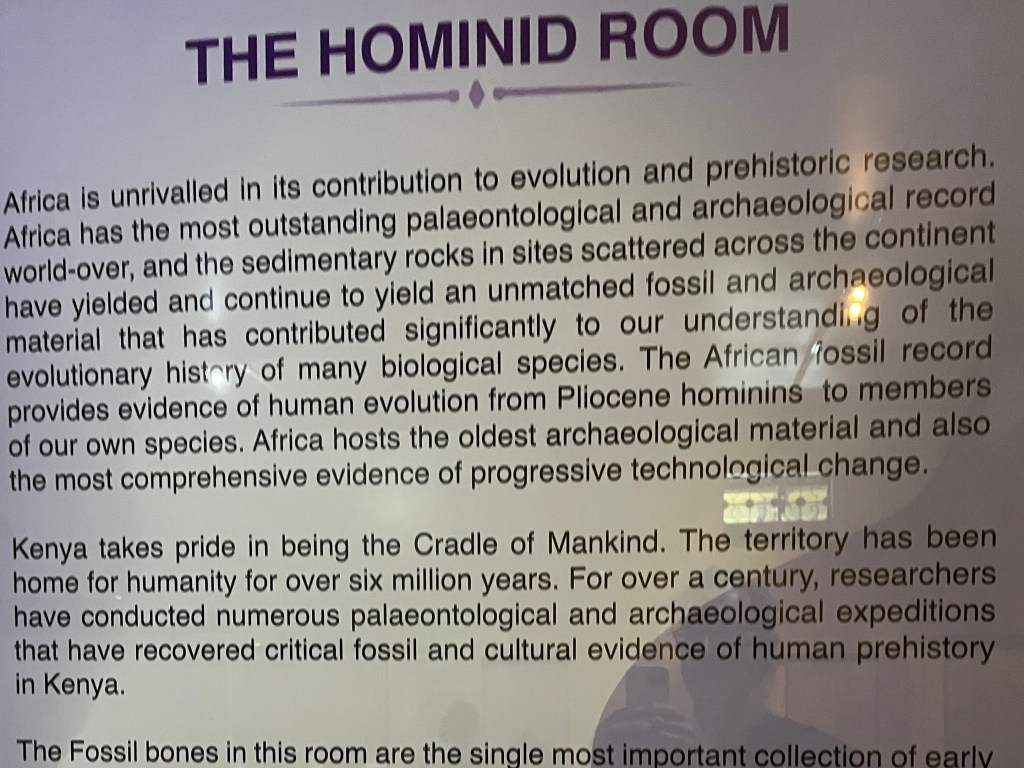
It’s not an entirely false statement, I guess, but it is insufficient. Before the fertile crescent we all had a bigger cradle, and that was the Cradle of Humanity. Humans were in Mesopotamia in 9,000 BCE, but they were in Africa long before that. There is an official “Cradle of Humanity” site (including museum) in South Africa somewhere, but the Nairobi National Museum holds some absolute treasures.
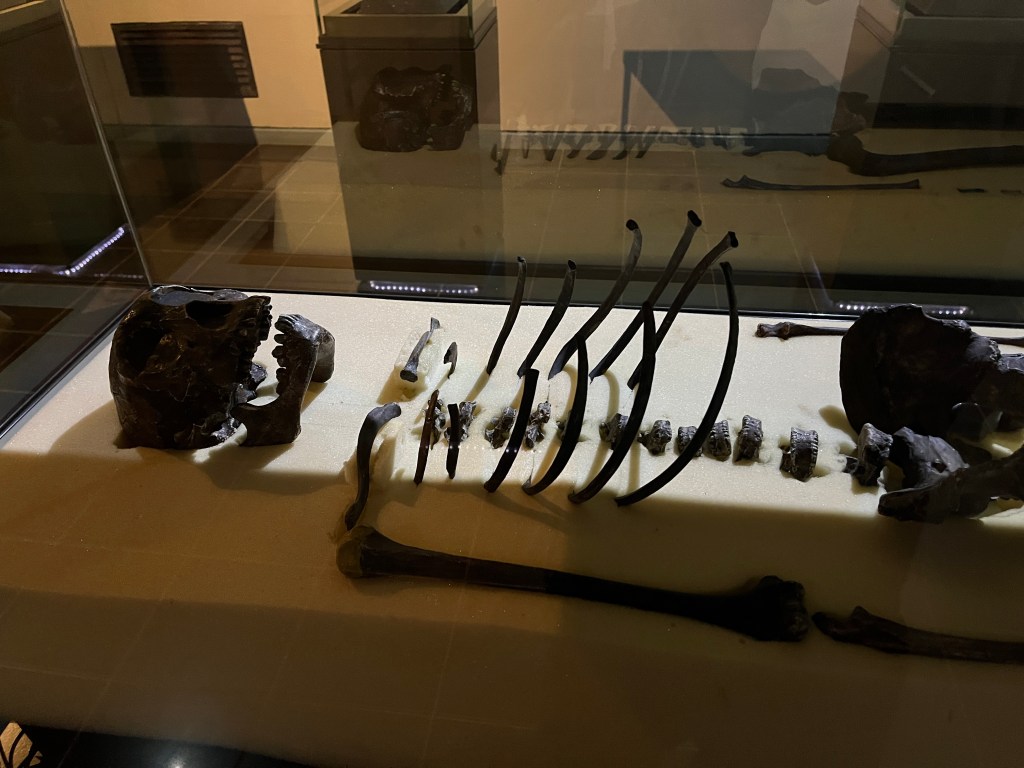
This skeleton of a boy, homo erectus, is 1.6 million years old, and nothing I have seen before even comes close to touching this. He was young at the time of death, between 9 and 12 years, but already over 5 feet tall. We don’t know much about him, but we can see where he stands on the scale of human evolution, with a brain size much larger than predecessors, and still much smaller than our own.
The boy’s skeleton was found on the west side of Lake Turkana, in the North of Kenya, and I wonder about his life. How did he live? Who was his family? How did he learn, and how did he play? Because I am certain he played. And what happened in the end? How did he die, and how was he grieved?
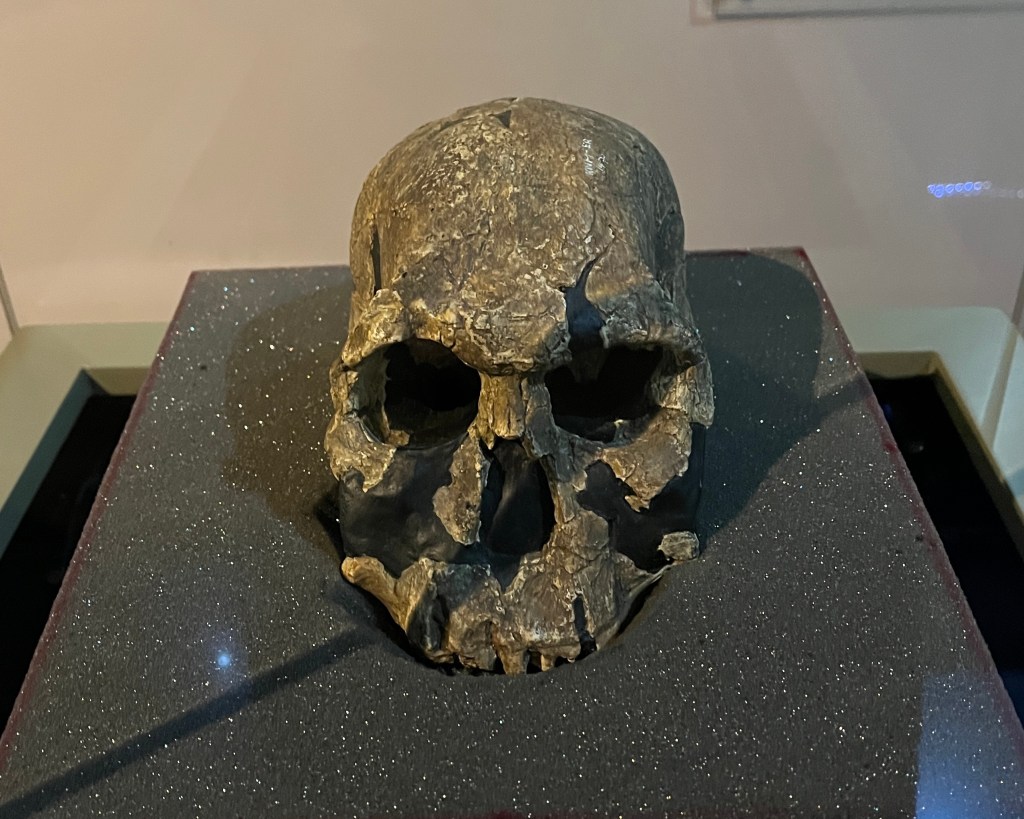
No other skeleton from that era, anywhere in the world, is as complete. Yet on the other side of the room, a 1.9 million year old skull demanded my attention. This skull, of homo rudolfensis, is remarkable for its large brain case, the earliest of our identified ancestors with this characteristic.
Nothing else I saw that day will stand out in my mind quite this way. This is humanity-defining. This is us.
I had set aside today as time off from safari – my one chance to see something of Kenya other than the great parks and great beasts, and I’m glad I did that.
I began the day with a walking tour of Nairobi, led by a soft-spoken man who was unfortunately difficult to hear amongst the din of the traffic.
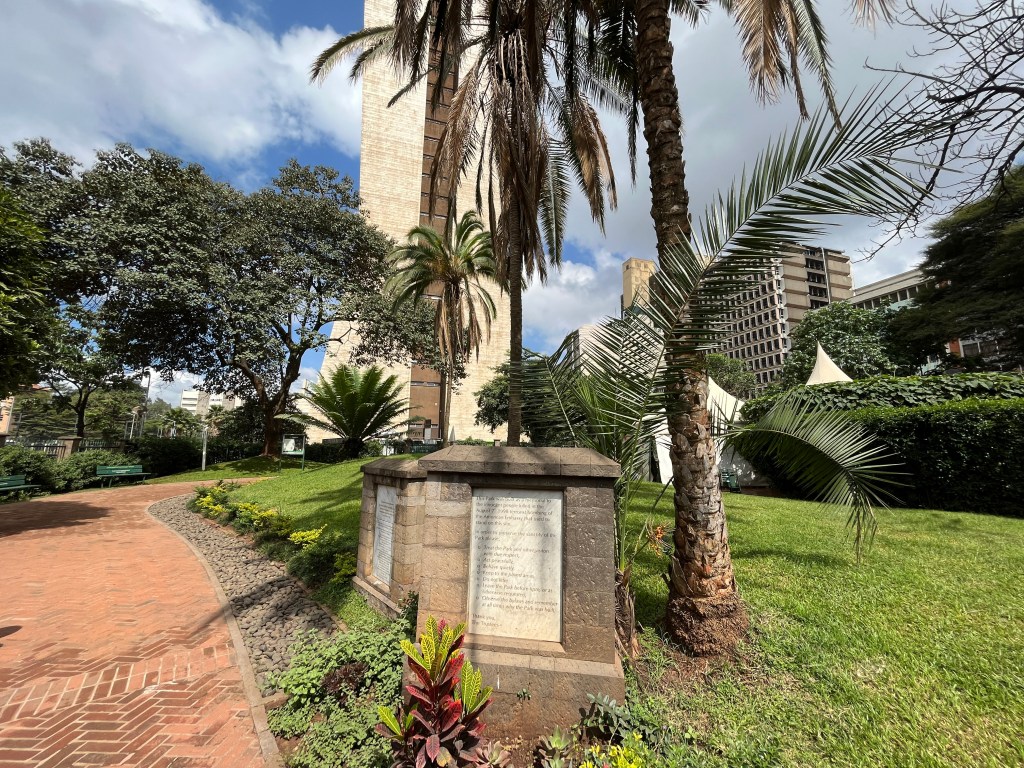
The most moving stop this morning was the site of the 1998 US Embassy bombing. In all truth, I barely remember that it happened, although the paired bombings (including a second, in Tanzania, also by Al Qaeda) still fire off a few dusty neurons in my brain.

The site in Nairobi has been rebuilt as a peaceful park. In this place 213 people were killed (I’ve found varying reports on this number), of whom 200 were Kenyan, 12 were American, and 1 was Greek. An act of malice was committed, but from that vile act has a park has sprung and a memorial center stands devoted not to retribution, but to peace.
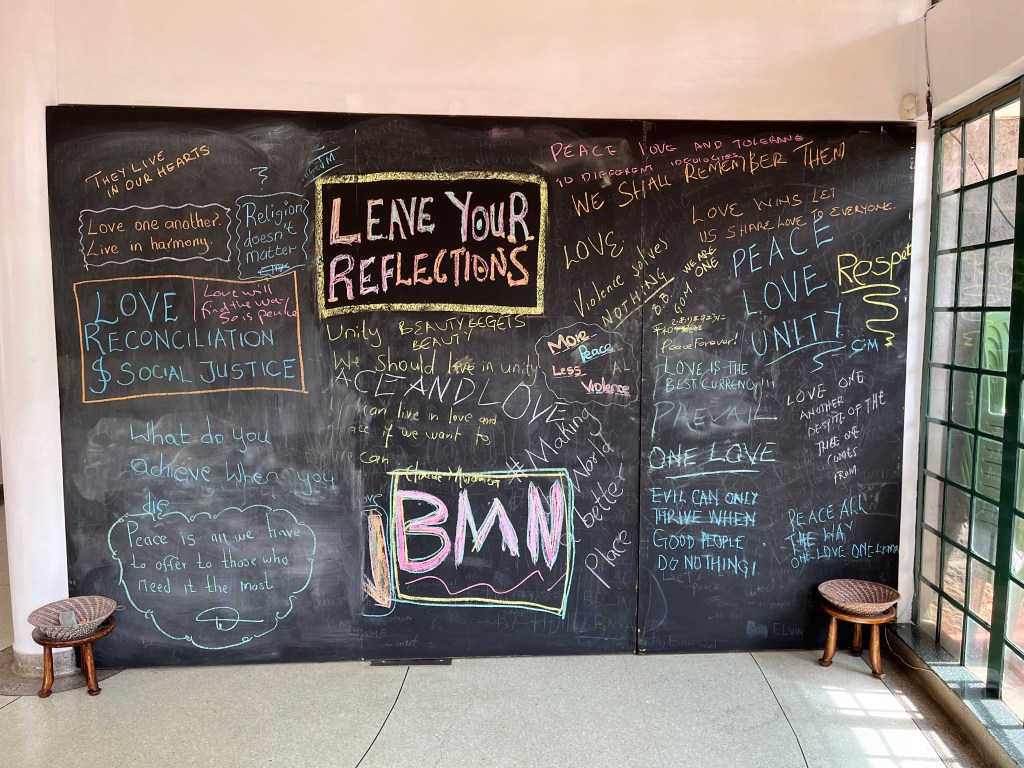
I hope we can continue to live the words scrawled on this chalkboard.
I am compelled to be honest about another thing – my guide really wasn’t the best of historians. He attributed most things to “colonial times” even when they weren’t (colonial times having ended in ~1963). This probably made it easier to deal with the fact that I could barely understand a word he said.
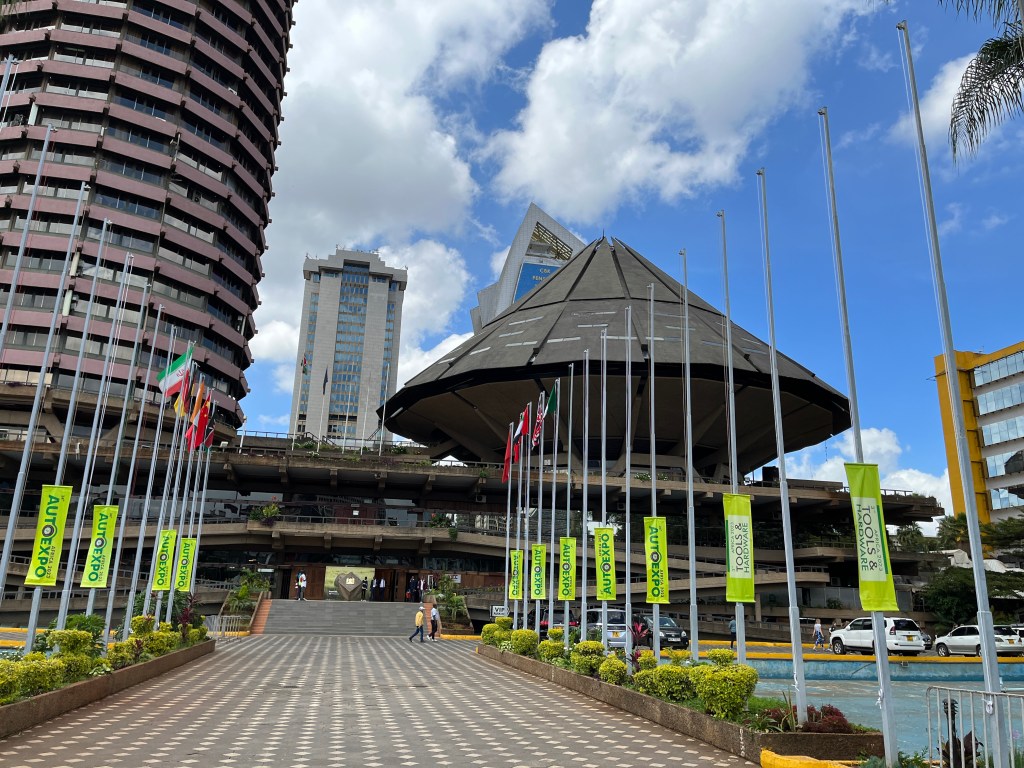
But even so, I was glad I took the tour because at the conclusion he brought me to this 1973 convention center (yes – he claimed it, too, was colonial). From high atop this tall building the great city sprawled around me, with other tall buildings punctuating the skyline on all horizons.
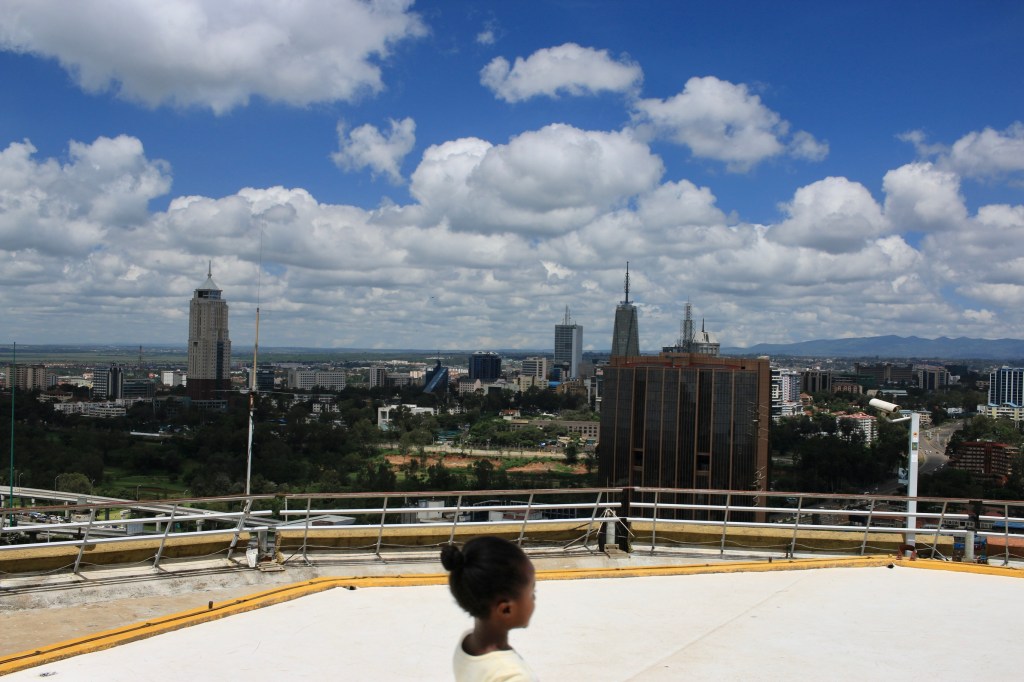
And on a landing pad in the center of it all a small girl practiced gymnastics.
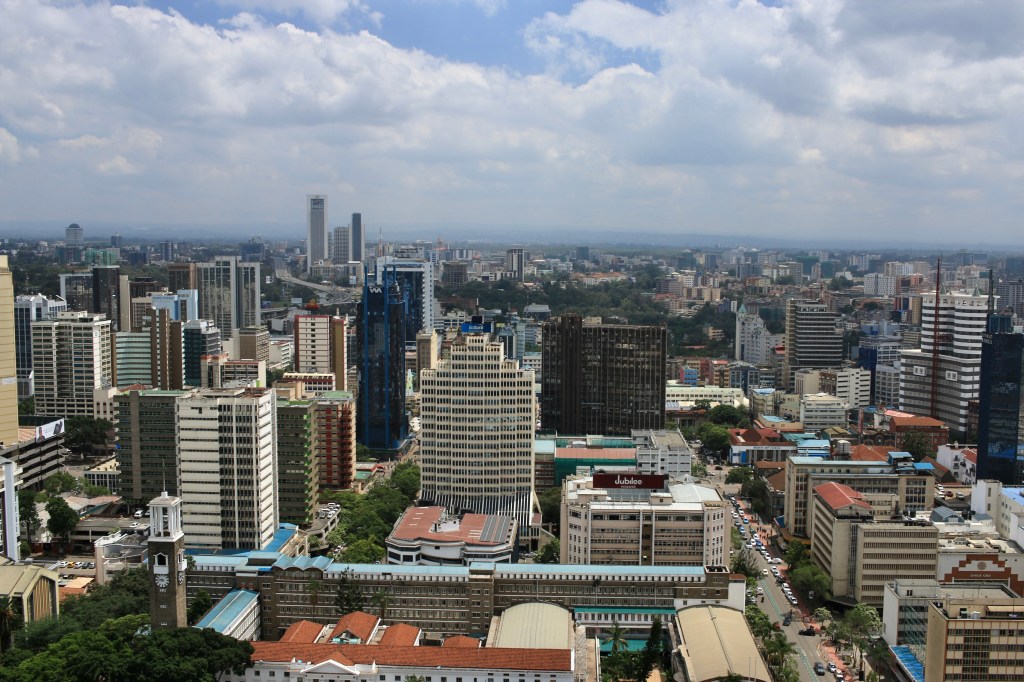
Above it all, I had some perspective. I haven’t spent time talking about some of the grand disparities between rich and poor in Kenya, but they aren’t really different than I have seen in other parts of the world. Here, well above the city below, I was insulated from these differences. Because, much like a Seurat, when one steps back we are one.
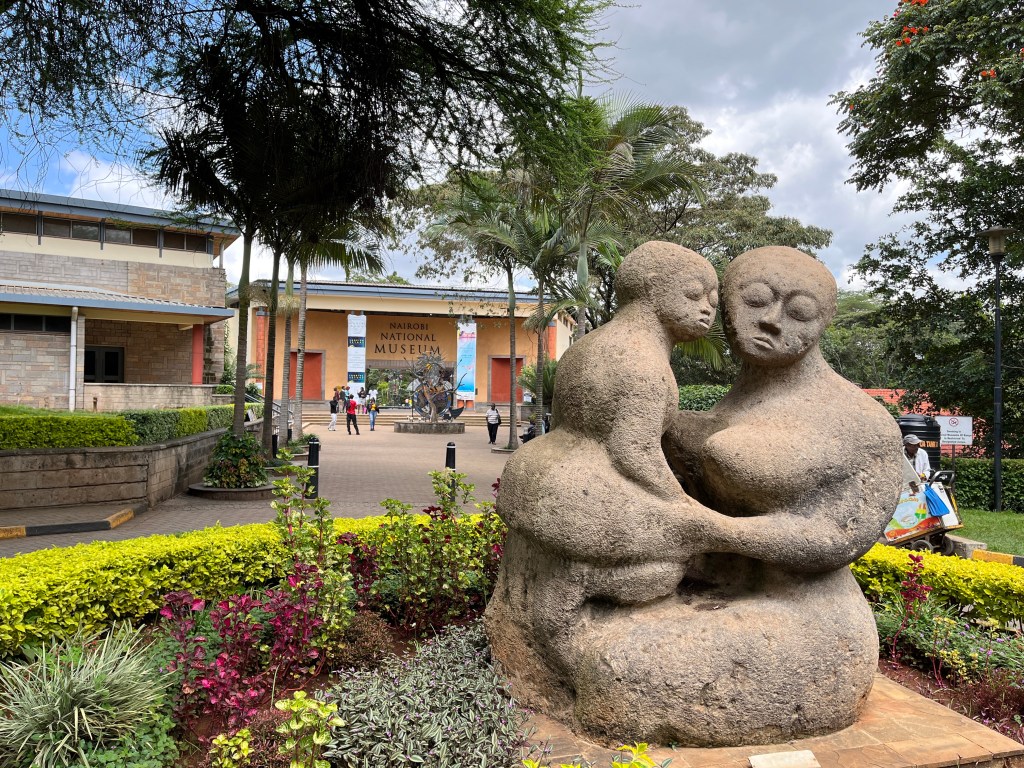
And somewhere in the hubbub below was the museum where the remains of a 12 year old boy were on display. A boy who, well before anybody even considered counting the days, had played on the shores of a lake not far from here.
My flight leaves tonight, and with these thoughts and memories, I was ready, at last, to go home.

 butterblogger