As I stepped out of Ghent Sint-Pieters Station, I pulled my rain jacket close about me and the hood down low over my head.
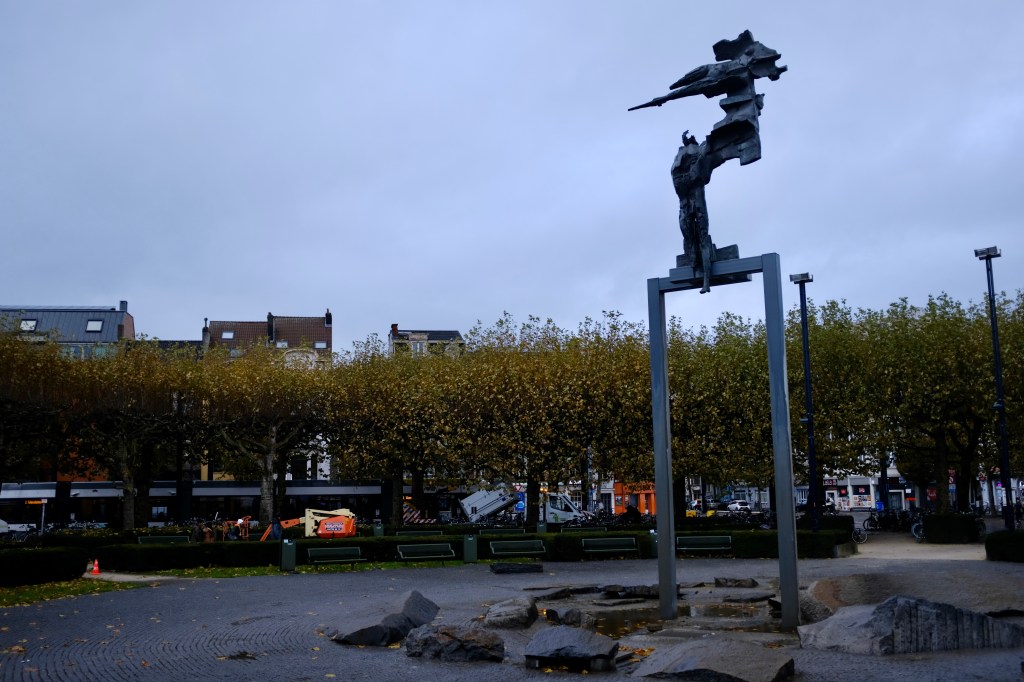
The rain wasn’t coming down heavily and the wind wasn’t gusty, just a steady light drizzle and a light breeze, but I wanted to try and stay warm and dry. I thought I would be OK today because I’d read the forecast closely and it didn’t look like I would be facing much more extreme weather than this today. The afternoon might even dry up.
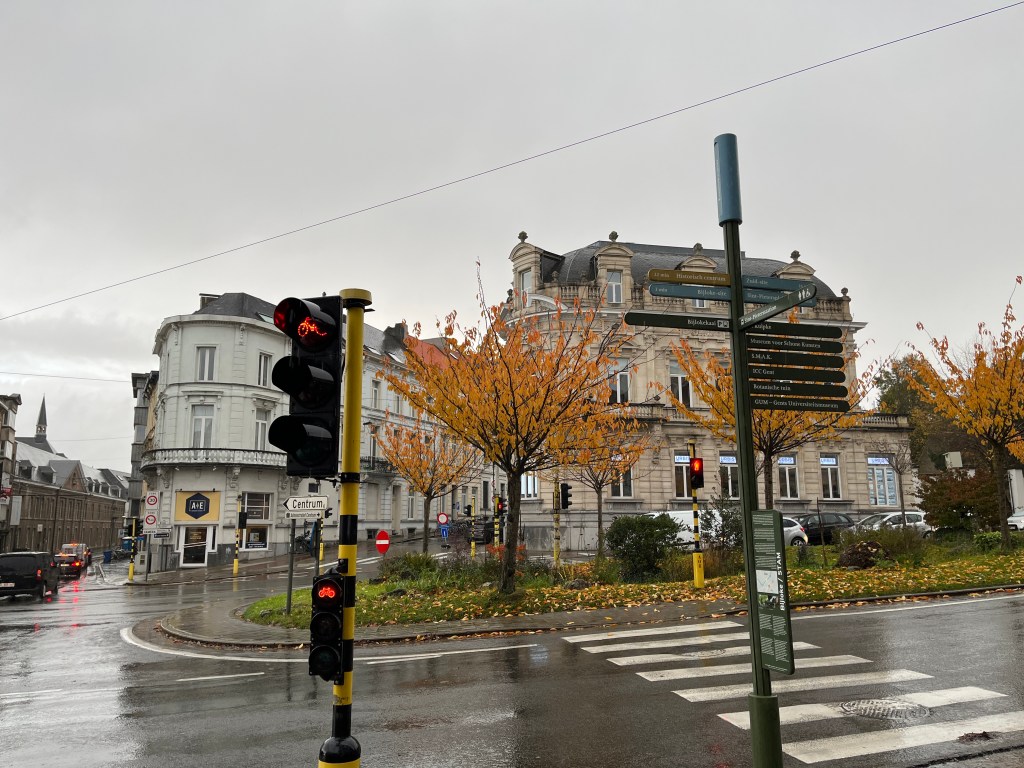
I walked briskly toward the center of town, which is about a mile from the train station. The walk is generally clean, but looks rather modern compared to what I’ve seen elsewhere. I can tell this isn’t the old core of the town.
In spots the drops of rain pause, offering hope, but then soon resume again.
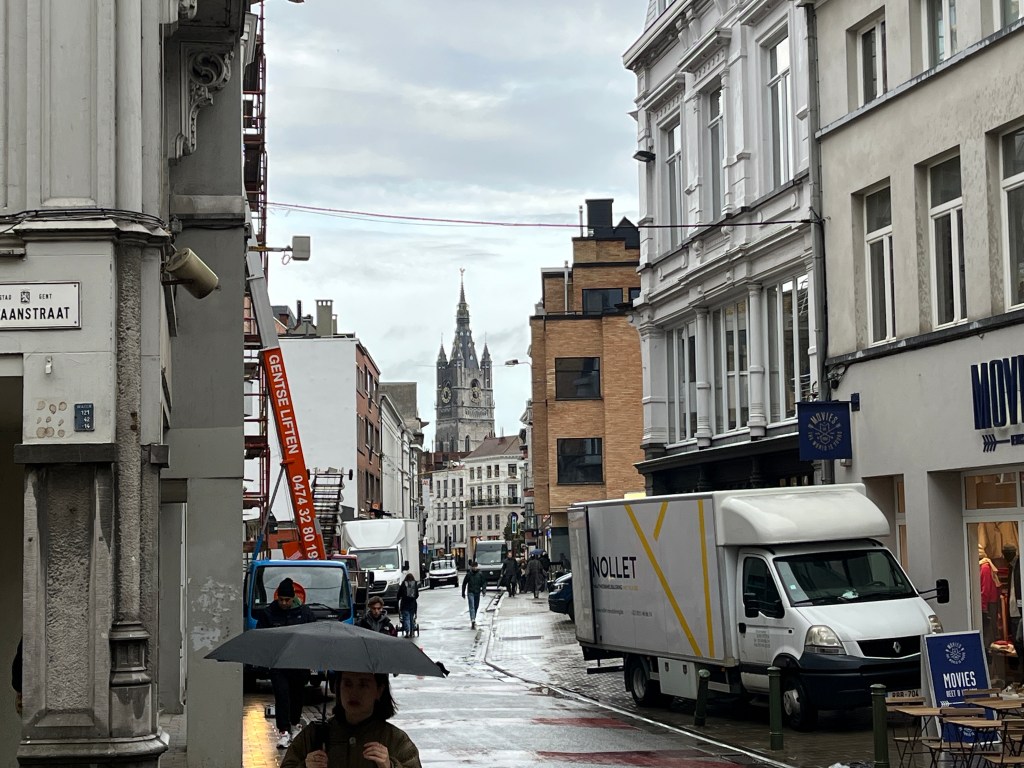
Thirty minutes into my walk, the belfry came into view, as my optimism was renewed.
Similarly, however, the rainfall was renewed when I reached the foot of St. Bavo’s Cathedral, my first destination for this daytrip from Bruges.
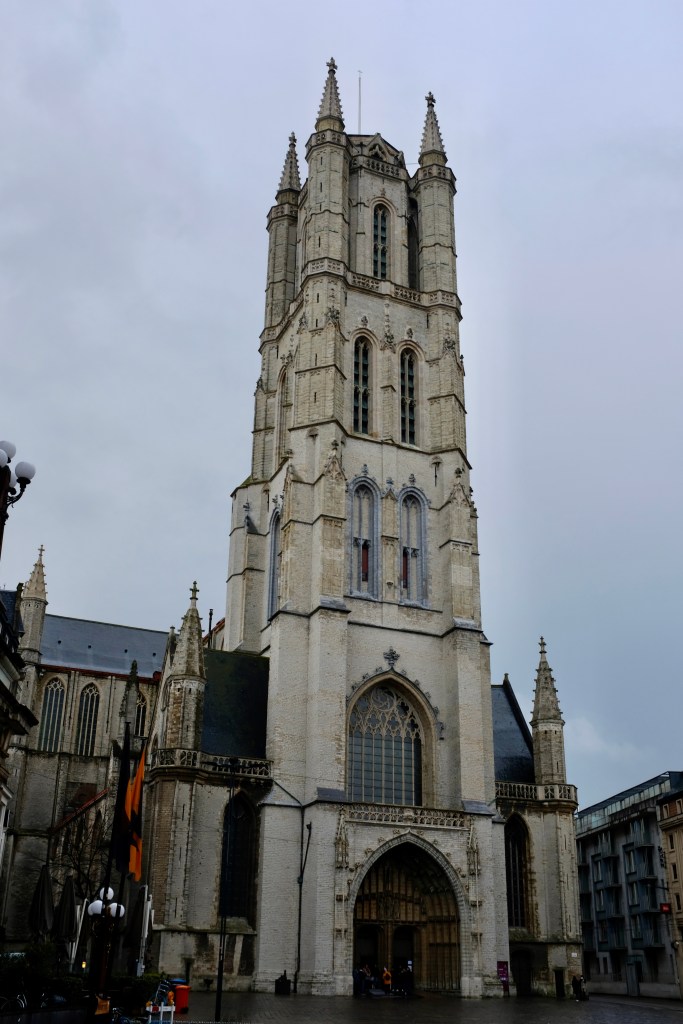
I dove into the cathedral, and welcomed the shelter of the long stone nave.
Visiting the cathedral is free, but my destination lay further within, upstairs. I paid the admission and began climbing the stairs, a modern addition and followed the signs.

I passed this marble gravepiece. It’s nice enough, I guess, but I’ve seen enough sculpture by now to know it is not extraordinary.
Further toward the back of the church I find my goal: the Ghent Altarpiece. It was the first major oil painging, dating to the 1420s. It has been attributed to early Netherlandish painters including Hubert and Jan van Eyck, and temporally stands at the beginning of the Northern Renaissance.
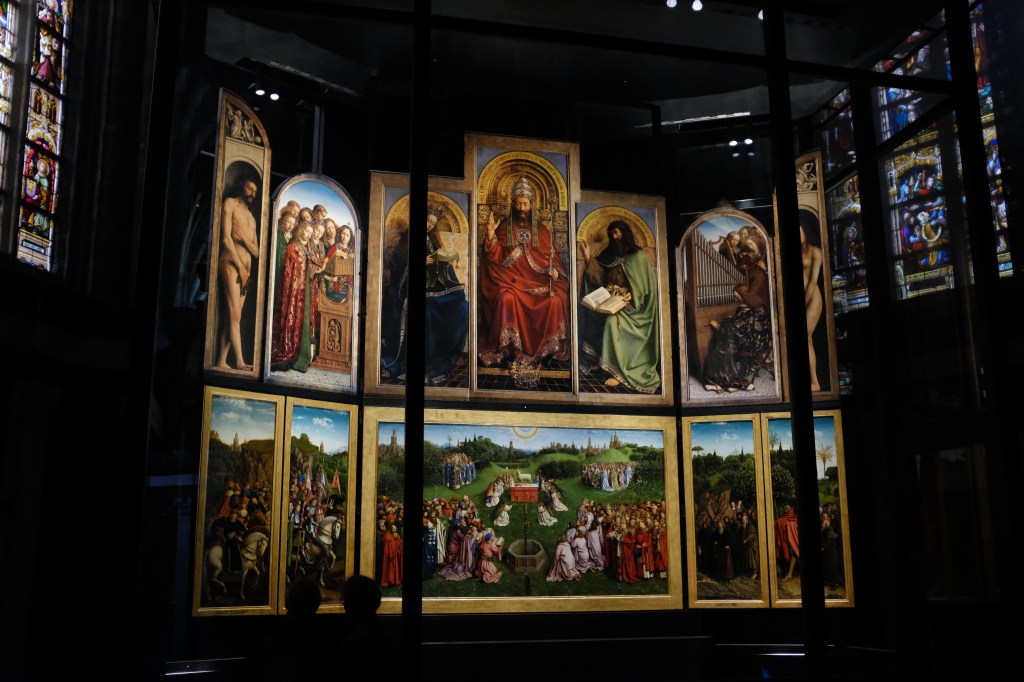
It’s a remarkable work of art, and people compare the viewing to the Mona Lisa, although in truth I spent more time looking at the viewers of the Mona Lisa than the work itself.
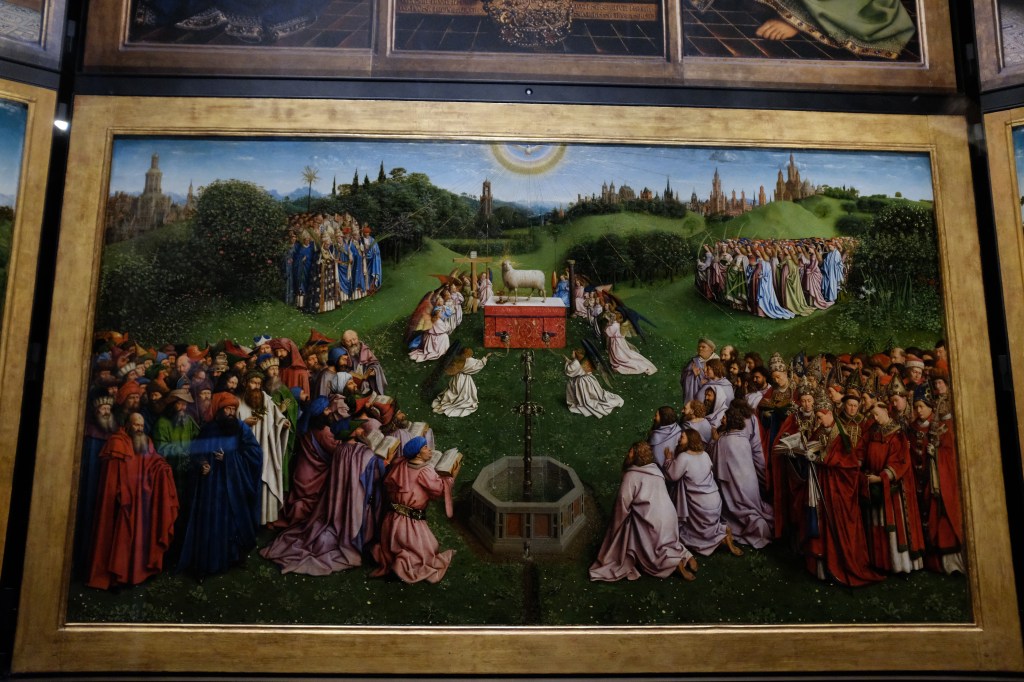
There were but a handful of us who had dared to make this pilgrimage to St. Bavo in this weather, and it was well worth it. It has exquisite attention to detail and symbolism, and the entire thing is marked by brilliant explosions of color.
It was well worth the trip.
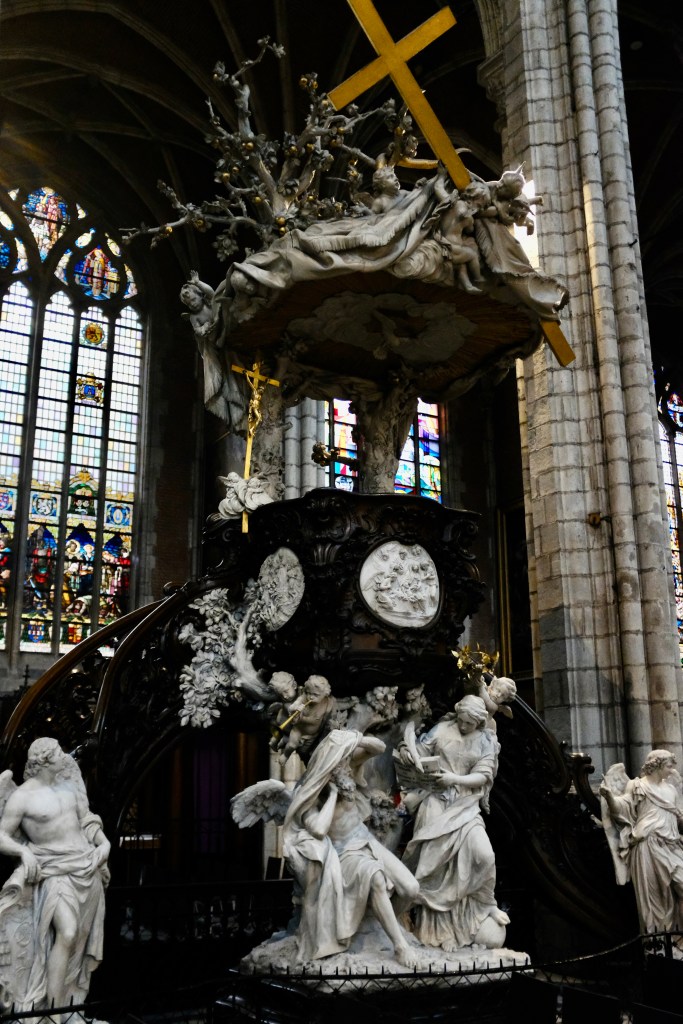
On my way out of the church I paused to view the rococo pulpit, hovering garishly above the parishioners. I imagine the sculptor working on it thinking “excessive is just a starting point.” And as a result it’s awesome in its own way.
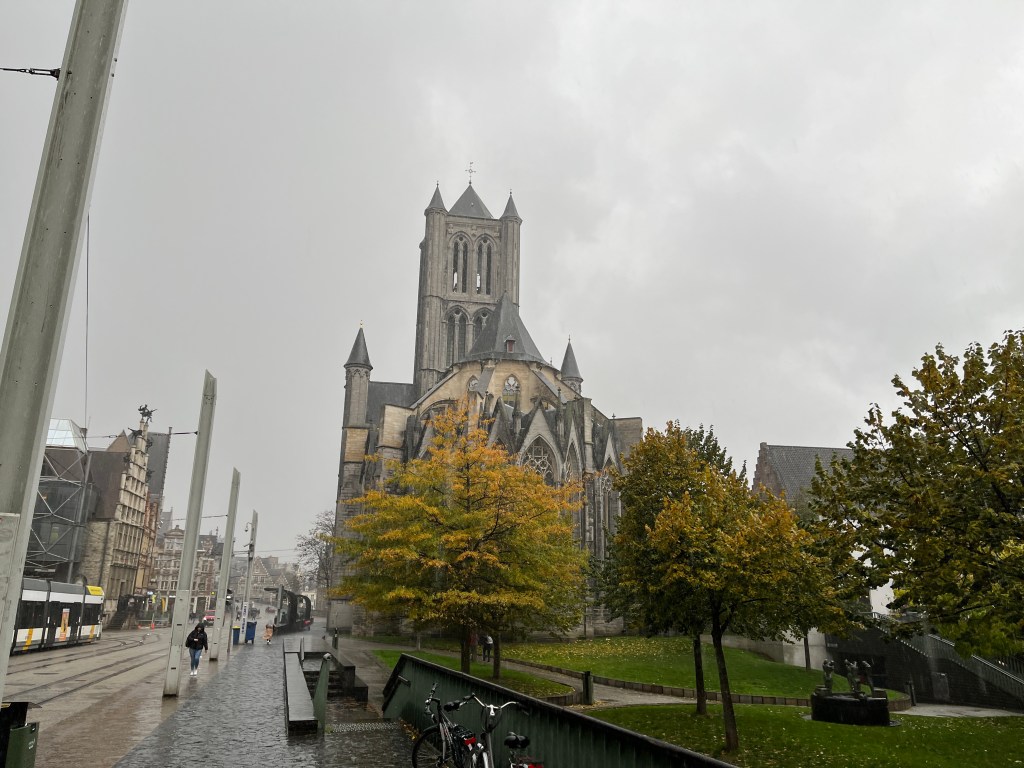
Outside I found the rain was falling more steadily so I hurried to Saint Nicholas Church, just a few steps away.

Within, the church is beautiful, but spare. I have noticed frequently in the Northern European churches that there is an absence of the art that drips from every surface of the churches in other parts of Europe. Those were places where the Protestant Reformation wasn’t as influential. Here, the Calvinists would have removed just about anything that could have been construed as a graven image. It’s amazing that the Ghent Altarpiece survived, come to think of it.
The rain by this point was steady, so I hurried into a nearby bar for a warming bowl of courgette soup while considering my options. Despite the jacket, I was still feeling wet.
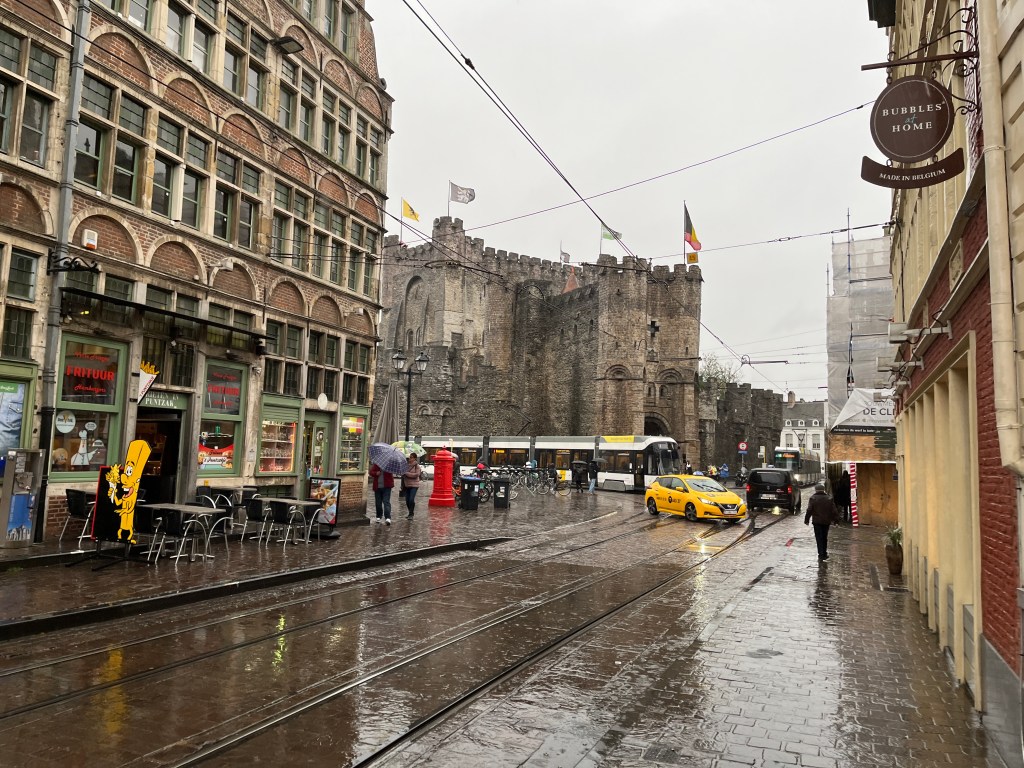
It wasn’t far to the Gravensteen Castle, dating to 1180, and it was high on my list, so I committed to one more stop. The audio guide they loaned me included a visit to the castle yard, but given the heavy rain I skipped that and went immediately inside, where it was quite warm for a 900 year old structure.
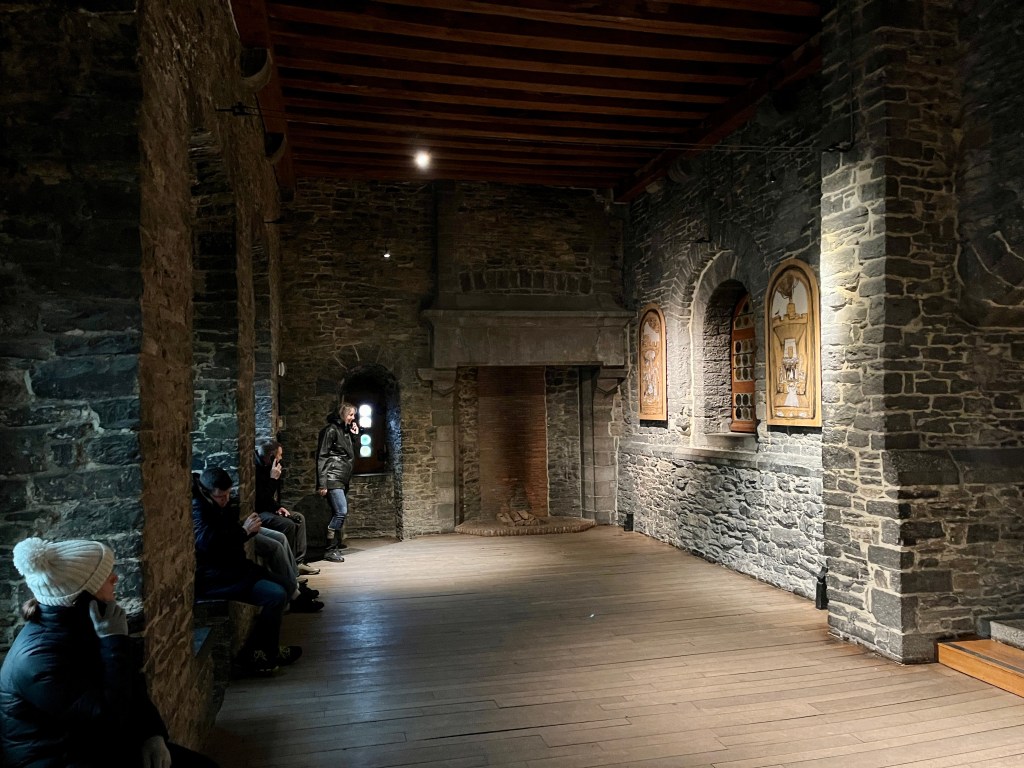
This fireplace, when it was constructed, was a truly innovative design. The guide explained that it was the first real fireplace, as we would think of it, in Ghent. I liked the idea of a warm fireplace right now.
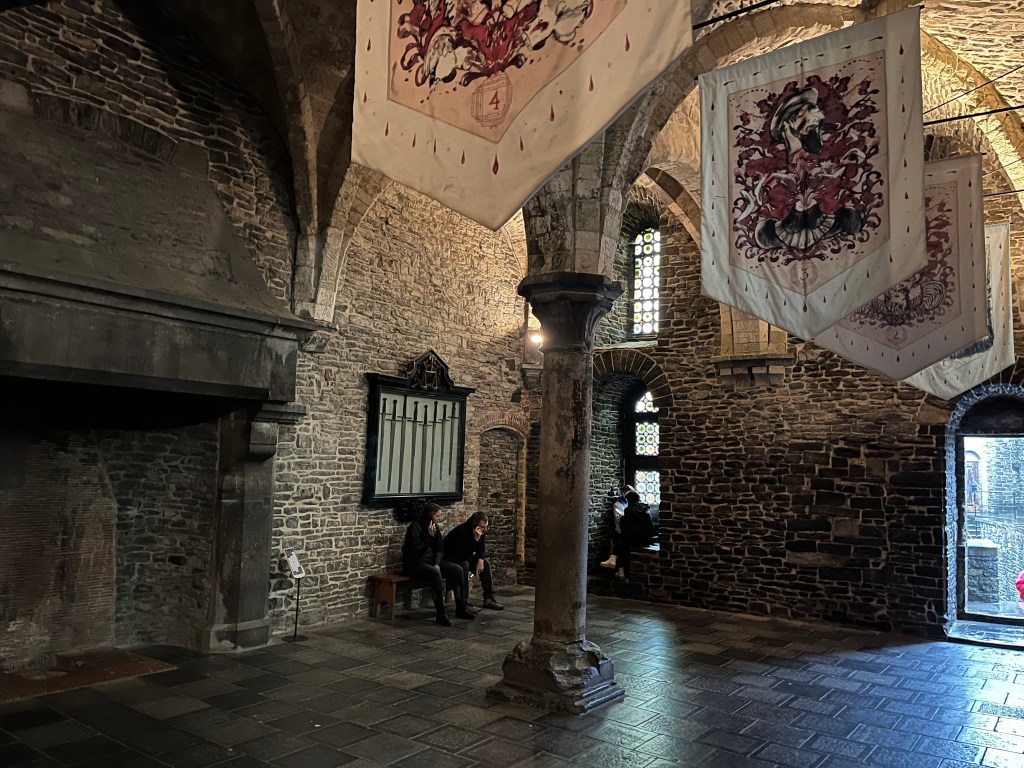
Much later in the tour I arrived at this room was where they held some of the more infamous public executions. Like every room we had seen, there was a massive fireplace with no actual fire.
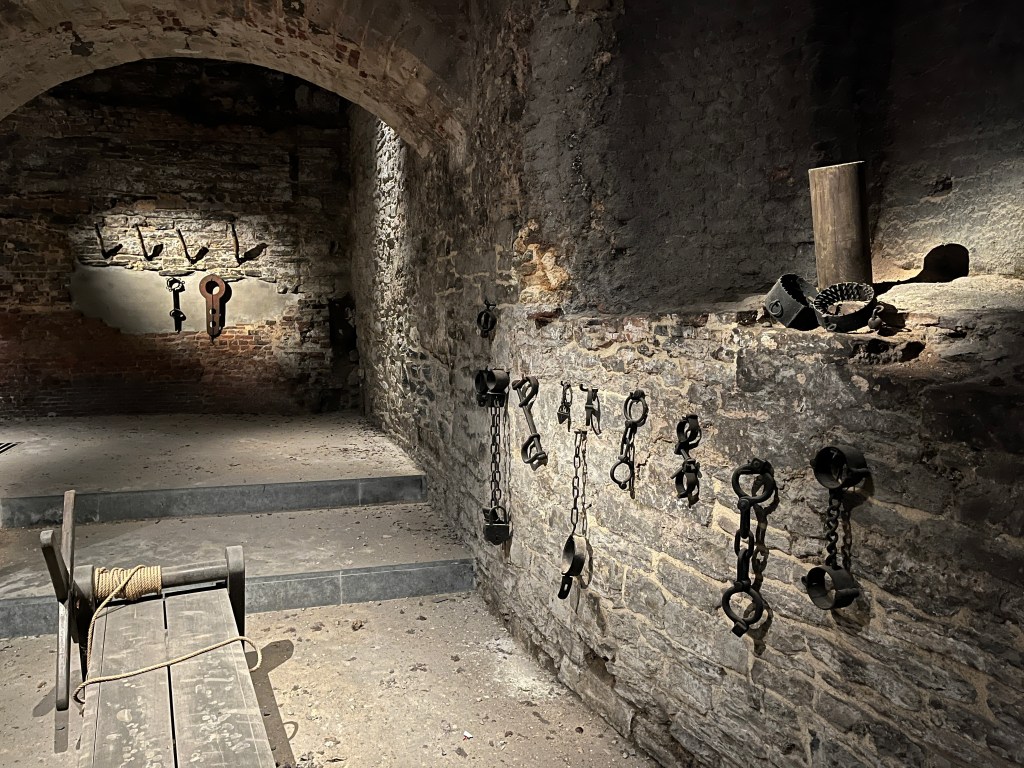
And just outside, this was the torture chamber. No tour would be complete without a visit to the torture chamber. (Notably, however, I saw no fireplace here)
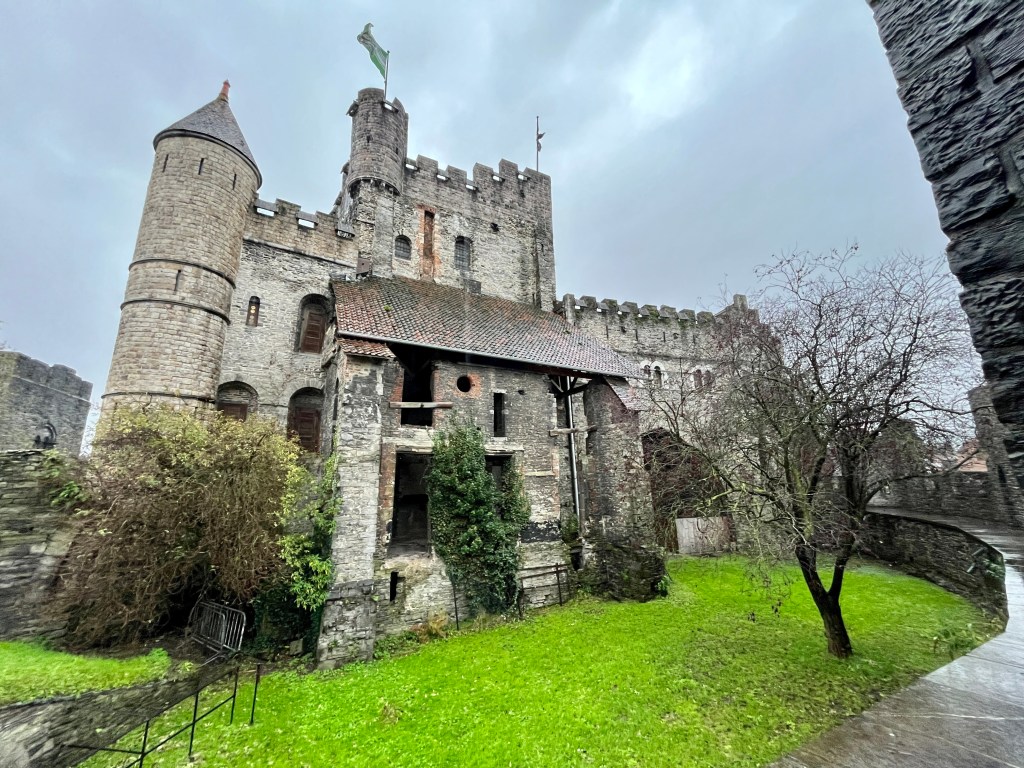
The castle is truly beautiful, one of the nicer ones I have seen. But I was wet and cold, so rushed through the visit faster than I otherwise would have.
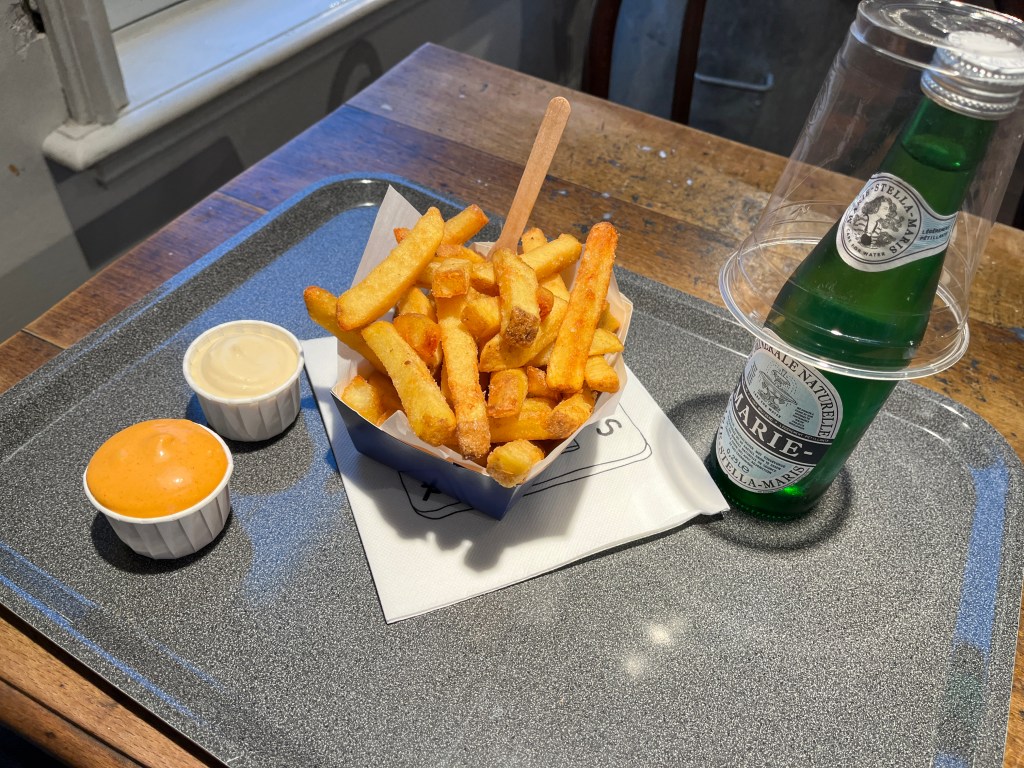
Finishing the tour, I stopped in a nearby restaurant for an order of french fries and considered my options. I didn’t want to walk all the way to the train station, and at this point didn’t want to go to the museum (near the station). I really just wanted to warm up and dry out.
The tram stopped nearby and would take me directly to the train station, so that was my best bet. After a brief wait in the rain, I was aboard and shivering, but happy to be moving in the right direction.
Back in Bruges, the rain had not abated, and in fact had worsened. To escape from the torrent I hid under an awning and summoned an Uber rather than make the 20 minute walk to my hotel.
I couldn’t wait to get back there and get into some dry clothes.

 butterblogger