I checked three sources before deciding to go to the Groeningemuseum today.
Had I checked a fourth source perhaps I would have found that they were closed on Wednesday, not Monday (as the other sources had all indicated).
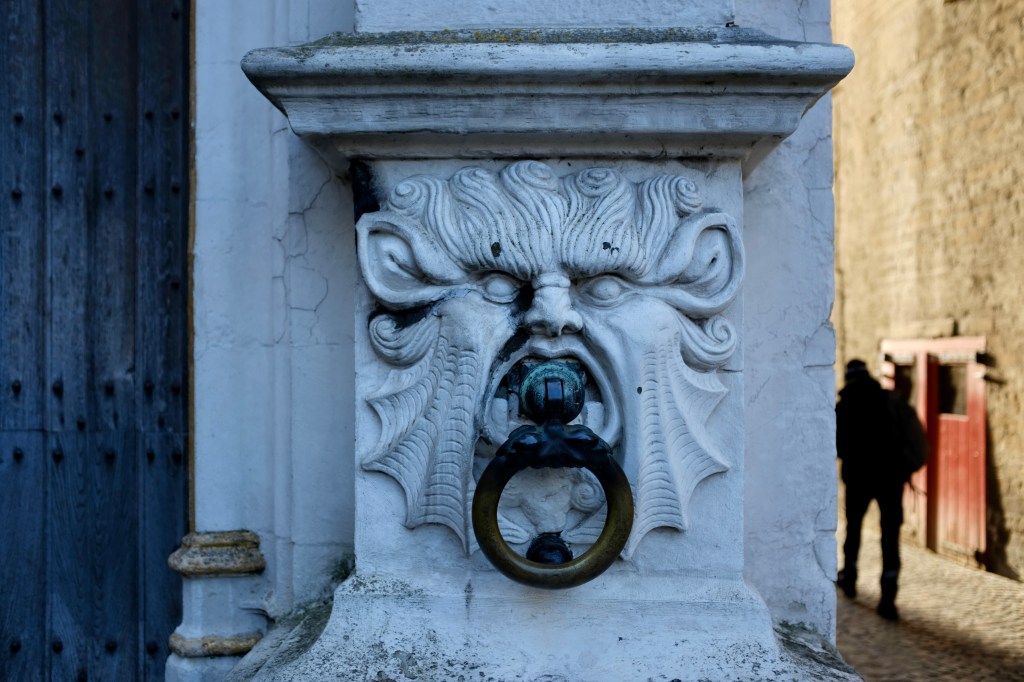
It was a bit confusing, and then disappointing, to get to the gate of the museum and find it closed, but I have long since determined not to let such things bother me. While I had intended to visit this museum today, it is quite large and I honestly often burn out on museums when I stare at artwork for hours on end. There’s pressure to see everything and then often I end up appreciating little.
I know that sounds a little “sour grapes” but it isn’t. It’s me moving on with a more a direct assessment of my feelings about museums; frequent readers of this blog will know I get museum’ed out.

The day had started a little more auspiciously. After checking out of my hotel, my feet guided me to the Stadhuis, where a market had set up with fresh meat, vegetables, flowers, and pastries.

Having skipped the overly-expensive hotel breakfast, this delicate little bomb of pastry cream and pastry was a delicious way to start my morning.
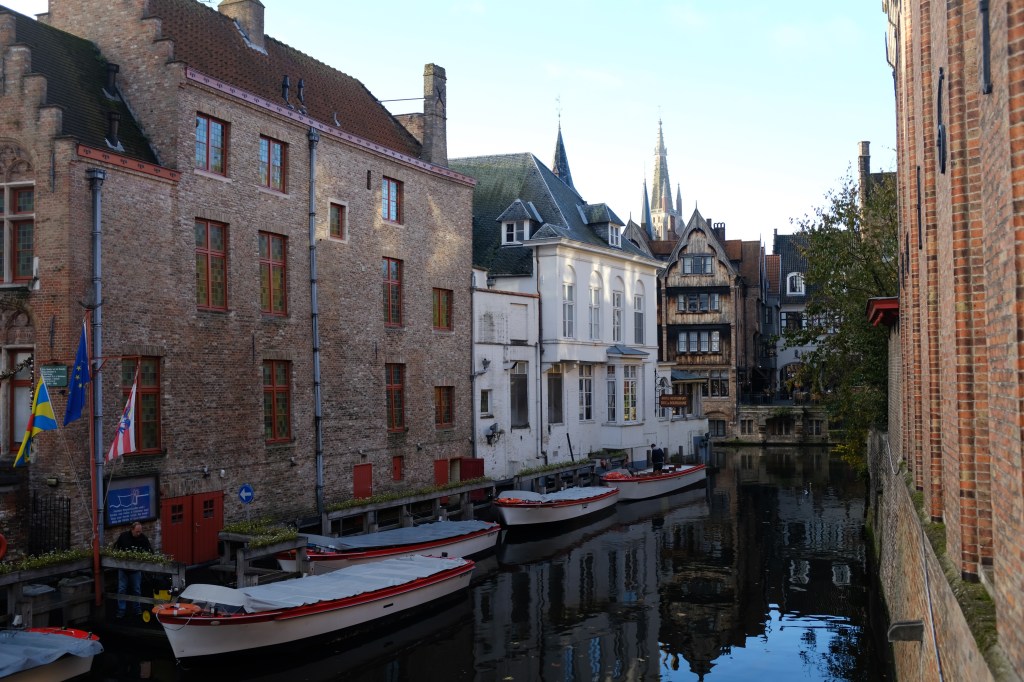
Beyond the market, I continued walking past some of the sedate canals that outline this town, marked by a rare boat (or pair of ducks) drifting silently along the waterways.
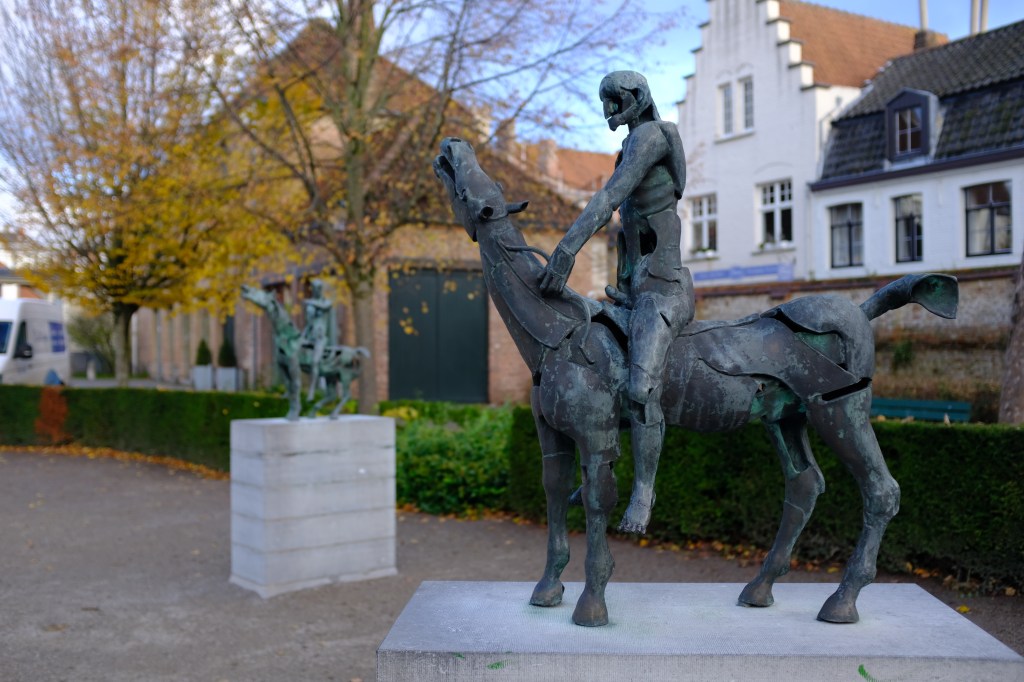
The path brought me to the closed museum, after which I paused briefly to regroup, and found these “Four Horsemen” sculptures in a nearby garden.
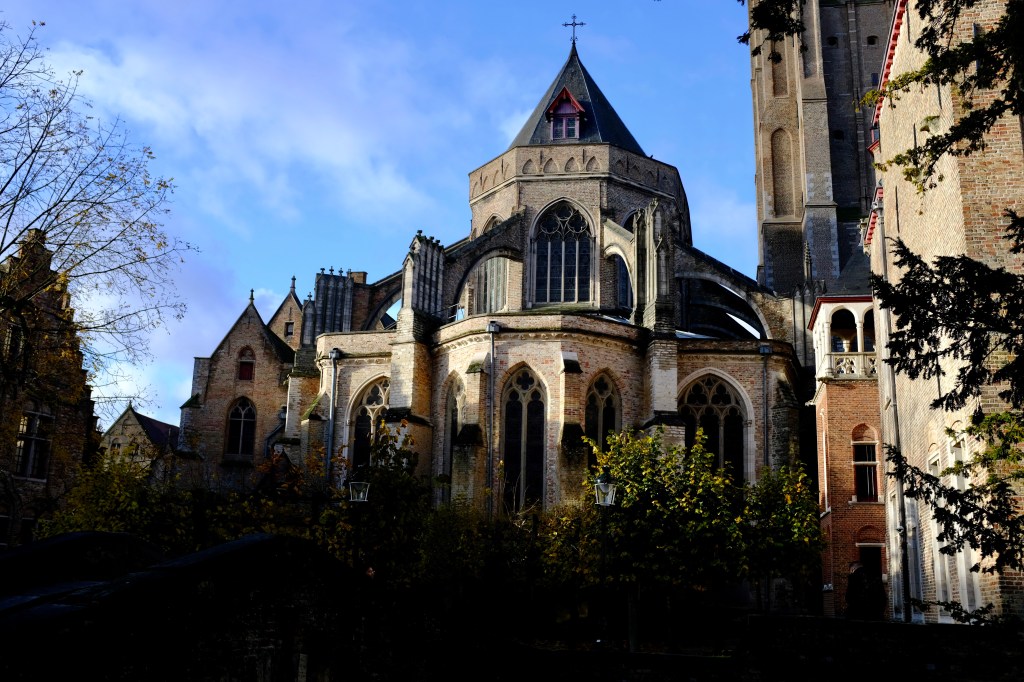
The garden itself backed up the Church of Our Lady. From this angle, looking at the apse and the buttresses, there’s a certain beauty that you can’t appreciate when looking at the facade of the church.
All of which led me to the Gruuthusemuseum, the former home of a Bruges nobleman. It’s a bit more historical than an art museum, and a few things really stood out.
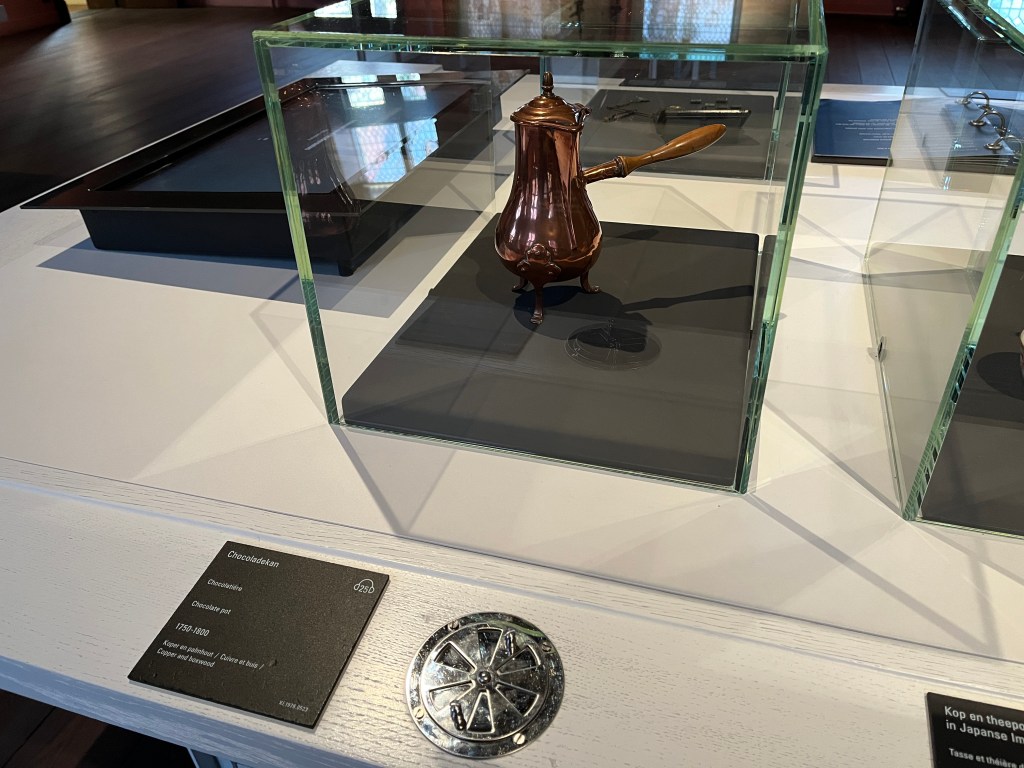
First, there was this chocolate pot, for serving hot chocolate. Chocolate is very big here, and friends at home know of my own penchant for the stuff.
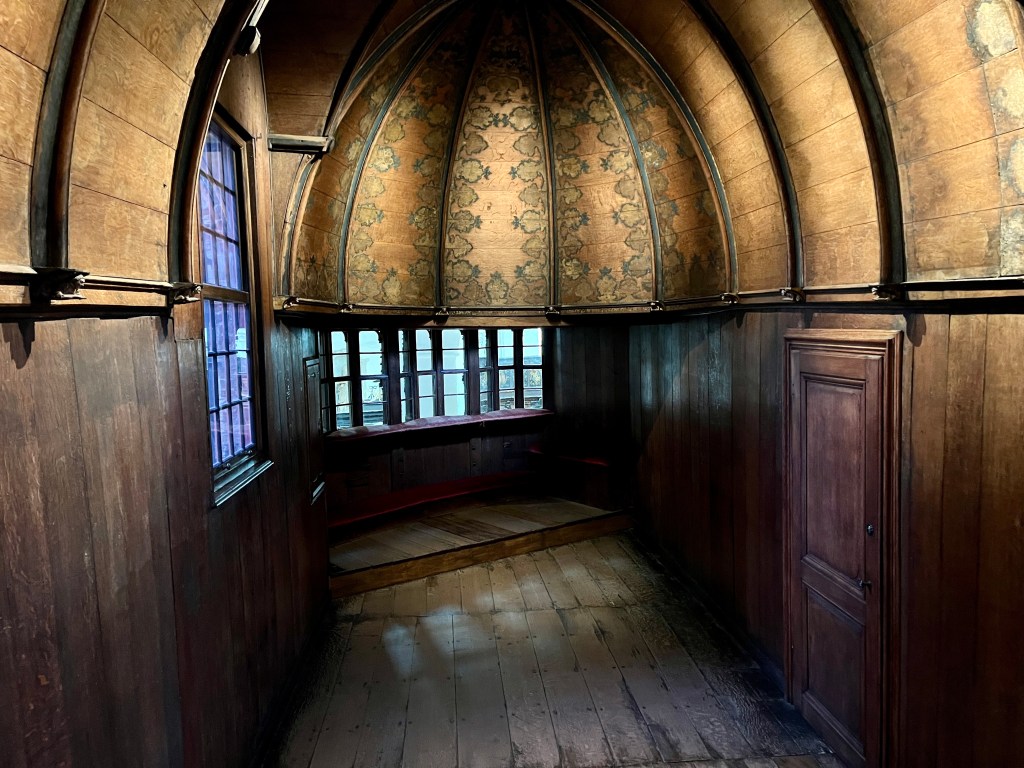
Most remarkable of all was this structure. Louis of Gruuthuse had this oratory built in the 15th century. It overlooks the choir of the Church of Our Lady, allowing Louis to attend mass without leaving his home. Even without a sign, the importance of the structure was obvious as soon as I saw it.
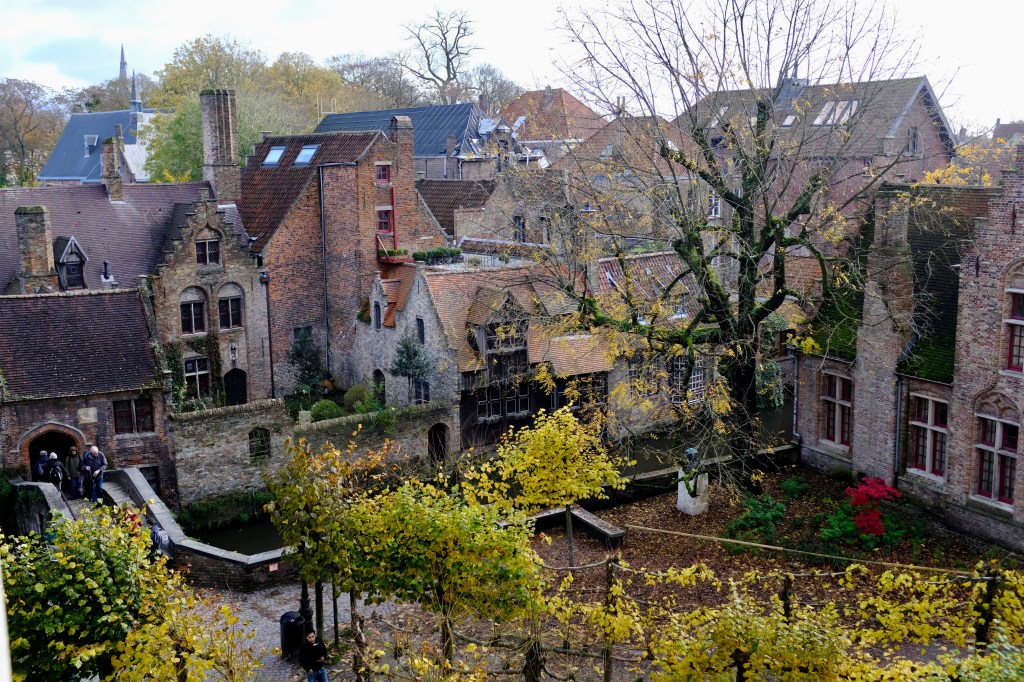
Finally, this balcony was advertised as having the best view in Bruges. I haven’t seen all of the views in town, but the view from here was definitely great, and I don’t know if there’s a better time to be here than right now – with the deep greens of summer fading to vibrant sunny yellows.
As morning turned into afternoon, I returned to my hotel, collected my bags, and turned my feet toward the train station. An hour and a half away my next destination, Antwerp, awaited.
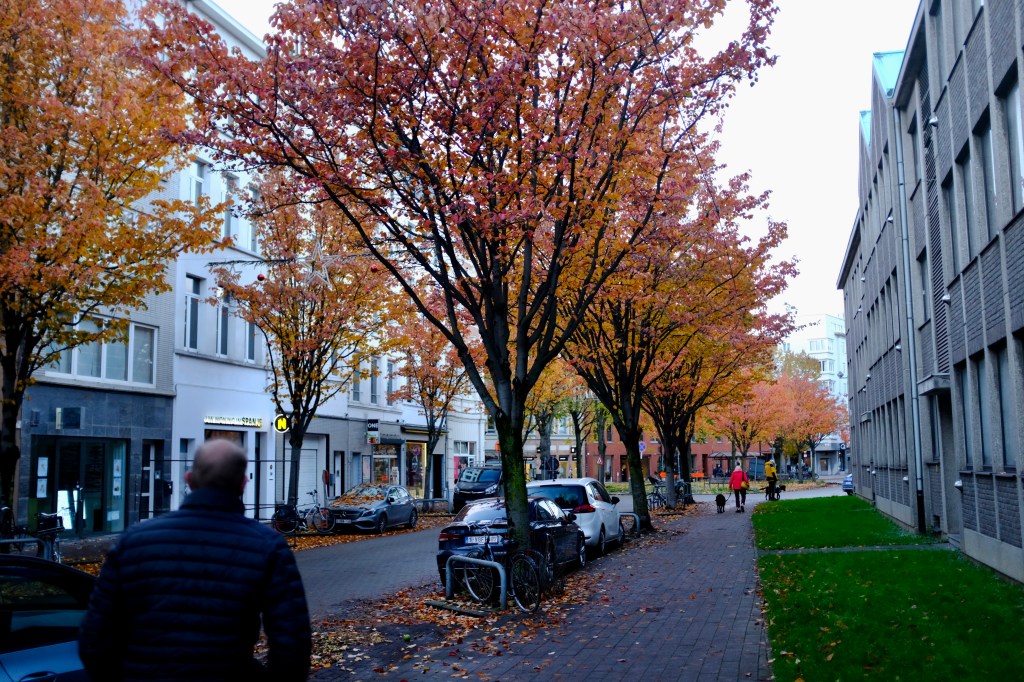
I arrived there with plenty of light in the sky, but a sun that was quickly setting. I headed into town where little was open, but the views were breathtaking.

The Spire of the Cathedral of Our Lady was the first thing I saw as I approached the center of town, it’s carefully sculpted face looking fragile at its uppermost reaches.
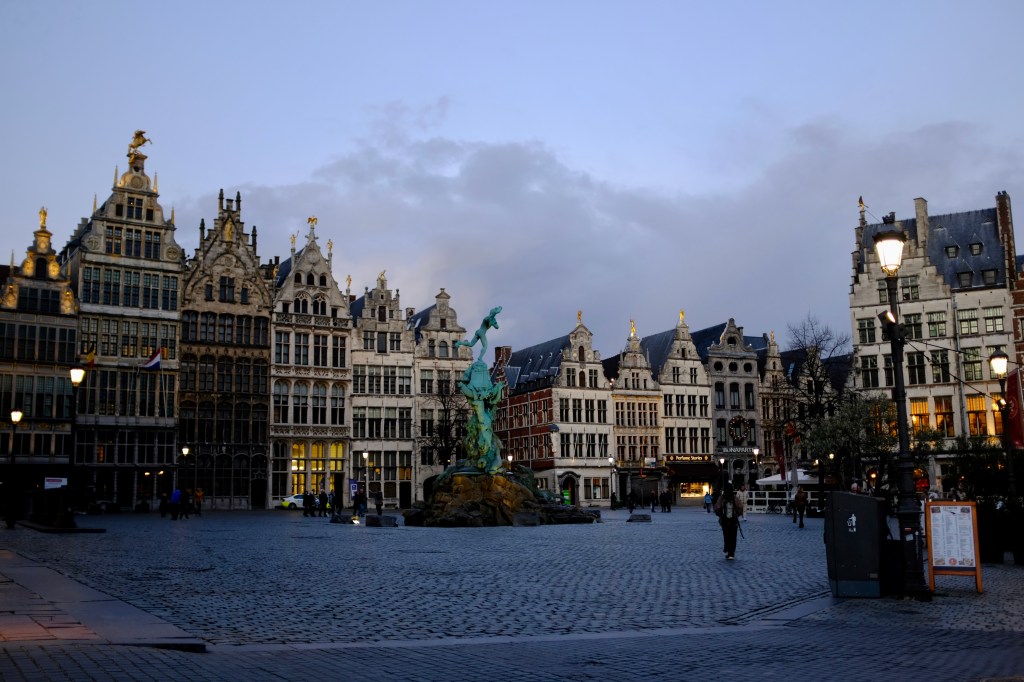
The adjacent Grote Markt sits in the center of town, where medieval buildings still border the great square.
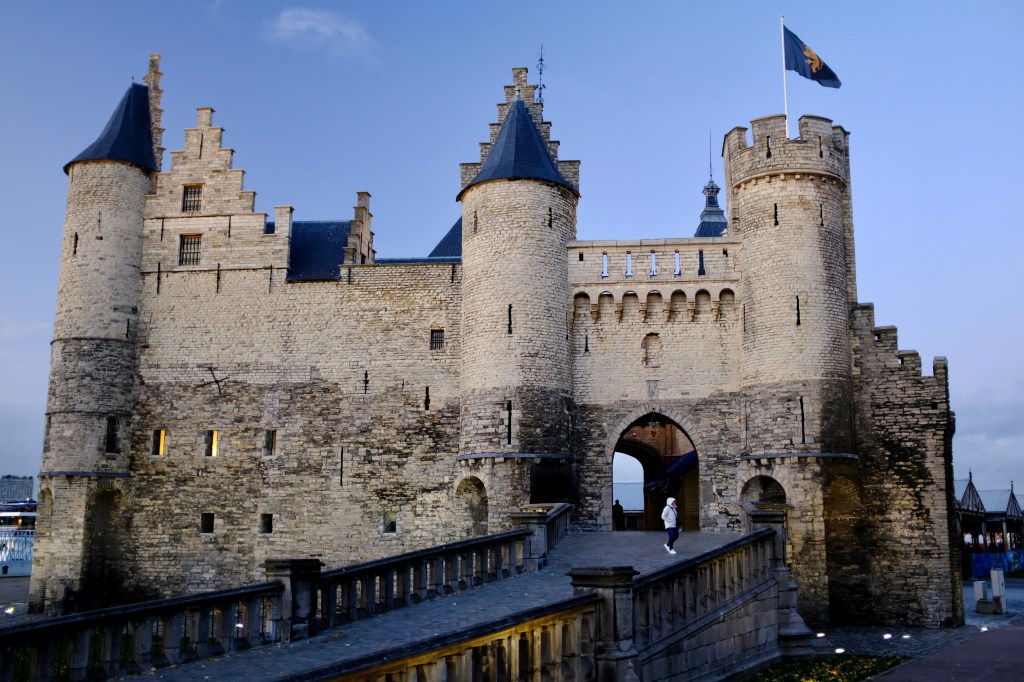
I had little time to wander, with the sky growing dark, but I made it in time to the riverfront where the Het Steen medieval fortress dates to the 1200s; It is the oldest surviving building in Antwerp. It’s towers, parapets, and battlements were defensive at one time, but the portcullis gaped open and an infopoint was warm and welcoming inside.
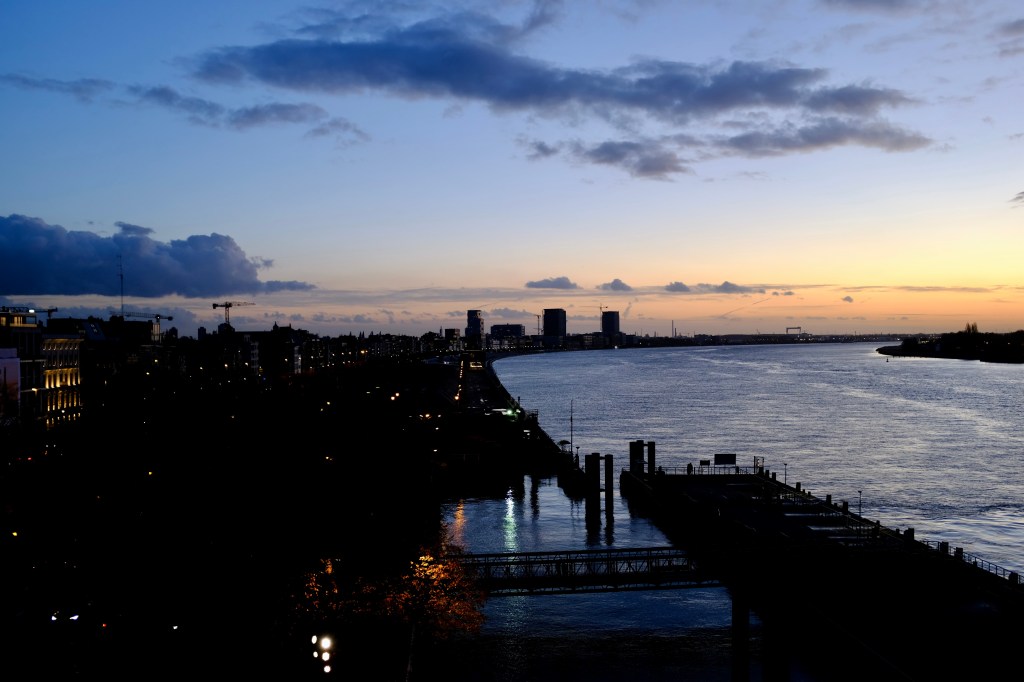
There I was able to climb to a viewing platform for views of the river Scheldt under the darkening skies.
And I can already tell I’m going to love Antwerp.

 butterblogger