Walking idly through the Norsk Folkemuseum I paused in front of a small unremarkable farmhouse standing in a quiet green glade, set well back from the walking path. I thought I heard the faint sound of music playing.
When I came to the Norsk Folkesmuseum this afternoon I found it to be a lot like the museum I visited in Bucharest, where they have brought in homes from around the country. Such places are often less engaging for me, as I don’t have the personal context, and this museum was no different.
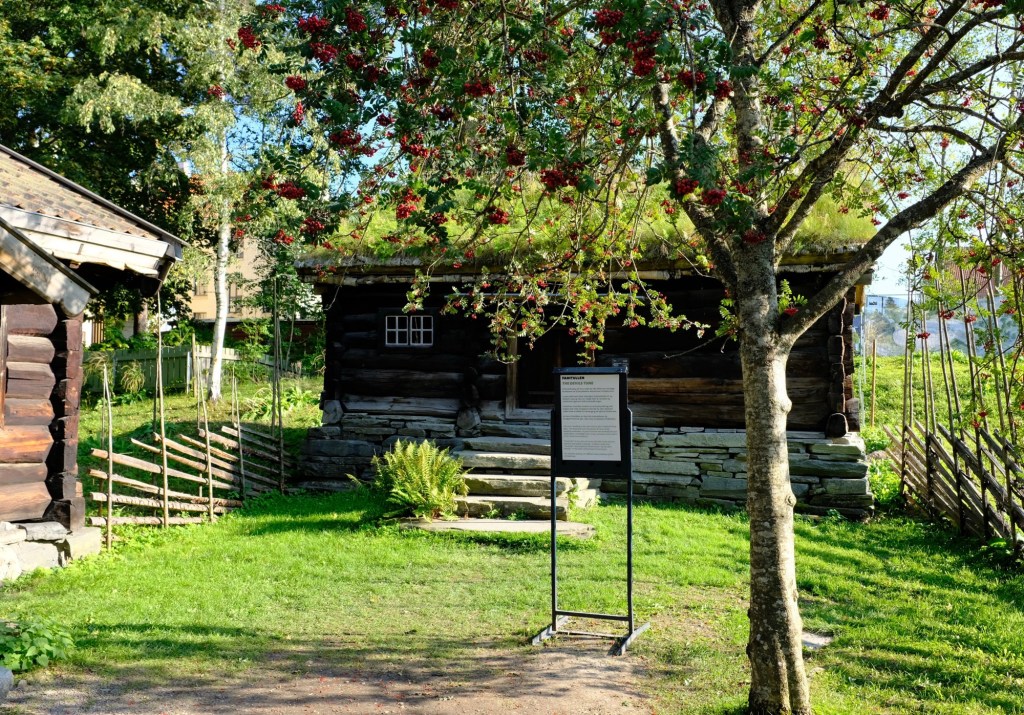
Even so, the simple structure standing in front of me, with a coarse stone foundation and sod roof, had caught my attention. Why had it been brought here? What was the significance, and why did I hear music?
The sign explained:
A farmer’s wedding in the 19th century often lasted for three days. The newlyweds were the guests of honor at the wedding celebration. A good musician was essential far such celebrations, and fiddle music, song, and dance were central to the rituals and traditions.
“Fanitullen” is the name of a piece of fiddle music about a wedding that ended in disaster. Tradition states that “Fanitullen” was played for the first time [in 1724] by the devil himself – in the cellar of the house in front of you.
So this was the house where the devil had hidden away in the basement playing his tune while revelers turned to blood and mayhem above.
And I was standing in front of it.
I thought about the things I had seen today.
The Viking Ship Museum, a major attraction in Oslo, is closed for renovations, so instead I had visited the Museum of Cultural History, to resume my ongoing quest for things old and ancient, and to imagine the memories they may hold.
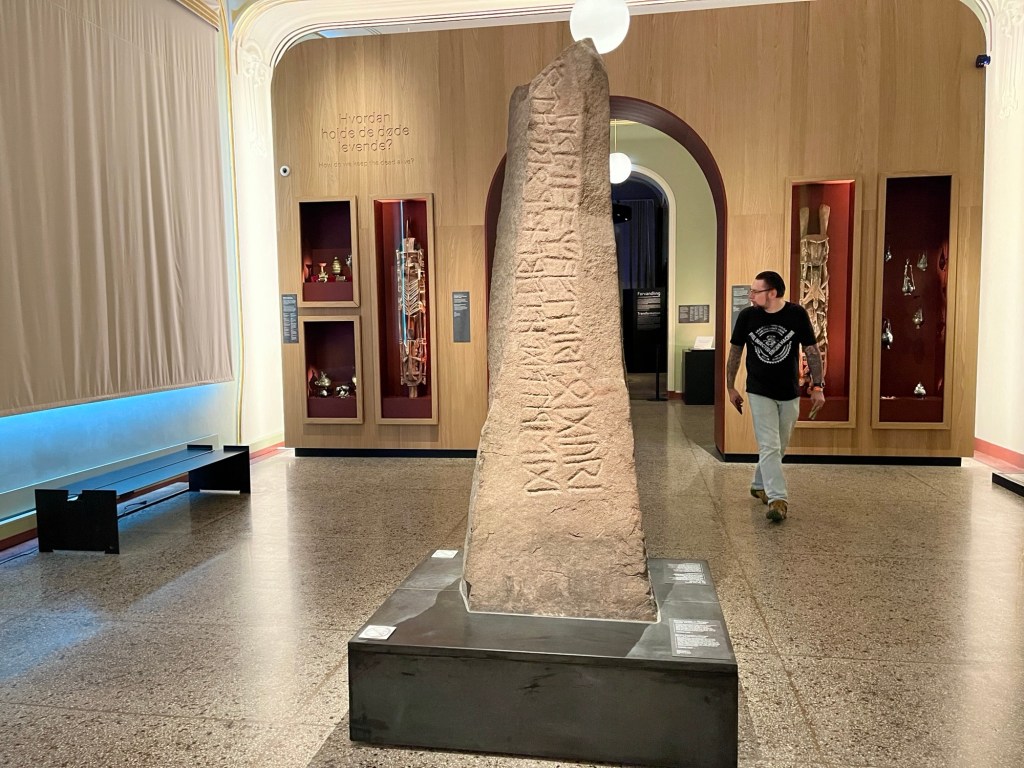
There I found the Tune Runestone, Norway’s oldest last will and testament. It was raised in about 400 CE, with the runes carved in the Ancient Nordic alphabet.
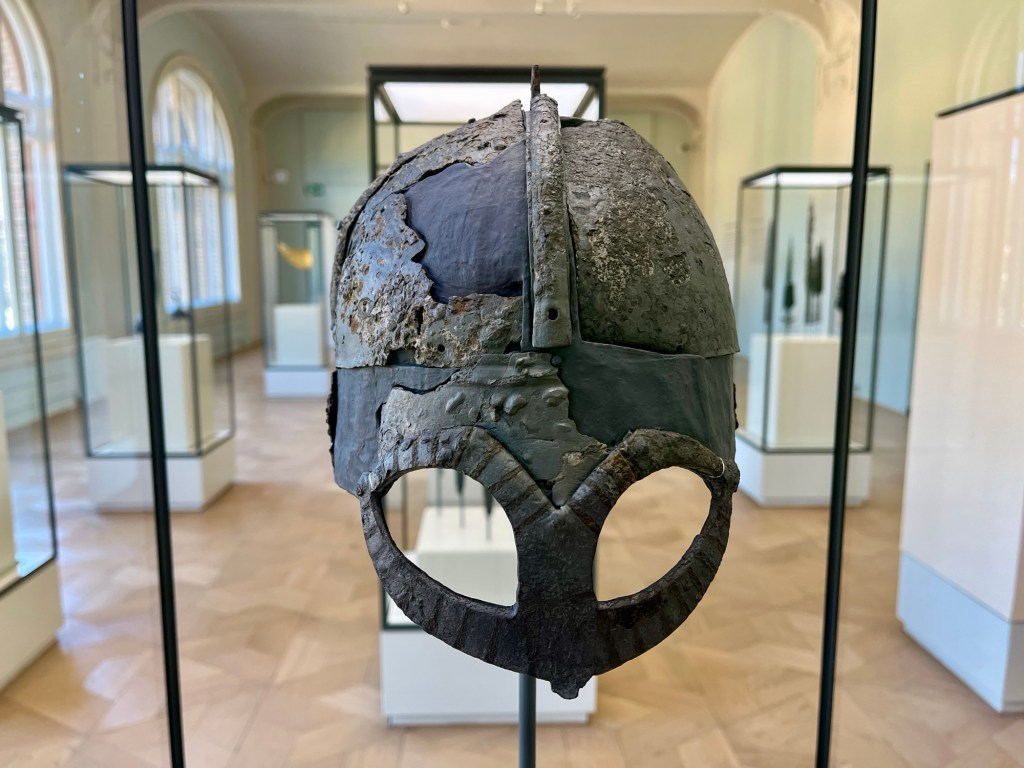
And there, too, was this helm, its eyes hauntingly empty, staring out from a display case, at least partially satisfying some of my Viking curiosities. Who was the warrior to wear this? How did he live, and how did he die?
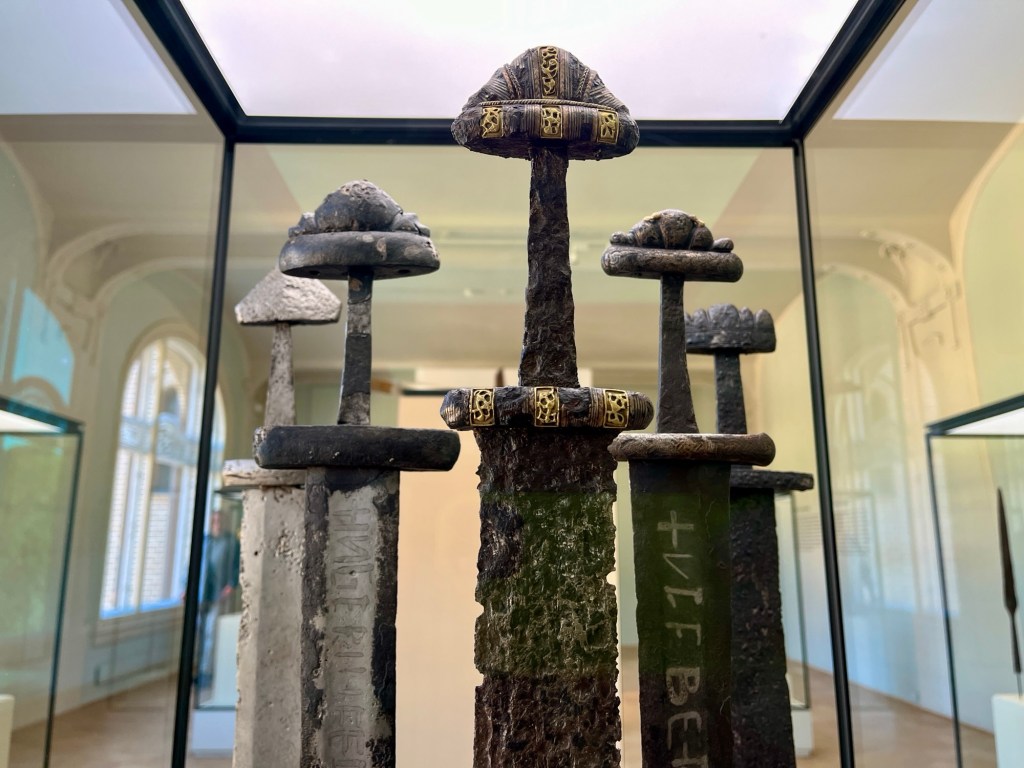
In that same room I witnessed these swords displayed at attention, their metals failing. I considered the hands that had once held them. Were they used to defend their homes? How many men had they felled?
Leaving the Museum of Cultural History I had found lunch and then followed a small trail leading through a shady stand of trees, along a winding course, and through a patch of sticky brown mud that clung to and coated the soles of my shoes. When the trees parted I had finally lain my eyes upon Frogner Park, where the brilliant sun hung unchallenged in the sky.

Frogner Park is a jubilant place where Gustav Vigeland installed his Vigeland Sculpture Arrangement (I’ve also seen this referred to as a sculpture garden).
Vigeland placed 212 sculptures here, wrought with care in granite and bronze, depicting a breadth of humanity.

He has parents hoisting their children.

A giggling child
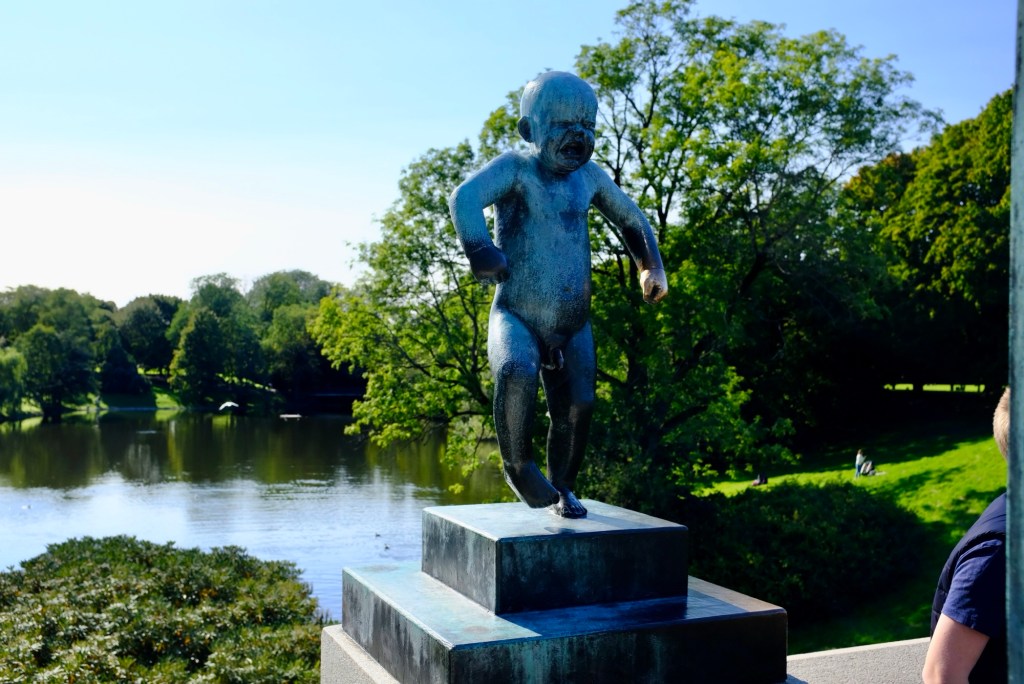
And an angry boy.
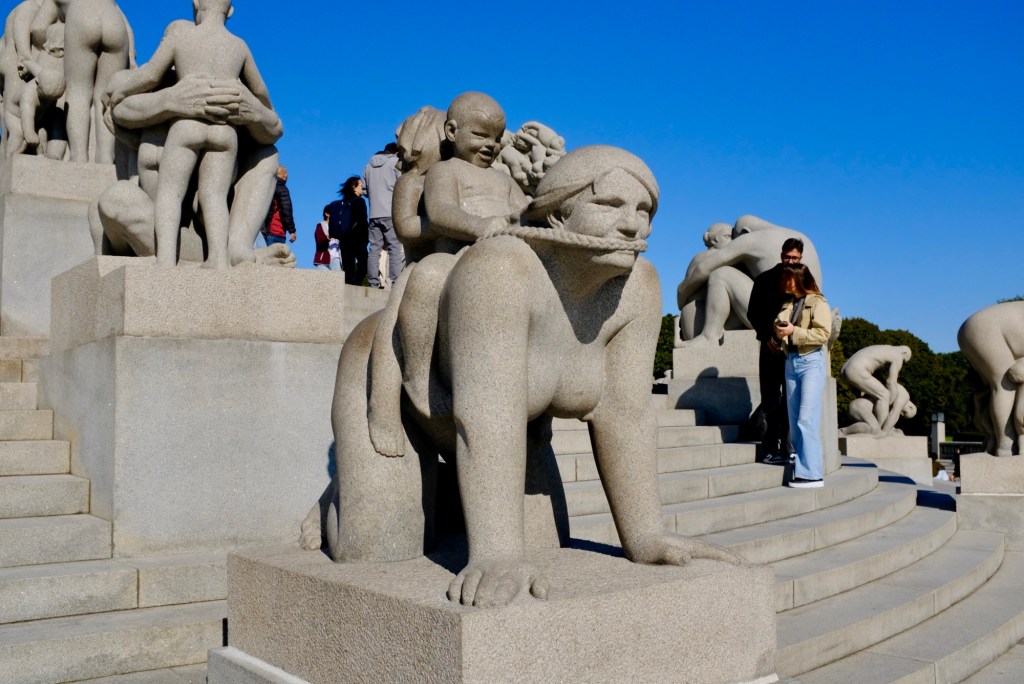
They are engaged in all the sorts of crazy behaviors people can find, and he has bodies in almost every configuration.

But there is more, something that entices so many to that place: the Monolith, a monumental obelisk of 121 figures intertwined and struggling to reach the top.
Frogner Park is a blast, and it brought me glee. After so much rain to start the trip, I had really appreciated being outside.
The Norsk Folkemuseum would be my last stop for the day, and mostly I expected it to be something pleasant to occupy my time. As I stated, I wasn’t mostly enraptured with what I found. While it was definitely enjoyable, until I heard the music the only other truly intriguing structure by far had been the Gol Stave Church.

Stave churches once embodied the standard design construction of most churches in Norway. Constructed of humble wood rendered in aspirational form, at one time there were as many as 2000 such churches spread across the country, but now a mere 28 remain. Most of them are far away from here, tucked in the countryside, in places I can’t readily visit without a car.
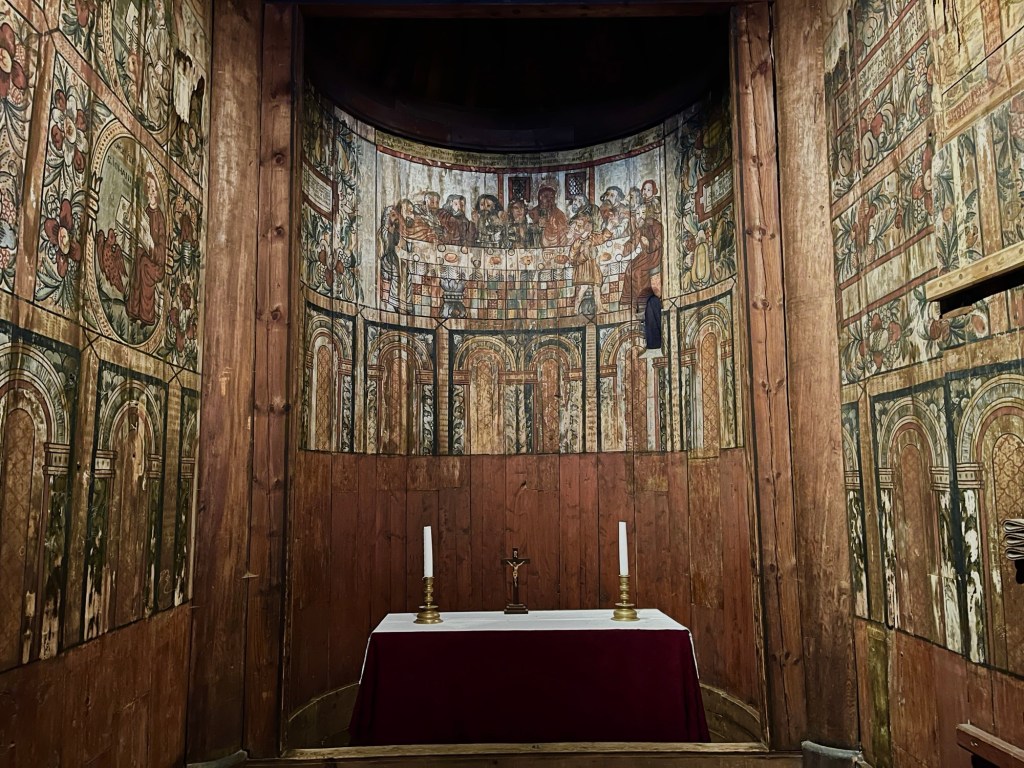
This one had been due for replacement in 1880, but was given a reprieve when it was disassembled and presented to King Oscar II, who had it rebuilt on this site.
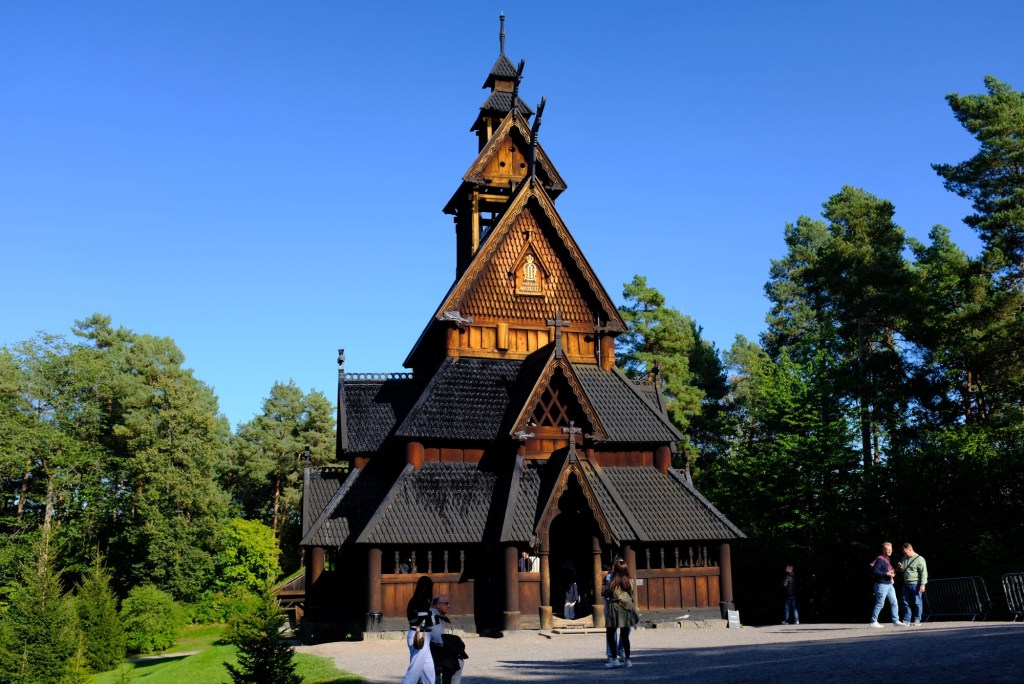
The church truly is enthralling, with a tall slender structure, solid lines, and tiers that entice the eye upward. The raw wood seems to weep at places.
The stave church alone would have worth this visit today, but this nondescript farmhouse – that I almost walked past without noticing – would stay with me.

Standing there, ruminating on my day and listening to the devil’s tune, I grinned at this very singular moment and the course of events that had brought me here.
Long ago, in the cellar of this modest, unremarkable structure, the devil took up his fiddle. And he played.
And still in Norway they play his tune today.
My time here is drawing at last to a close my friends, and it has been a lovely escape, even with the rain. My flight home will take me to JFK and then to Detroit.
Thank you, dear readers, for stopping by to check in on this trip, and I hope you will join me again next month.
Until then…
With Love,
Butterblogger

 butterblogger