It rained this morning in Buenos Aires. It wasn’t the sort of light drizzle that you sometimes see that comes and goes. This was a drenching rain that occasionally slows down to a steady drizzle but never seems to truly stop. It’s the type of rain that finds a way to penetrate through a “waterproof” jacket.

The rain was a bit of a disappointment because I had hoped for today to be an outdoor day. You see, here, as in much of the world the museums and many other attractions are closed on Monday. So I was planning to go to La Recoleta cemetery and was also considering visiting the Plaza del Mayo.
Instead I had extra time to think as I lounged in a café, sipping on a cappuccino, and sheltering from the rain.
I’ve been here for a day and a half and noticed a few things.
First: for new visitors Buenos Aires isn’t super easy to get started. I wouldn’t say it’s hard, but a few things are more complicated than I would have expected. I’ve been to a lot of places in the world, and even when they don’t speak much English (and they don’t here), things are usually easy enough. Buenos Aires is not one of these places.
You want money? Our guide told us yesterday that the best thing to do is to make an account with Western Union and wire it to yourself. That sounds crazy complicated to me.
Every place else in the world that I have been, I have just gone to an ATM and withdrawn money. But here the ATMs can only dispense about $20 in cash. And the fee on that is about $10, so that’s a terrible choice.
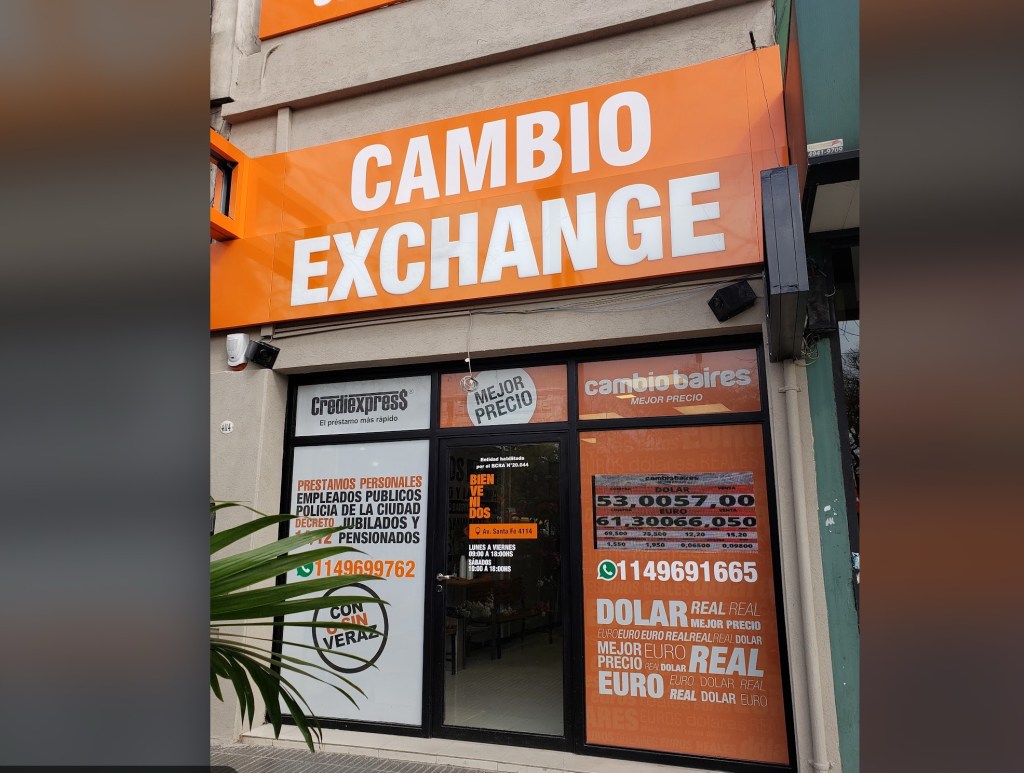
How about just using credit cards? That definitely works for most things, but it sounds like it won’t work everywhere. And American cash is also an option (but also suboptimal).
The best strategy for most people is going to a cambio (exchange) house. For this, travelers should bring crisp new $100 bills, because those have the most value. You take them to the cambio, where you are directed to a back room and somebody exchanges that for Argentine pesos. If this sounds a bit sketchy, I can confirm that it felt that way.
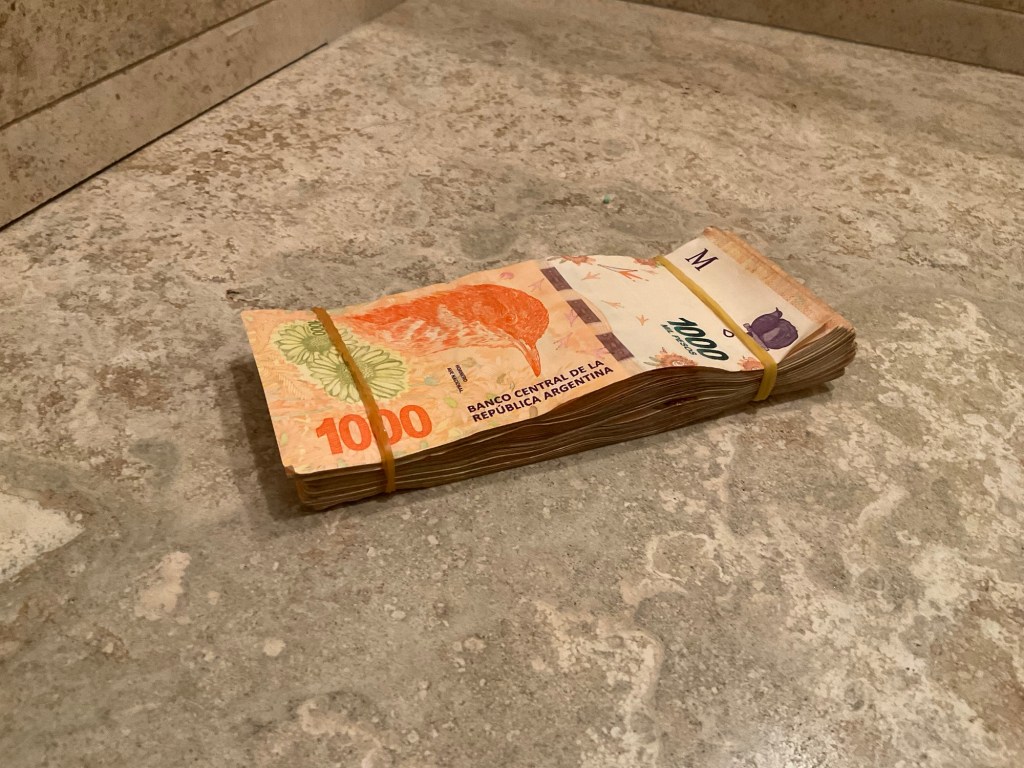
For the most part, Argentine currency is only available in 1,000 peso notes, which means I walked out out of the cambio with a stack of 113 bills, which felt unsafe. It’s my understanding that larger notes exist, but they’re just not used that frequently.
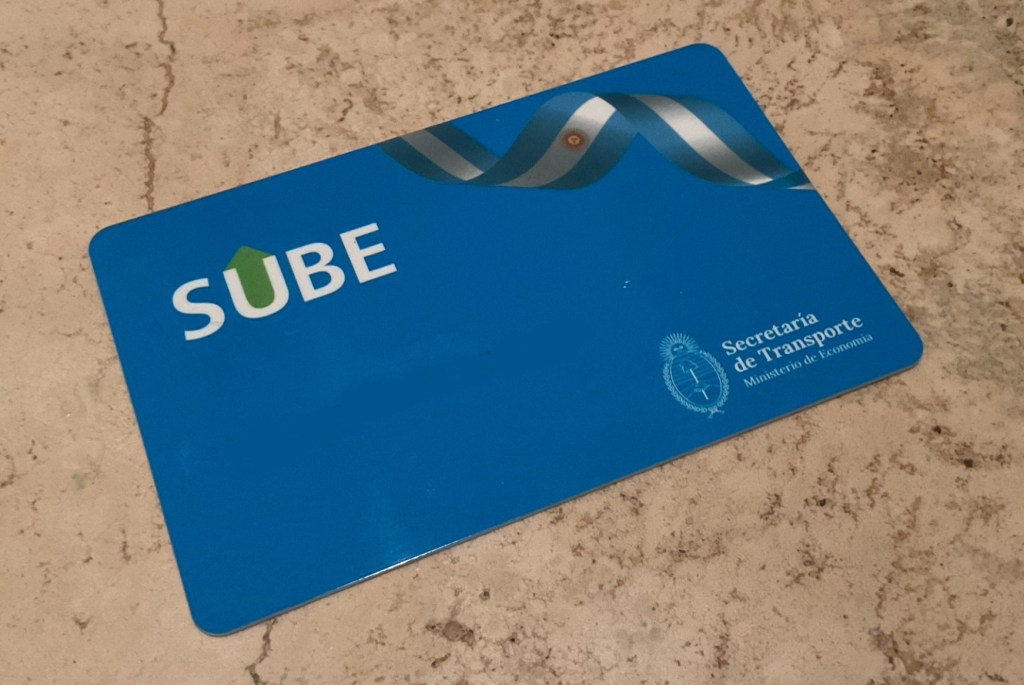
Another difficulty I’ve encountered was getting a subway card. It’s called a Sube card, and everything I found online said they’re easy to obtain. I went to the subway station, but I went in the wrong entrance so I couldn’t get one there. I went to the correct entrance and they made me wait five minutes and then told me I couldn’t get one there, with the gentleman in the booth waving his arms wildly in the direction of the stairs.
I found the official listing of vendors and went to 3 different stores who turned me away (sometimes angrily) before finally finding a card available for purchase. This was at the lottery vendor, who was also happy to charge it up for me.
I don’t think I’ve ever had this much difficulty using a subway before.

Getting on the subway (Subte) felt like a success and the trains are clean and efficient. I immediately headed toward the center of town, disembarking a few blocks too early (this was my mistake).
Here, as in Palermo Soho, the beauty of Buenos Aires is unmistakable. It’s a very European city located on the coast of South America. The architecture is very European, but the scale reminds me of New York. Things aren’t close together – they are spread out in a very New World manner.

The buildings are often grandiose and ornate.
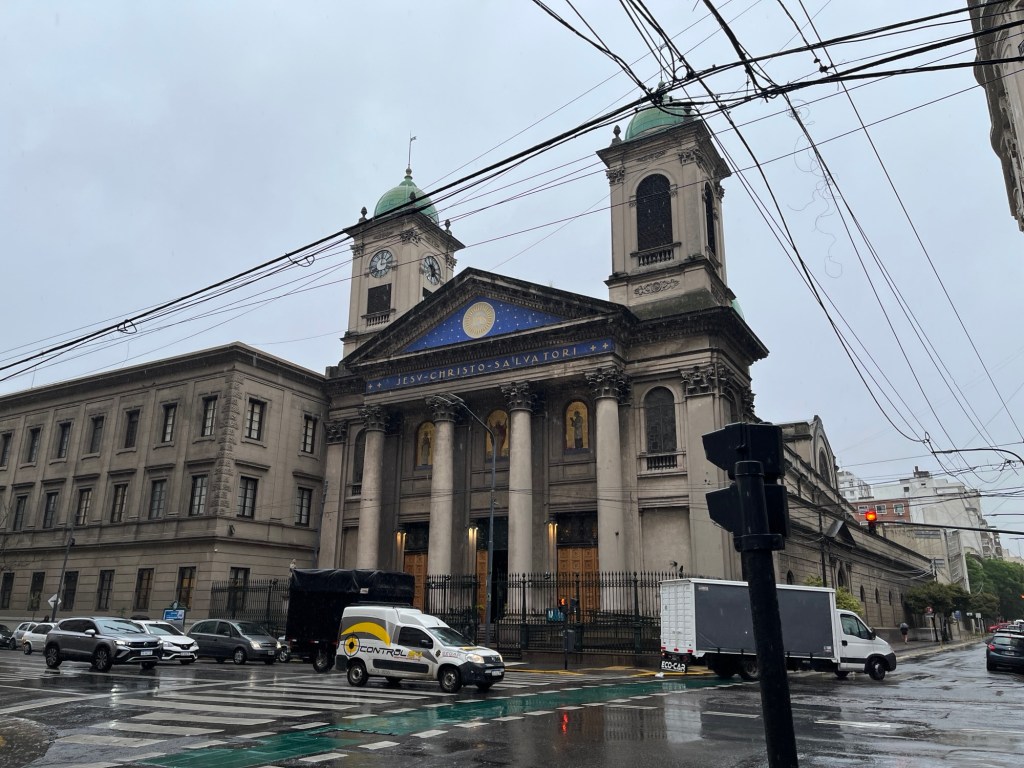
The sights I witnessed remind me of the the great cities of Europe.
It is an aspirational place.
The rain was slower after lunch and I found myself in the other tourist attraction reliably open on Mondays: the Cathedral.
They love the Pope here, and with good cause. I see a lot of signs with his photo. I imagine that this was his home Cathedral when he was cardinal in Buenos Aires.
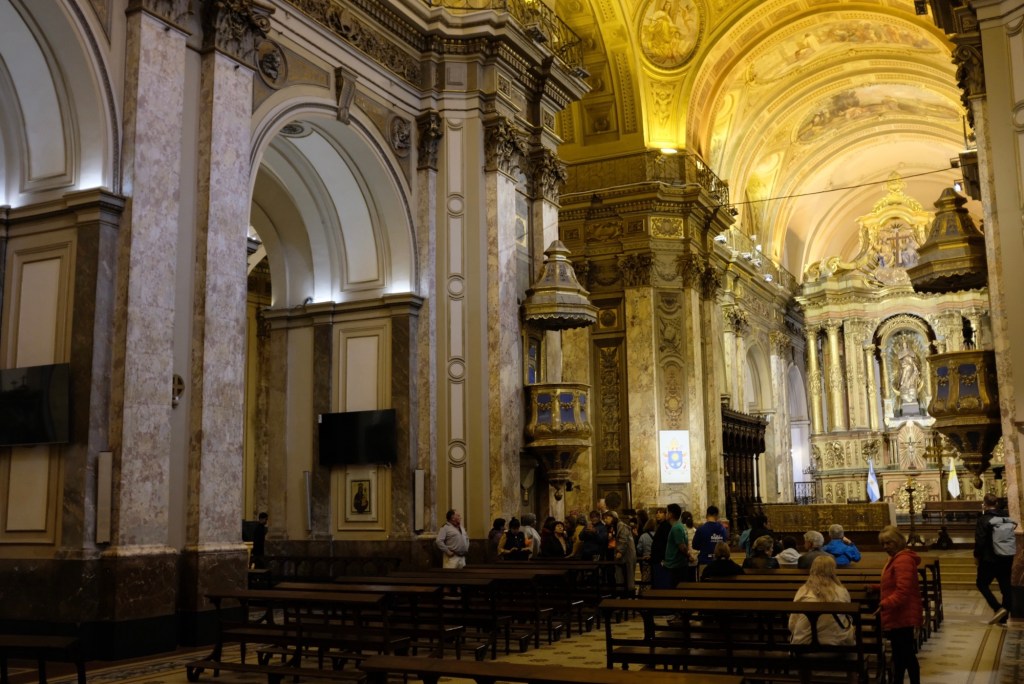
It’s a grand building, with a wide nave.

High above, a central dome draws ones sight forward and toward the sky.
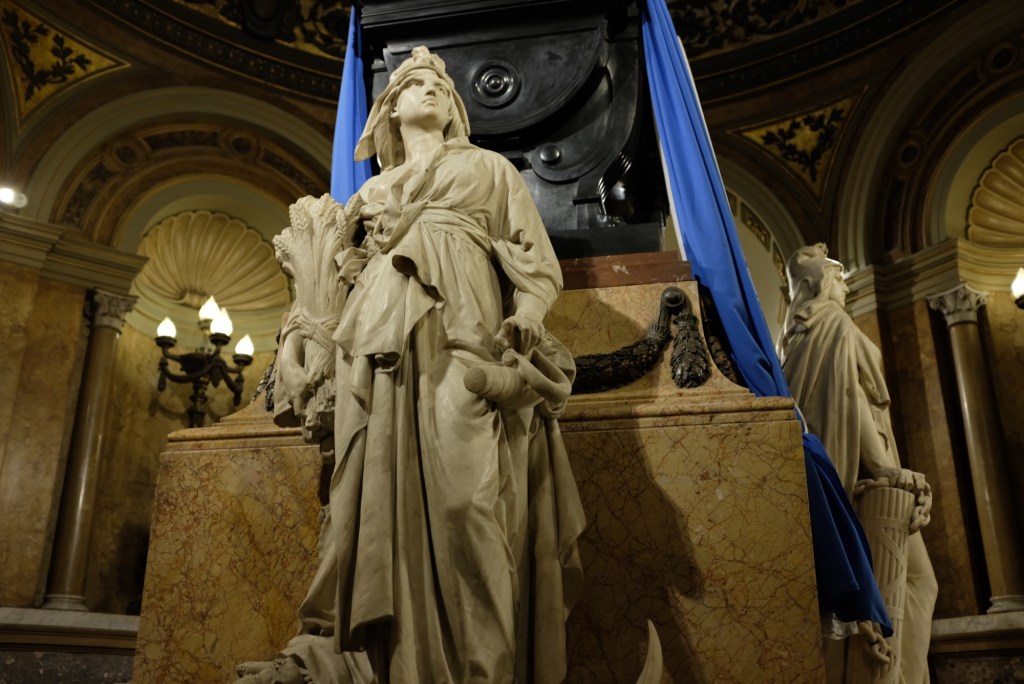
The tomb of Jose de San Martin is here. He was an Argentine general and the primary leader of the independence movement in southern and central parts of South America.

After I had finished at the cathedral, it was time to think about my flight to Mendoza. I took the subway back to my hotel, stopping only for a gelato along the way.
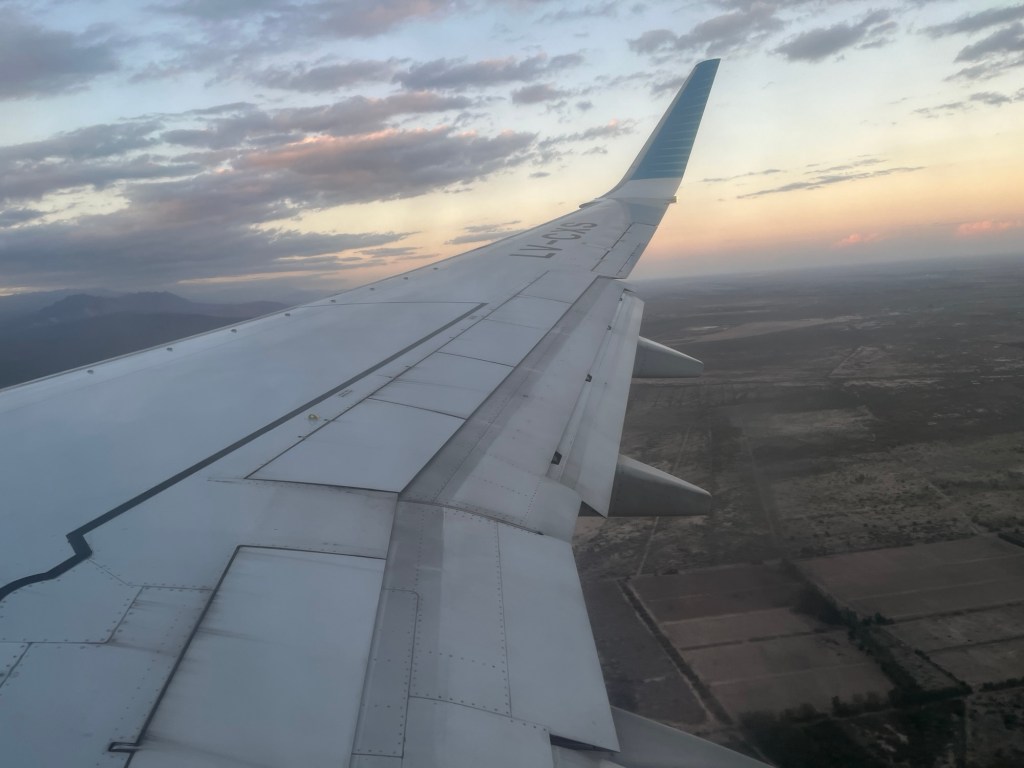
At the hotel I gathered my belongings and called an Uber to the airport.
Mendoza awaits, my friends.

 butterblogger