Walking the narrow paths between the mausoleums of the Recoleta Cemetery I thought about the thousands of years of necropolises I’ve visited and the graves I’ve witnessed. I’ve seen millennia of tombs, some as excavations removed from the initial location and placed respectfully in museums, their contents dissected carefully for meaning, others as elaborate pyramids, and yet more as simple enclosures in a wall.

The graves were often preparation for future life, and in many cases survived as the only records communicating to us today across the ages, beyond the rise and fall of empires that had long since forgotten the histories contained therein.
In a sense, I guess the lives and memories of those individuals who were entombed, the children and kings and queens, and the men and women of all statures, have been sustained by those graves. They live on through the stories their interments hold.
I started today with a generally well-defined plan. As usual, I had left a few of the finer points up to chance, but suspected a visit to the Museo Nacional de Bellas Artes would create a perfect morning, and then after lunch I could visit la Recoleta Cemetery.
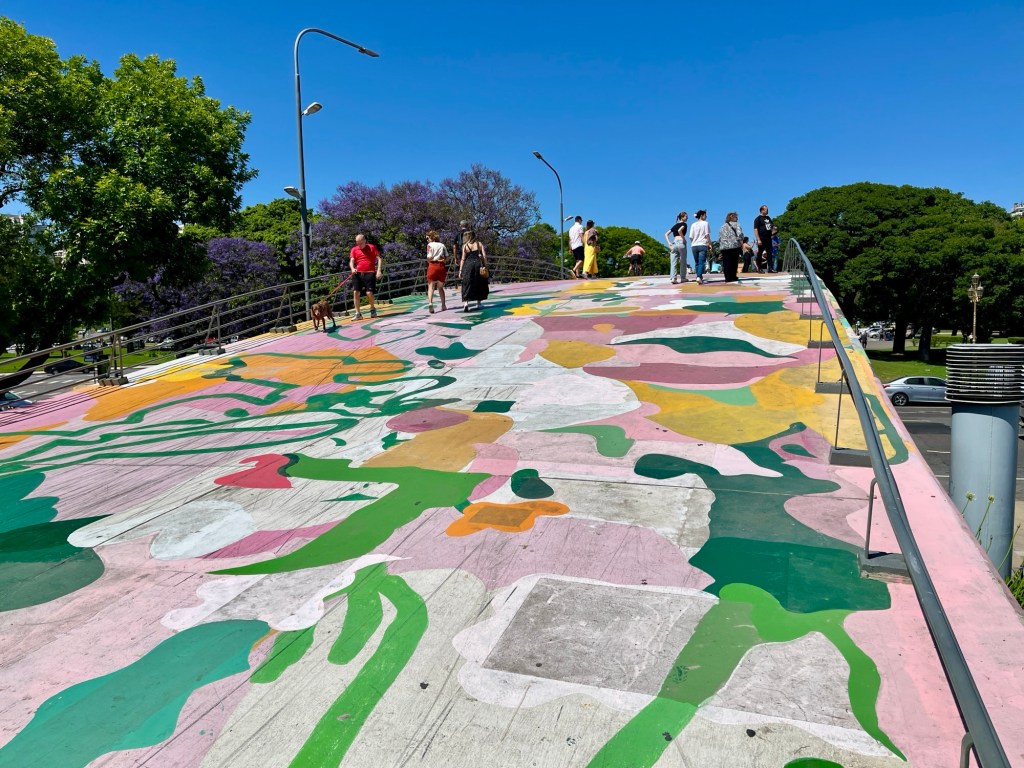
I took a leisurely breakfast and then descended into the subway, which rushed me away toward the Facultad de Derecho station. This was the last stop on the line, which simplified things, but as with any new subway it took me a moment to get my bearings. I soon passed by a group of runners warming up and was quickly walking across a broad, brightly painted footbridge over the bustling roadway below.
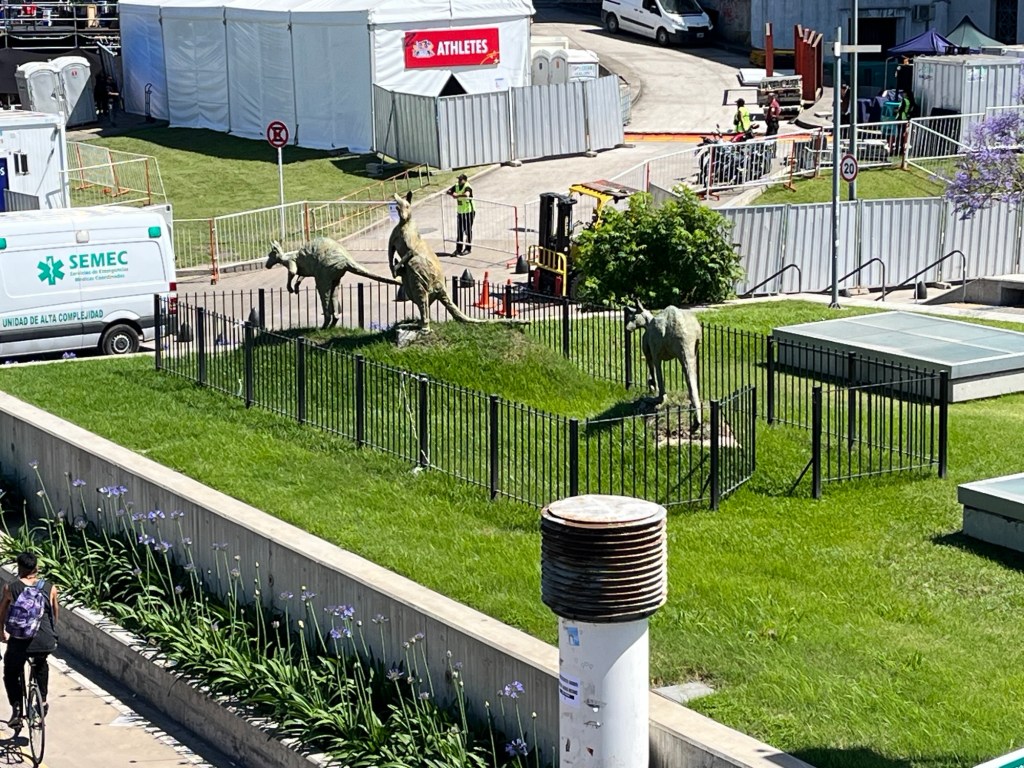
Near the road to my right I saw a collection of kangaroo statues that I still don’t understand, but it certainly stood out.
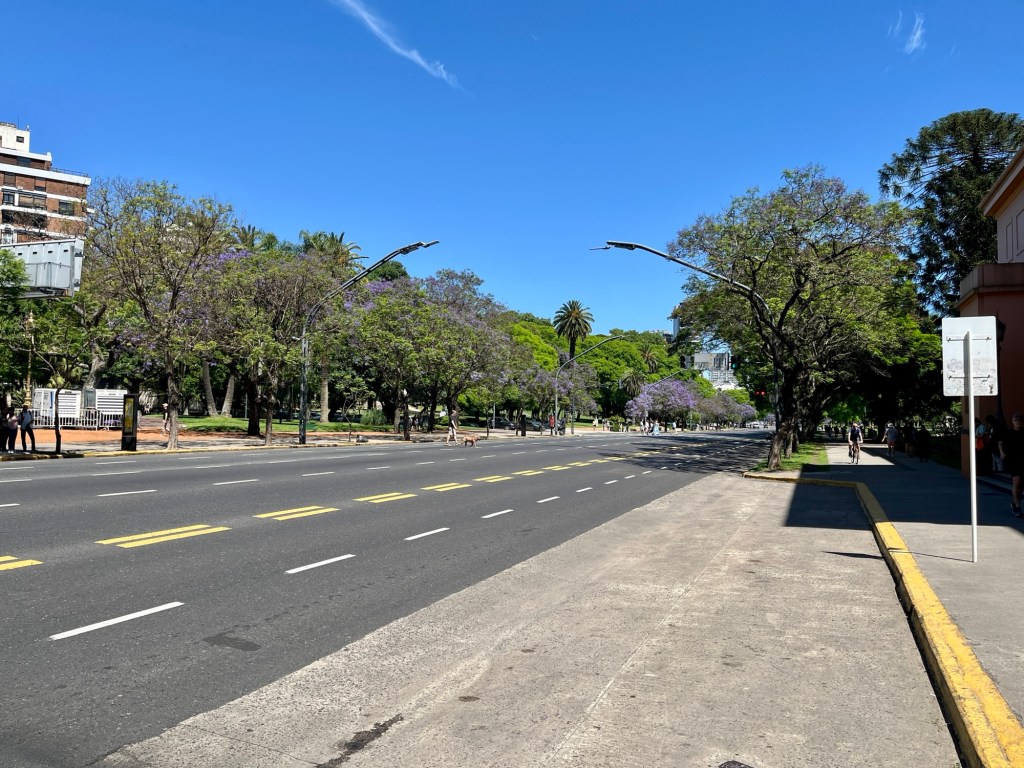
Beyond the bridge was a small, treed park, next to which stood my destination: a wide, hulking building, with a tall linteled arch over the doorway. I climbed the steps, grabbed the handle, and it didn’t budge.
A security guard walked over and said something to me in Spanish. I asked him to repeat it, but couldn’t comprehend it. It didn’t matter, the museum was locked tight. Lights were on inside, and there were no postings indicating closure, but clearly I wouldn’t be entering.
I checked the website, and there were no special events today – It should have been open. Other would-be visitors came up and faced the same confusion and consternation – I was not alone.
With nothing to be done for it, I headed instead to the cemetery, where many of the important figures of Argentina were laid to rest.
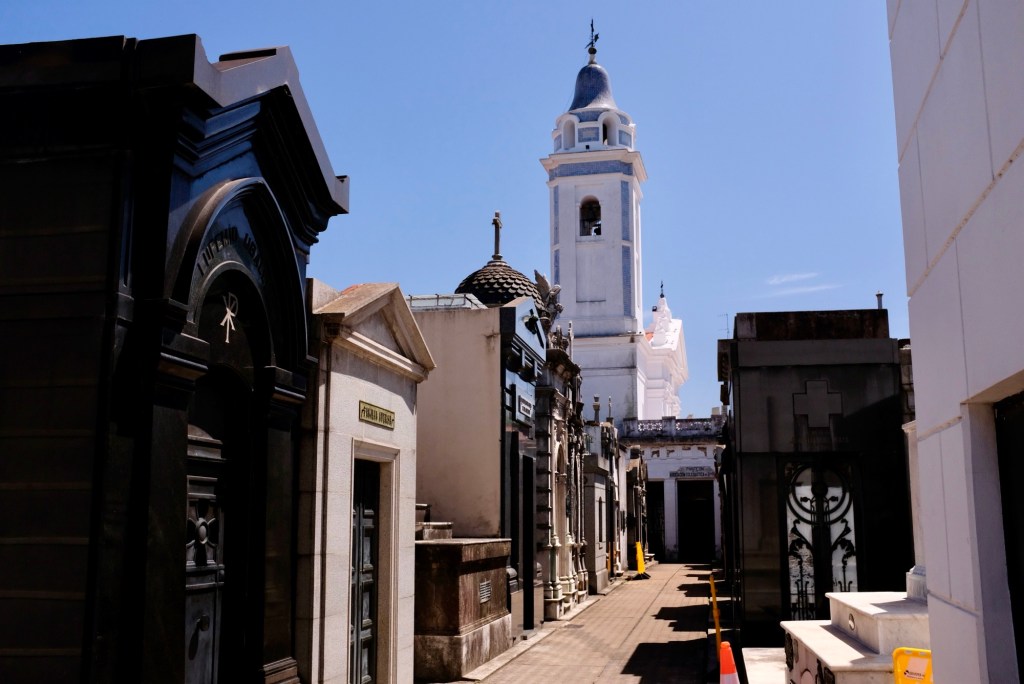
The grounds are closer here than in Florence, and it is a younger place. There are faces all over, however, and they look at us.
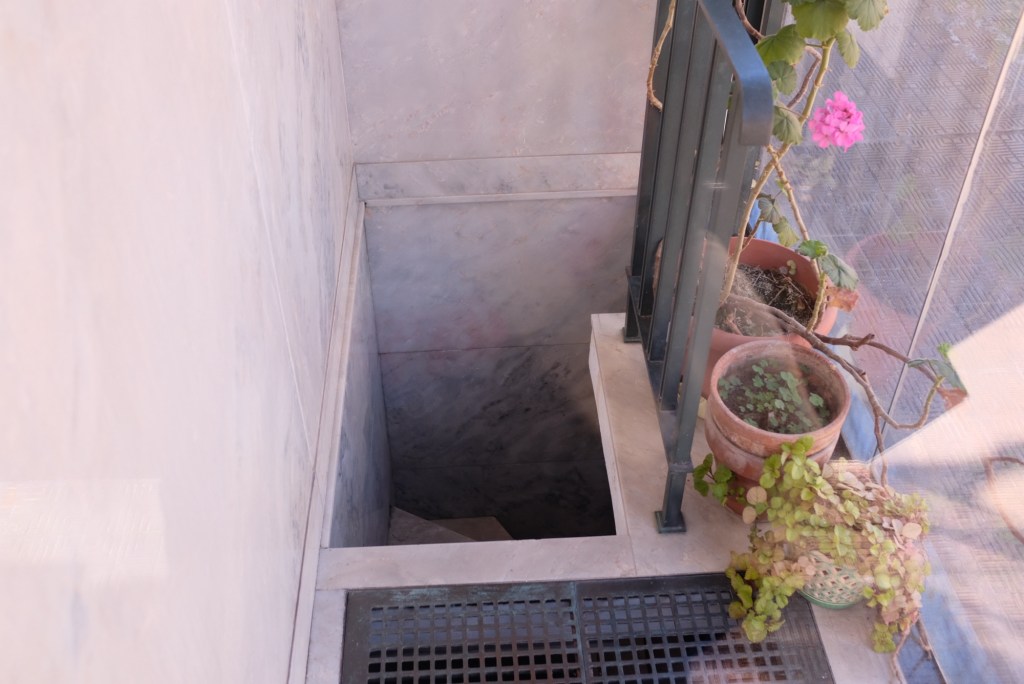
Some of the old mausoleums are clearly visited regularly. The glass doors are kept clean and they are maintained with fresh flowers.
Others are neglected. Families likely never visit (if they still live). Dirt encrusted glass lies shattered on the ground.

Inside the doors I see something I didn’t expect – which is that these are dug deep into the ground, with several levels to contain the dead. This design draws my mind back to the worker’s tombs in Egypt, the Etruscan tombs north of Rome, and the Roman catacombs.
And somewhere in my mind I see a long line that connects millennia of human burials.
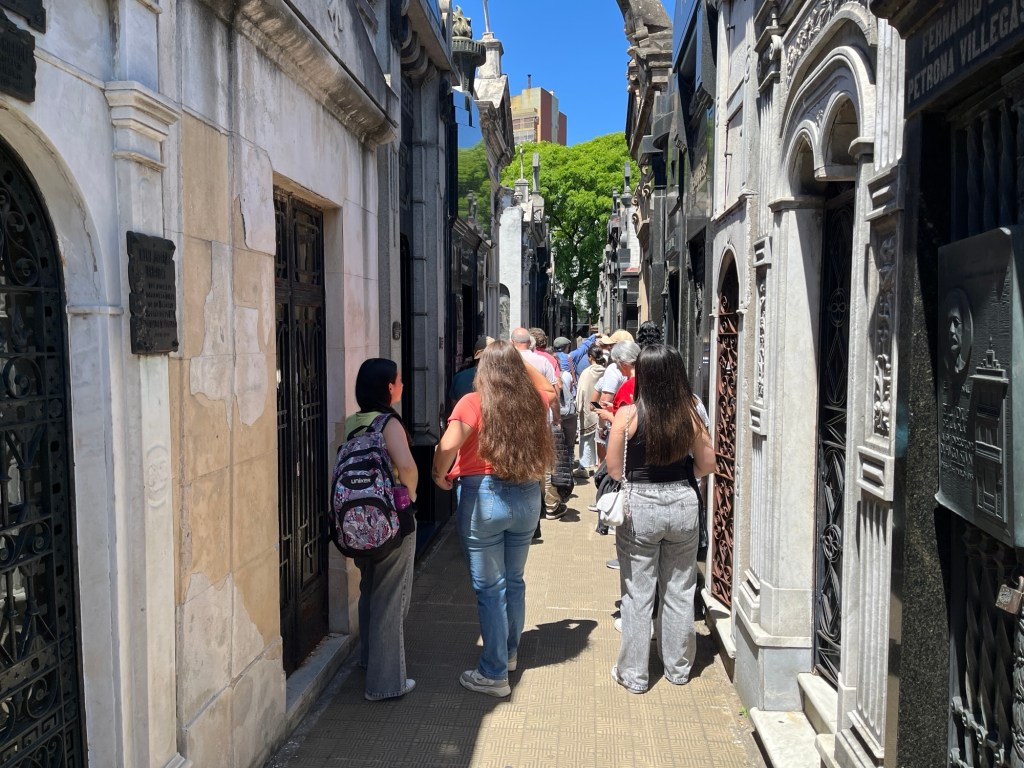
Toward the exit, many people stop and gaze at the burial place of Evita Peron. I’m not big on cults-of-personality but a visit here is a thing, so I brave the small groups of people taking selfies and pay it a visit. I don’t understand the grave markers (there are several of them) that cite dates of 1952-1982. She was born in 1919 and died in 1952. After a military coup in 1955 her body was hidden out of the country, in Milan, until 1971 when it was discovered and briefly moved to Spain. In 1976 she was returned to her homeland and laid to rest here.
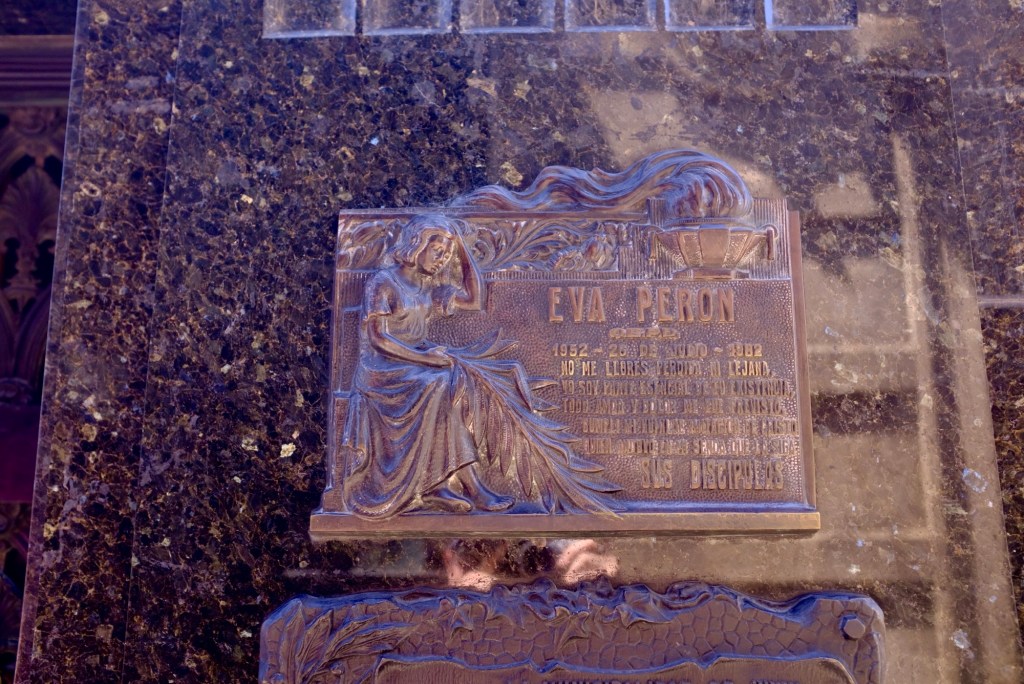
I have no idea what 1982 means.
Outside the cemetery I stopped back at the museum on my way to the subway, where I found the doors still locked and would-be visitors now lounging on the steps. There were clearly many of us with disrupted plans.
My friend Alison had recommended another cemetery to visit, near where she stayed when she lived here. It is newer, and built in a brutalist style. She sent me an article about the unique nature of the architecture at this cemetery (and I can’t say I often think about the architecture of such places). With little else on my agenda I hopped on the train and headed in that direction.
Leaving the subway station, Google Maps took me on a long walk to the entrance, where I found a much more sprawling cemetery, awash with grassy lawns and massive buildings.
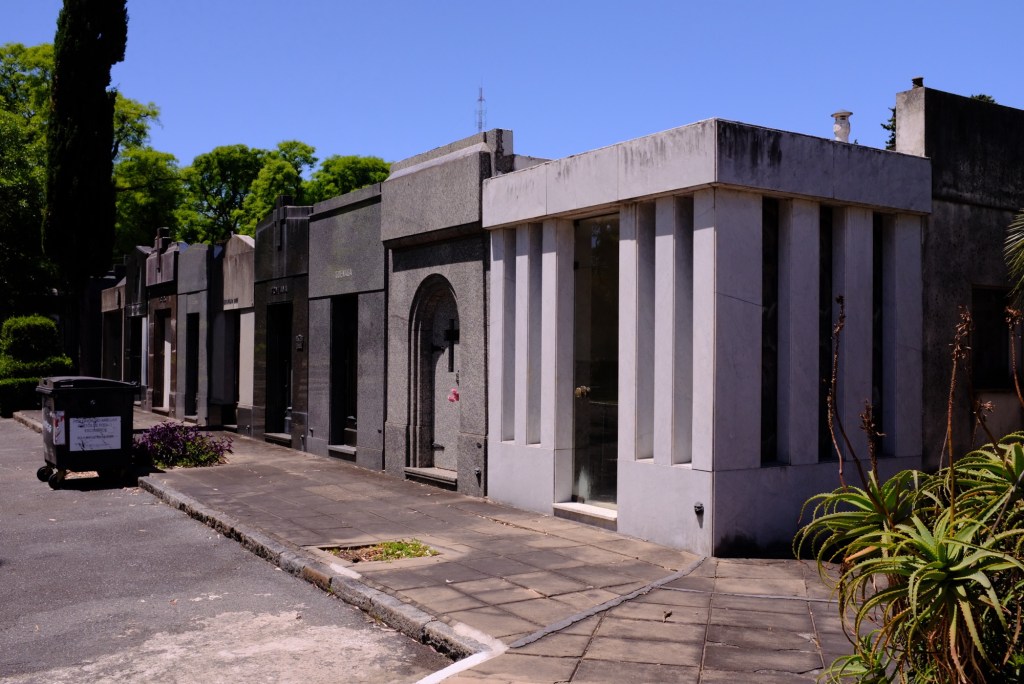
There are several areas of interest here. Much like the Recoleta, they have private mausoleums that stand in various stages of care. The construction is much less elaborate however – definitely more functional. Whether that is a because of age, culture, location, or cost is unclear to me.

At the edges of the grounds are large buildings to entomb thousands of the dead. When I stand in the center I’m not certain that I can see all the way to both ends.
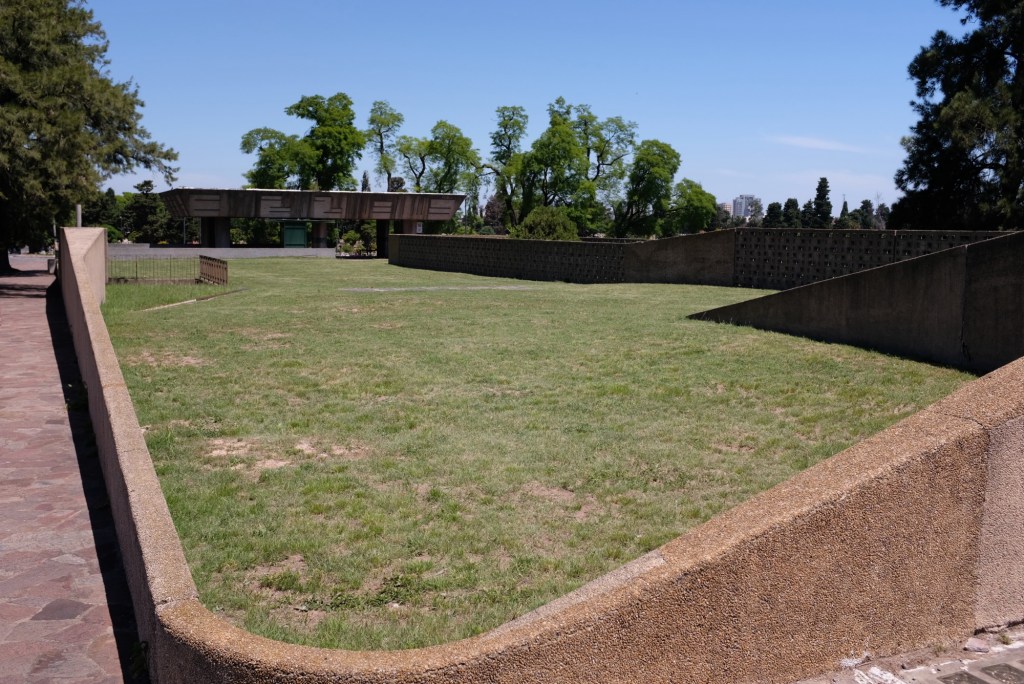
And below ground are several similar banks of tombs. Some dug into the earth near the older part of the cemetery clearly show more wear. In the newer sections of the cemetery there are no mausoleums above ground, just green spaces above massive underground hallways housing dead by the thousands.

It is all very egalitarian here – I guess we are all equal in death.
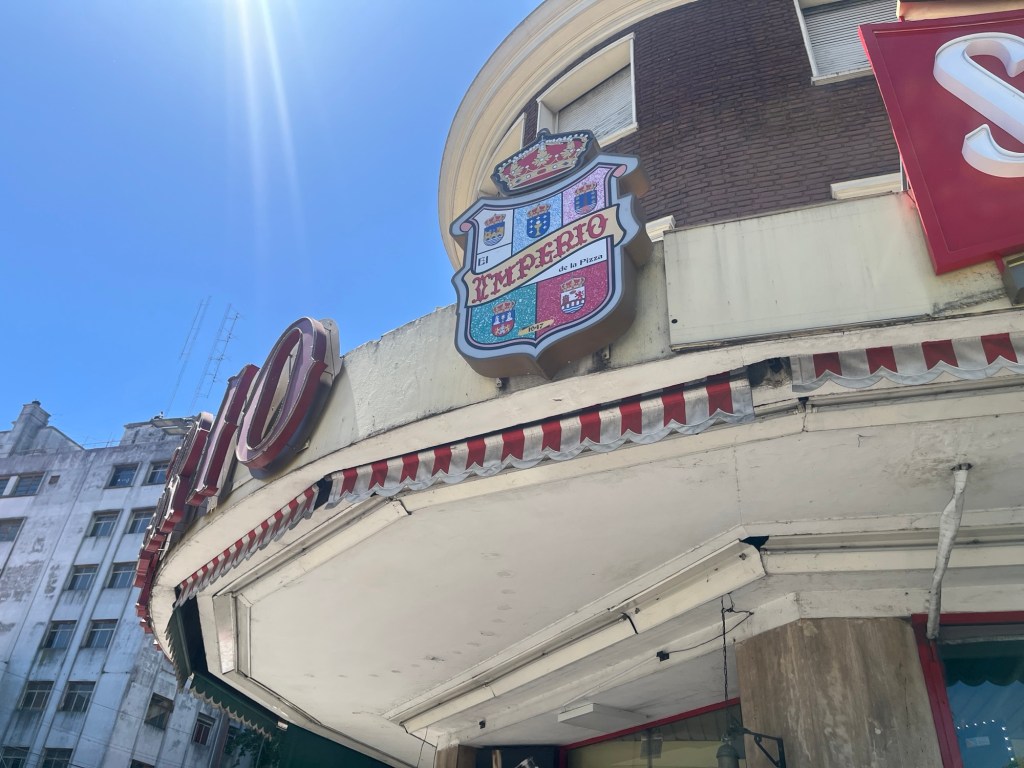
Outside the cemetery I slid back into the world of the living. I considered stopping at Alison’s favorite picza place, but the lines there were long and I don’t speak enough Spanish to navigate the process.
Instead I sat down for a slice near my hotel, and then called an Uber for the airport.
I’m on my way home, my friends. My flight will take me from Buenos Aires to Santiago and then New York where I’ll change airports and head to Detroit. This routing is tough, but it was much cheaper than flying out of DTW.
At home the holiday season will be starting soon, with a late Thanksgiving and then rush to Christmas. Sometime in the New Year, I’ll be back and on my way to another adventure.
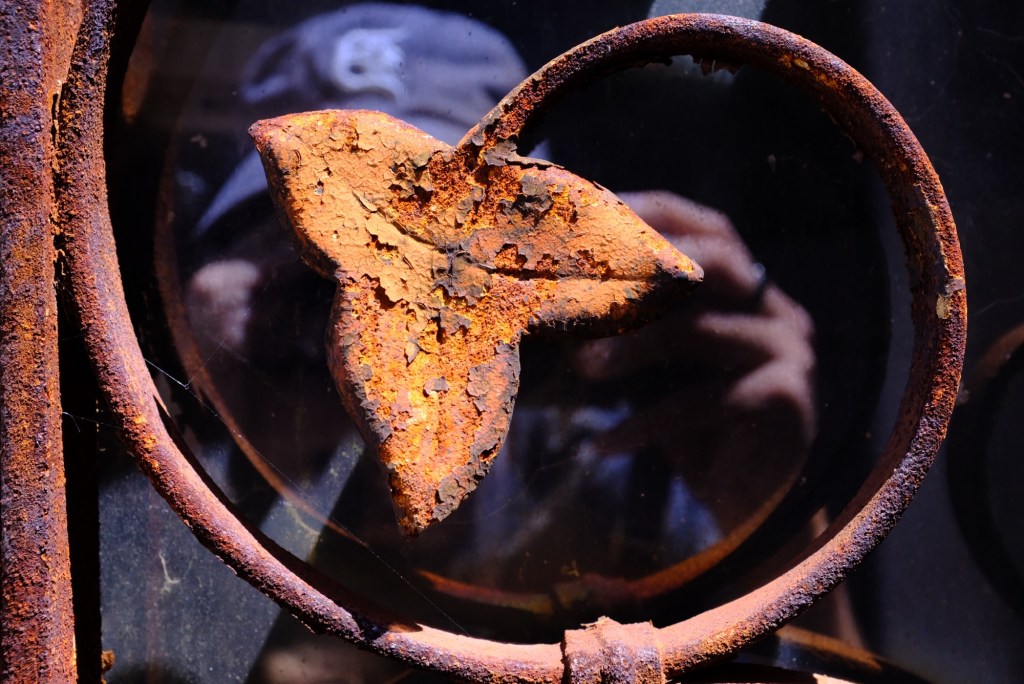
Until then, thank you for spending time with me this year. It maybe hasn’t always been my best year, but I’m doing OK, and I’m going to keep moving. We can look to the past, but still move forward with the living.
With Love,
Butterblogger

 butterblogger