Our guide, Hakan, deposited the four of us at the entrance to Uçhisar Castle (at least that’s where he said we were – under the low hanging clouds it didn’t quite match the photos) with instructions to return in 40 minutes, and I rushed down the hill and into the site like a child at a playground.
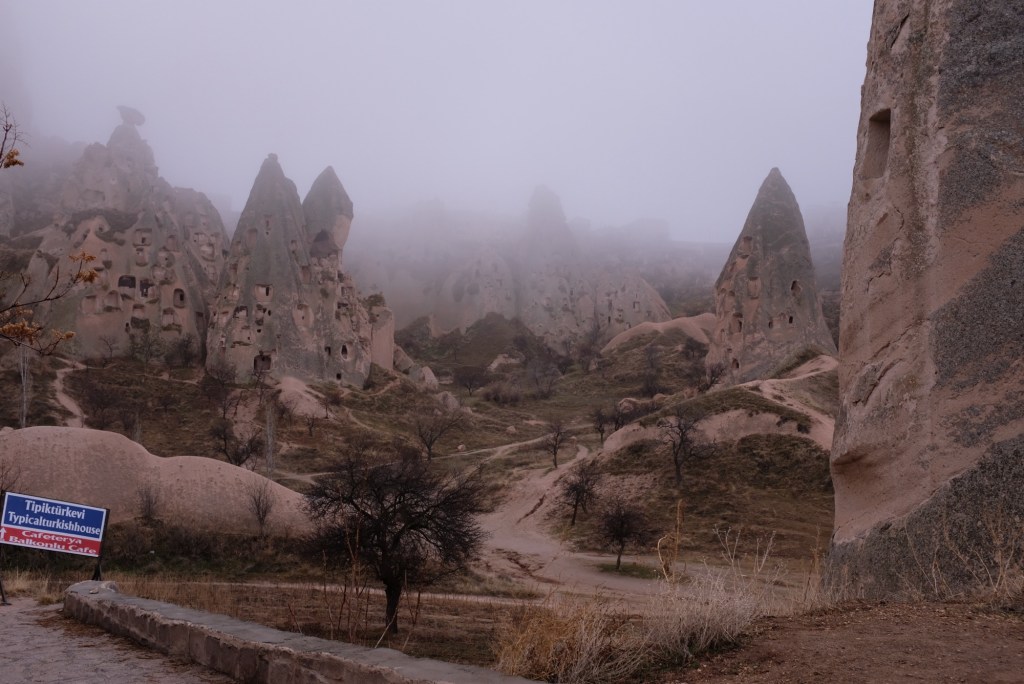
This is totally my type of thing: an ancient site with rolling hills and steep paths to climb, and scattered alcoves to peek my head into. Who knows what trouble I might find.
It is like a place that has sprung to life from out of a storybook.

The wide grin on my face must have showed my joy because when I met the group again they all laughed at me.
I spent today on the “Red Tour” of the region. There are two primary tours here and this one focuses on the northern sites, along the Red River. Tomorrow I will do the more southerly Green Tour.
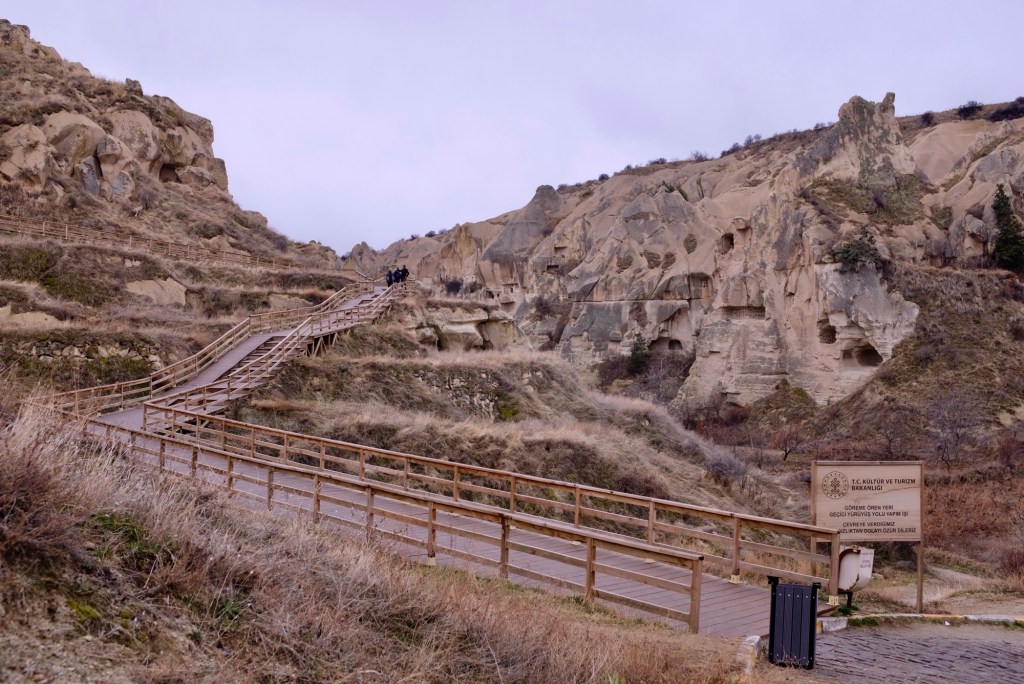
As we went from site to site Hakan told us the history of the land. He is a storyteller and told of of 10,000 years of human occupation.
He told us tales of people who lived here before long recorded word, carving caves into the soft rock. And he spoke of the Hittites, and their empire that prospered here over 3,000 years ago. And he spoke of the Persians and the Greeks.
It was drizzling when we arrived at our next stop, the Goreme Open Air Museum, which, centuries ago had once been a monastery. In 200 AD Early Christians began fleeing to this place seeking refuge from a Roman Empire that would persecute them, and it would peak sometime between 600 and 1600 AD (I find quite a range of dates on this).
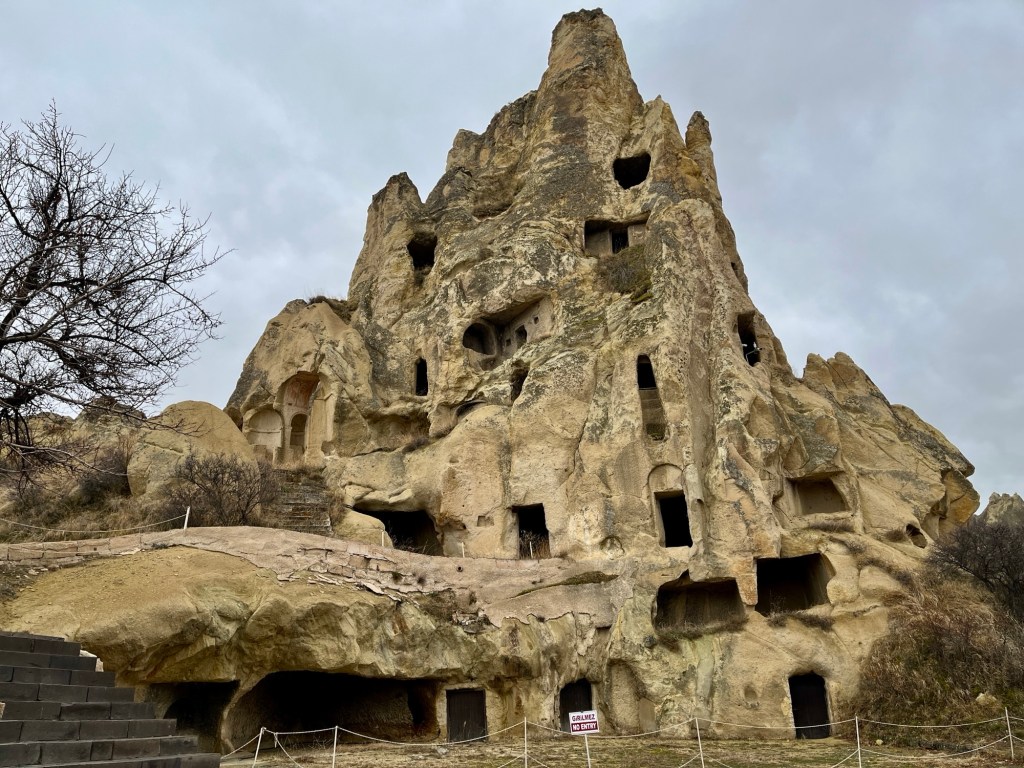
Once upon a time, nuns lived in this hill. And somewhere behind me is where theIr counterpart monks once lived, an underground passageway linking the mountains.
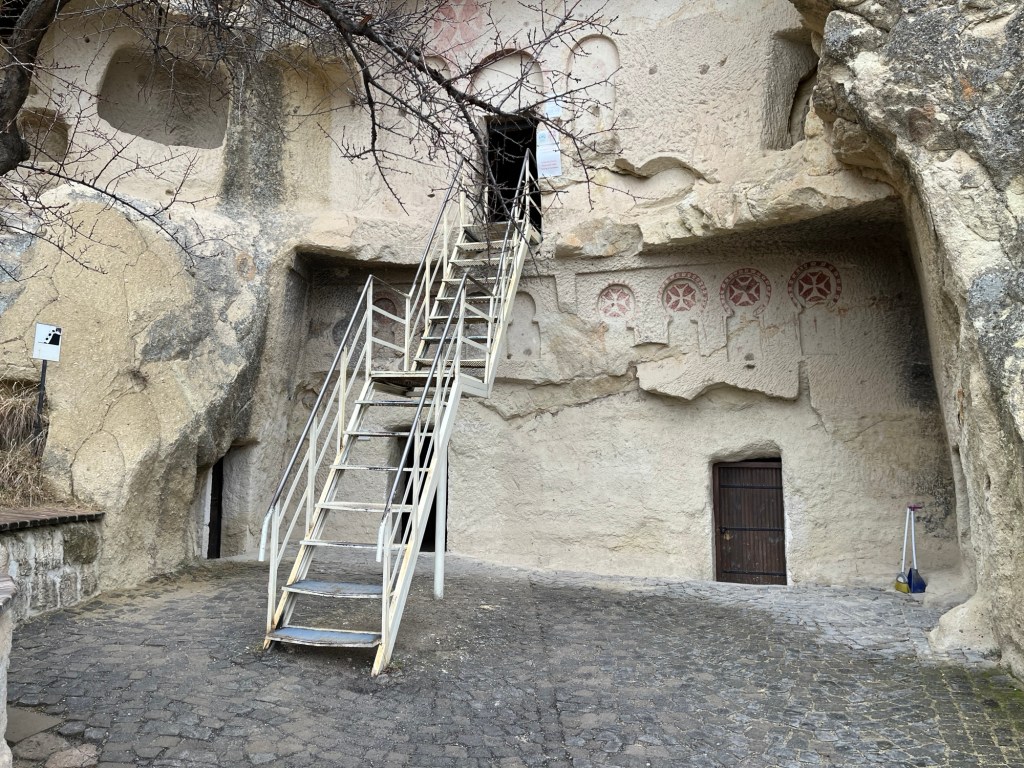
Within these hills are at least 60 churches carved into the ground, and 8 of them are accessible to the public for viewing (7 today). They are sacred spaces, many hidden up steep walkways with timeworn paintings and frescoes secreted within. The art here is precious and delicate. Time and the laws of nature are gnawing at them, wearing them away.
They asked us not to take photos in the churches, so here is a link to the official site.
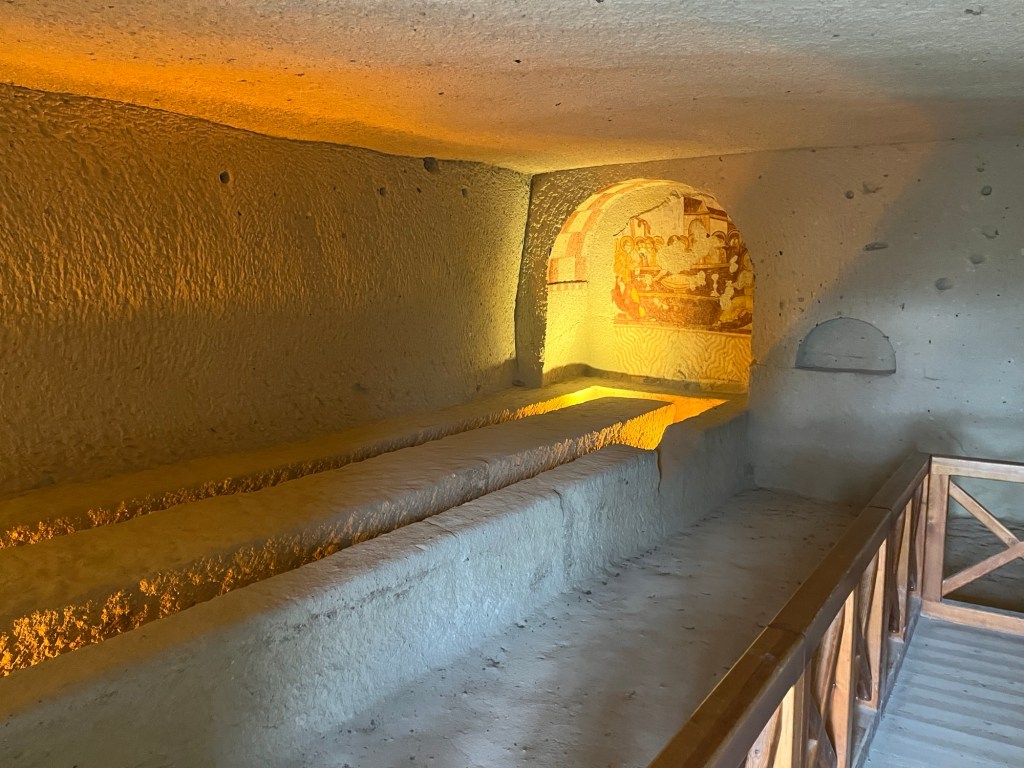
And here is a photo in one of the refectories. Monks would dine at the long table with another leading prayer from the apse at the end.
Its easy to feel how the fingers of millennia have shaped the land here, with layers of earth bent and carved into bizarre figures.
At Monk’s Vally, Hakan spoke of geologic history, and of volcanoes and great seas. Here, he explained that, twelve million years ago the volcanoes of the region began erupting, and for millions of years after lay down layer after layer of new earth.
Great lakes and great rains started the erosion, and today we are left with fairy chimneys.

The stalk of the chimney is made of a soft type of stone, like tuff, so it erodes more quickly. But the top is made of lahar or ignimbrite; harder stone that erodes more slowly. This is why they look the way they do, like narrow columns wearing a conical cap.
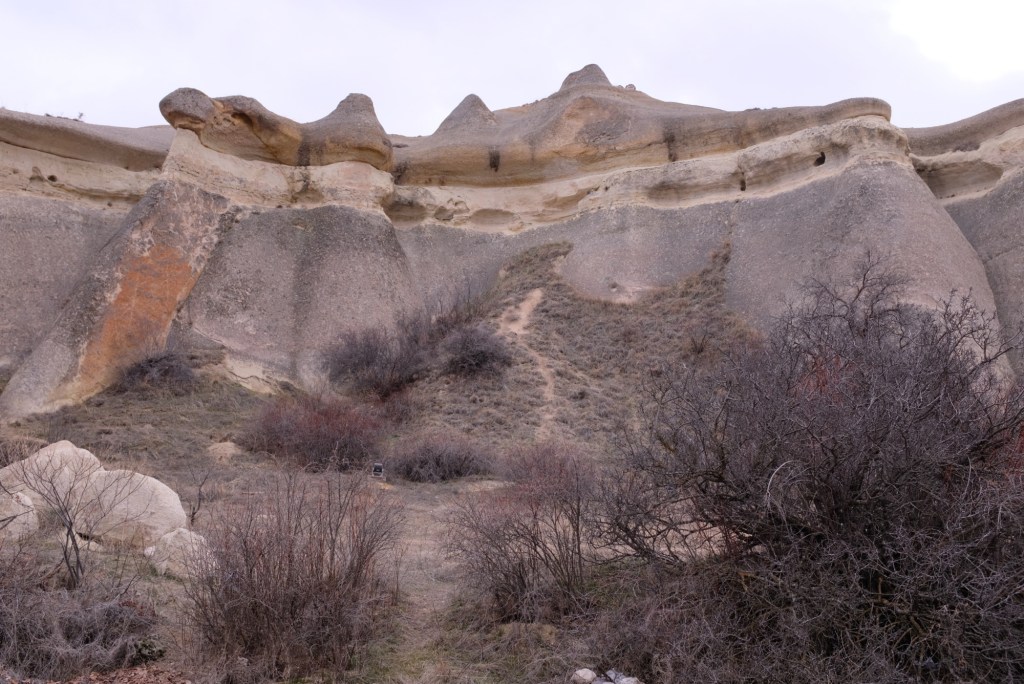
Hakan points out where the hillside is receding, and more fairy chimneys are forming. And then he sends us on our way
Left to myself for a time, I explore the grounds. I leave the paths and try to climb the hills where I can.
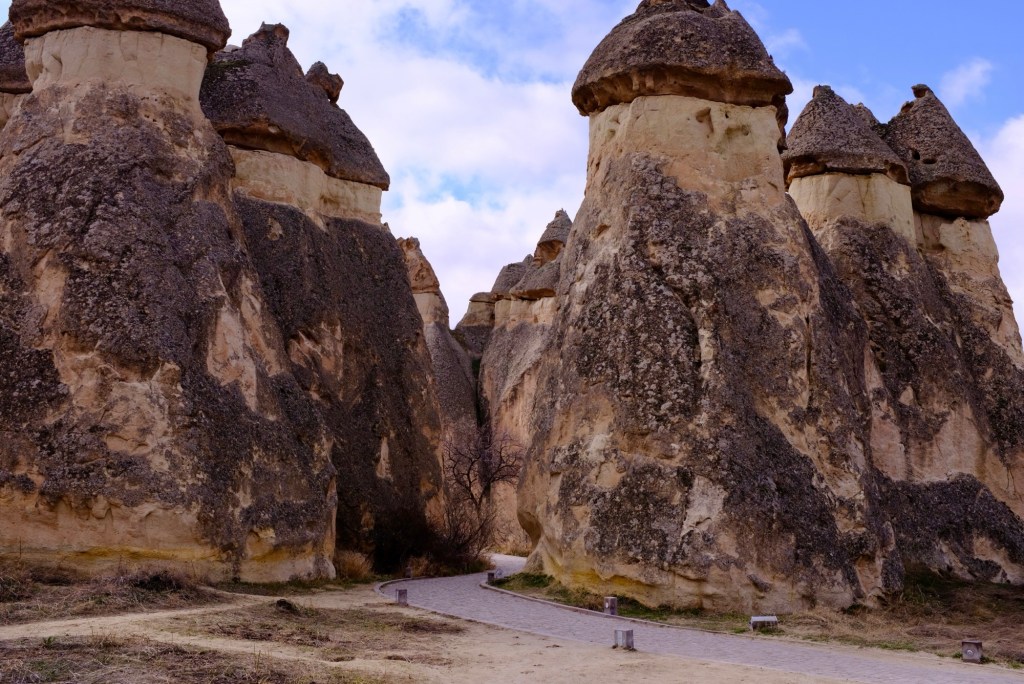
The drizzly sky from the morning is receding and blue is peeking out from behind the clouds warming my face. Somewhere in my heart, this place is magical and I feel like a lucky kid at play.
I doesn’t get much better than this.

 butterblogger
love your stories and beautiful pictures. Thank you for sharing. Wishing you many more happy and safe travels.
What a cool place! I can’t believe I haven’t seen these caves and amazing rock formations! Beautiful and magical!