I read somewhere that the Kadikoy neighborhood of Istanbul was once home to some of the oldest settlements in the area, with evidence of human occupation dating back thousands of years. It was the Greek colony of Chalcedon long before the Romans established New Rome (later Constantinople) on the opposite side of the Bosphorus.

I also read that there are no remains here to show of that history, so was left wondering about this site near the water’s edge. It’s certainly not prehistoric, but looks as though it holds some memories.
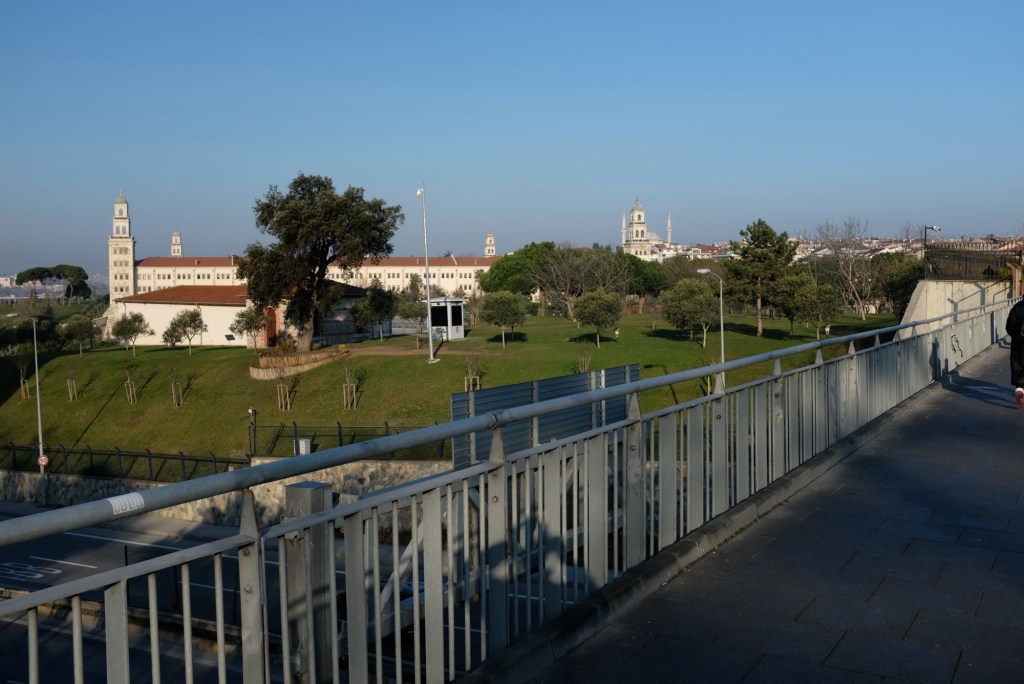
Istanbul is large, and the walk from Kadikoy to neighboring Uskudar wasn’t fast, but that was OK because the sun was bright even if the air was cool. There doesn’t seem to be a lot for tourists on this side of the river, but Uskudar has a reputation as a very traditionally Muslim neighborhood. According to the guidebook, the area was once (and perhaps is still) preferred by many of the faithful of this city because it is located somewhat closer to Mecca.
Because of that there are several notable mosques tucked away in the the neighborhoods here that are worth seeing.
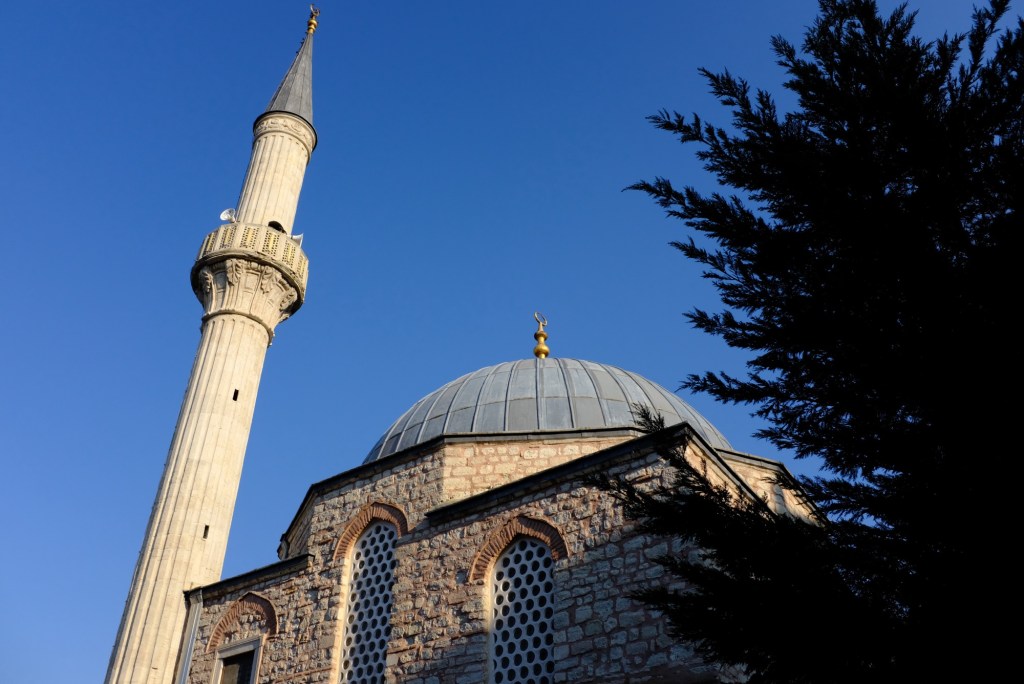
I wasn’t certain about visiting the first one I reached, however.
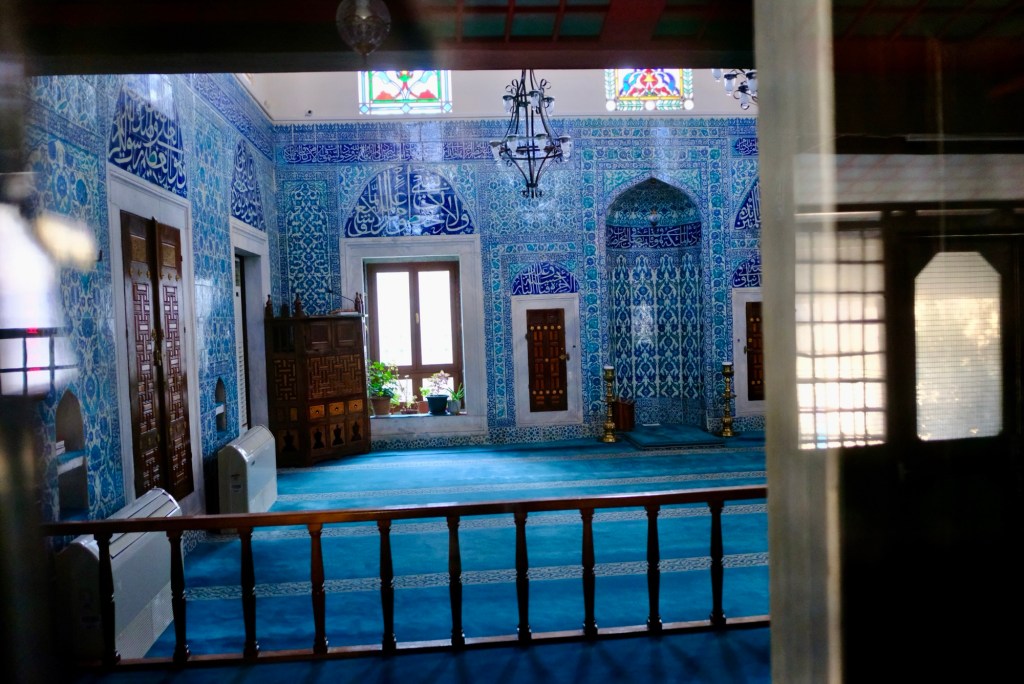
I climbed the steps of the Cinli Camii, or Tiled Mosque, and then stood in my stockingfeet on on the carpet outside and snapped this photo through the window. I didn’t know if the door was unlocked and was uncertain about the propriety of trying.

Instead, I just peeked inside at the intricate tilework, marveled at the minaret, and looked at the shadirvan (fountain for ritual ablution) in the courtyard.
At the next mosque, Atik Valide Camii (Old Queen Mother Mosque), the situation started off much the same, although there was a sign outside the courtyard directed at visitors.
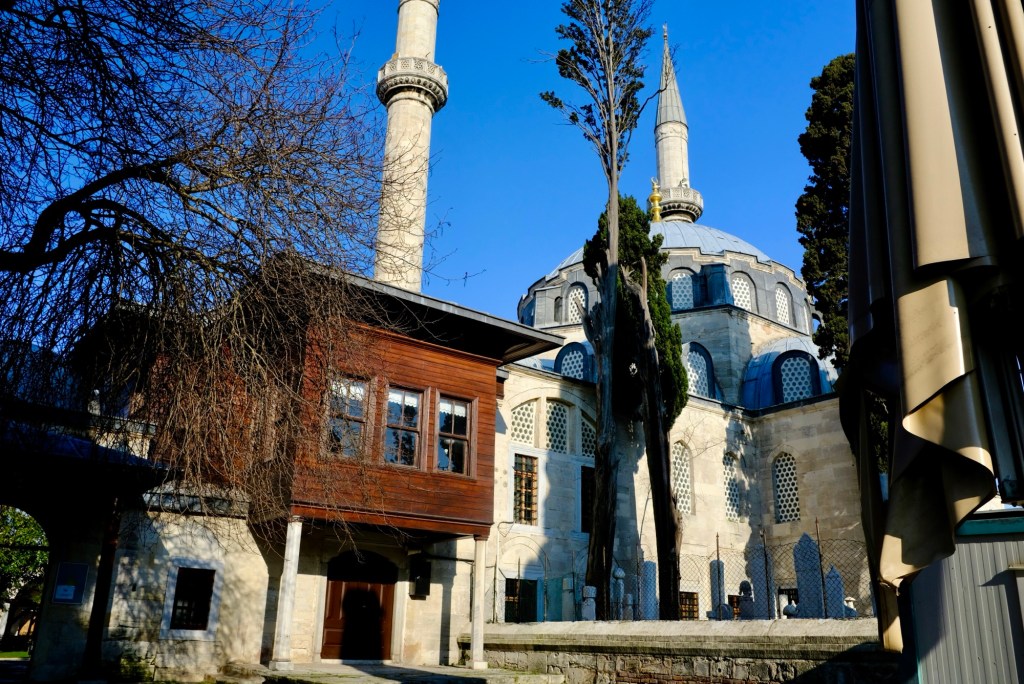
Mimar Sinan was the Imperial Architect who designed this mosque, and it was once one of the largest mosque complexes in Istanbul, with an associated hammam, madrasa, hadith college, school for Quran recitation, an elementary school, a dervish convent, a hospital, and a hospice.
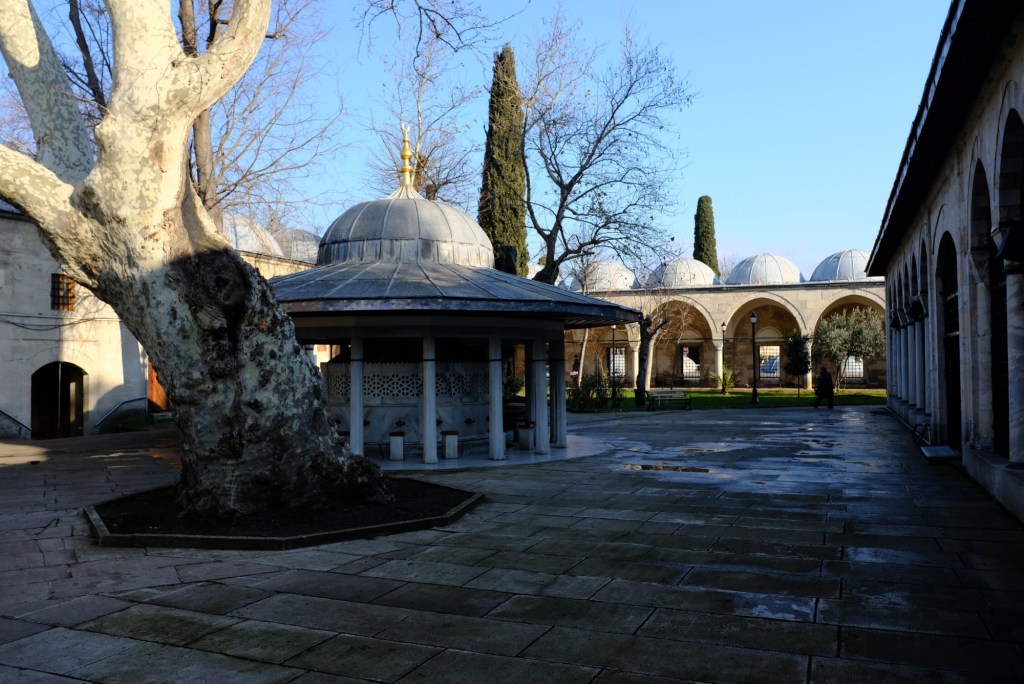
The courtyard was expansive and serene, but I really wanted to go inside. A heavy plastic barrier covered the door, presumably to keep out the cold. This time, I dared to lift the curtain, but the front door was closed. I explored a bit more and found a side door that was cracked just a few inches. Other shoes were left on the storage racks, so I decided to step inside.

I found myself in a wide open carpeted space, with a vast soaring dome above, decorated with delicate patterns.
I mentioned Mimar Sinan, and he had an outsized influence here, with a role in the construction of 476 buildings, with 196 surviving. He has left his fingerprints all over Istanbul. Consequently I feel like I’ve seen similar structures before, with airy open spaces and high arching domes.
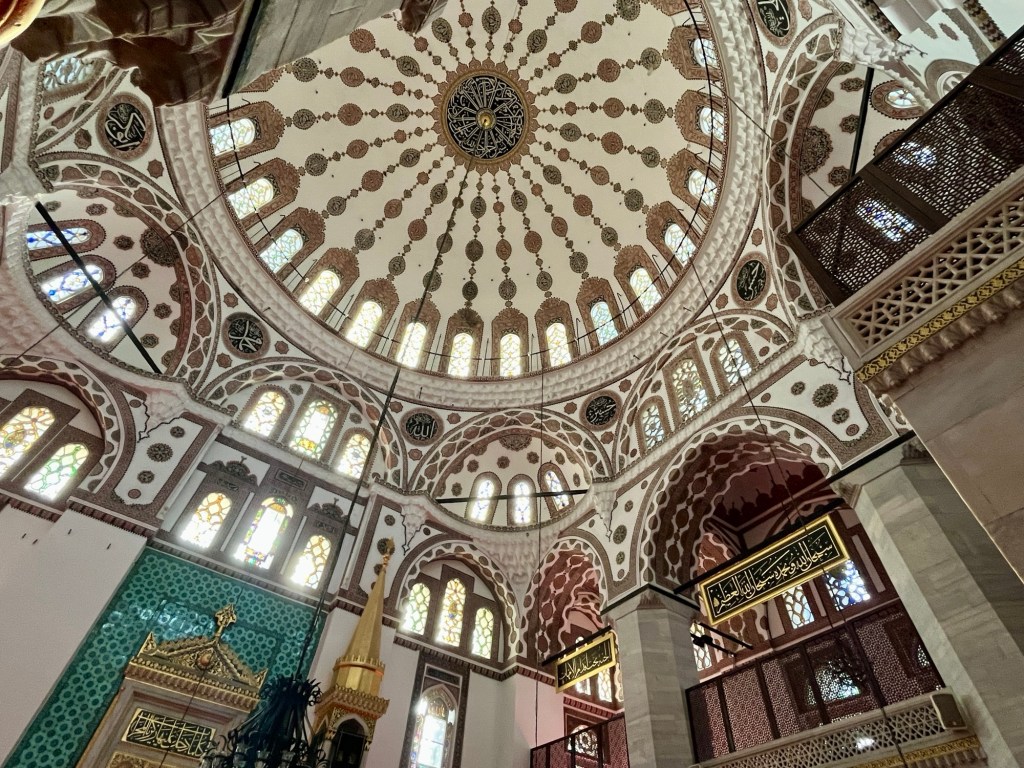
The Yeni Valide Mosque was my next stop. It really wasn’t remarkably different, however. It’s a bit newer than the others, but Wikipedia states that it is of the Sinan school of Ottoman architecture, so the style was familiar.
At least I wasn’t the only visitor here.
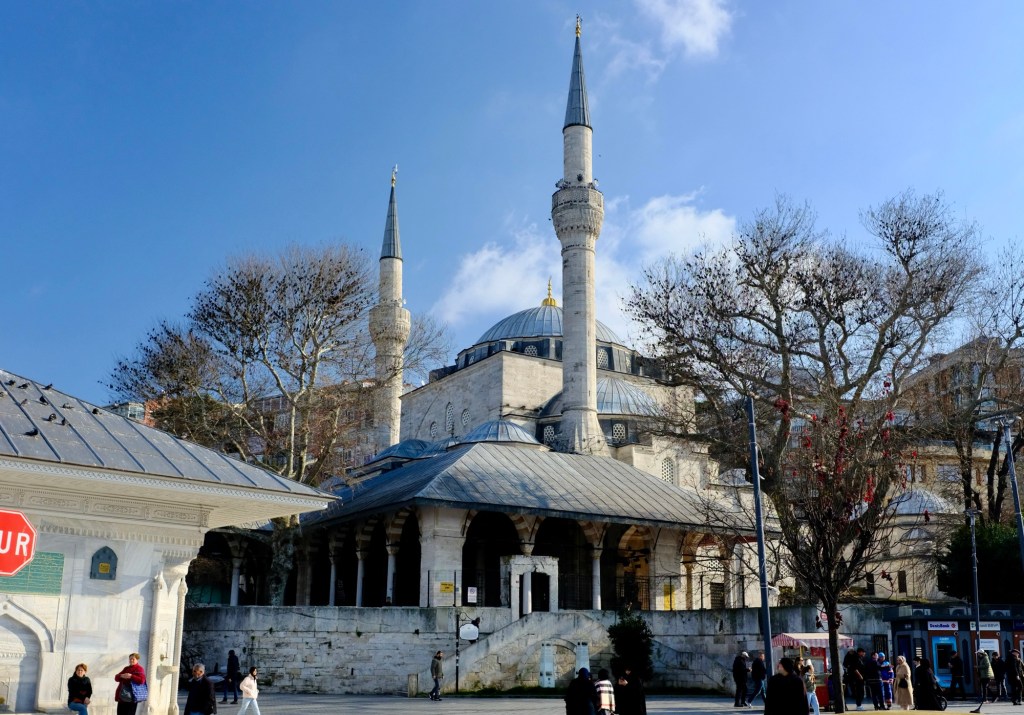
I continued toward the dock where I found the Mihrimah Sultan Mosque, a hulking structure that once sat on the shore of the strait, but is now separated by a road and walkway.
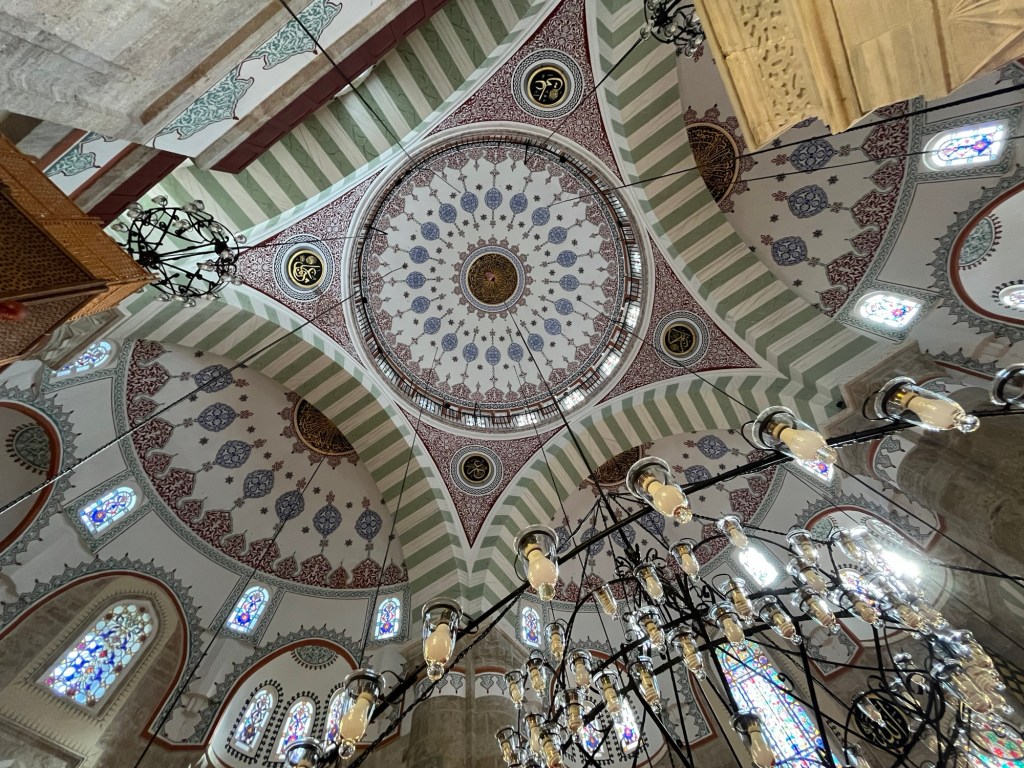
Inside I found several other visitors taking in the sights. This was my fourth mosque today, and by now I was fully aware that I don’t really know how to read a mosque and it’s markings. After visiting a few I can pick up some of the differences, but it’s not a language I speak.
Still I can make comparisons to churches. For example, they’re much better lit than the churches of Western Europe, which wouldn’t typically have used clear glass to let the light in.
There is no hagiography – no images depicting scenes from the Koran are to be found anywhere, due to the strict prohibition against anything that can be interpreted as a graven image. Instead, fine scripted verses are inscribed.

However, there is a minbar – or in the West we would call it a pulpit.
And outside, the fountain for ablutions isn’t dissimilar to the Roman Catholic ritual of crossing themselves with holy water.
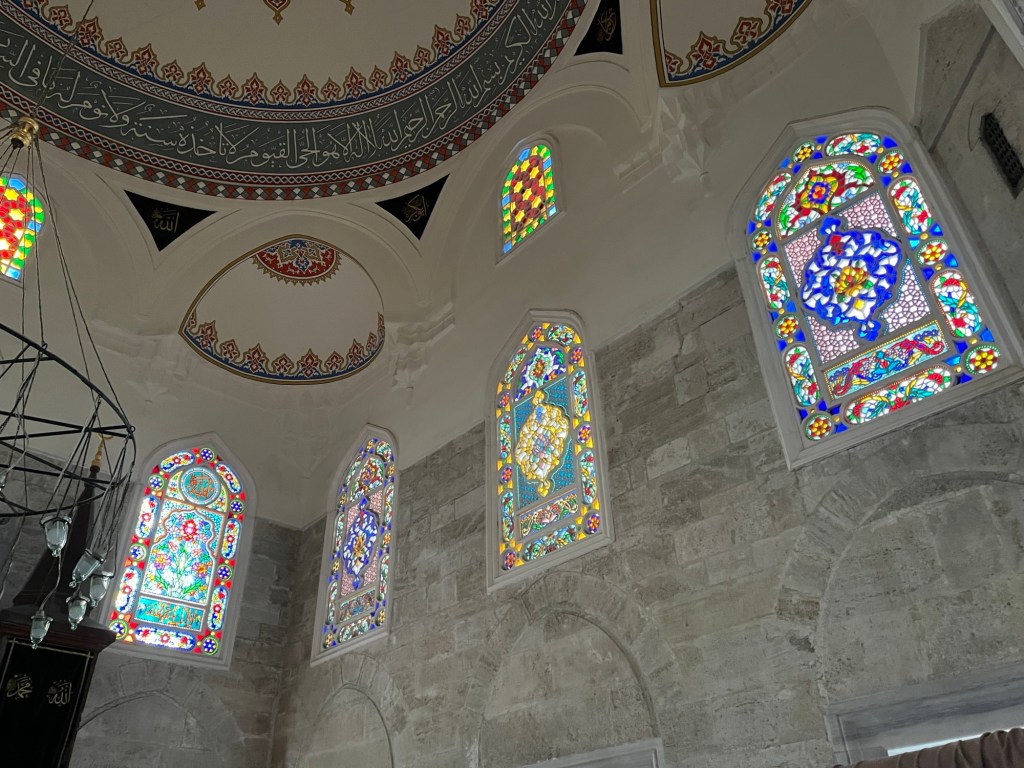
One more small mosque was waiting for me in Uskudar, the Şemsi Pasha Mosque, one of Sinan’s smallest works. Within, I was struck but the brilliant eye-catching stained glass inlaid in filigree stone. It was a lovely place.
And then I began my journey back to my hotel. It was a long walk, but also a perfect day for it.
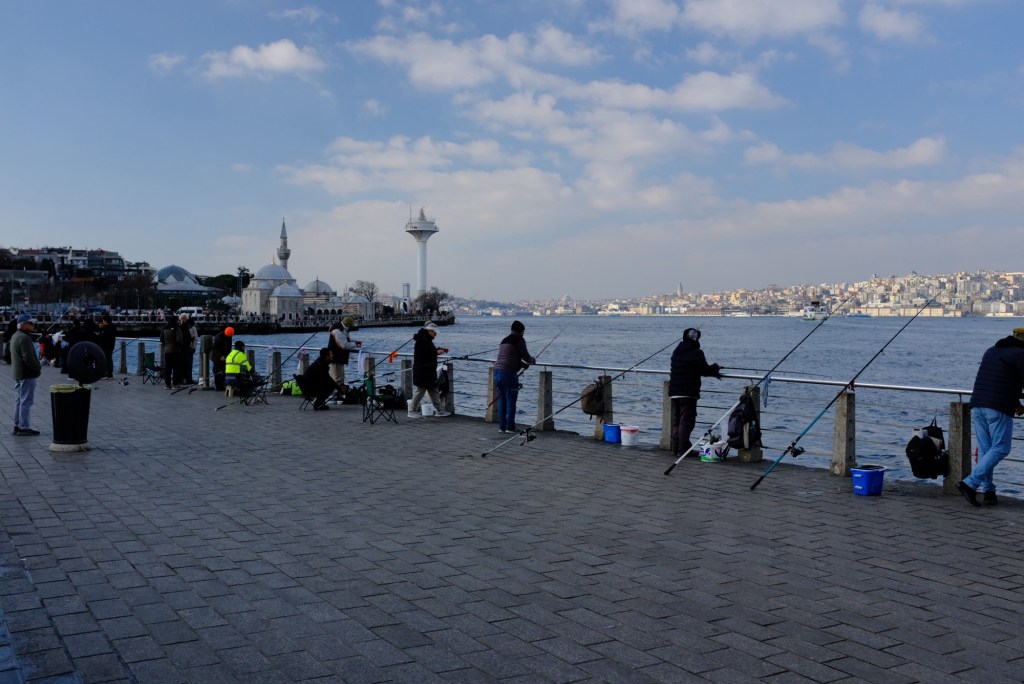
My steps followed the waterfront for a time, where fishermen cast their lines aggressively into the water in hopes of landing dinner.
Along the way I was able to see the Princess Tower. Visiting would involve a trip back to the opposite shore, but I didn’t need it, because the view from here was what I really needed, with the tower standing alone, almost floating on the surface of the Bosphorus.
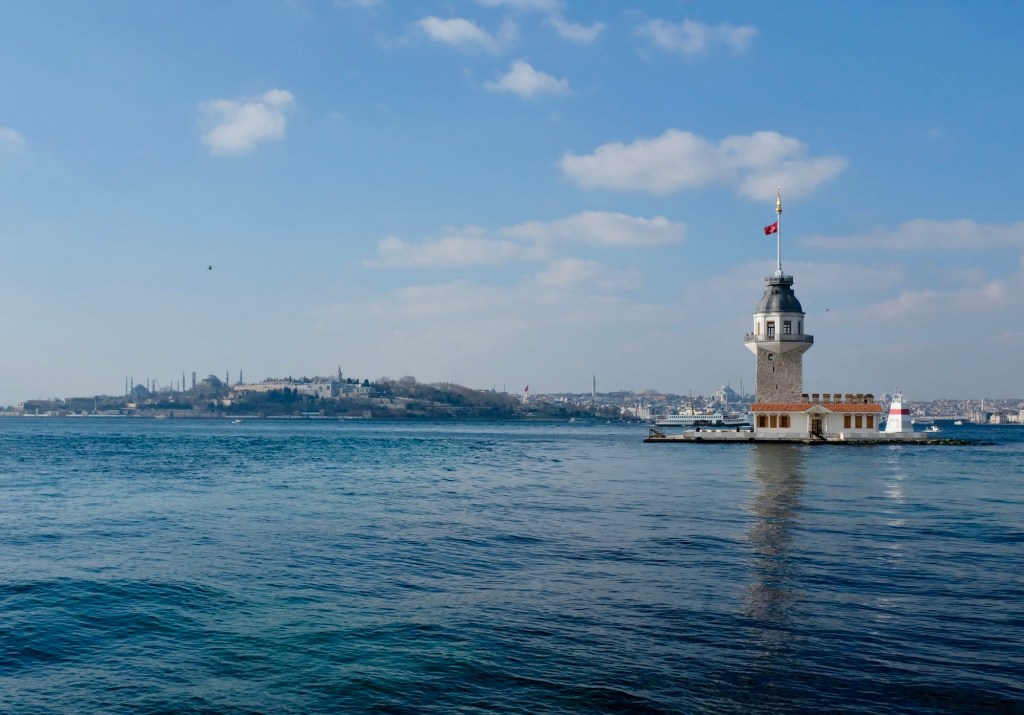
And far behind it through the haze I could the Hagia Sofia and Blue Mosque on the opposite side of the water, standing on a hill in majestic Old Istanbul.
My final stop of the day would lay over there, in a decadent hammam, or Turkish bath, where an attendant would scrub the soil of the road and ease my tired muscles.
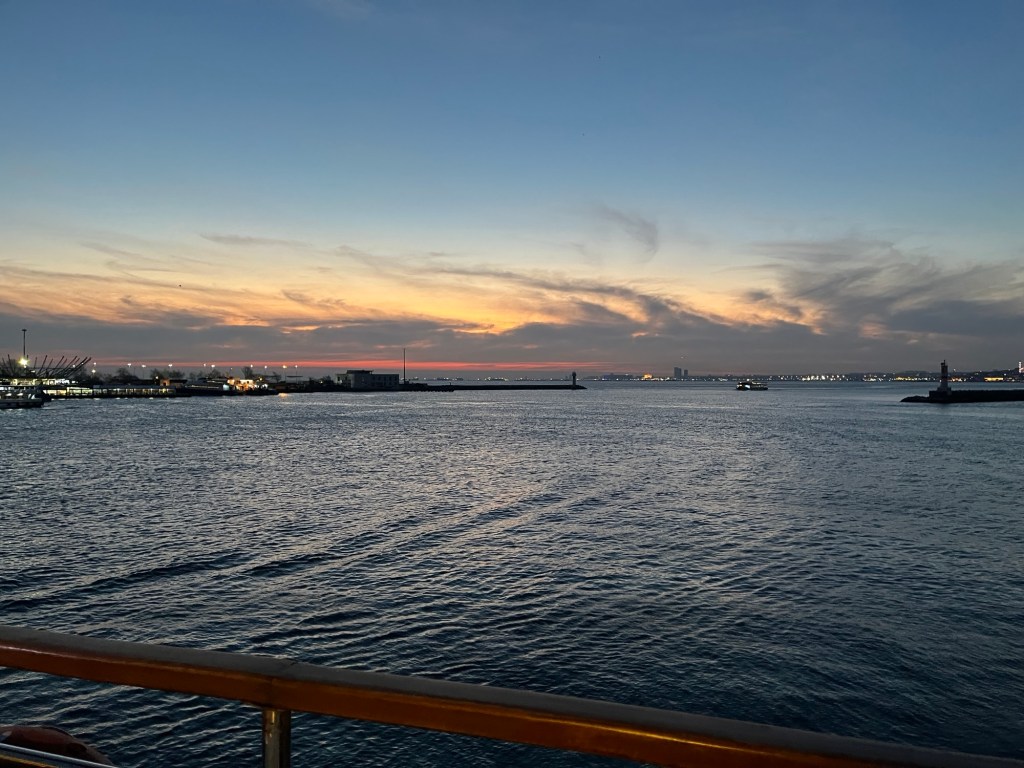
For this is the end of this quick journey, my friends. I have a long flight tomorrow, and home and work await.
But I will return again soon.
With Love, Always,
Butterblogger

 butterblogger