Scilla has a stunning solitude this time of year. When the tourists are away, the narrow streets are quiet other than an occasional pedestrian and some hushed voices sitting at a cafe. The storefronts mostly stand closed, and the rare few that are open are staffed by lonely shopkeepers. Even the ripples of the Sea of Joy (that’s what it’s called) lap almost silently against the shore – there are no big waves here.
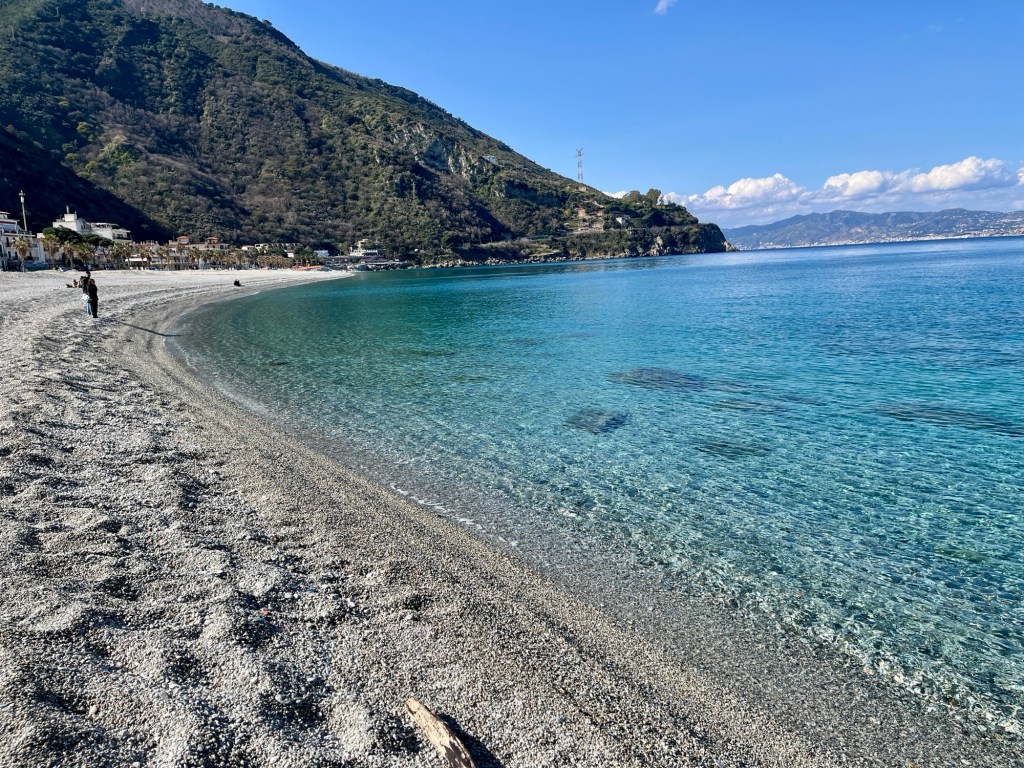
This truly is a beautiful place, and in my mind this is probably the best time of year, but I’m really not one to sit around staring at the sea, lounging on a beach, or even shopping all day. If you have read my blog on a regular basis then you know that when I’m on vacation I like to be out and seeing things, preferably ancient history.
So in a sense, then, I have put myself in a bind. While being in Scilla for a night has definitely satisfied interests in ancient history and mythology, it’s also a small place, and even in the peak of summer I think I wouldn’t find much to do here (there’s a hiking trail nearby but it’s listed as a difficult hike, and without proper footwear and hiking poles I wasn’t about to brave it right now).
The other thing that motivates me when I travel is food – going someplace where I can get something unique and tasty. Fortuitously, the town of Tropea, known for her sweet red onions, is just over an hour away by train.
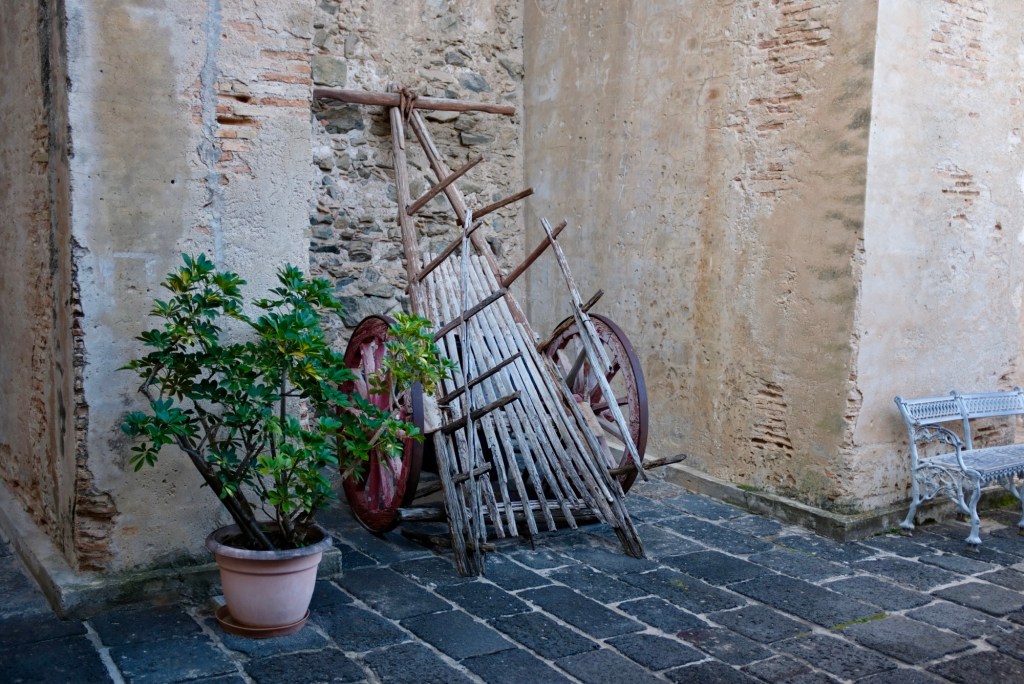
My train wouldn’t be departing until late in the morning, which gave me time to visit the Ruffo Castle, standing defiantly at the top of the cliff overlying the sea. This castle is a great example of the obscurity of this region – there is no entry for it in the English version of Wikipedia, and overall the available information I can piece together is limited, fragmented, and a bit inconsistent.
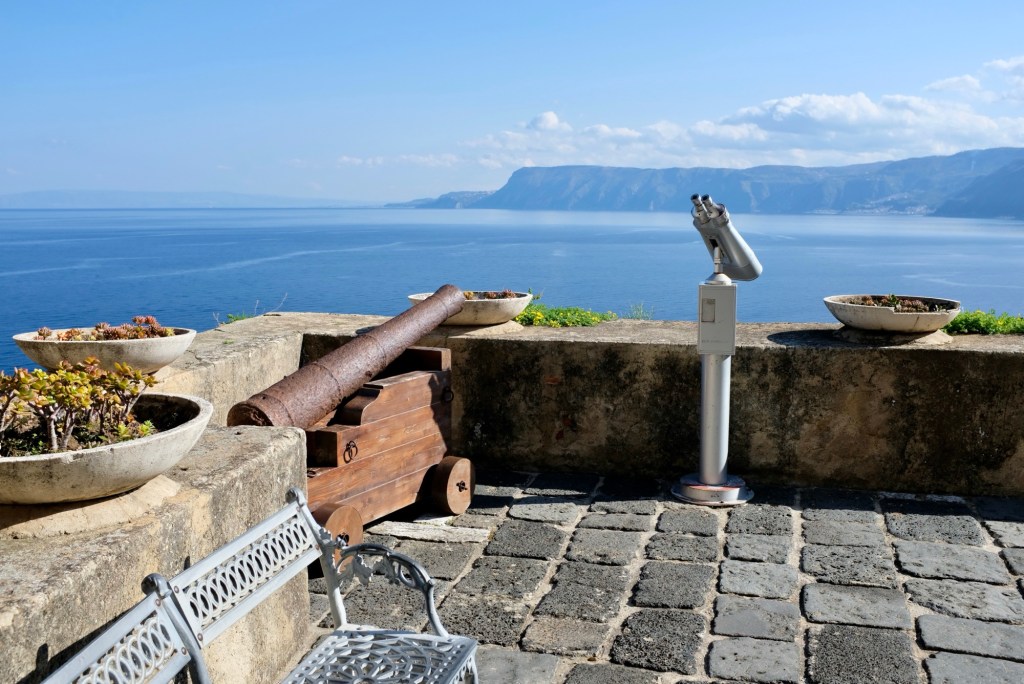
Yet it’s clear that her history is ancient – because high upon this promontory overlooking the Strait of Messina, a fortress has stood since the Greeks held sway (or perhaps, as some sources suggest, it was the Etruscans). At some point in the early Christian era it became the site the Monastery of St. Pancras, and then in 1060 it was transformed into a military fortress.
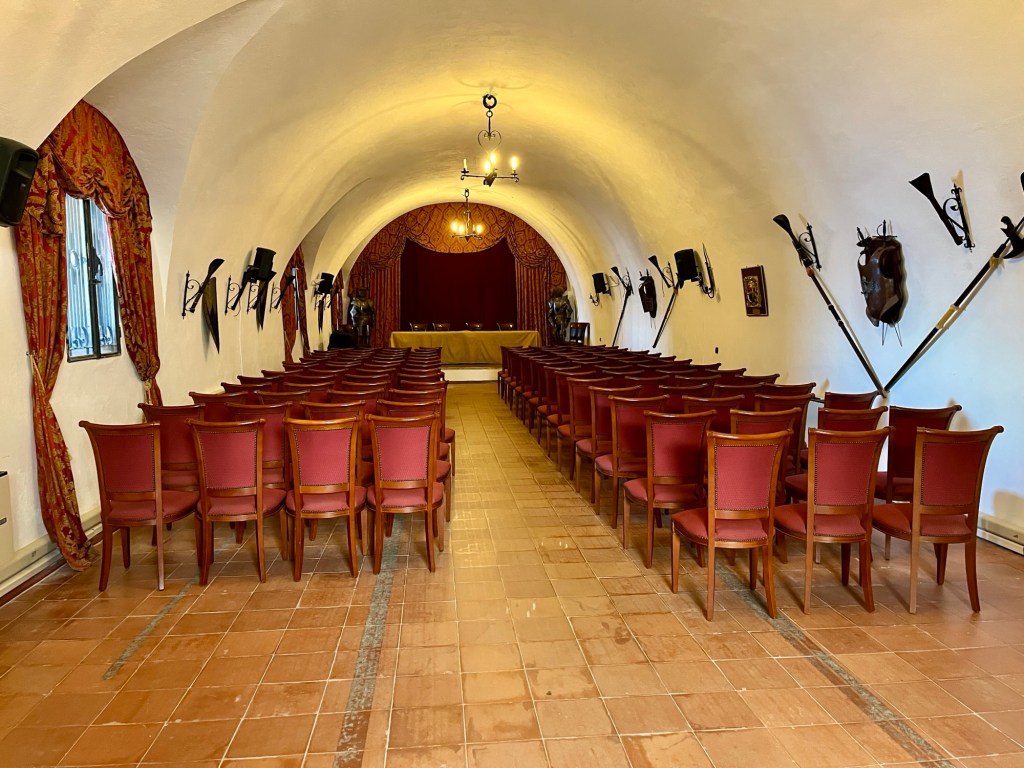
Along the intervening centuries it has stood proudly on guard, despite being damaged by earthquakes in 1703 and 1908. And today, after several restorations, it has long since been retired from official duties, and most recently has served other roles including youth hostel and meeting venue.
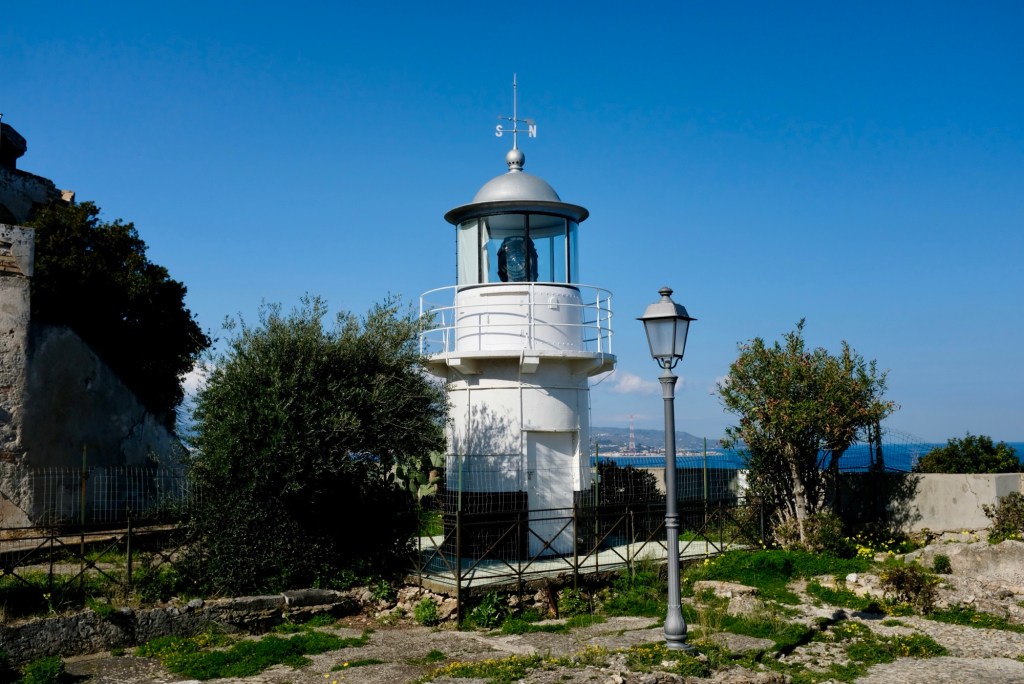
The lighthouse here is small and modern, but its presence speaks to the timeless importance of this place for sailors across the long millennia.
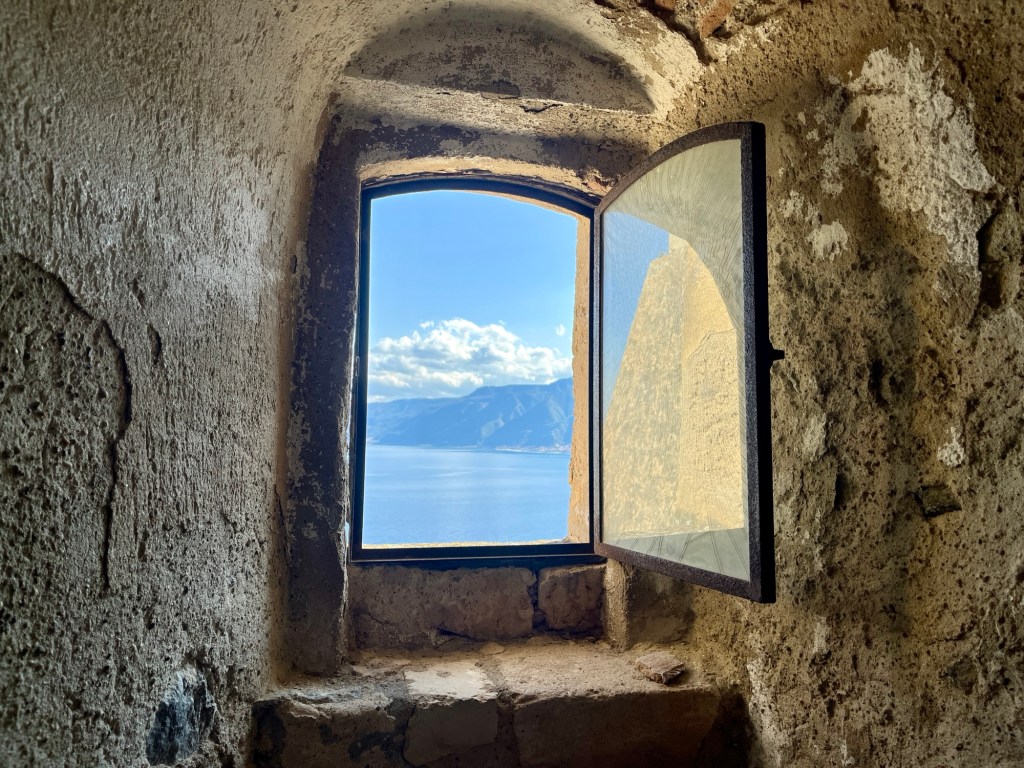
The views from here stretch far up and down the coast of Italy and are entrancing.
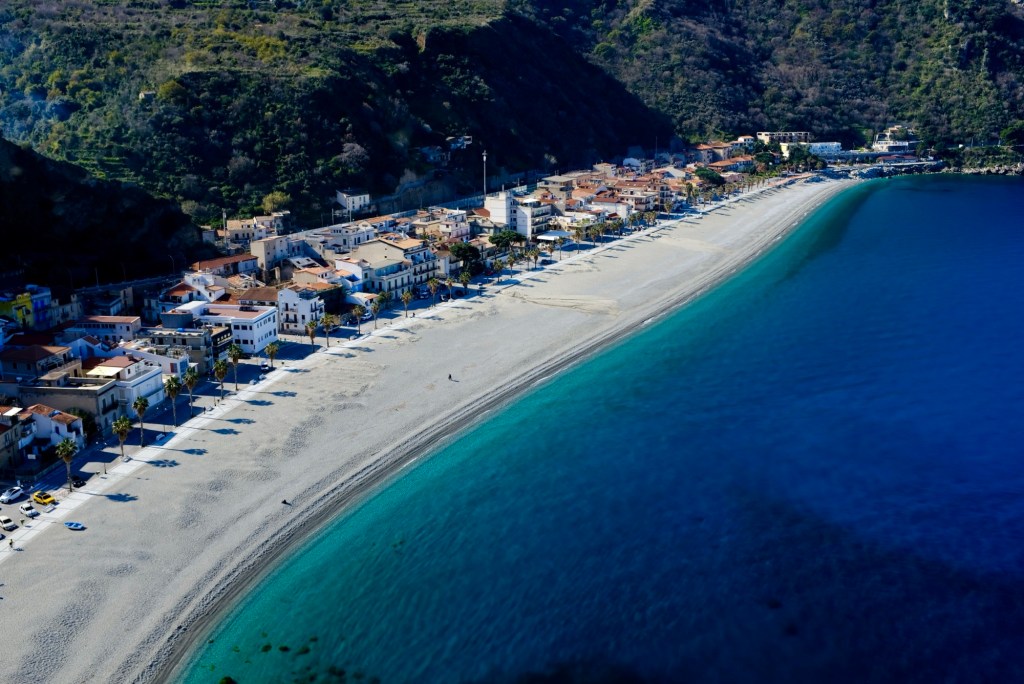
And the rare visitor on the beach below is but a speck.
I wandered through the rooms for a bit, enjoying the views, before finally heading out and down to the station where my train for Tropea found me.
I first heard of Tropea when Stanley Tucci came here to taste her famous onions a few years ago.
This is perhaps the most seasonal of any place I think I’ve visited on this trip. Reggio Calabria is large enough to continue to be active (with some nadirs) despite seasonal swings, and Scilla is small enough that the winter lulls becomes less relevant. Taormina is distinctly a tourist destination that is well known enough that there probably is no real end, just grades of “busy.”
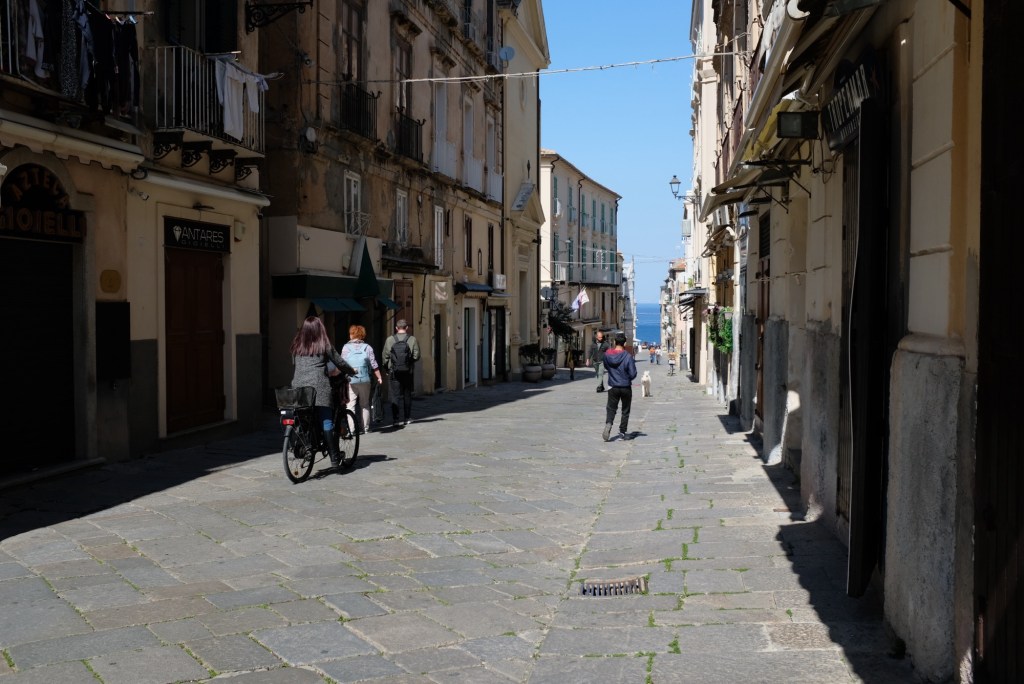
But Tropea falls in the middle. Several of us disembarked from the train and walked into town finding the same thing: Tropea is clearly closed for the season. The streets here are much bigger than Scilla, and their emptiness is felt more acutely. Many of the restaurants sit with their chairs piled in the piazza. There is silence and void in her alleys. The doors of the gelaterie are shuttered.
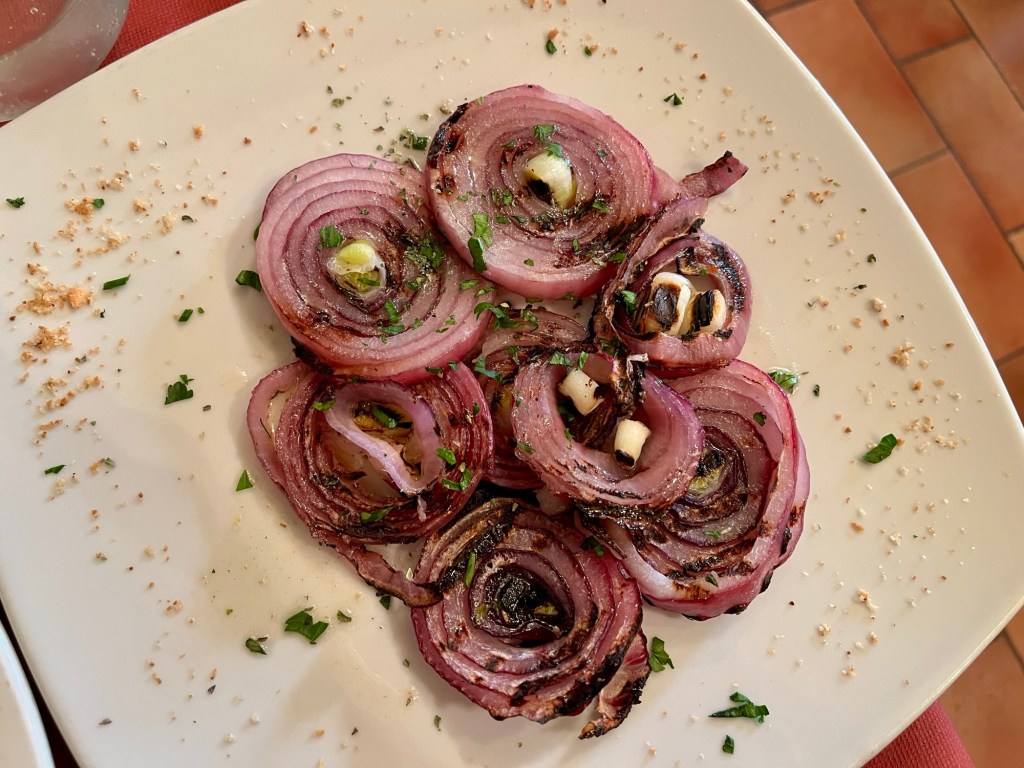
Reaching the apparent center of town, I started my visit by completing my primary mission of finding lunch. I was the second person in the restaurant, but it filled up after me. My meal consisted of an antipasto of sauteed onions, as well as an onion pasta. And they were both delicious.

Back out into the streets after my meal, I wandered toward the end of the road, to where the city stands on the edge of a cliff and I could view Sicily and the Aeolian Islands far away.
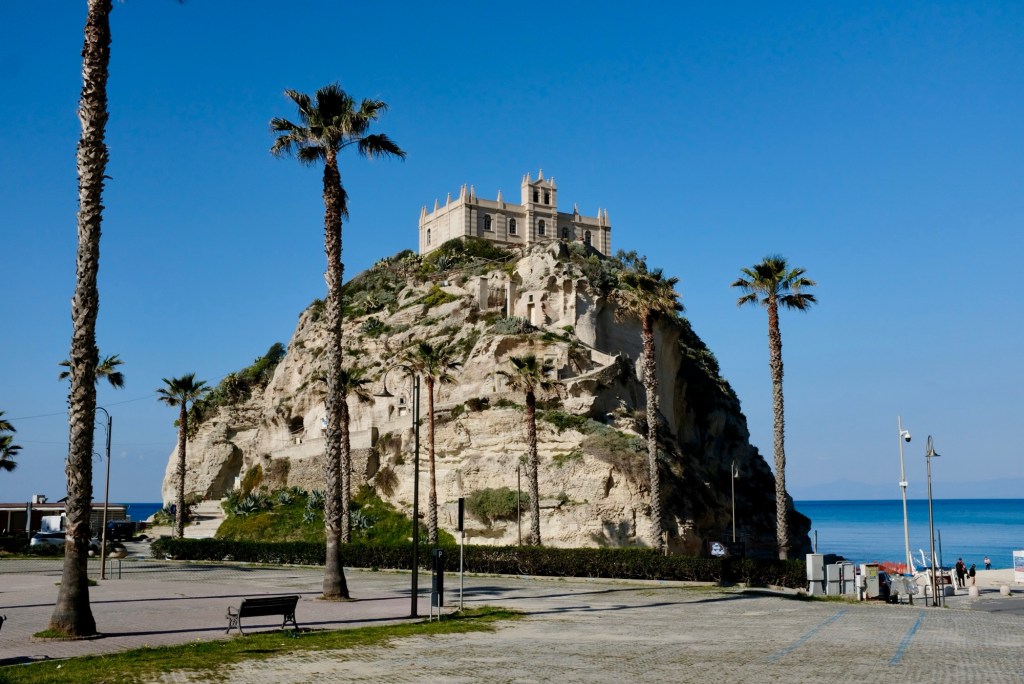
This sanctuary standing above the sea glistened proudly in the bright afternoon sun, but she was closed to entry. And so that left me alone with my bemused thoughts in my long climb back up from the shore.
I imagine that in the summer this place is bustling, and that one can barely move for the crowds of Northern Italian tourists taking up residence, sunning on the sand, or tasting a gelato.
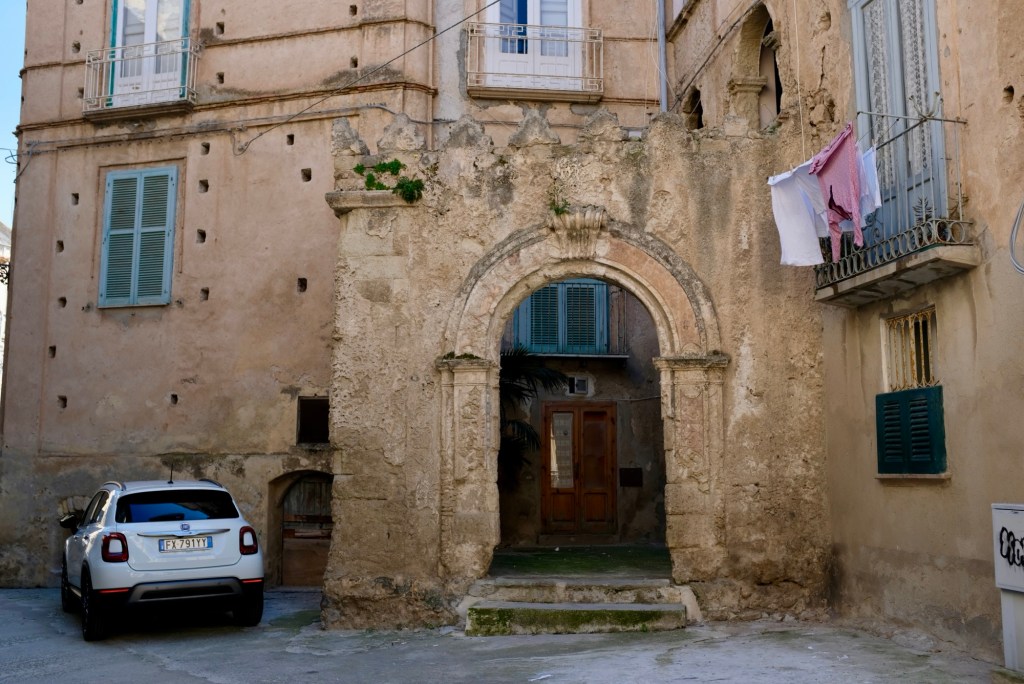
But today the streets were mostly quiet, except for the scattered sounds of construction in preparation for the months ahead.
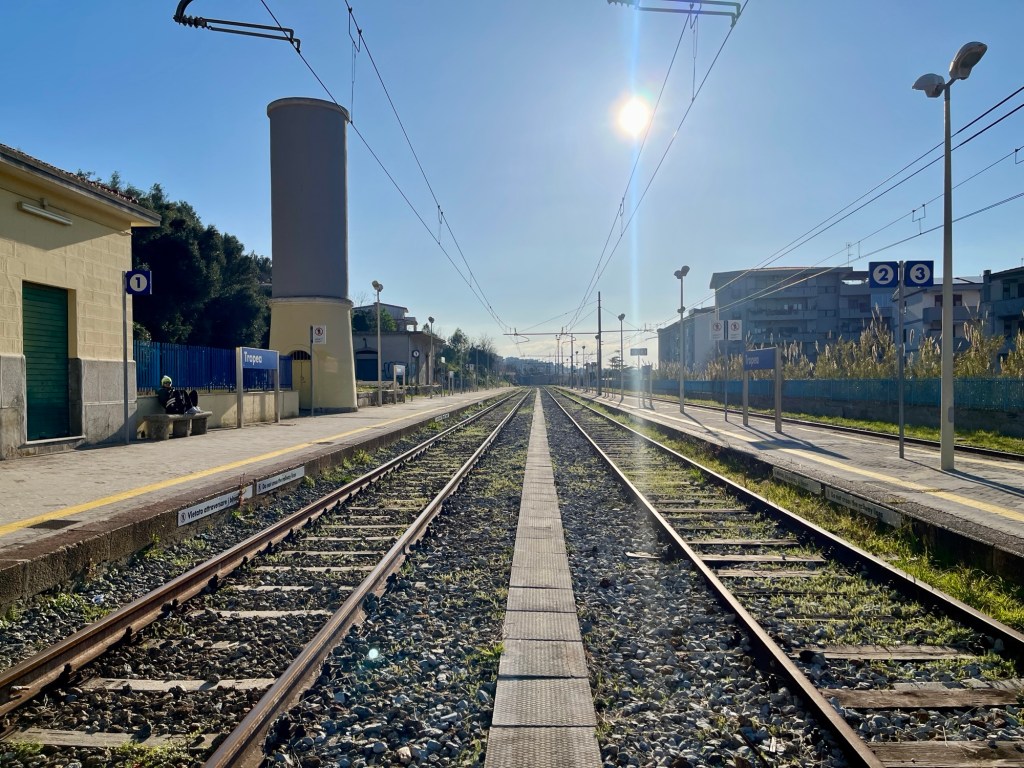
I’d had my lunch, and decided there was nothing else for me here.
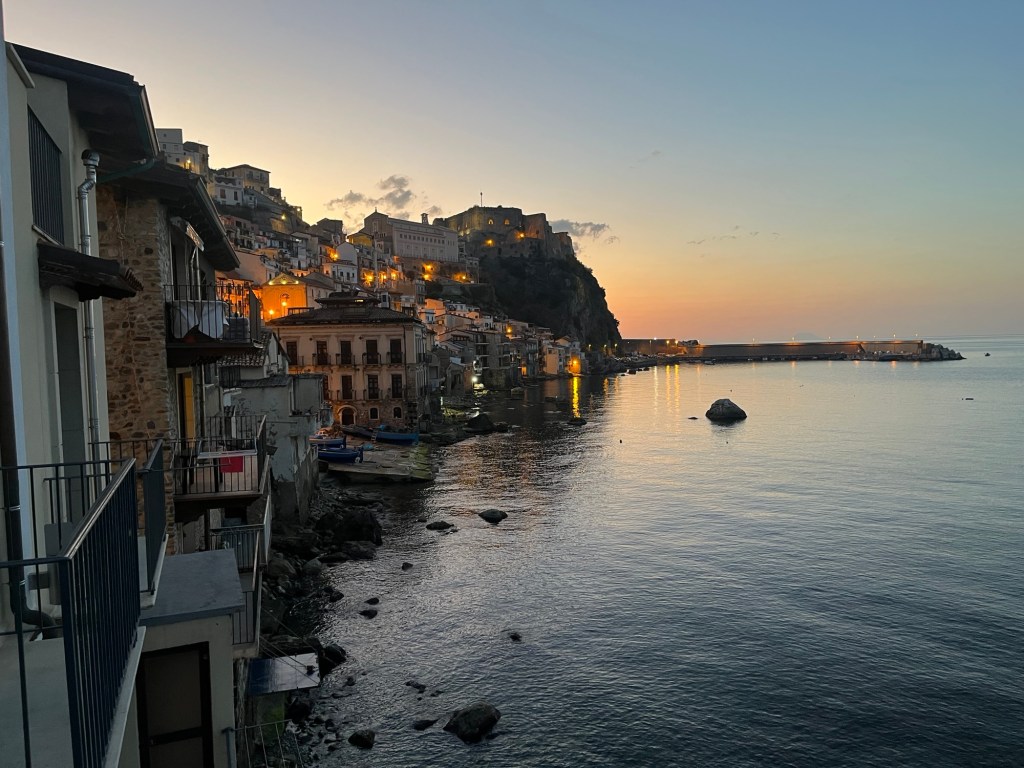
And so I returned to Scilla and her solitude, relaxed and still in my mind.
And it was all enough.

 butterblogger