There’s something uncomfortable about being alone and hungry on the other side of the planet, in a place where you don’t speak the language. Sometimes you don’t quite know what to do next, how to move forward, or how to even get a meal. There’s something disquieting about navigating that uncertainty and figuring out how to work your way out of that situation. I think some people might interpret that sensation as fear – but I don’t want to be afraid, so I don’t accept that – fear is something different.
For me, that feeling of unease is something that I relish, because in the end I know it means more. It’s the feeling of growth. It’s not simple, but this is how we change for the better: we do new things and push our boundaries. We don’t make progress by doing easy things that we know – we do so by challenging ourselves.
And pushing through those feelings, my friends, feels like one of the greatest things in the world to me.
The weather at Seoul Incheon airport was cold, hazy, and drizzly when our wheels hit the tarmac. The clouds were so thick and low lying I didn’t even realize we were approaching the runway until about a minute before we landed.

The rain didn’t deter me, however, and the moment I stepped off of the jet bridge I couldn’t help but smile. The path through passport control was easy, and I soon found my driver and began the trip into the city. My driver didn’t speak any English, so I dozed for a good portion of journey, which was fine because most of the way there wasn’t much to see.
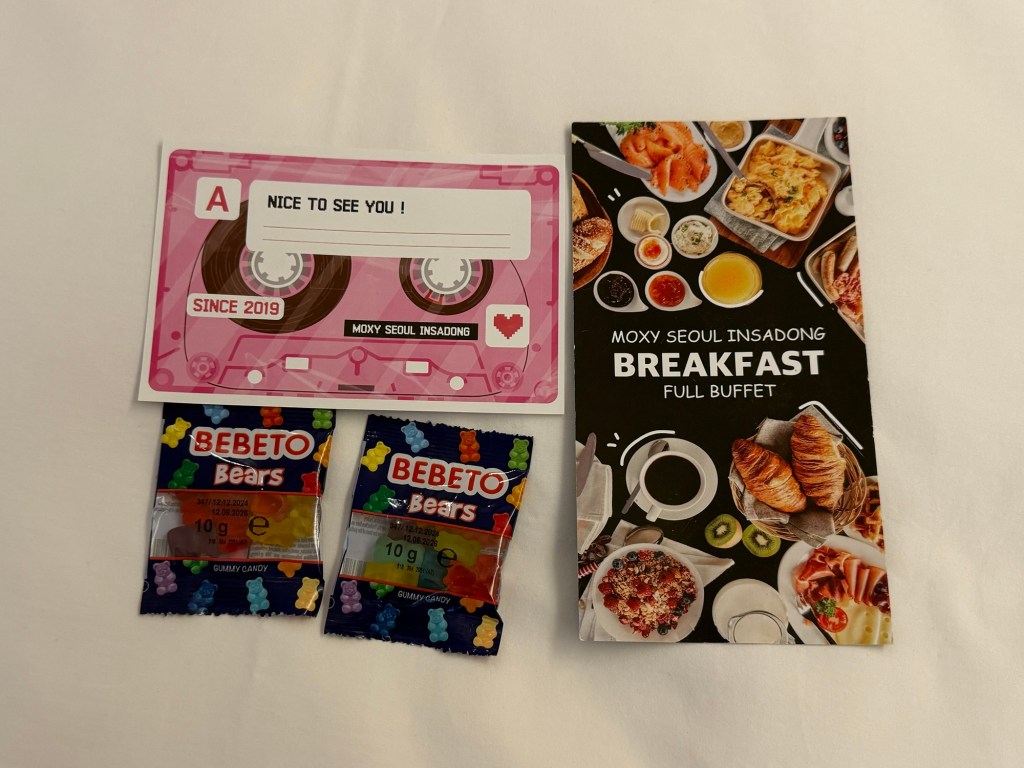
Exhausted as I was, once I had finally checked into my hotel at around 6pm local time, I was ready to do the only thing I could: eat.
But eating near my hotel is challenging. There are oodles of restaurants, but many are very crowded, whereas some are smaller and I’m not certain if they take credit cards. Most sources seemed to indicate that South Korea is almost cashless, but I found one very confident source that claimed there are problems using US credit cards here.

To complicate things further, they don’t seem to speak much English in South Korea. Given the history of the Korean War and the influence of the American GI’s, I expected that English would be widely spoken, but I was wrong. For comparison, I heard much more English in Vietnam.
This made me nervous about going into a crowded restaurant, ordering something strange, and being unable to pay for it. How would I communicate to resolve these issues?
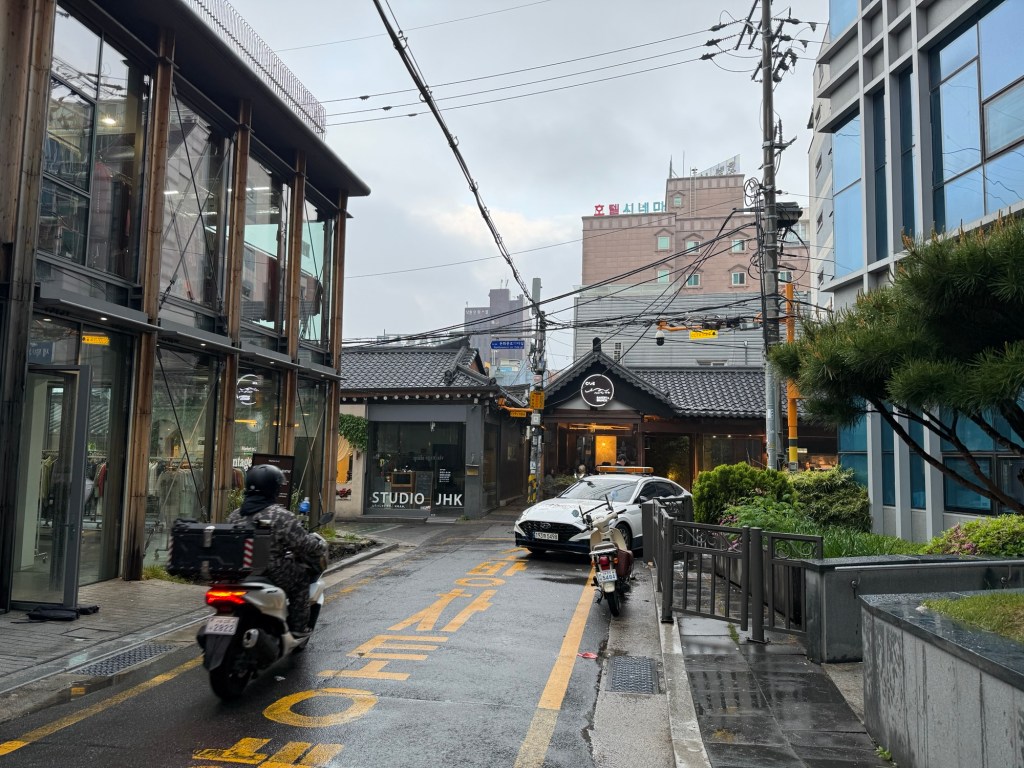
So I spent the better part of an hour trying to find an ATM that works and functions in English. Along the way I explored the Insadong neighborhood, with her bustling alleys with low slung roofs.
And I worked through that uncomfortable feeling of growth.
In the end, my hunger led me to do what I knew I needed to do – I chose a restaurant.
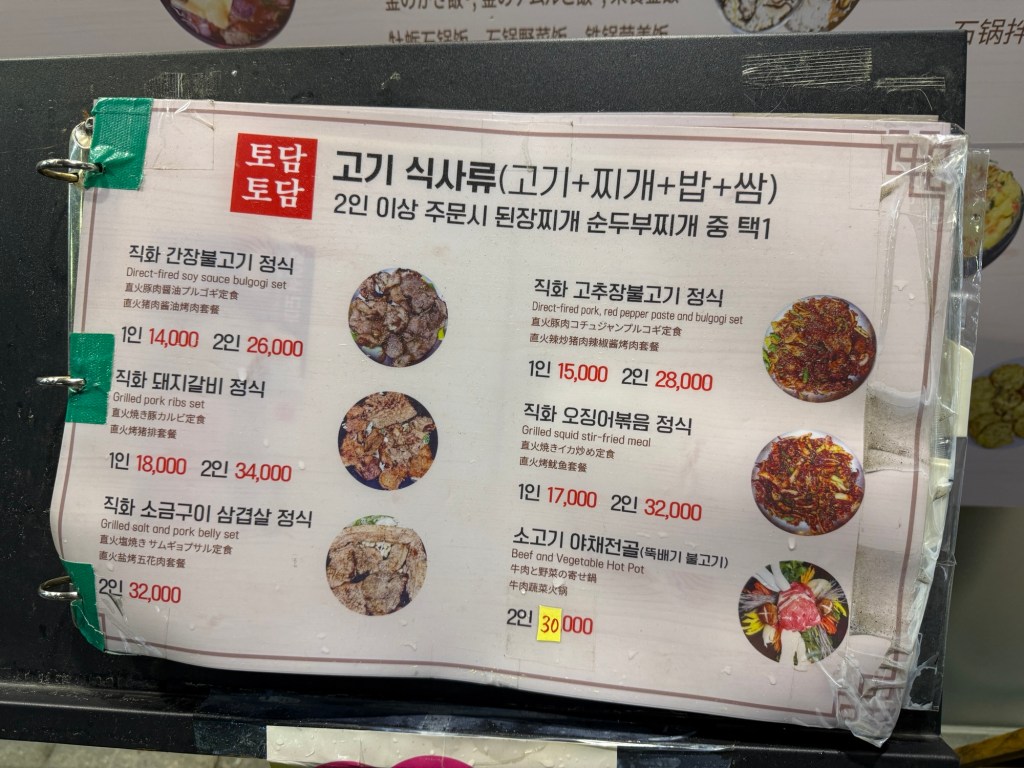
I had walked down a street to where they weren’t quite as busy, and peered in the windows and at the menus. I wanted someplace with some empty seats, and something warm.
I don’t know where I ate (it’s probably on that menu), or even all of the details of what I ate. The owner and his wife spoke but a few words of English.
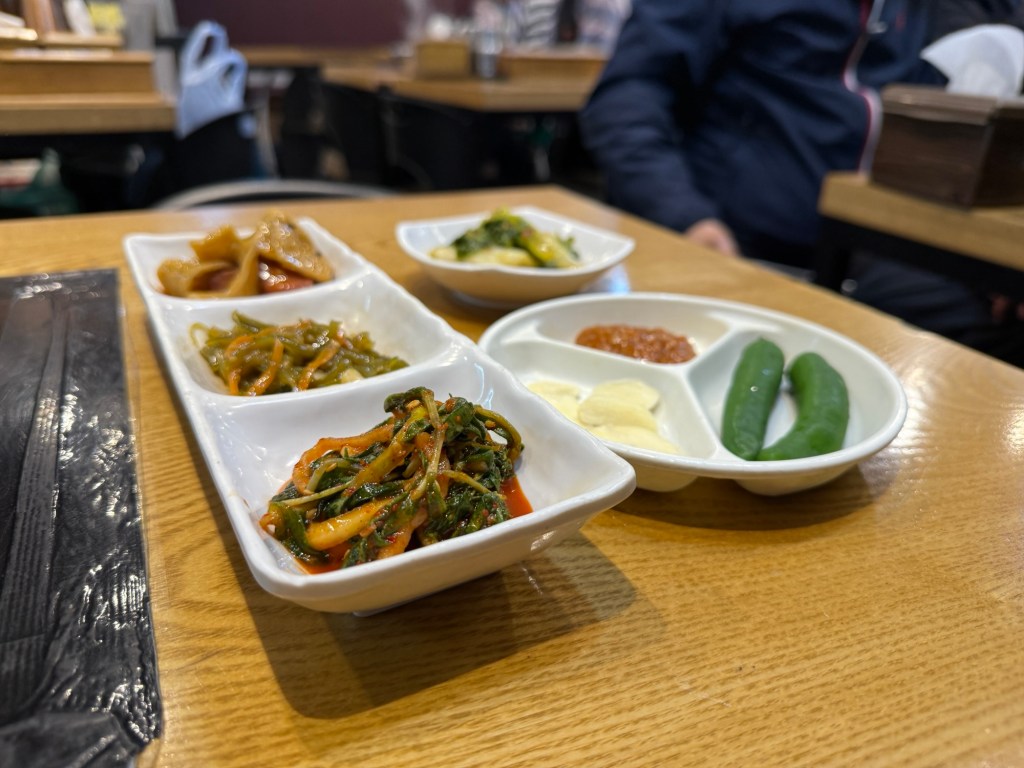
But they sat me down in a corner near a boisterous table of older Korean men, and opposite a smaller group of Korean women. The owner made some suggestions on the menu, and pointed out that I had chosen a spicy dish.
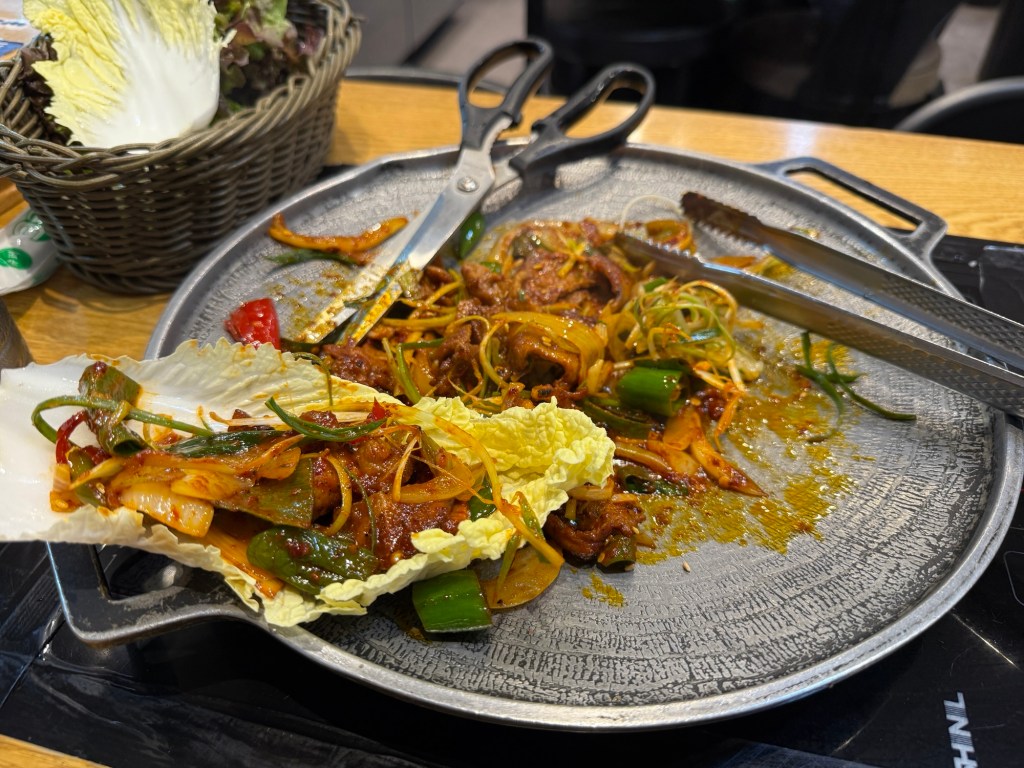
I navigated the table settings, and when deposited my meal, she kindly showed me how to cut up my bulgogi.
Everything I had was delicious.
And I wasn’t afraid.

 butterblogger
Love your words & wisdom!