The taxi driver didn’t speak any English, and I really didn’t have any way to communicate the name of my hotel to him. I showed him where it was on the map, thinking that would help, but he seemed even more confused by that.
Finally I was able to find the Korean address, but that didn’t seem to help much either – not the first time at least. A few minutes into the drive, we pulled over to the side of the road so that he could sort things out further.
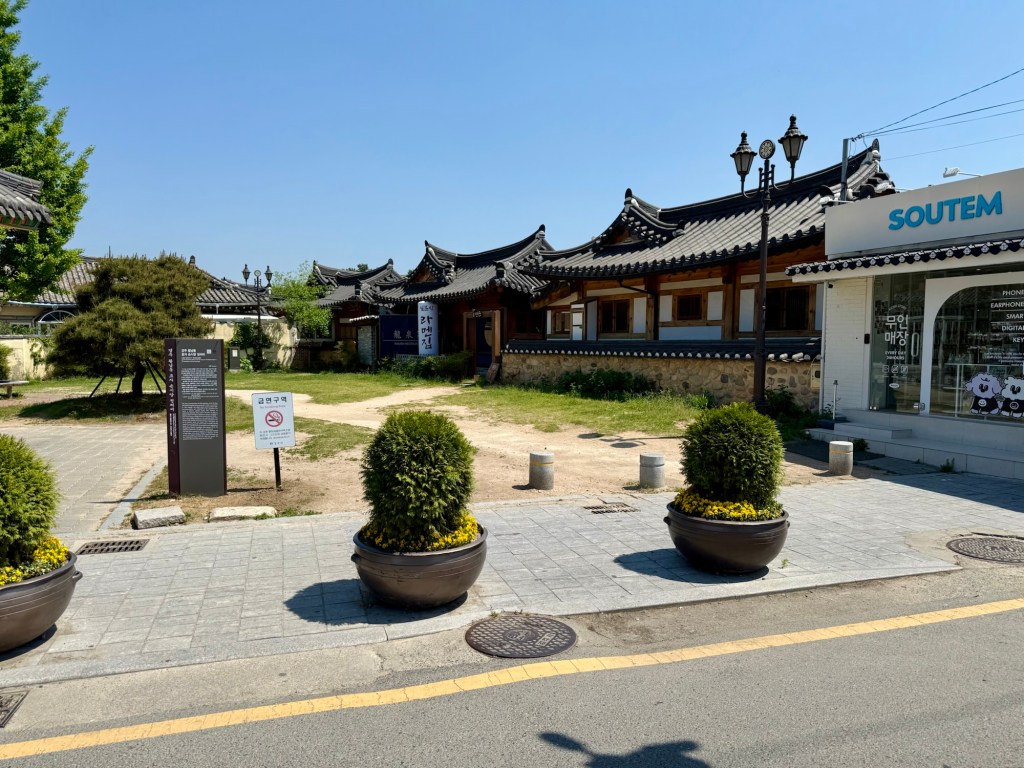
Eventually we got to the corner near my hotel, but the car could go no further, as the street was closed to traffic. I paid the fare, hoisted my suitcase onto my shoulder, and was on my way. I had somehow found myself in a hush-voiced neighborhood of hanoks, much like I had seen in Seoul.

My hotel was actually a guesthouse, rather than a hotel, and the proprietor was friendly and welcoming. With his few words of English, he guided me through his small garden and showed me how to use the door, where to deposit my shoes, and how to lock my apartment.

I dropped my suitcase inside and headed out.
I’m in Gyeongju, on the advice of ChatGPT, and when I stepped off of the train I was second guessing my decision. I had asked the AI engine to suggest an itinerary considering my interests in history and food, and that preference caused it to suggest this small city in lieu of extra time in Busan. But this city has a relatively small entry in my guidebook, which left me wondering

On the train I looked again at the guide and Tripadvisor, using the time to choose some sights to see. This city is small, but there are many historic attractions in the region, and they are spread far afield. The fact that I didn’t have a car would clearly limit my options. Uber might work, but that’s a bit unclear.
In the end, I decided there was plenty within walking distance, especially given that I only have 2 days here

I started heading south from my guesthouse, and was immediately smitten. This place really is adorable – a bit of an anachronism planted near the edge of the Korean peninsula.

I soon encountered a vast green field, marked with massive mounds of earth. I immediately recognized them as tumuli, or burial mounds. I had seen similar structures near Thessaloniki in Greece.
My destination for the day was the Gyeongju National Museum. This is a museum primarily dedicated to the Kingdom of Silla. Silla ruled the Eastern half of the Korean peninsula from 57 BC to 935 AD, uniting the entire peninsula in 668. The Silla dynasty lasted until the entire region was united with areas in the north under the kingdom of Goryeo.
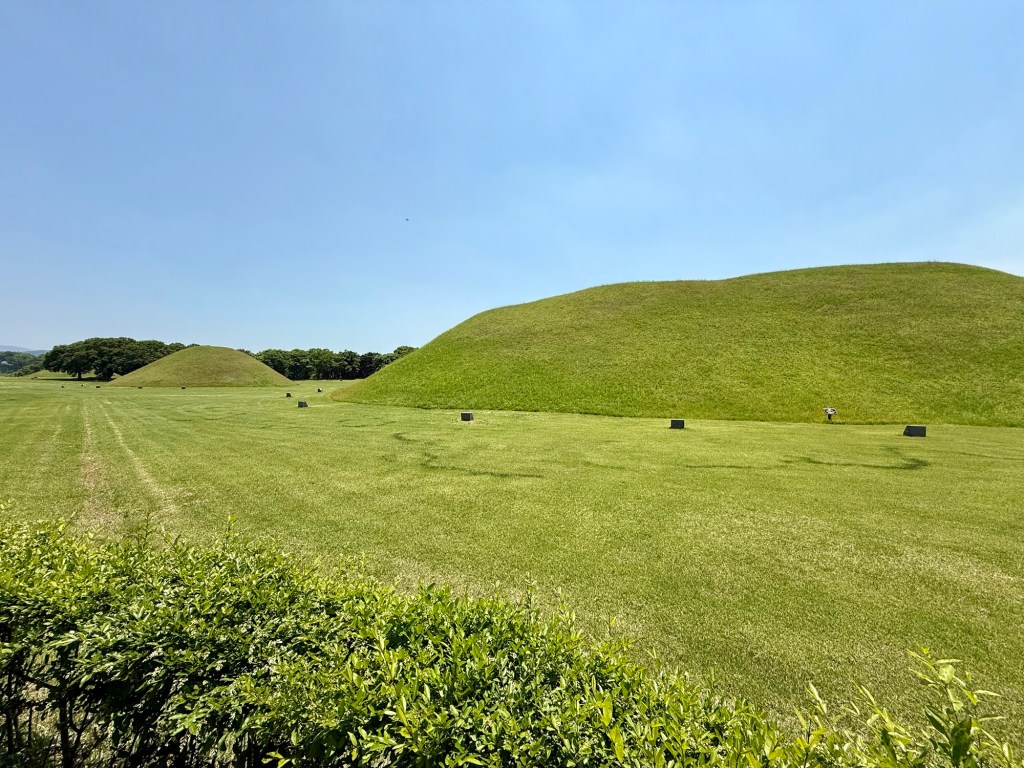
These mounds dated to the Silla period.
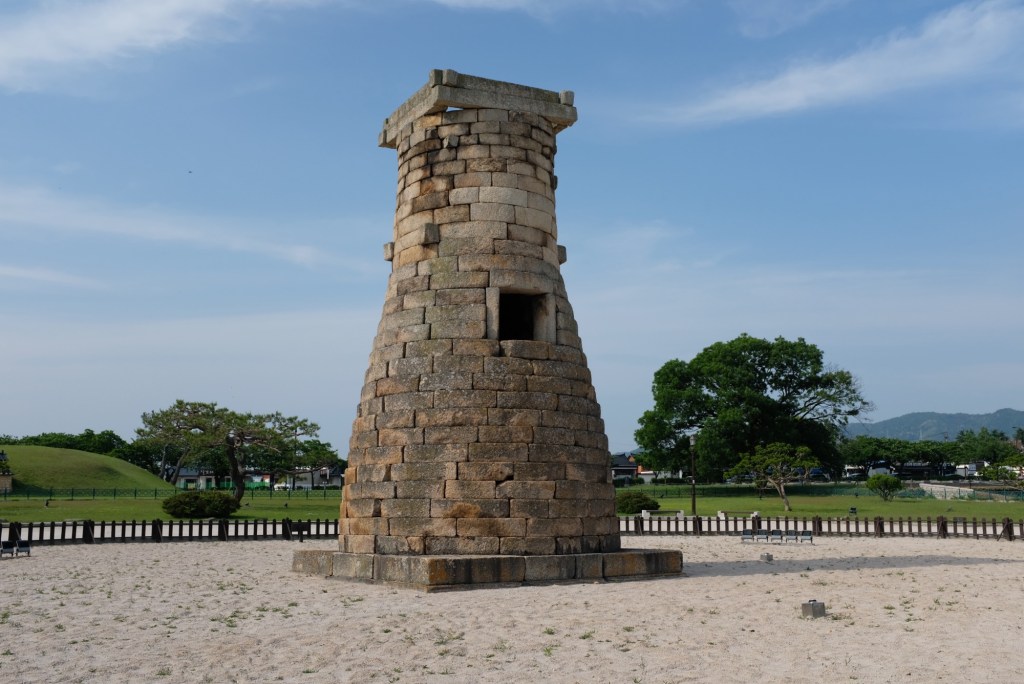
To get to the museum, I had two options – a more direct easterly route, or the more roundabout route that would take me past Woljeonggyo bridge. The sun was swelteringly hot and I was profusely sweating in my jeans, so of course I chose the latter, letting my visit to the ancient observatory of cheomseongdae wait until my walk home.
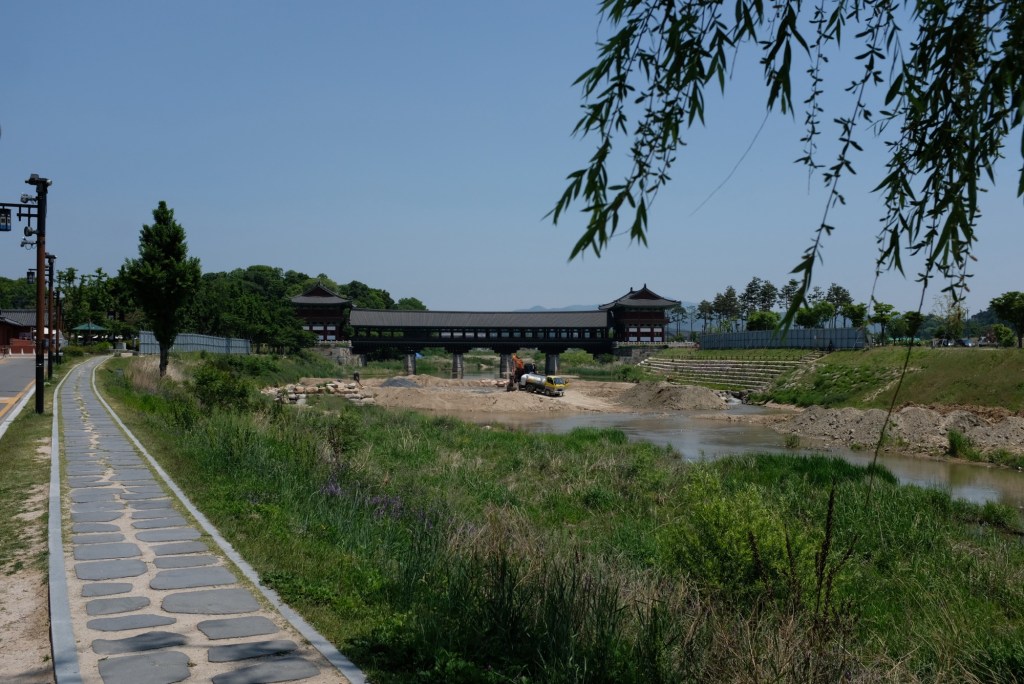
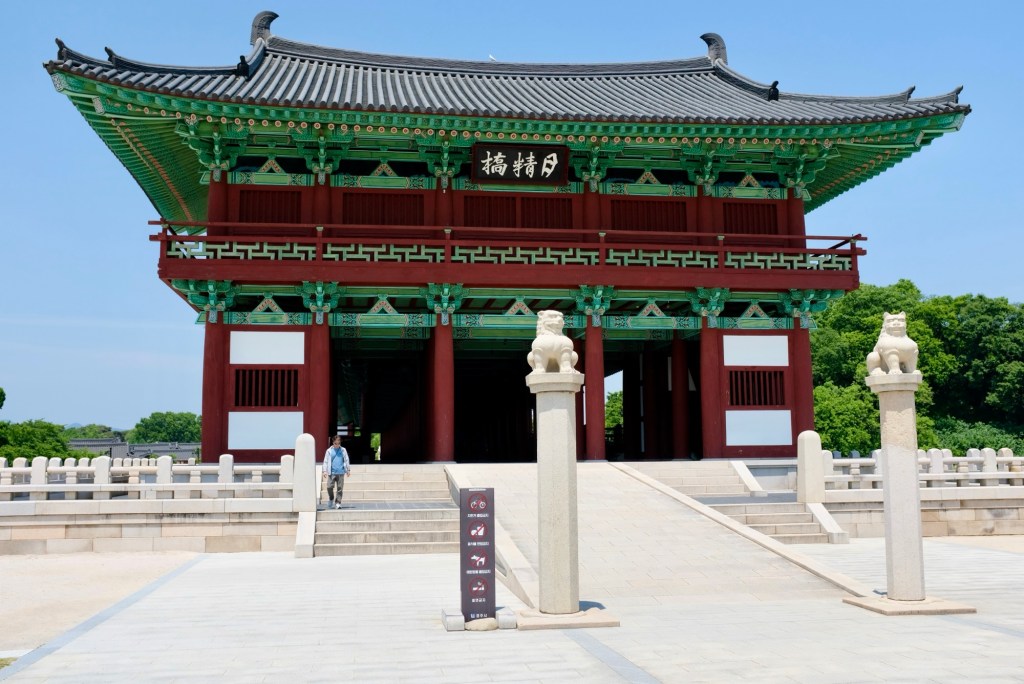
The bridge is stunning, with heavy wooden posts painted a deep red, and colorful lintels. This bridge was originally built in the Silla period (~670 AD), and lost during the Joseon Dynasty. As with many such structures of that age, the current bridge is a reconstruction that began in 2008.
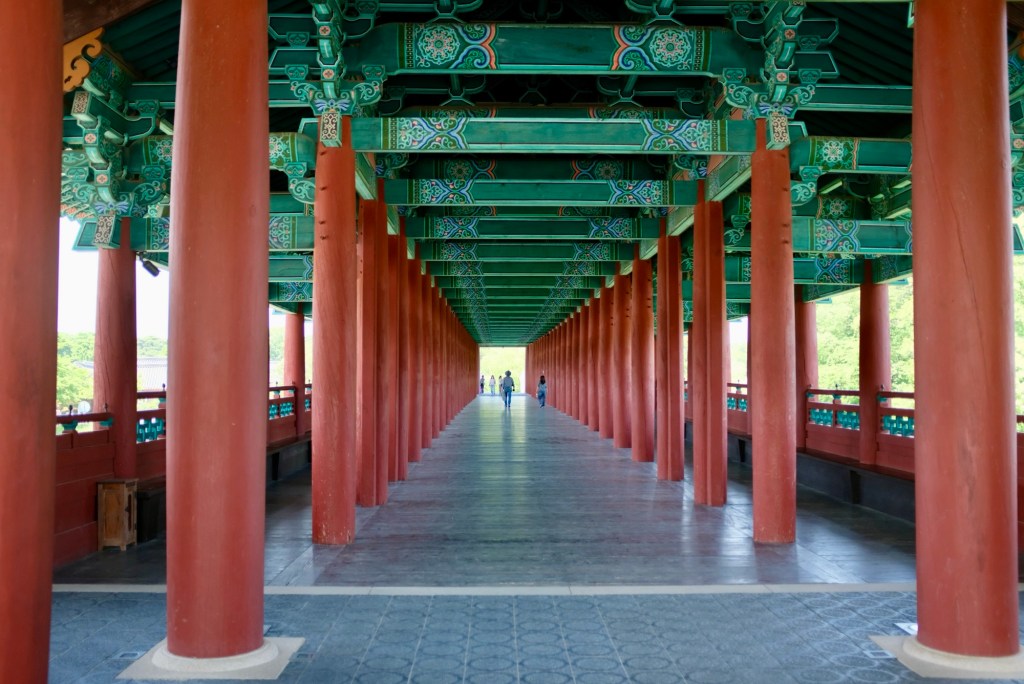
I appreciated a moment in the shade on my walk.
Eventually I arrived at the National Museum, which is more of a complex than a single museum.

I began my stroll through its rooms not quite knowing what to expect, and eventually became more and more enamored. By the end of my visit I had decided that this is one of the better museums of its sort that I’ve ever visited. It isn’t really curated for an English-speaking audience, but that’s OK.
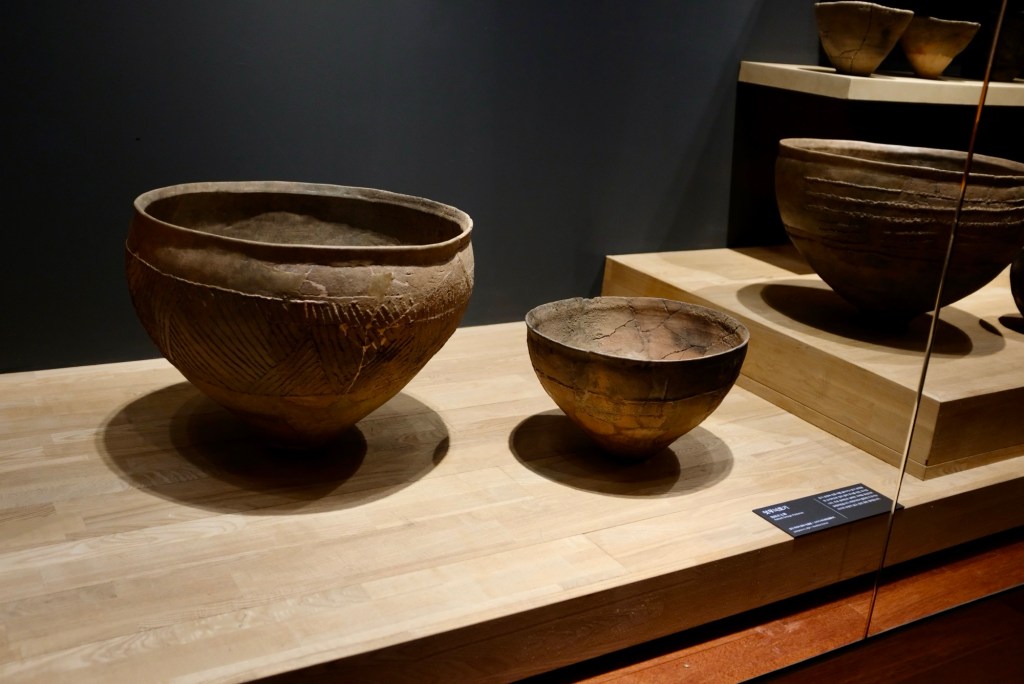
It begins in the neolithic period, but focuses almost entirely on the Silla period, and that’s where it shines.
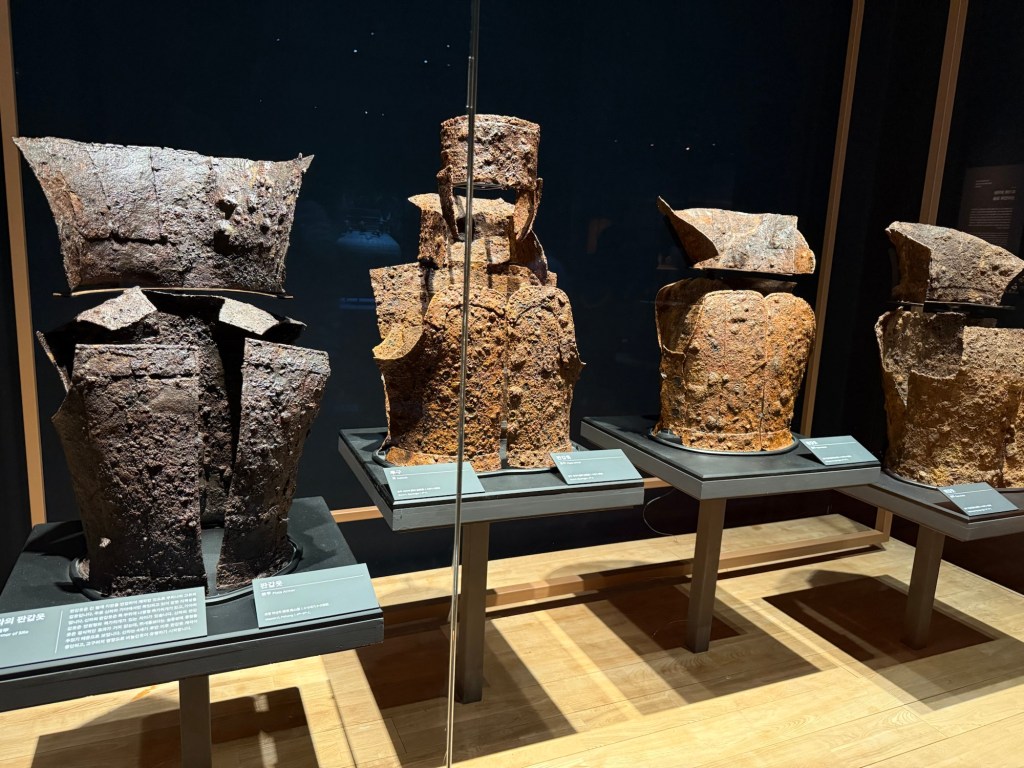
This ancient plate armor, once worn by fierce warriors, is now worn by the passage of centuries. Yet even so it remains stunning.

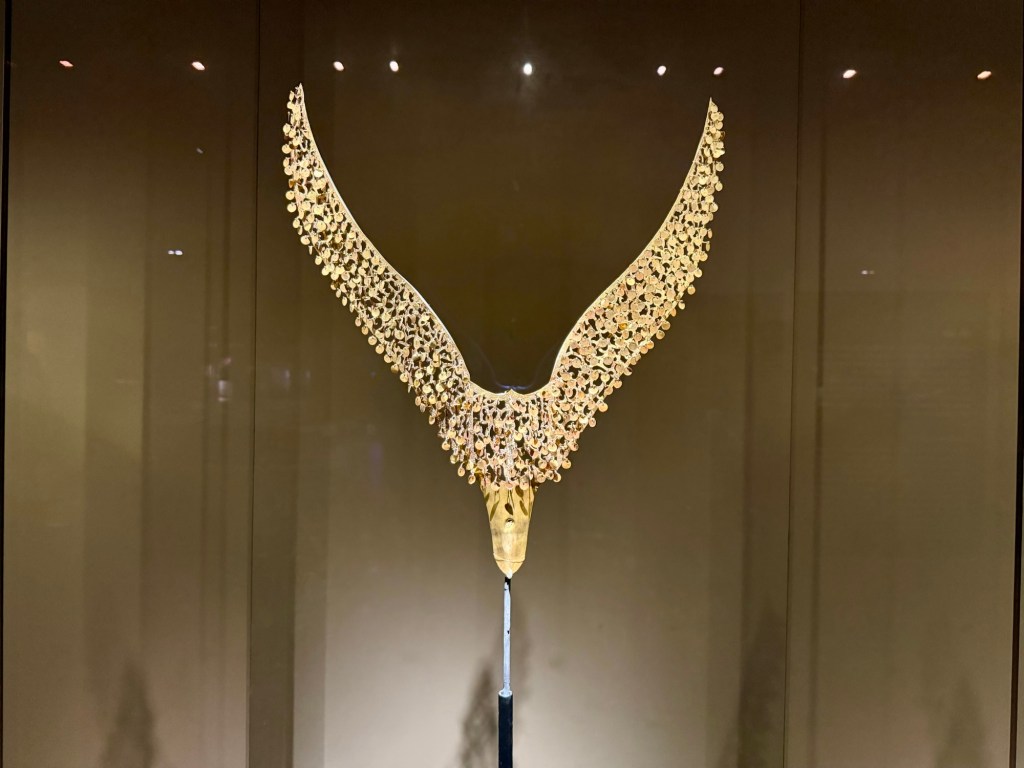
This crown and belt from one of the Tumuli reminded me of the glorious jewelry from the tumuli of Vergina in Greece.
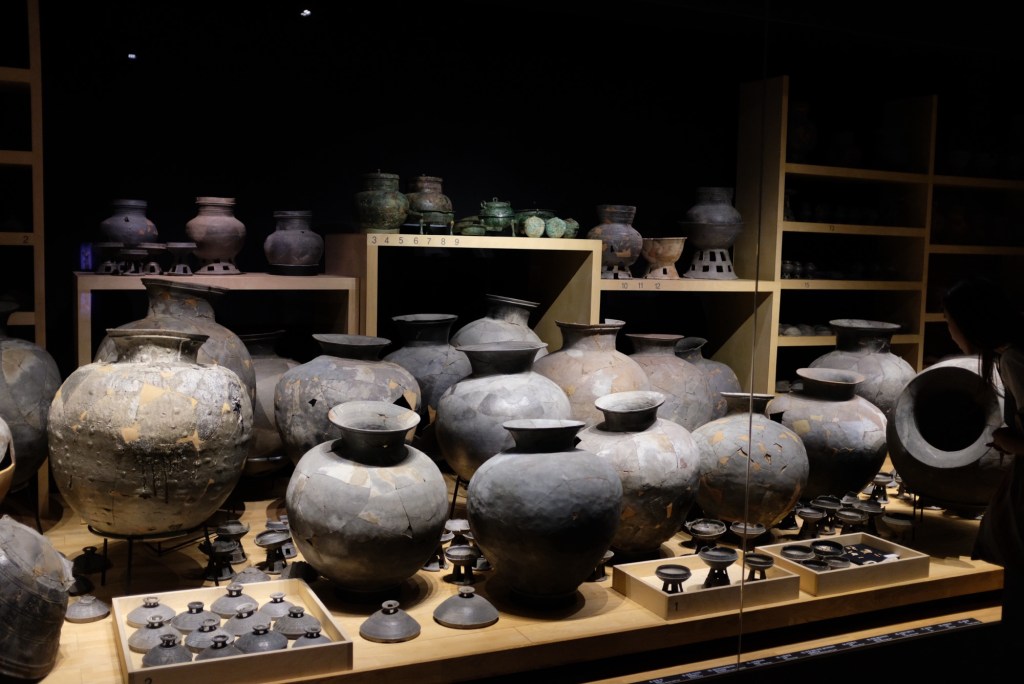
And there was just something about the humanity represented by this breathtaking jumble of urns.
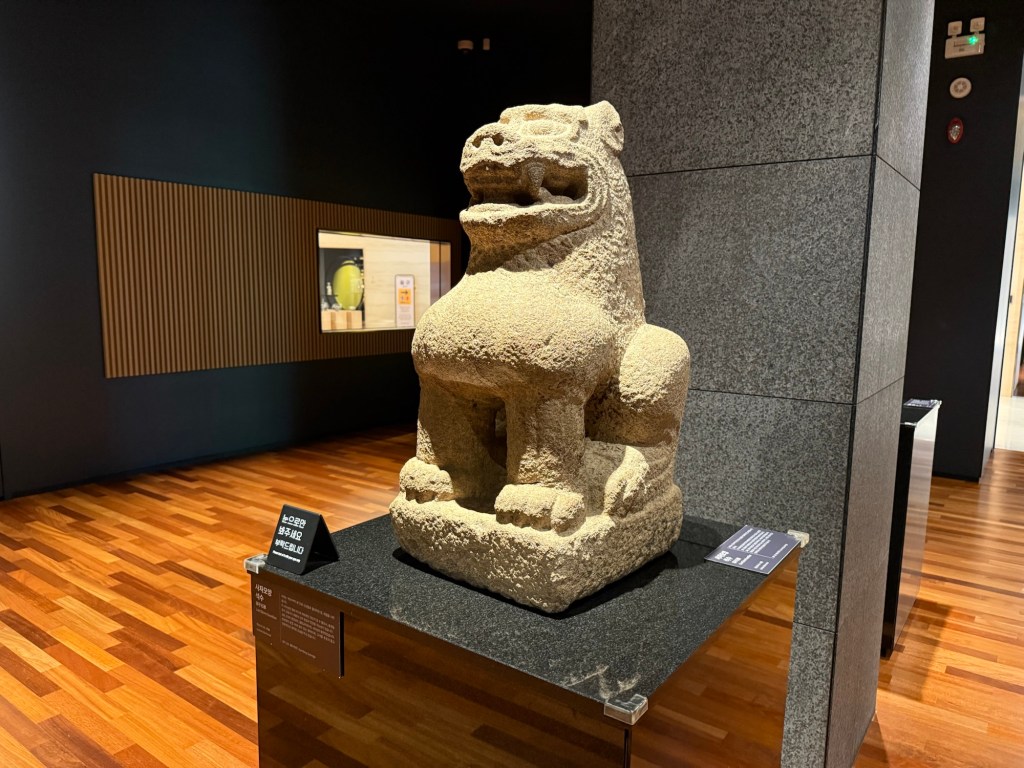
I meandered through the rooms of museum, taking in what I could, and trying not to be overwhelmed.
Before this trip I didn’t know much about Korean history, and I guess I still don’t. But I know more than I did when I started, and that’s a step.
Once upon a time, a great civilization lived on these lands, and they have stories to tell if we take the time to listen.

 butterblogger