I had come to Gyeongju for history, and I found it in the form of enormous verdant grassy mounds surrounded by ancient shady trees under a warm azure sky. I know that for a lot of people these would be just piles of dirt, and otherwise meaningless, but for me they meant much more more than that.
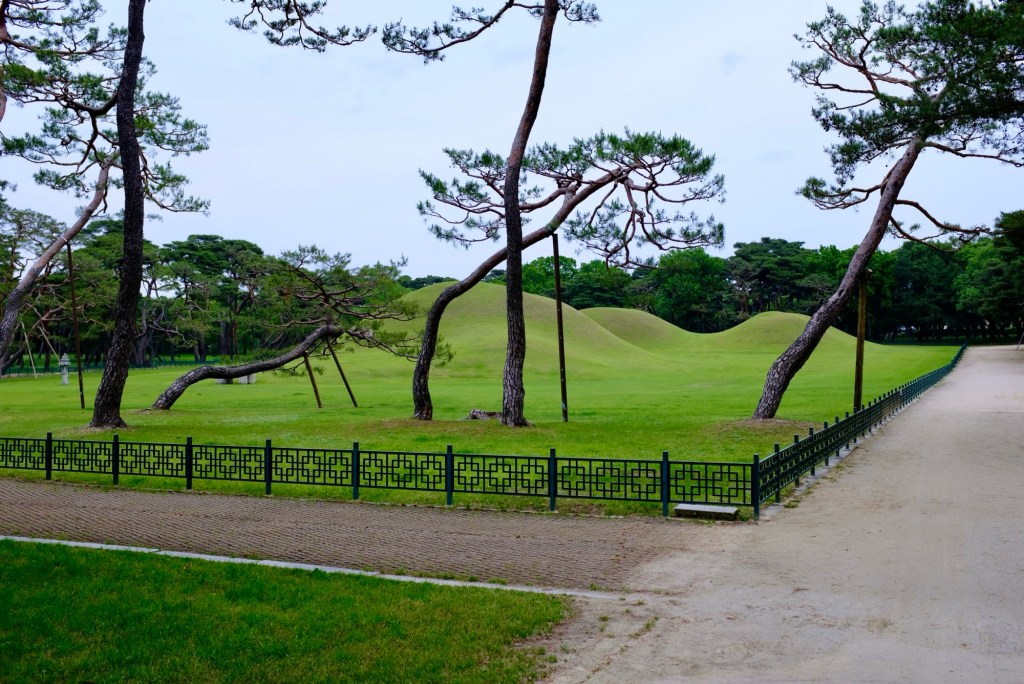
You see, I was standing in front of the Five Royal Tombs, which are known to be the burial places of the founding royal family of Silla. Buried here, under these five great mounds, are King Hyeokgeose, and his wife, Queen Aryeong, his son King Namhae, his grandson King Yuri, and his great-grandson King Pasa. King Hyeokgeose passed in 4 AD, and four of the first five rulers of Silla are entombed in this land.
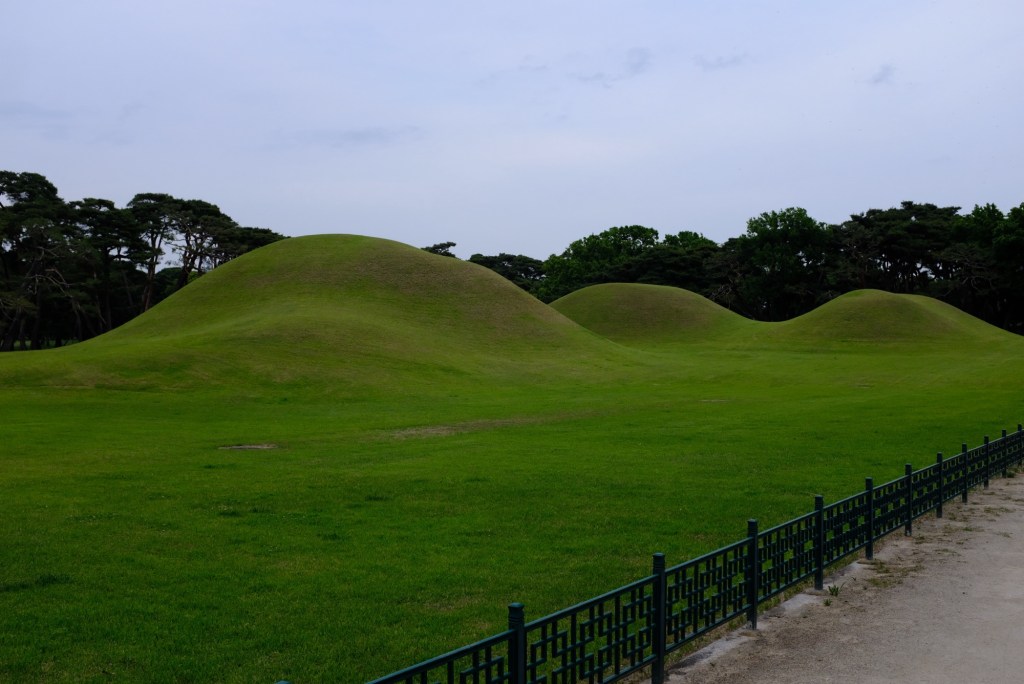
I counted the mounds, and two of them are doubles, suggesting a count of 7. The largest, belonging to King Heokgeose, had a small second peak attached to one side. I found no explanation for this, but imagined that perhaps a lost child might be buried with him.
The Silla Dynasty ruled most of Korea for almost 1000 years, and this was the start of it all. I reflected on the fact that one of the great ruling families of history had started (or ended, I guess) here, and I felt grounded to that history in some small way.
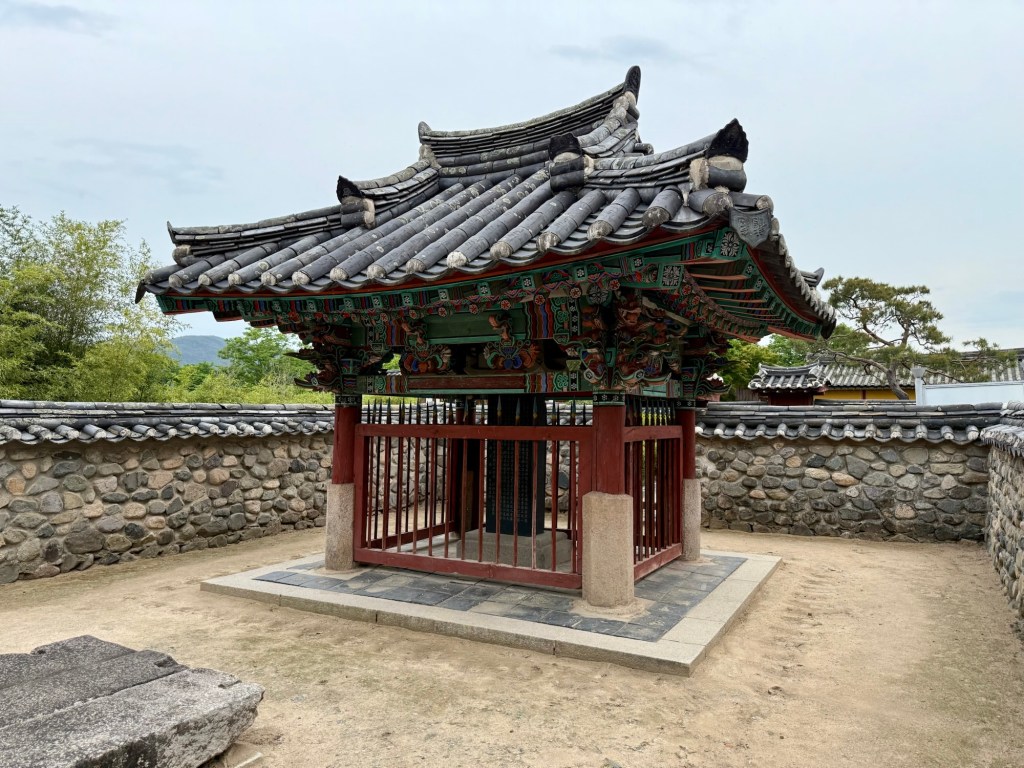
Nearby was the Well of Aryeong. As the myth goes, the queen was born from the armpit of a dragon at the site of this well, and it was in commemoration of the well that she received her name.
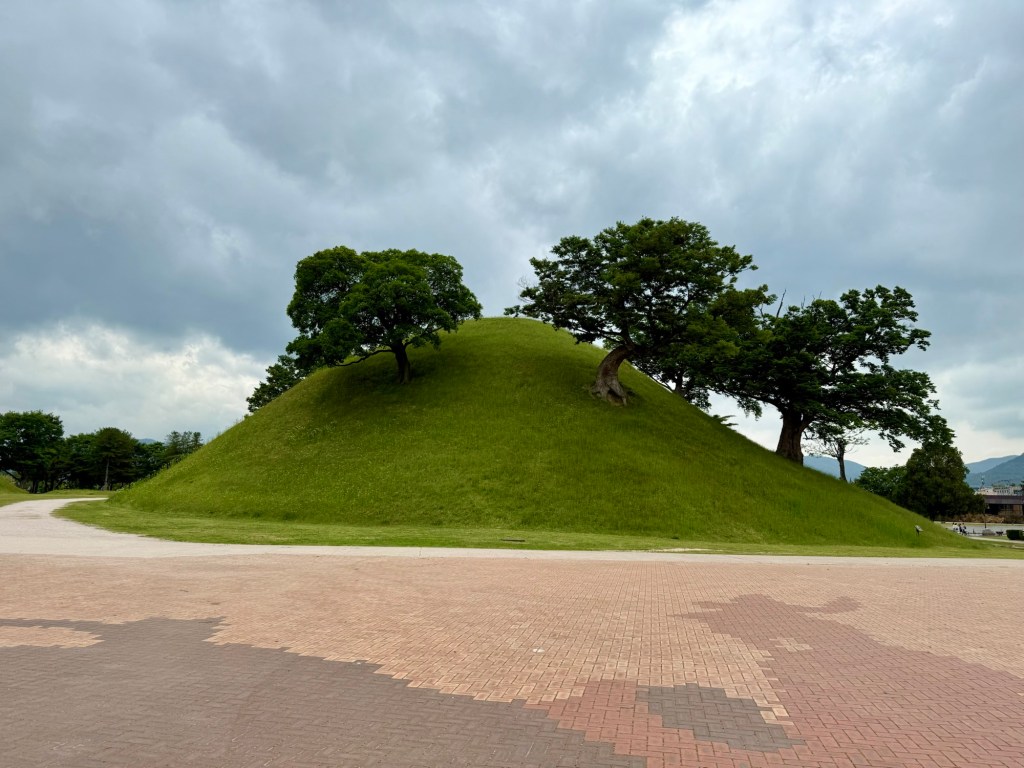
The mixture of truth and legend here is enchanting, and similar to what I have seen in so many other parts of the world. While I don’t truly know these myths (vs the Greek and Roman mythology with which I was raised), it really doesn’t matter. The linking of story and truth, grounded in the tangible locations, sings to my heart and the things I love most about travel.
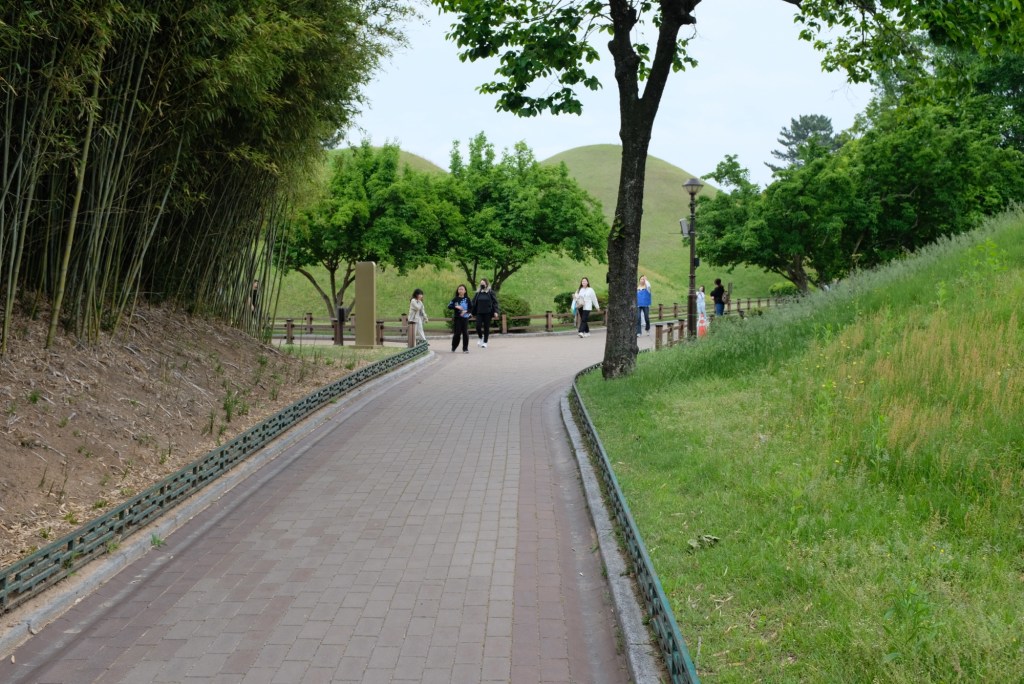
What’s most serendipitous about the Five Royal Tombs is that I almost didn’t see them. I had spent all day chasing tumuli and sites across town, and had come quite close to missing this place.
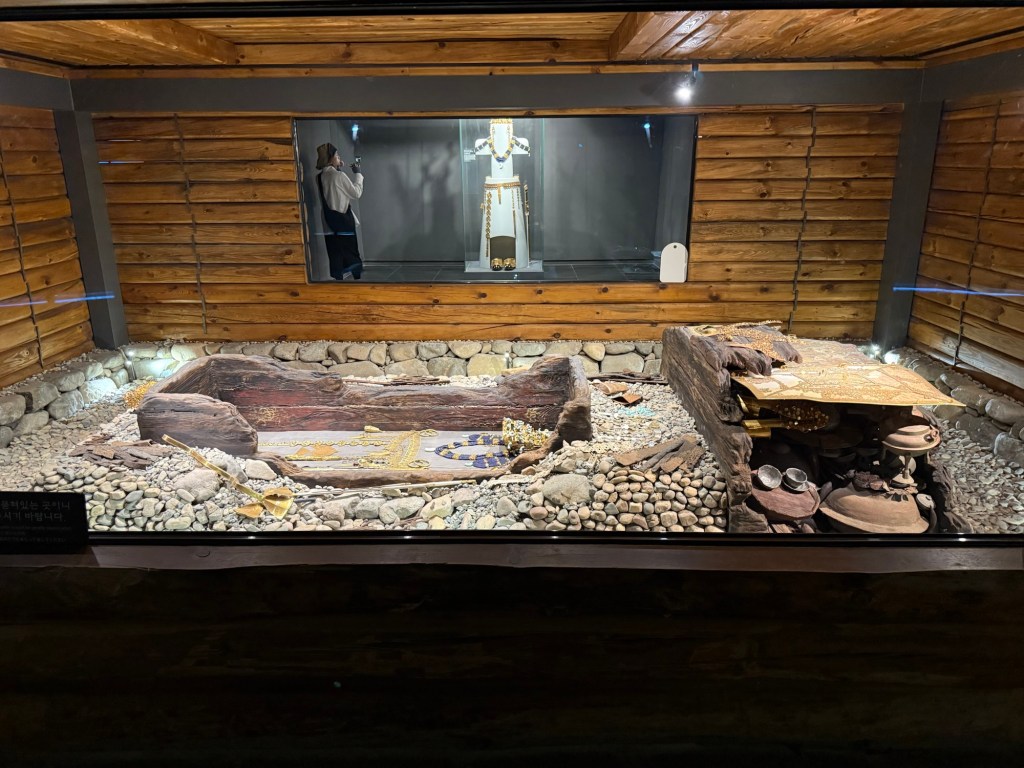
I had entered the underground Cheonmachong Tomb, with its beautiful horse symbol and extraordinary riches (all presented as replicas).
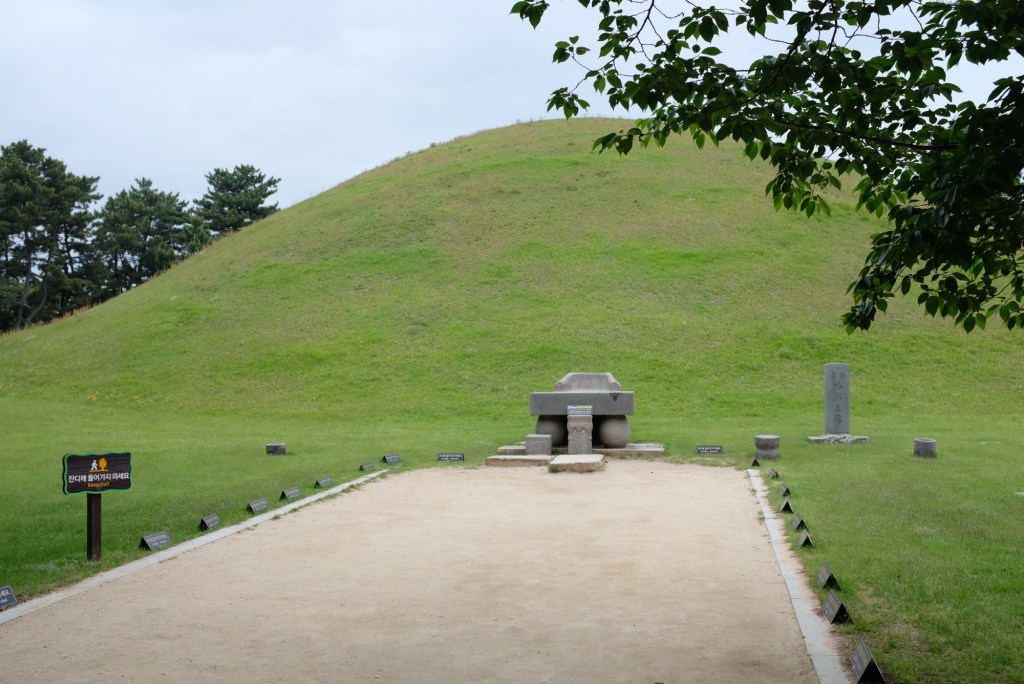
I had paused momentarily at the tomb of King Michu with its silent markers, keeping time against the waning ages of the world.

And after another long walk I had visited the former site of the Donggung Palace, which once stood proudly next to Wolji Pond. A scant three buildings (reconstructed) stand here, but at one time it was clearly glorious.
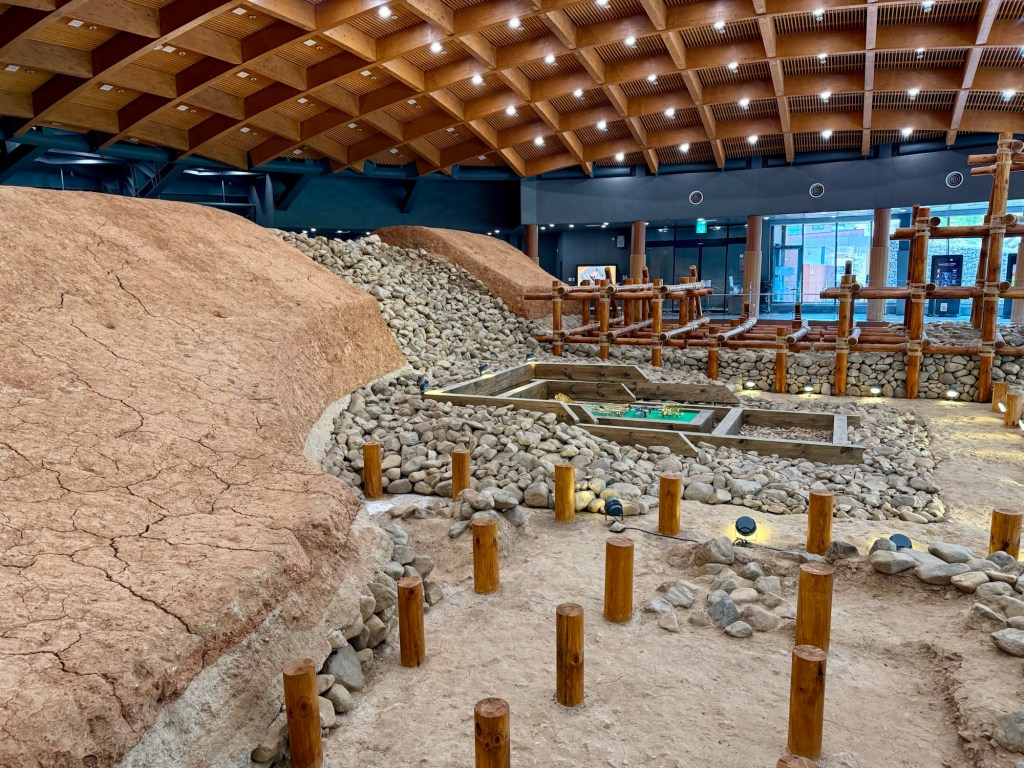
Much later in the afternoon, after visiting another opened tumulus, long since defiled by the Japanese, but now presented in respectful manner, I thought the soles of my feet had been spent and my day was finally done.
Yet I looked at the clock and the map and concluded that I had time for one more stop as the evening approached.

It took 25 minutes to reach the Five Royal Tombs, and when I arrived the gates appeared closed. Fortuitously, one of the gates was unlocked, and I was relieved when I found my way in.
At the end of the day, that singular extraordinary moment — that instant when legend and history became inseparable — was the best thing I would take home with me.

 butterblogger