“Whoever saves one life saves the world entire.”
Oskar Schindler was given a ring with that Talmudic inscription by the people he saved.
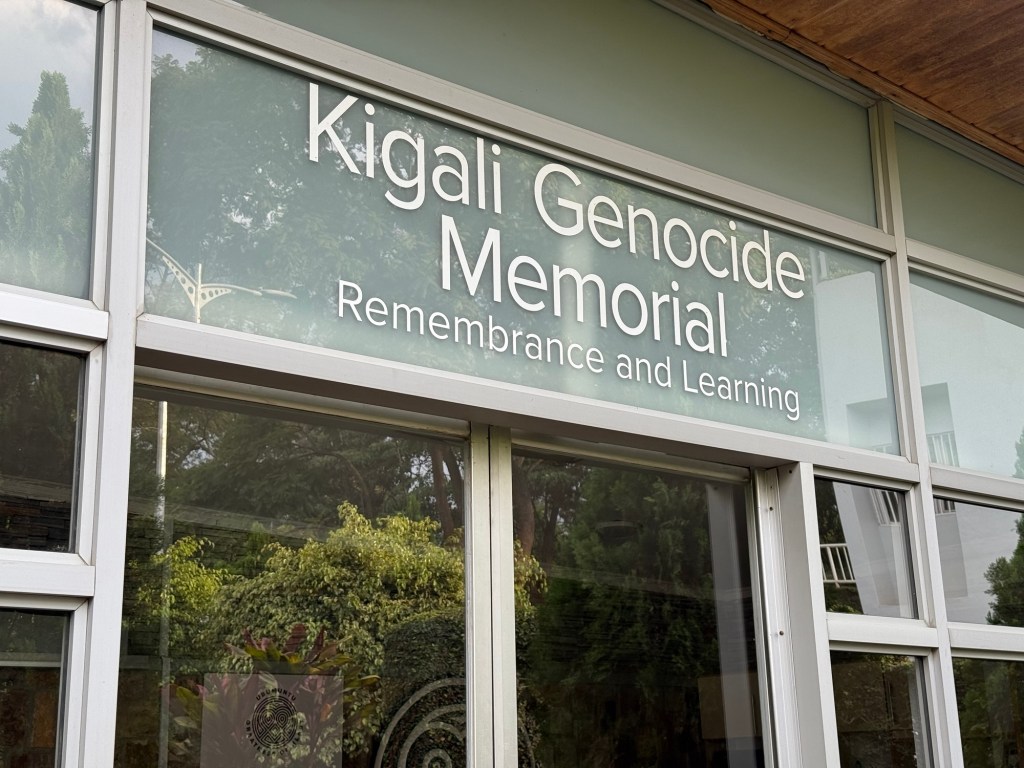
I couldn’t help but reflect on those words today at the Kigali Genocide Memorial, where we spent the afternoon commemorating the lives lost in the Rwandan Genocide, a catastrophe of humanity that lasted a mere 100 days in 1994. Estimates range from 500,000 to 1,000,000 lives brutally extinguished during that brief window.
I should probably clarify for my readers, but I am in Kigali, Rwanda right now. This is a work trip, so I wasn’t really planning to blog anything, but I couldn’t avoid addressing what I saw today (you won’t find many photos here, as we were asked not to photograph inside the memorial).
When I was first invited on this journey, I realized I didn’t know much about Rwanda. I remembered the stories of a war torn nation in the 90s, but hadn’t honestly paid much attention to the renaissance that has happened since. Then again, to be fair, I didn’t know what had happened before.
The story of the Rwanda genocide doesn’t begin in 1994, although that’s when it reached its culmination. In fact, it goes back millennia to when the Tutsi tribes moved into the region, where they lived peacefully alongside the Hutus and the Twa. Things begin changing when the Belgian colonists came in, however, and assigned people classifications.
Suddenly longstanding differences were exaggerated between neighbors, differences that became starker over years and decades.
As best I can determine, there is no simple answer as to why this happened. There is no single smoking gun, but a gradual buildup of hatred that occurred over this time, the complexity of which is beyond my ability to explain. In 1994 the Hutu leader was assassinated and the Hutus of Rwanda were instructed to kill the Tutsi in response.
And that’s exactly what they did.
Over 100 brutal days, they raped, murdered, and mutilated friends and neighbors in a most barbaric and merciless fashion using machetes, guns, and grenades.
The displays in the memorial, of clothes and bones, evoke other genocide memorials I have visited.
The images of heads and faces with massive machete gashes were gruesome.
And the stories of some of the children and how they died were soul crushing. They were innocents who liked things like cake, and ball, and running with their parents. And they were hacked to death.
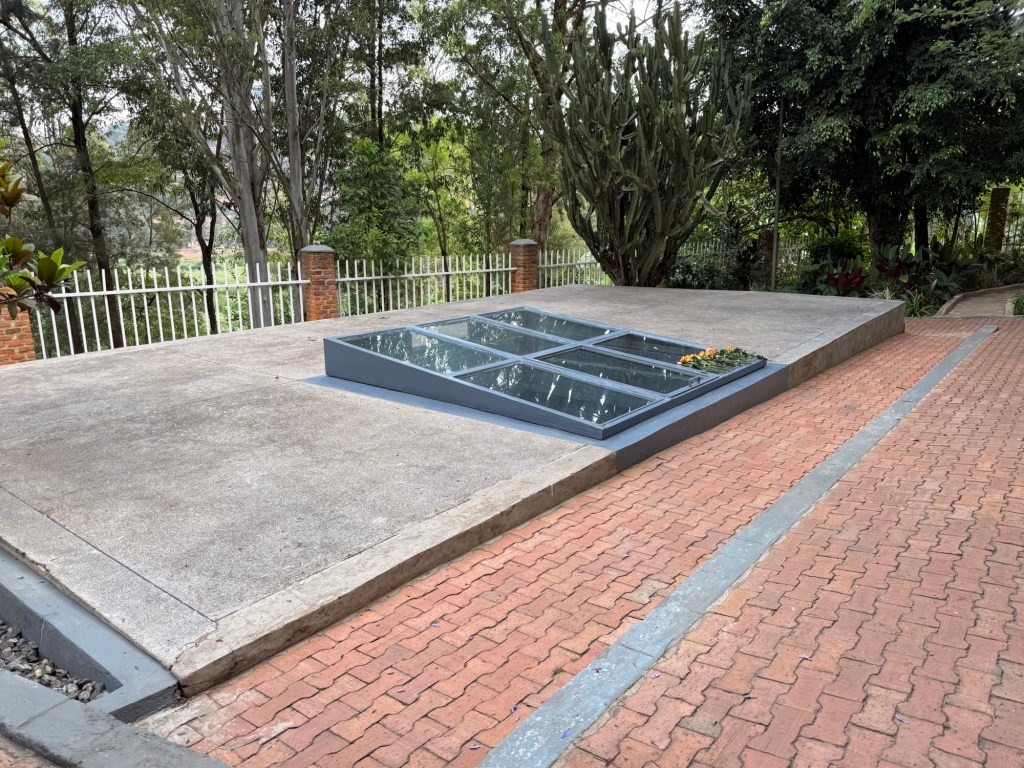
Looking over some of the mass graves I thought about this post, and I was going to encourage you to think about who you are being told to hate in the world today. Who do our leaders despise, and who do they ask us to deride?
But I want more hope than that, I want more hope for all of us.
I reflect on Oskar Schindler and Corrie Ten Boom, two names from the Holocaust, who hid Jews to protect them from genocide.
And I can’t help but consider that there was another set of stories in the memorial today. They were only allotted to one room, but for me they may be the most important. Some of the names I learned today, both at the Memorial and after, are the Righteous of Rwanda.
Zura Karuhimbi is but one of those names – she exaggerated her reputation as a witch in order to save over 100 Tutsi from the Hutu militias.
One of the things I have discovered over the years, is that when times are darkest we should look to the righteous, but they won’t be easy to find. They won’t be on pedestals with microphones pointing fingers. Instead, they will be discrete – they will be hiding in basements, behind false walls, and in closets. They will be protecting as many of the vulnerable as they can, and doing so at great cost, shielding them with their lives.
They truly are righteous, but never self-righteous; they are simply doing what they can to save the people they can.
And they are saving their little part of the world.
And knowing that they are there — well that gives me hope.

 butterblogger