There’s something about permanence and persistence that always gets me. Things that come from the past and are still recognizable, retaining relevance long after they were first created. They tie us to another time and unite us in our humanity across centuries, millennia, and epochs, and sometimes they do so in unexpected ways.
This is why I’m so enchanted with our most ancient history — it brushes against the days that precede the written word. Medieval history has engaged me, but never in quite the same way. It’s old, but not on the same scale.
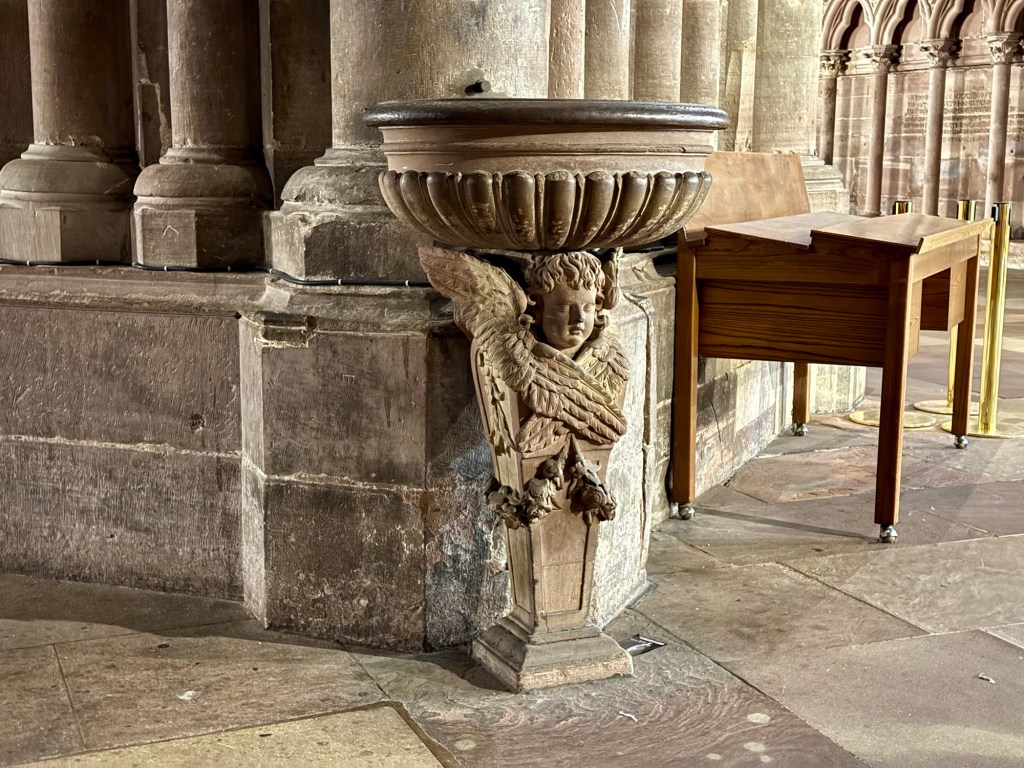
Even so, I do my best to find things to relate to, and this stoup in the Strasbourg Cathedral was one such item that captured my imagination.
I noticed it as I was preparing to exit the great basilica. I had dipped my fingers gently and ritually into its dried basin to cross myself, and I slowed for a moment of reflection. How many countless others had placed their fingertips here in the same way across the centuries? How many children had crossed themselves for the first time here, and how many elderly frail fingers had trembled with some of their waning strength to do so?
This stoup has seen a lot of lives come and go.
It’s not as old as the church itself, however. I can tell that by the style, which a bit newer than the surrounding edifice. The church itself began its life as a Romanesque cathedral whose first stones were laid in 1015, on a site which had hosted a church since at least the 6th century. I wonder if there was another temple here before that. It wouldn’t surprise me, as holy ground persists.
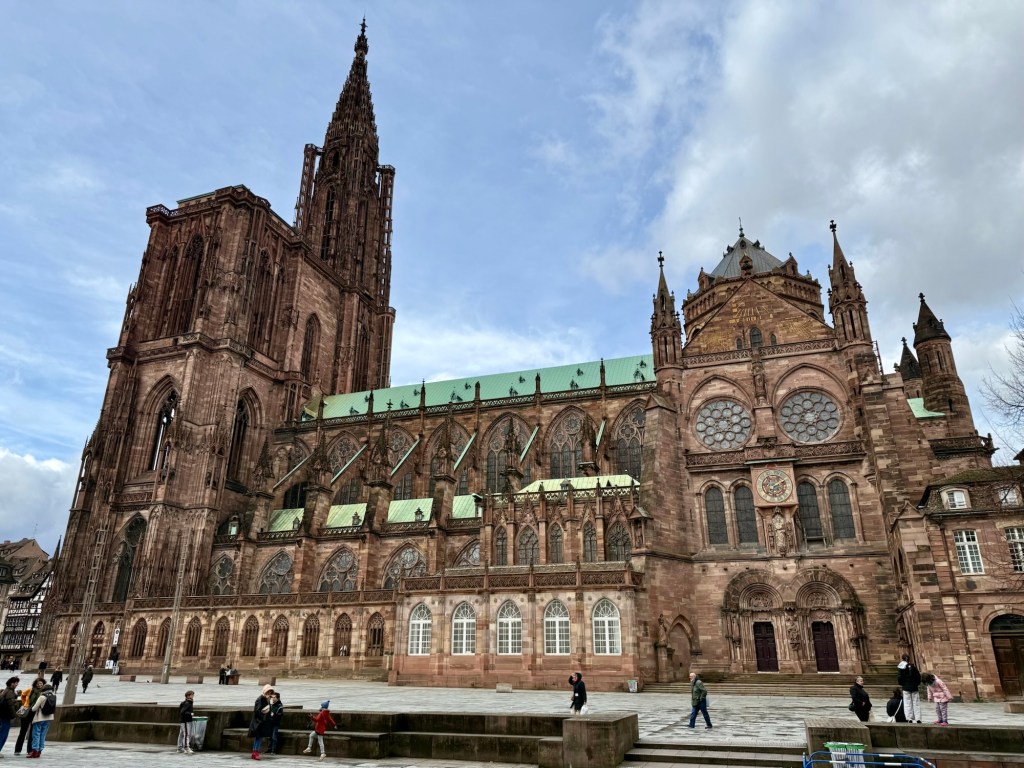
Over time, and following fires, the current cathedral was constructed on the foundations of the 11th century structure, in a timeline beginning 200 years later, in the 13th century, reaching completion of its lone spire in 1439.
Today she stands as an ongoing testament to those centuries of labor in her construction and the Gothic expertise in graceful architecture.
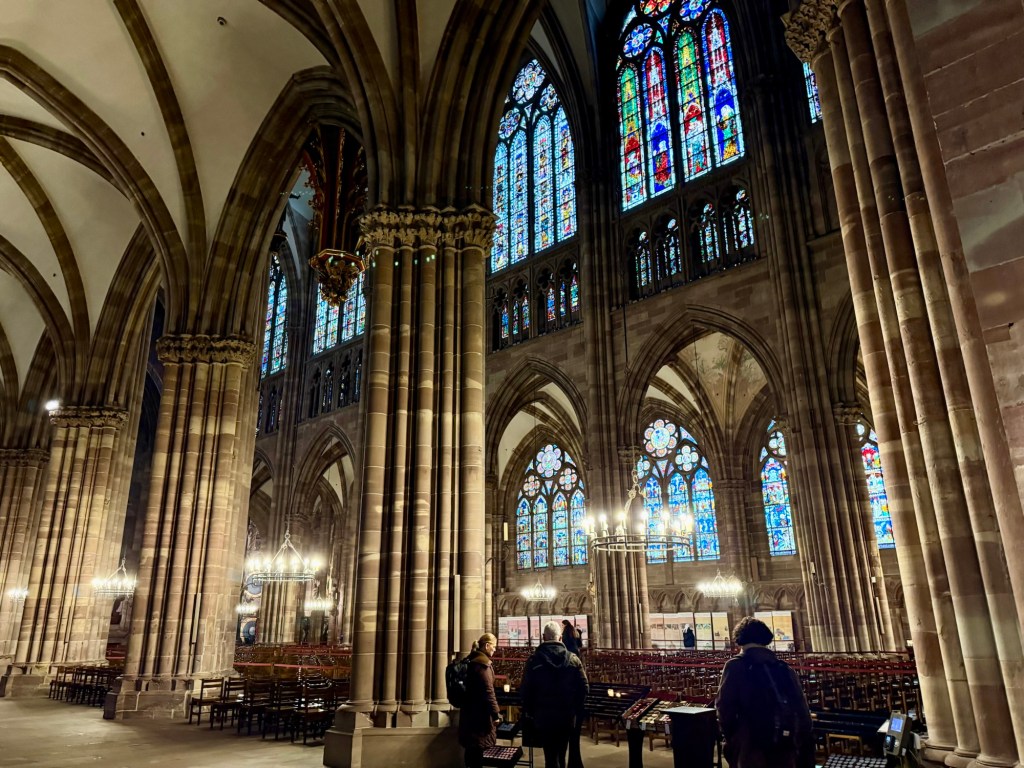
Upon entering, the windows were the first thing that captured my attention. Immense stained glass windows line the sides of the nave, a luminous manifestation of the delicate Gothic style. It reminded me of the Sagrada Familia in Barcelona, but light is a feature there, a spectacle, painting the interior with shifting bold hues. Here, the light is just a comforting presence.
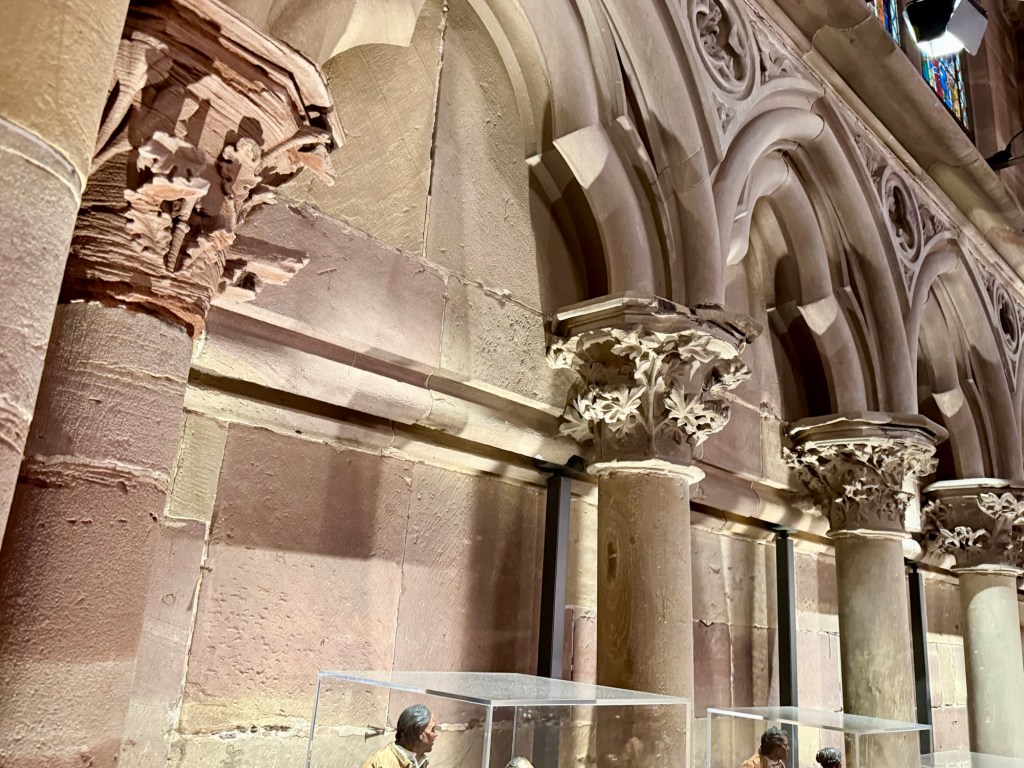
There are so many details in this cathedral that warrant attention, and I barely know where to begin to appreciate them. I did notice these columns below the windows, however. They may not seem like much but in reality are extraordinary. No two capitals are quite the same, much like the thousands of unique faces on the facade outside.
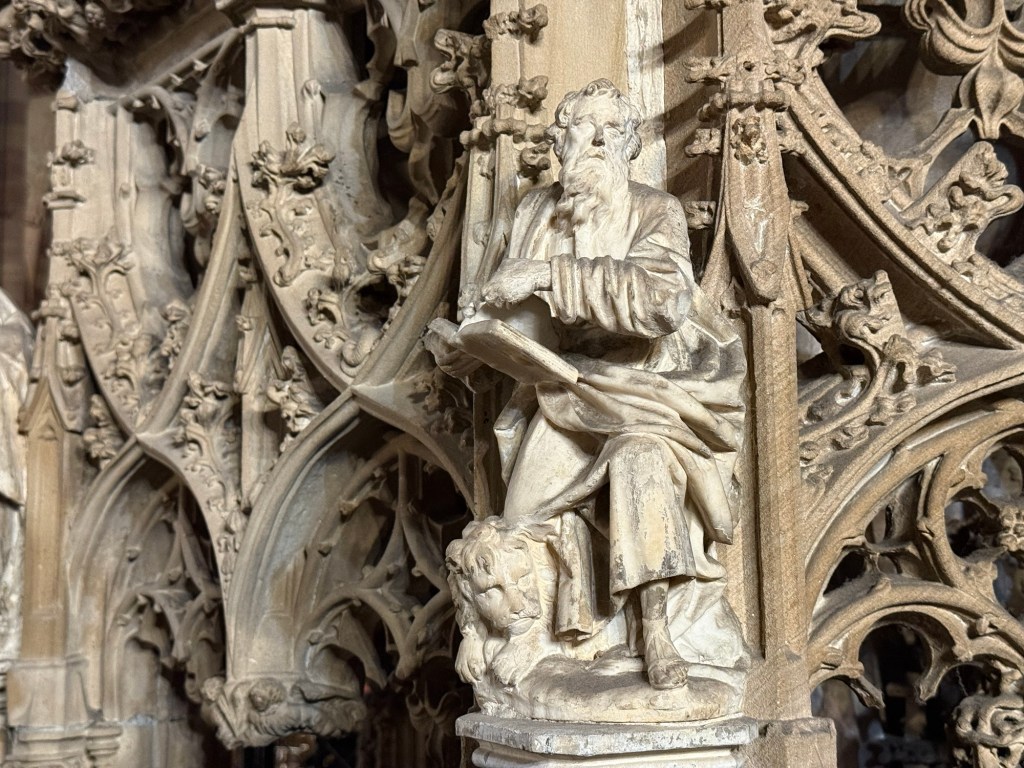
And I focused for a few moments on the minutiae of this small statue of a prophet adorning the pulpit.
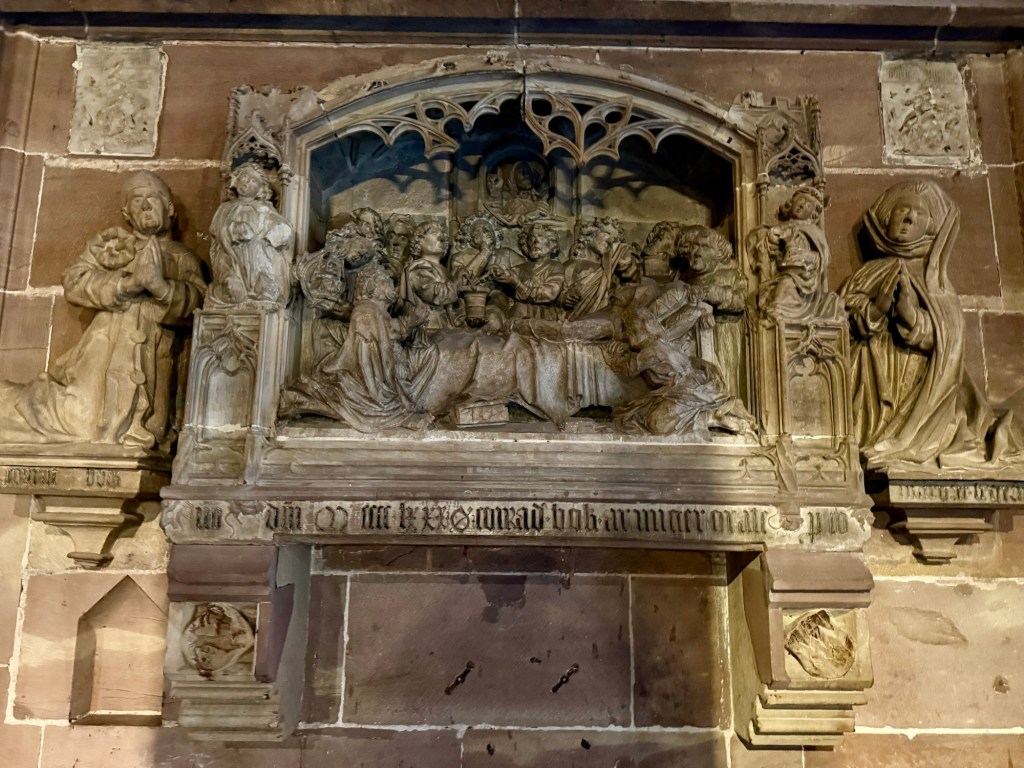
I remember being taught once that the Gothic sculptors didn’t have the skills of earlier eras, as they weren’t as adept with depiction of individuals, and maybe that’s true. Or maybe it’s a sort of bias. In any case, I can see that perspective in the coarseness of some of the fine work on these faces.
But the work of Gothic architects and masons is mind-blowing.
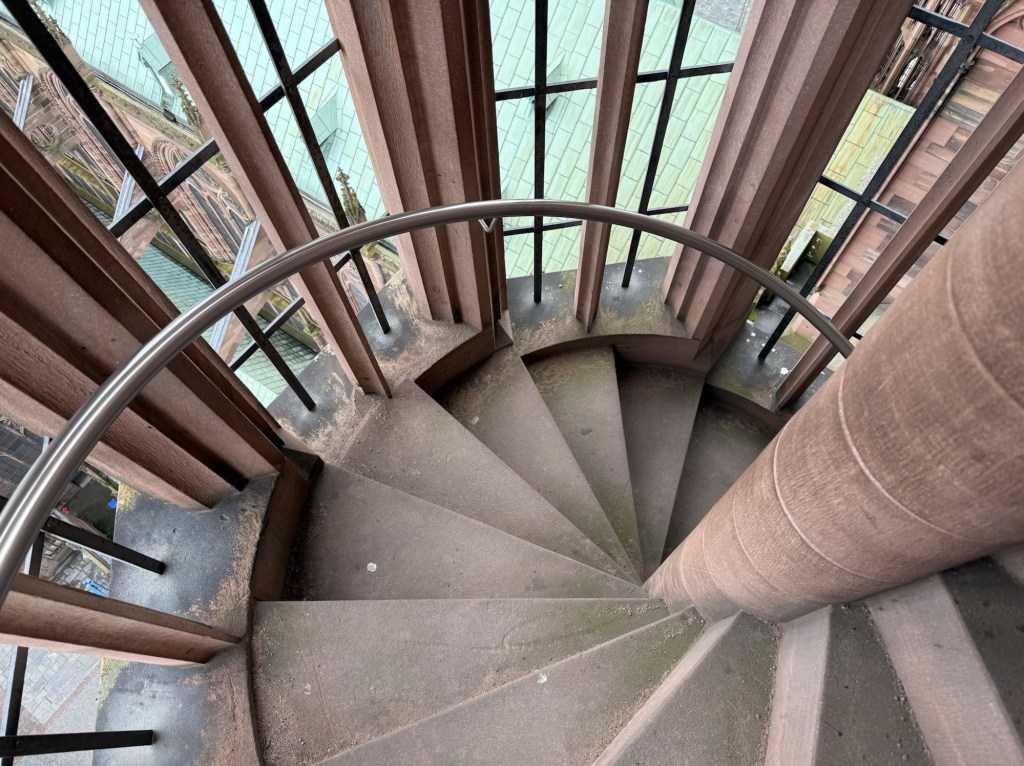
Back outside the church, I paid my 10 euros to climb to the top of the facade in hopes of a view of the surrounding countryside.
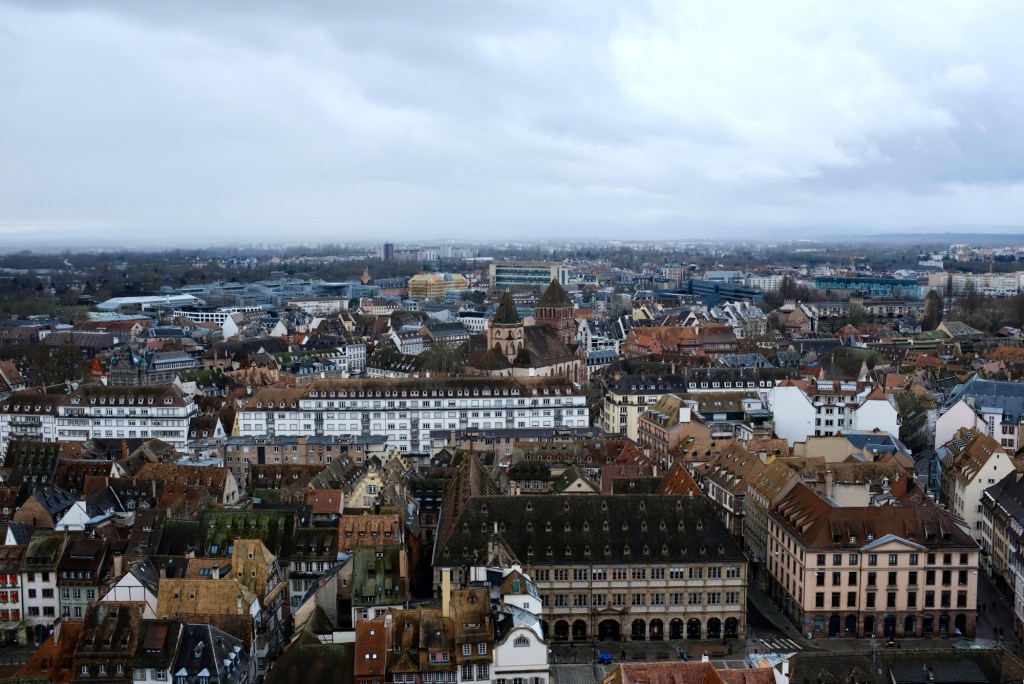
The clouds were low and I could just barely see the Vosges mountains to the west, but what I got was better than the views: I got to see the church up close.
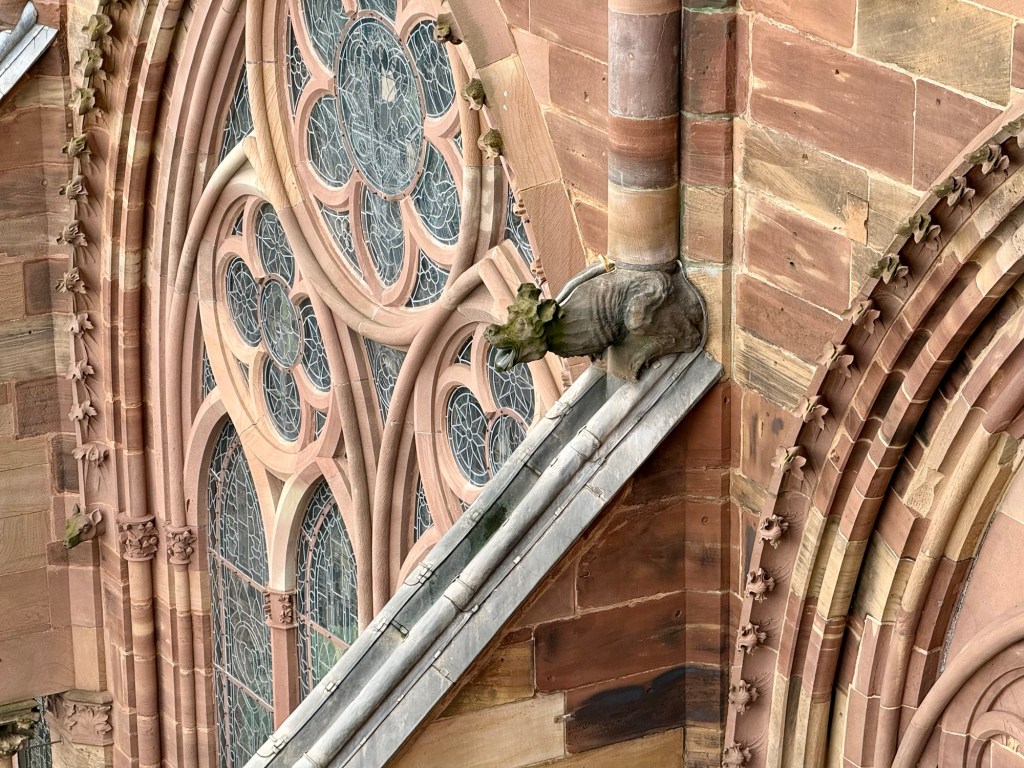
Climbing up the 332 steps I was able to see more of the little details that weren’t as visible from below, such as these gargoyles standing at duty, directing rainwater down from the roof.
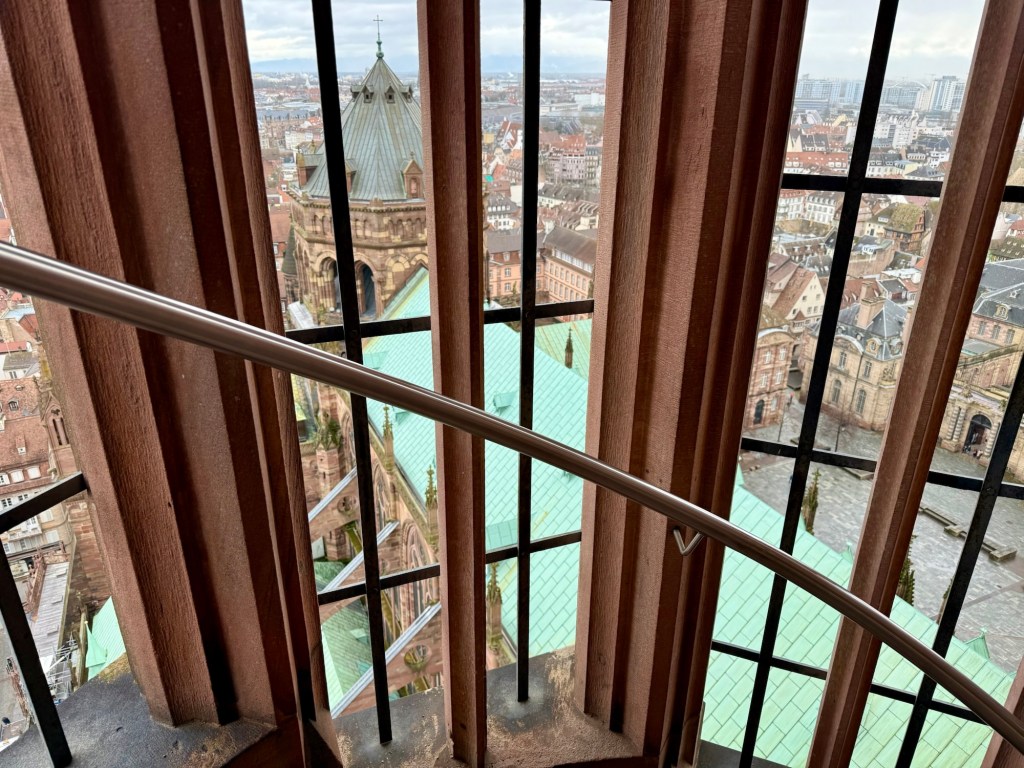
But the thing that impressed me the most were the vertical lines of inches-wide stonework that reach high into the sky, supporting everything.
I thought architectural stone would be too brittle and fragile — I thought it had to be heavy. I didn’t know it could do this.
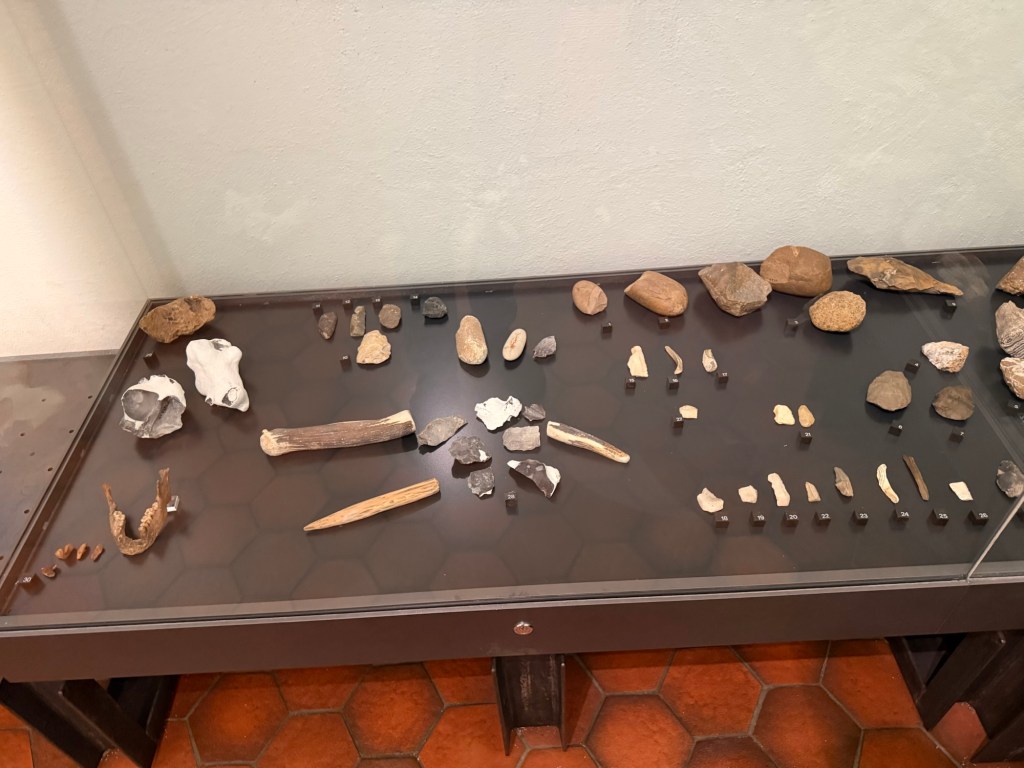
Later in the afternoon I walked out of the archaeological museum where I had seen paleolithic tools dating back hundreds of thousands of years, rock that had been coarsely shaped into the roughest of instruments, attesting to man’s long existence in this part of the world. I’ve seen the like before, but today they didn’t excite me as much. Perhaps I’ve seen enough of them.
Exiting the museum I was confronted by the colossal stone church, and I considered the prehistoric stonework I had just seen and the intricate stonework that stood in front of me. Ages of human existence and evolution separated them, but they are all expressions of the same thing: humanity.
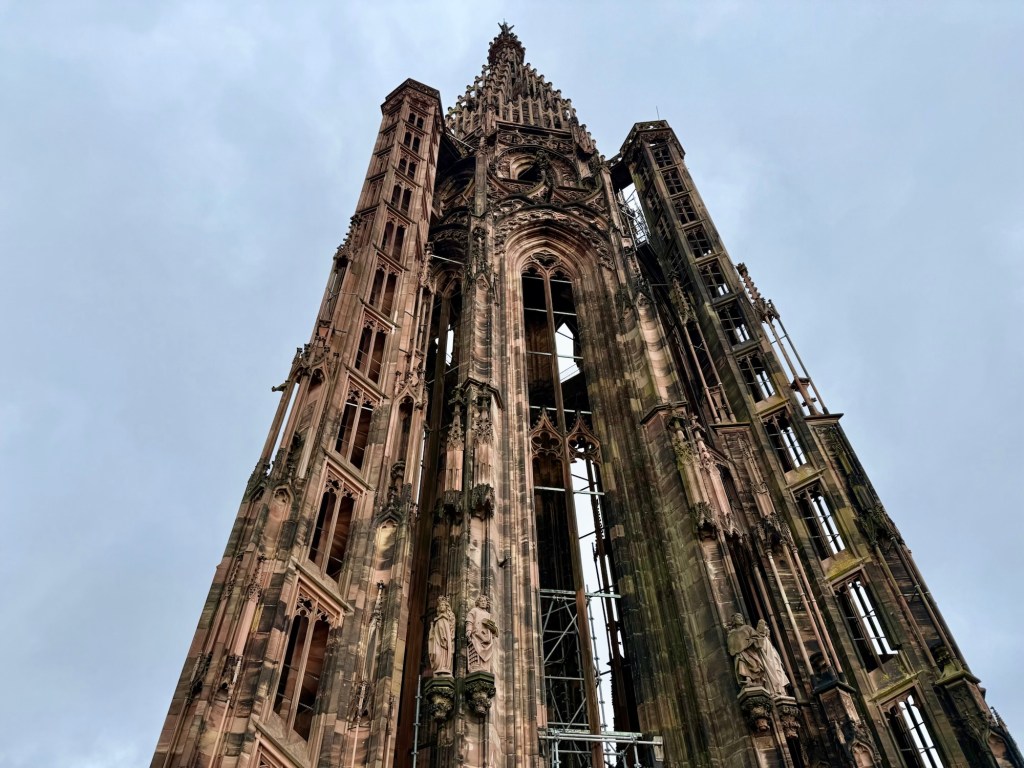
My eyes were carried upward, to that grand spire, pointing high into the sky, and I couldn’t help but see those inconceivably long vertical lines of carved stone, yearning upward. They were everywhere, creating a sort of scaffolding around the spire, framing it, and defining it in an ethereal mesh.
But in reality, I realized, that filigree stone scaffolding is the spire, and my close-up view earlier showed me something that can only be appreciated from a distance.
Those long stone lines, aspiring toward the heavens, end abruptly at sharp corners. Belying the graceful image of Gothic architecture, they are acute and aggressive. The entire structure looked like a giant subway map to me, or maybe a server farm in the shape of a rocket, its thrusters waiting to be fired.
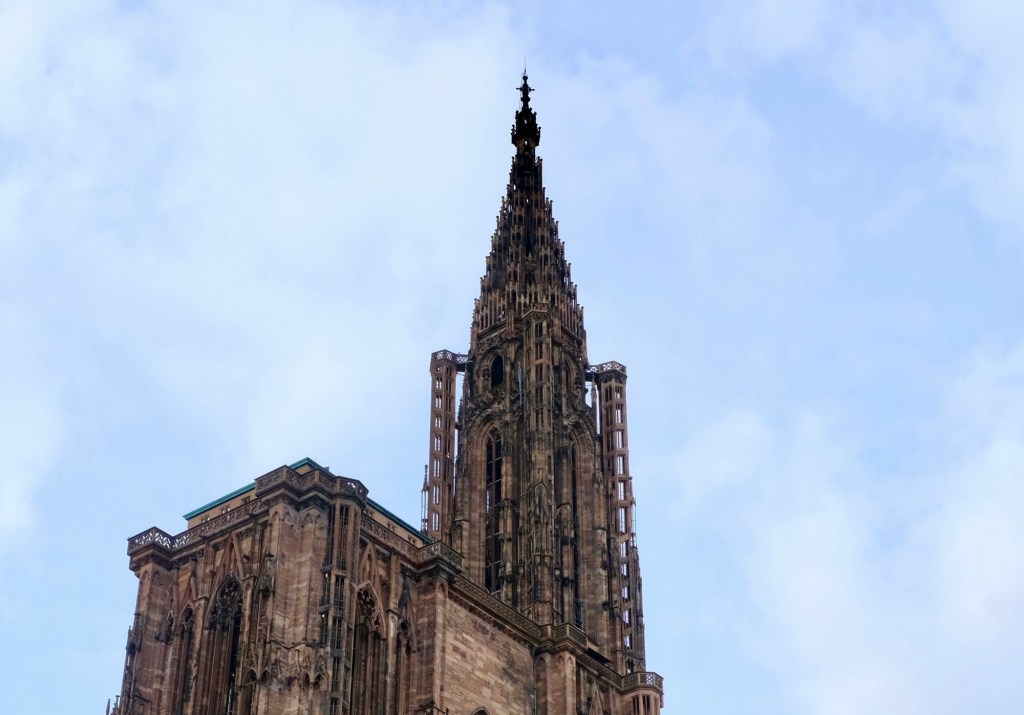
And in that centuries-old spire of that Gothic cathedral I saw something I didn’t expect.
I saw modern art.

 butterblogger