There’s something about faces that is extraordinary. They are our most defining individual characteristic, and perhaps our most expressive. Without a spoken word, a face can effectively convey emotion, intention, judgement. So often, they are our first “tell” by which our family and friends read us. When we want to disguise our feelings we try to mask them there.
And it’s not only human faces that we read. Animals, too, carry expression in their eyes and mouths, and we understand them instinctively, separated though we may be by millions of years of evolution.
In my travels I’ve tended not to photograph faces – at least not of people, anyway. I’m mostly trying to document the places I visit, but I also know I’m sharing a lot more about myself along the way. Still, I consciously don’t show my own face on the blog and I’m certainly not going to photograph strangers. That would be intrusive and a face is personal. It’s intimate.
Faces are distinctive and sometimes, unexpectedly, one will stick with you. I clearly recall the face of an old man slurping ramen at a seat across from me in Kyoto 10 years ago, his weathered eyes looking up over his glasses, his creviced mouth smiling between bites. I don’t know anything about him, but I can’t forget his face.
And suddenly I’m realizing that I’ve written several times about faces the last few days in a way I never have before.
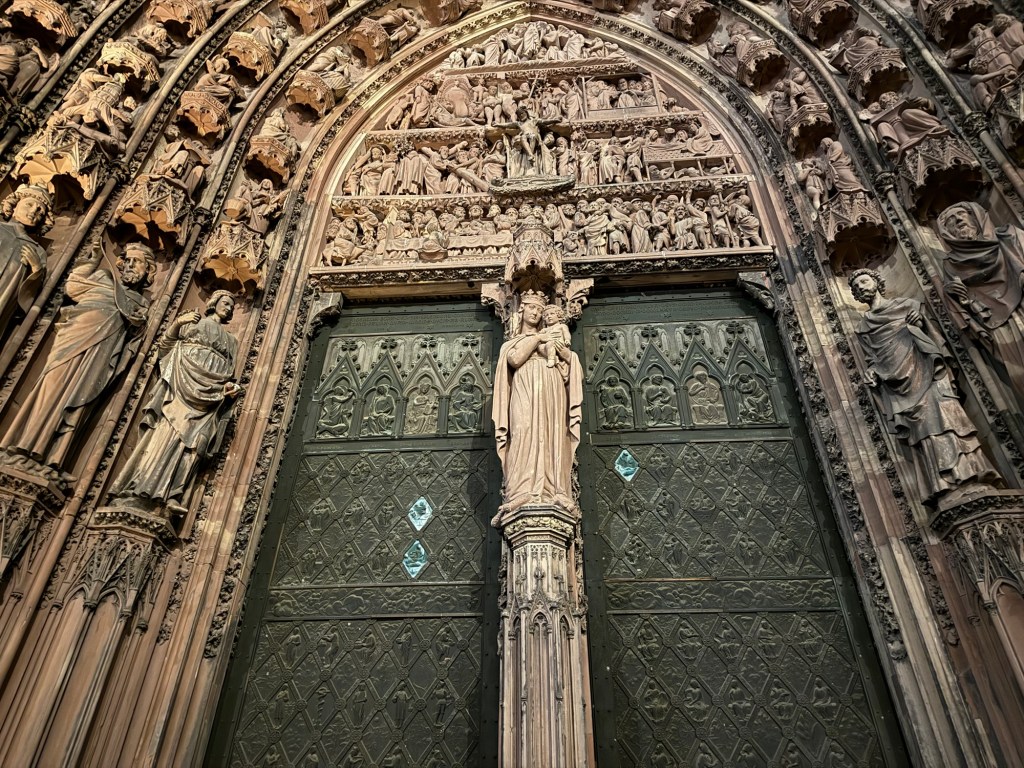
I started by mentioning the faces on the Cathedral and then yesterday wrote briefly about the faces inside the cathedral. I even stated that, based on facial depictions, Gothic sculptors weren’t as skilled as classical sculptors, and I wondered if that’s a bias.
What bias could it be? I wrote those words and have since continued to wonder. For one, there may be an ascertainment bias. The works of the ancients are 2000 years old today. Much was lost after the fall of the Roman Empire, and perhaps only the best pieces survived. In contrast many more works exist from the Middle Ages, including lesser quality pieces.
We certainly have an aesthetic bias that colors our views. And then there are intrinsic biases that we carry favoring the Classical world and biases based on what we value.
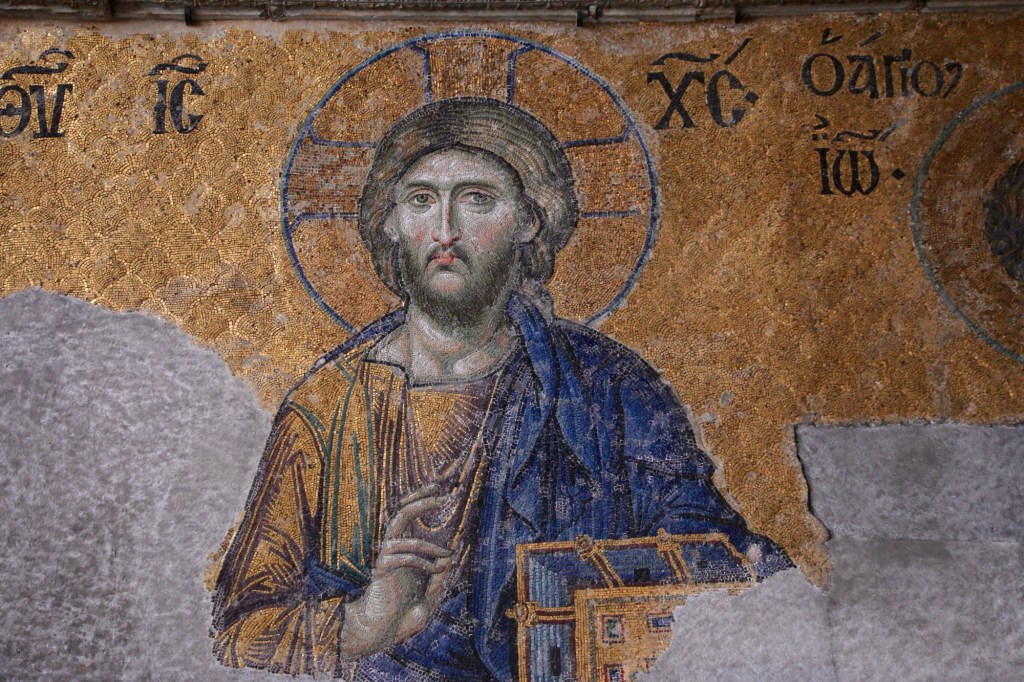
All of this got me to thinking about how faces have been depicted in art across the years, from the idealized Greek and Roman view, to the flat Byzantine depictions in the church.
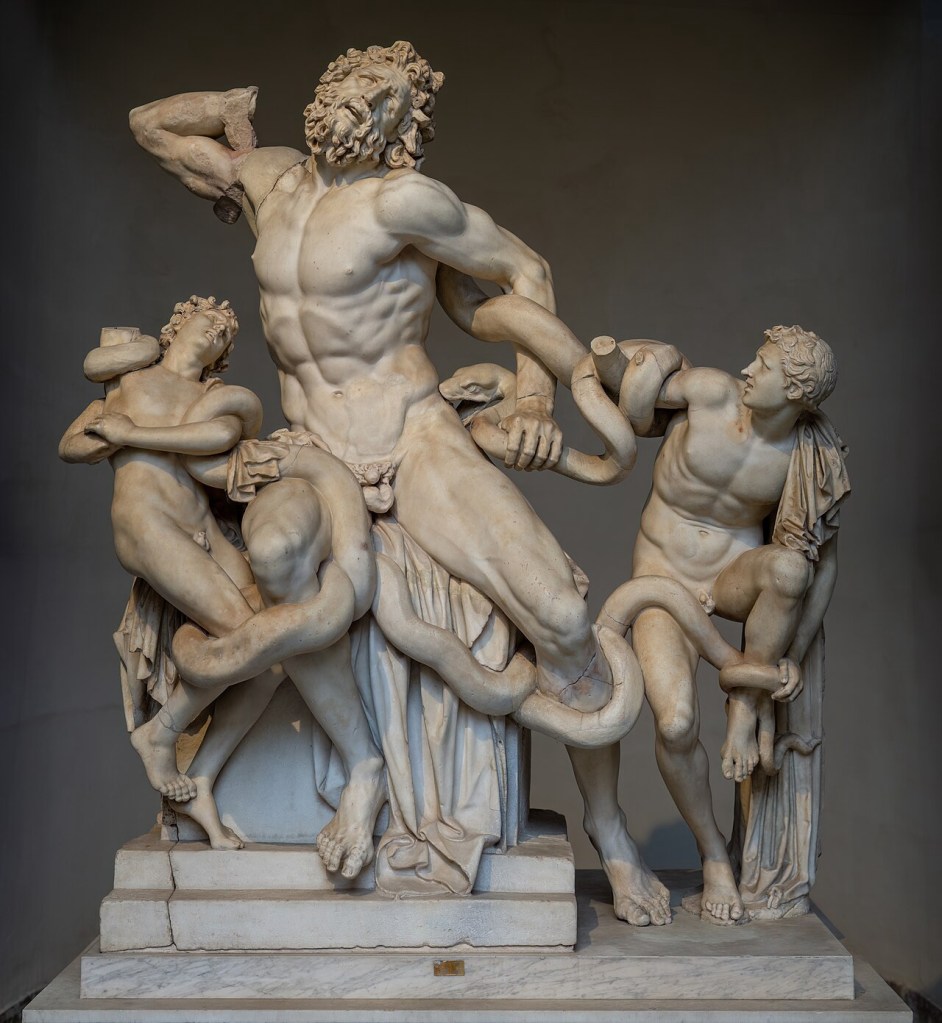
The contorted agony of the Laocoon.
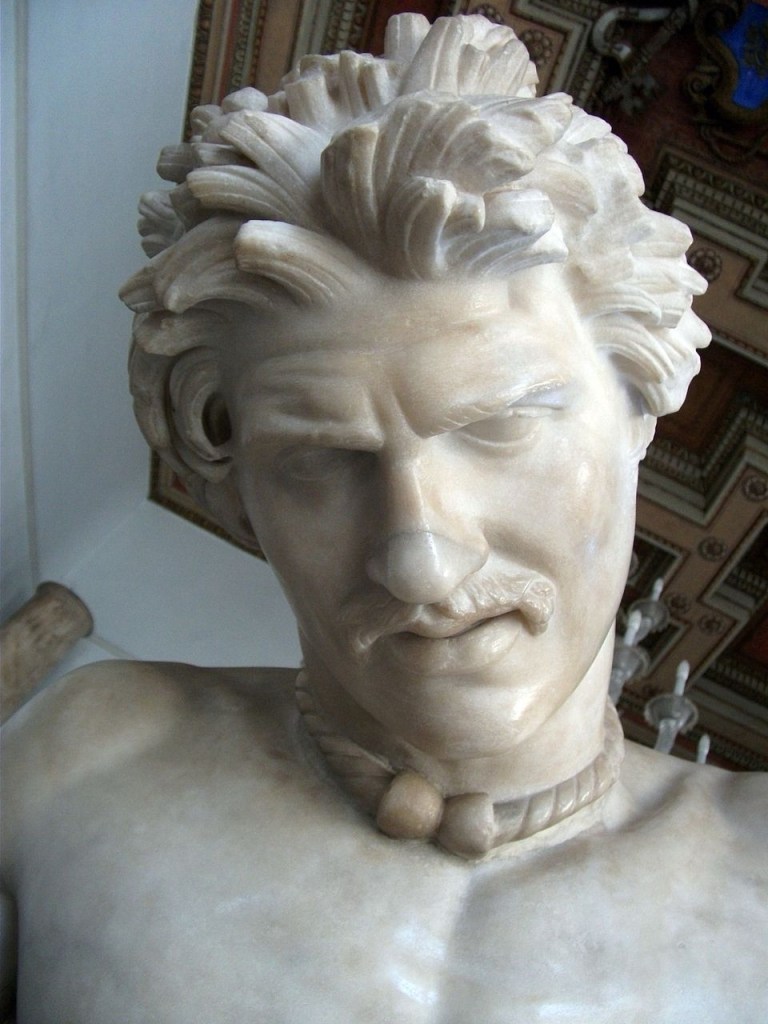
And the noble resignation of The Dying Gaul.
Their faces carry emotion, but they are idealized. Each perfect in its own way.
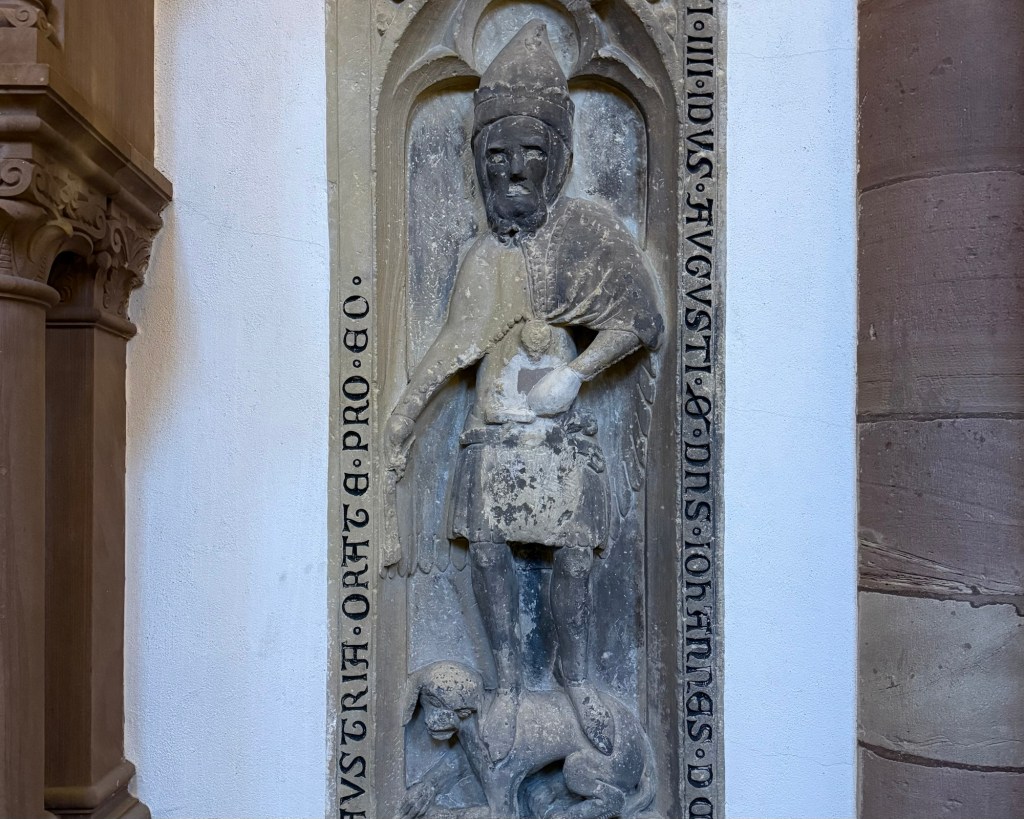
After the fall of the Roman Empire, an extraordinary amount of knowledge was lost, and during the Dark Ages (or Early Middle Ages, which seems to be the preferred term) faces were flatter, more a symbol than a person. I suspect this change isn’t simply loss of skill, and in part was intentional. Perhaps taking a minimalist approach was preferred to avoid depiction of a graven image and the risk of venturing into the realm of idolatry. A vaguely fashioned face may have been a compromise between avoidance and hagiography.
The Gothic faces I’m seeing here aren’t sculpted at the same level as those produced by the Classical artists. They may not be quite as refined or natural in their details, but many of them have something their most famous predecessors lack.
They have imperfection, exaggeration, and realism.
Unlike Classical depictions, they aren’t supreme archetypes or allegories. They are simply human.
Today I visited the Musée de l’Oeuvre Notre-Dame, adjacent to the Cathedral.
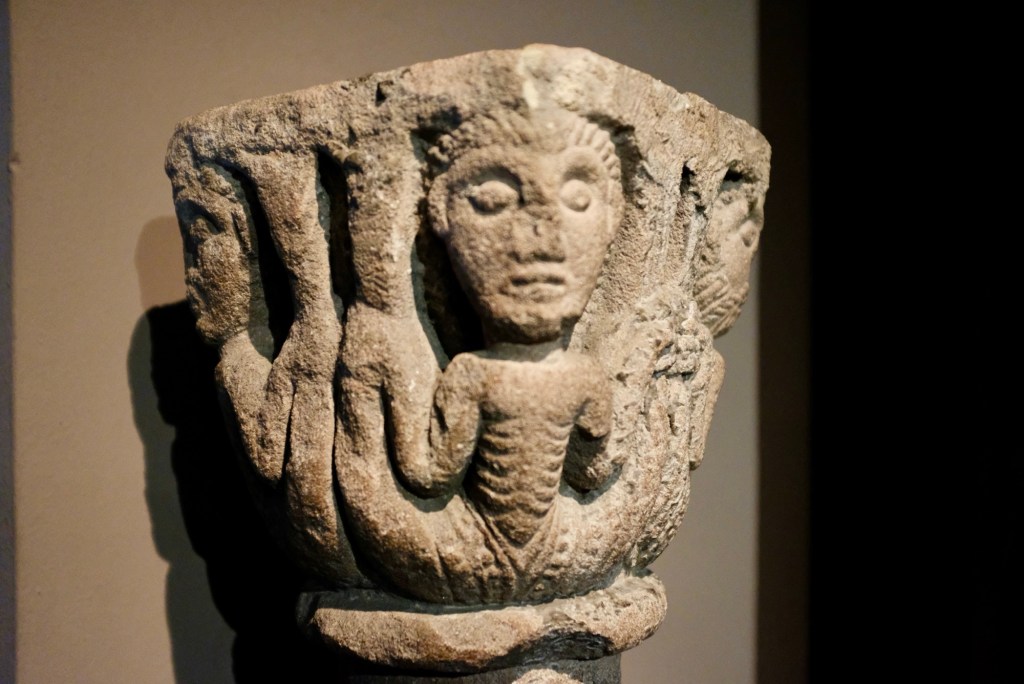
Within the first room stood the remains of a Romanesque church. Nestled away in a corner was this grotesque of the demon from one of the capitals, and I found it much more engaging than the virtual reality tour of the church they offered.
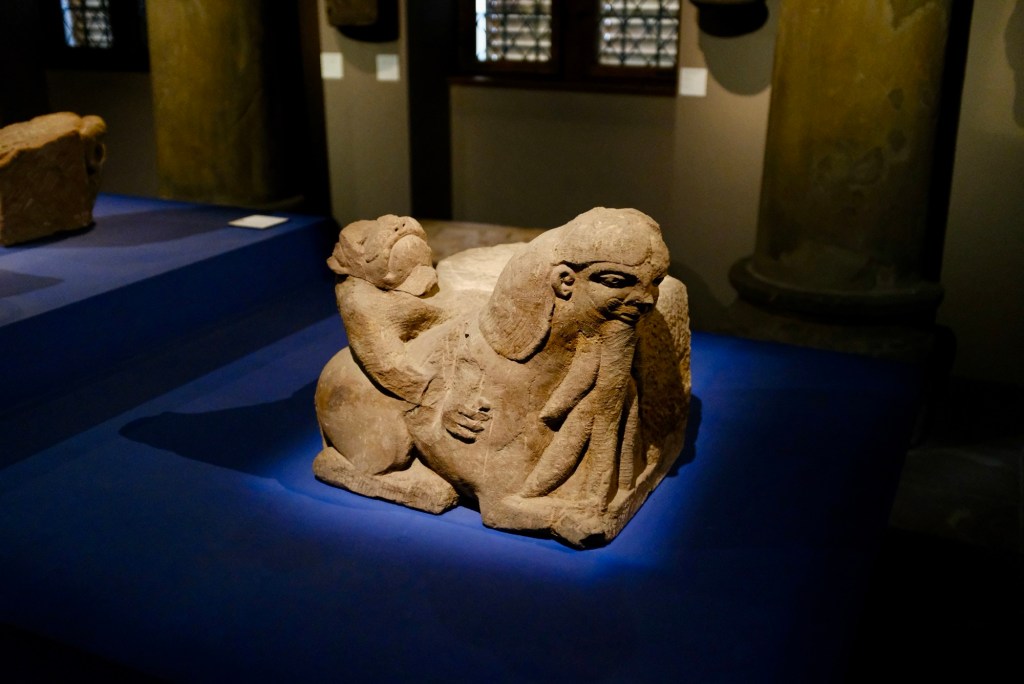
And this base of a column depicting a monkey astride a sphinx was amusing, fascinating, and provocative. The sign and audioguide indicated we could touch it to experience the texture, but nobody was doing so. Touching things in a museum feels wrong, as each person will imperceptibly wear away the stone grain by grain until it is smooth.
But these were Romanesque, that in-between era after the Fall, and you can see that in a certain lack of refinement. A coarseness to the carving.
From there, the tour moved into the Gothic rooms, and that’s when things really got interesting.
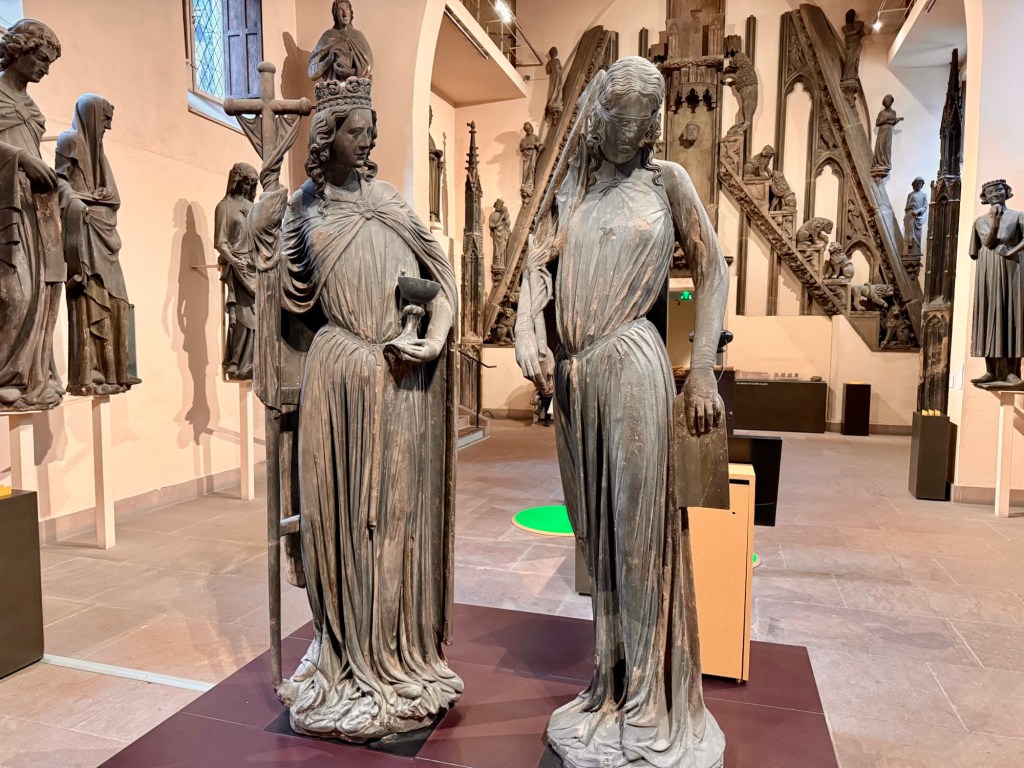
These statues of Ecclesia and Synagoga, Church and Synagogue, once adorned the portal of the south transept of the Cathedral. The Church on the left wears a crown and displays an arrogant mix of pity and disdain as she peers down her nose at Synagogue on the right, her eyes blinded and her lance broken.
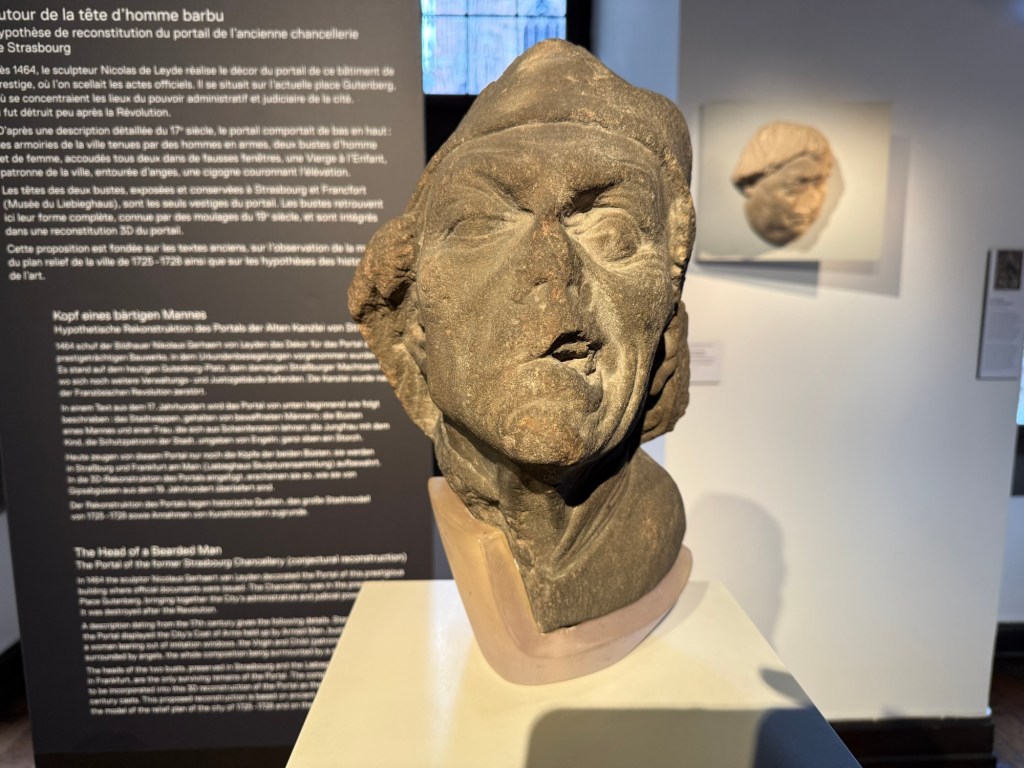
Further on, the face of this man with paralysis is misshapen and tortured, an unflinching eye glaring out from above a twisted mouth. It depicts human illness in a way I can’t recall seeing in any ancient work.
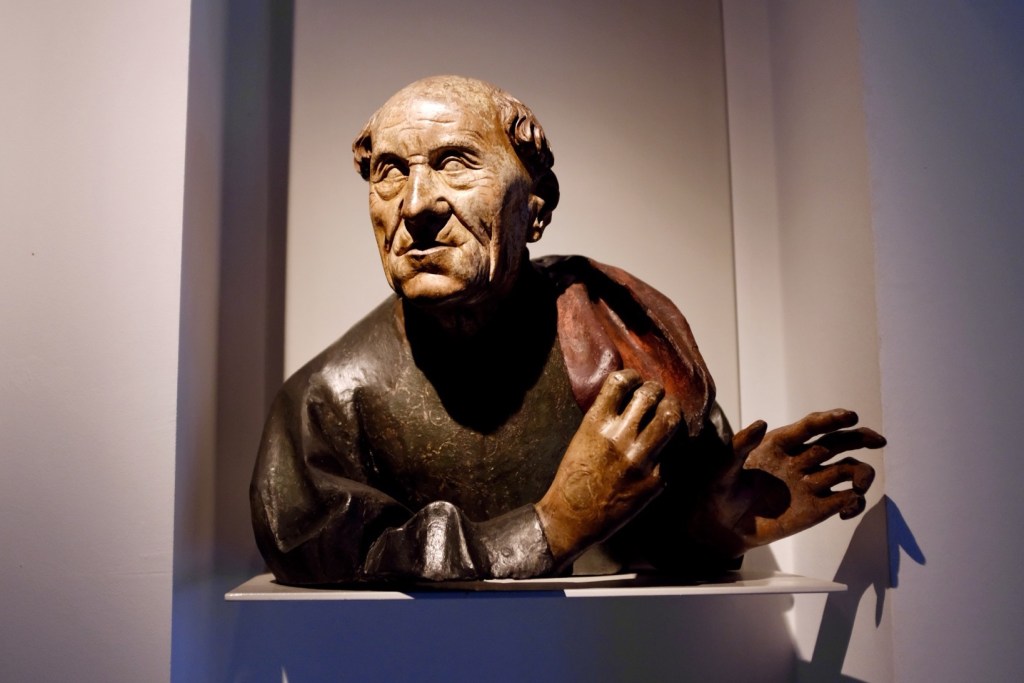
This bust of a man, his eyebrows bushy, the crags of his face deep, and his mouth pinched, clearly carries years on his skin. His is a sour presence.
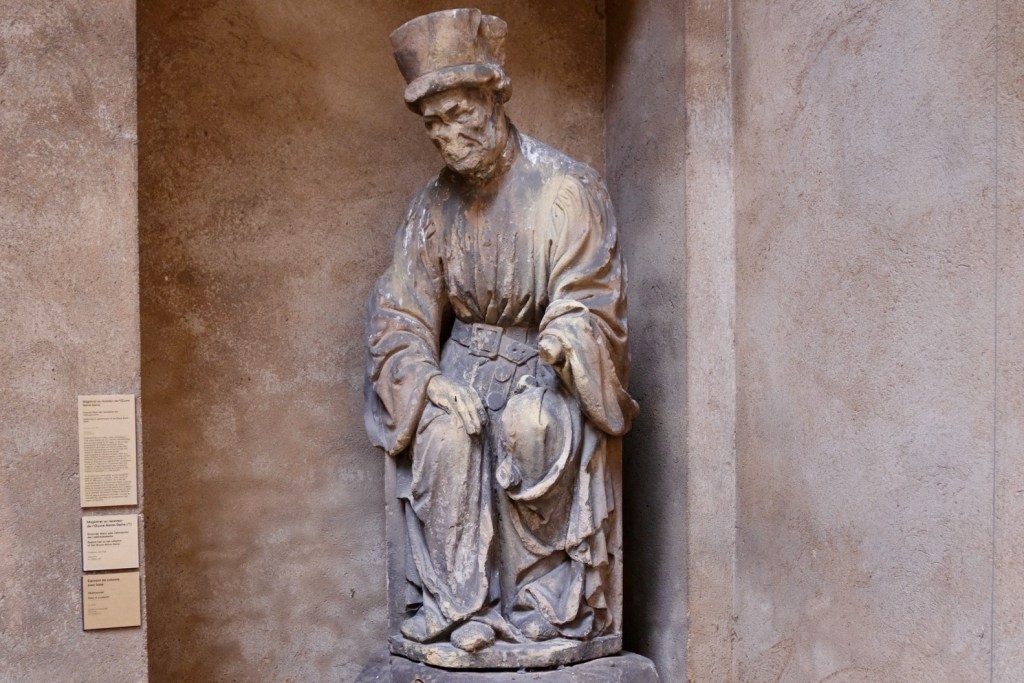
Elsewhere, this tax collector leans hauntingly. The fine details of his countenance have been worn away by time and weather, but high cheekbones and severity of his expression are unmistakable. The presence is ominous.
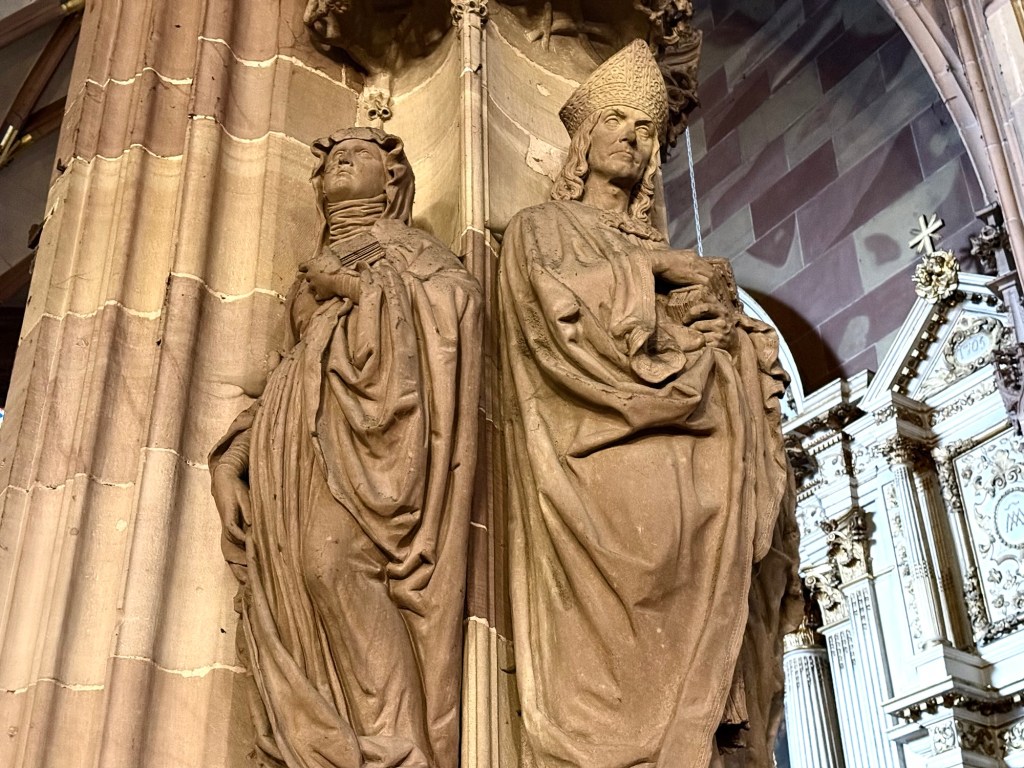
And yesterday I noticed this bishop in the Cathedral, who stands in dour judgement, a look of condemnation on his face.
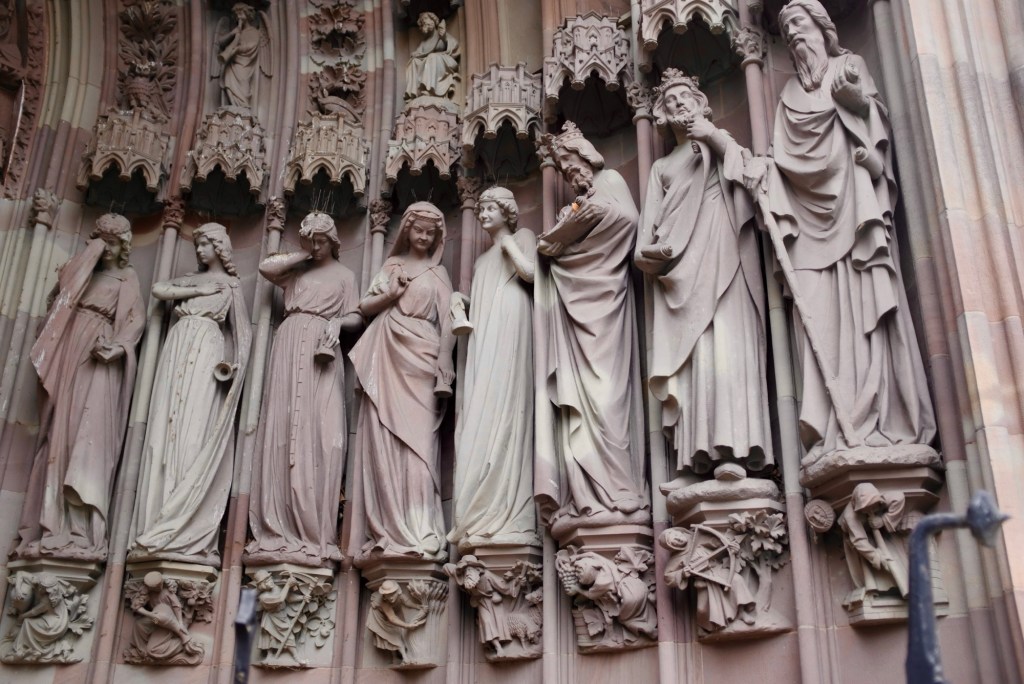
At the church near my hotel there were these faces, some holding their heads and some carrying a little more weight.
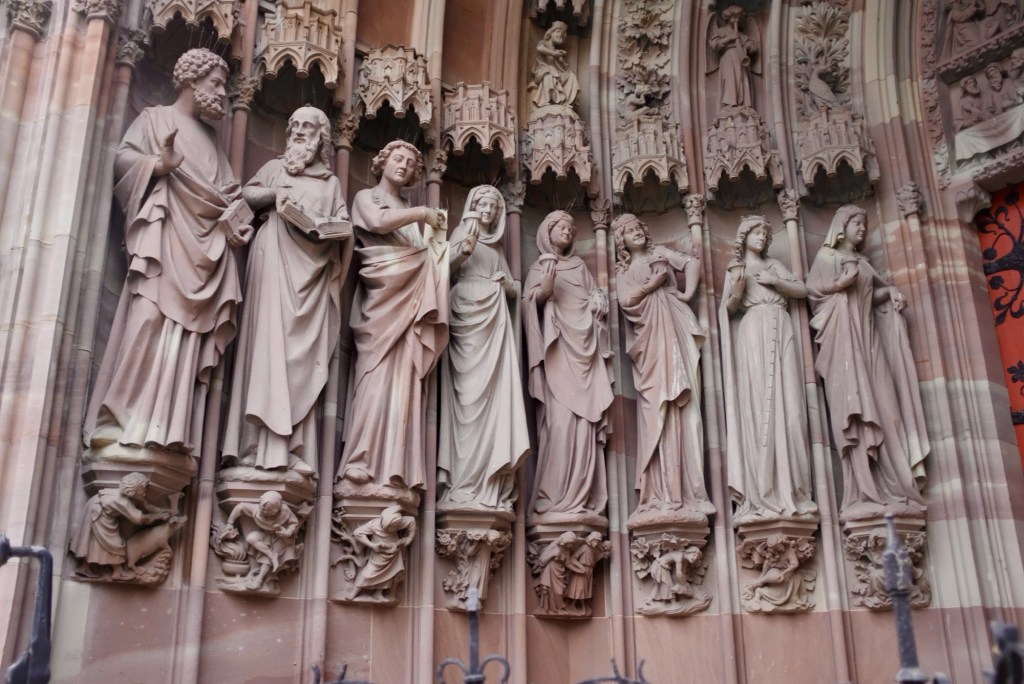
Opposite them, some are smirking and some are laughing.
The sculptures I saw today were better than the paintings. They have a dimensionality that paintings wouldn’t begin to exhibit until the Italian Renaissance.
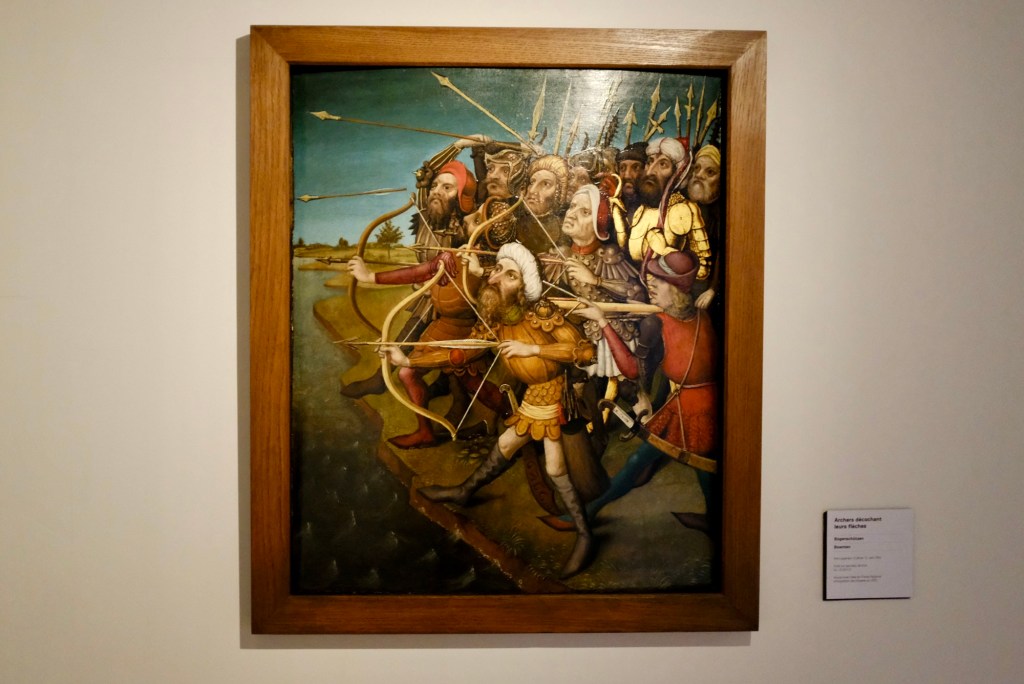
Still, look at the comically bulbous noses of the front archer here. There is nothing idealized about him.
I spent a great deal of time looking at the faces depicted in Gothic art today. I’m less disconnected from them than I am from the perfected faces the ancients sculpted.
They are real people.
And now I can’t help but wonder who they were, really. Who were the models upon whom the sculptors based their work? What were their joys and their sorrows, their worries and their rests? Because they don’t look like concepts of people.
They look like individuals.
And as I continued to explore the town around me, I couldn’t help but look a little closer at the faces of the people walking by.

 butterblogger