Nestled on the fluid border that divides France and Germany, in the picturesque land between the Vosges mountains and the Black Forest, Alsace boasts a rich, complicated history. A frequent spoil of war, the region has changed hands five times since 1681.
When a people experience such swings of authority and allegiance, they develop a certain resilience. Reclaimed time and again, they look to each direction, and then, rather than be divided, turn inward to the most stable thing they have: themselves. From this fertile soil grows a distinct identity, separate from that of either country.
I think of other such borderlands: Catalonia in Spain, the Dolomites in Italy, and even Texas. They have a certain uniqueness that they fiercely treasure. To an outsider this can look like arrogance and disdain for the surrounding regions, but such an assessment would be unfair. It’s not contempt for others, necessarily. Instead, it is simply pride of place.
Didier is our guide today, whose job it is to take us to some of the small villages in the area. His chest expands as he speaks of his people and their accomplishments. He and his countrymen are Alsatian first and French second.
They have their own language, a dialect of High German, unique from Standard German. It may not be the official language, but this is what they use when they sit together with family and friends in local bars and at home across kitchen tables. It incorporates some French elements, and, similar to other regional languages, is decreasing in daily usage. But still, it remains theirs, and theirs alone. It is Alsatian.
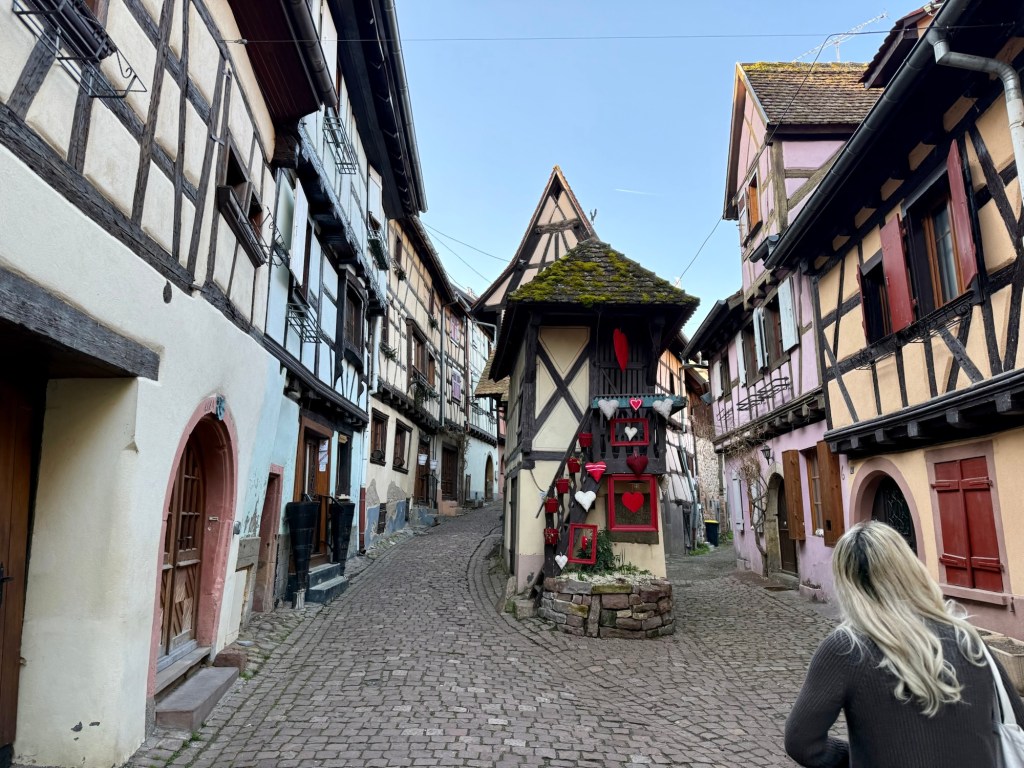
Our first stop is Eguisheim, a tiny village just a few minutes drive from Colmar, with a population that doesn’t quite reach 2000.
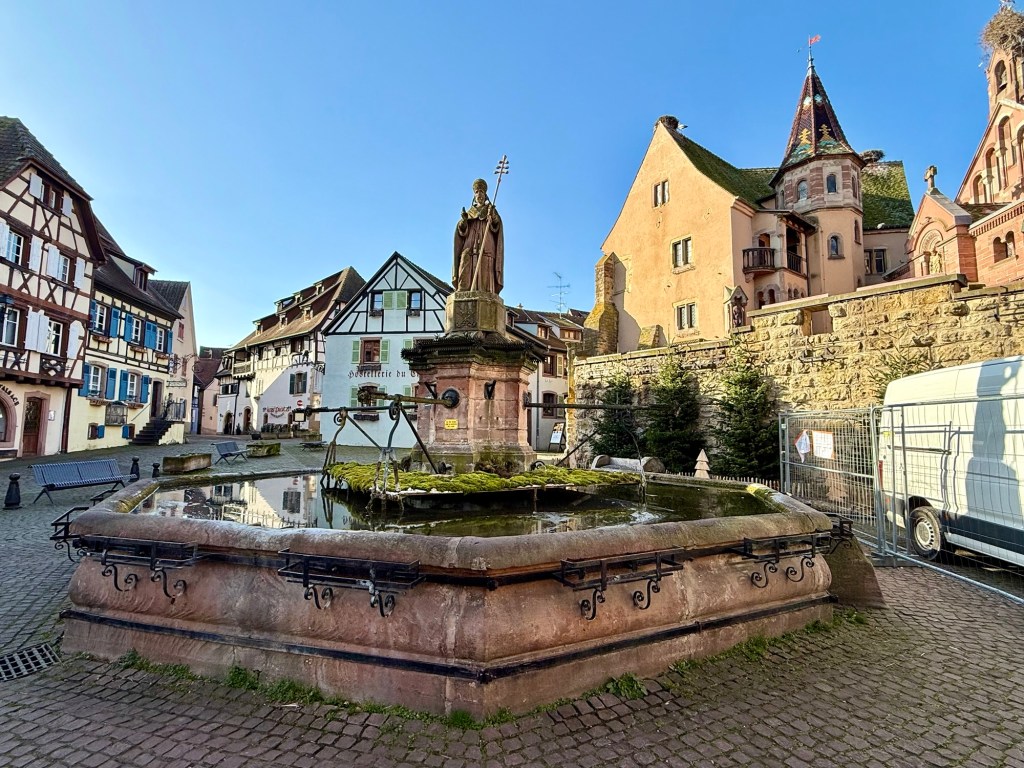
This quaint town, with its narrow branching streets and canting houses, was the inspiration for Belle’s village in Beauty and the Beast. This is the fountain where she paused in the opening song, while a sheep ate a page from her book.
Didier speaks fondly of the half-timbered houses that surround us here, as they do across the region. They are built following a traditional form of architecture, with an appearance that is highly regulated. Owners can do what they will inside their homes, but the exterior must not change without administrative approval.
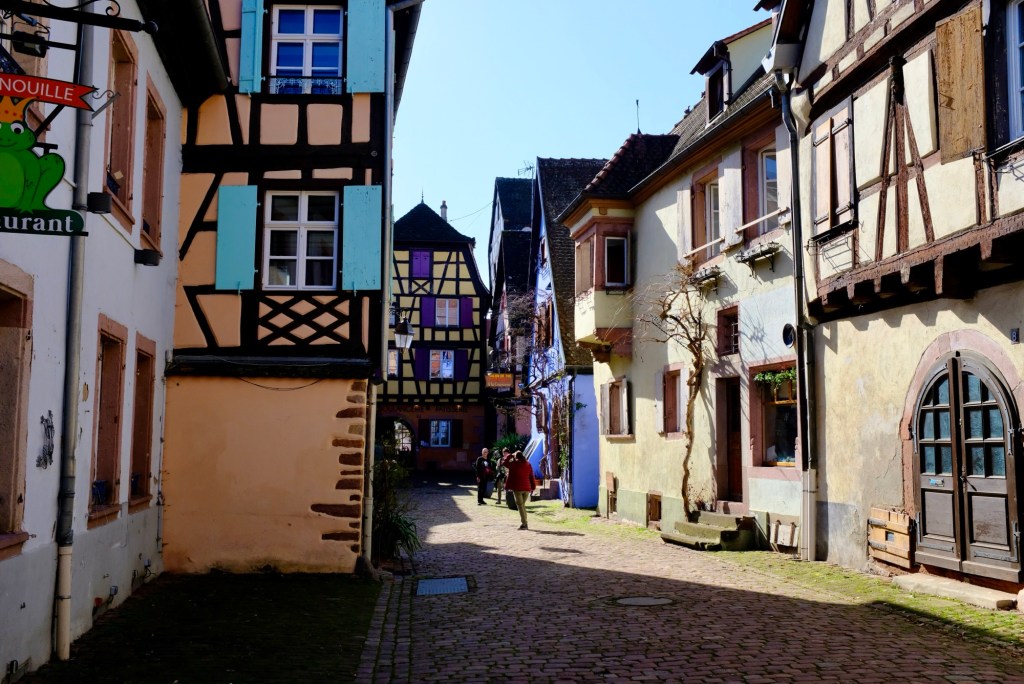
The colors aren’t chosen on whim, but instead tell the history of the place. Blue homes, for example, were once occupied by carpenters, and red were the blacksmiths, fiery from the heat of the forge. The bakers lived in warm, yellow homes, and farmers bedecked their abodes in shades of green.
The colors are identity.
Alsatian flags here frequently fly boldly over the French flag, reflecting an independence that they defend vigorously. They even have their own anthem.
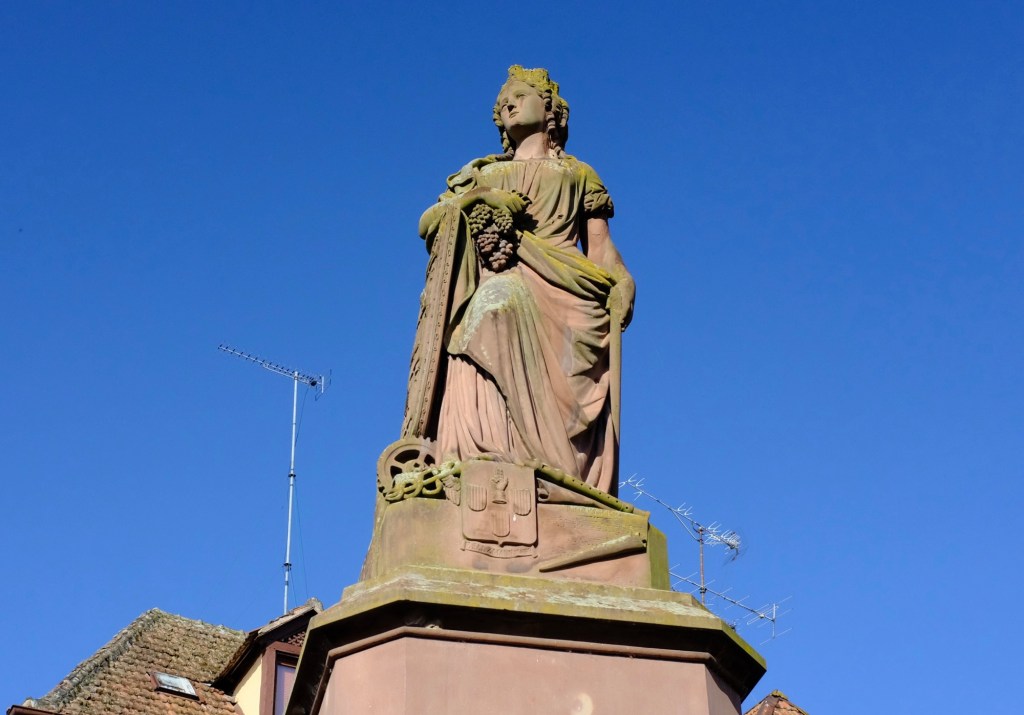
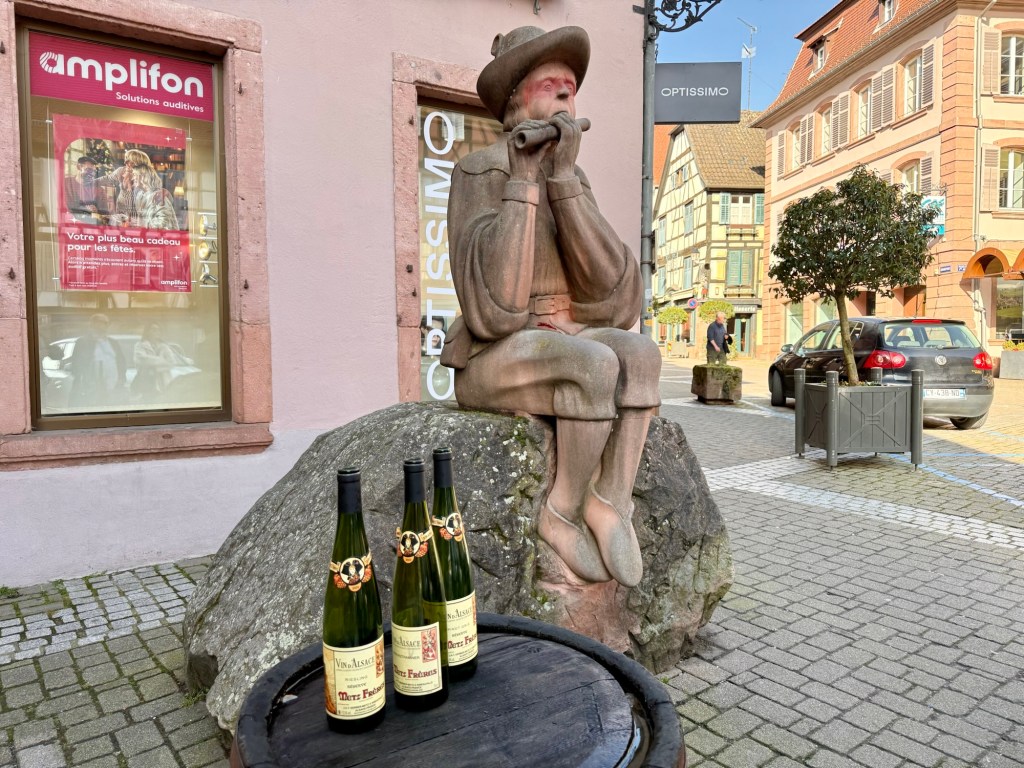
In Ribeauvillé Didier points to the statue of the local protector, Odile, the patron saint of eyesight. She stands, weeping, with shield in hand, surrounded by grapes, a gear, a flute, and the rod of Aesculapius. All symbolize Alsatian history, labor, and values. Identity.
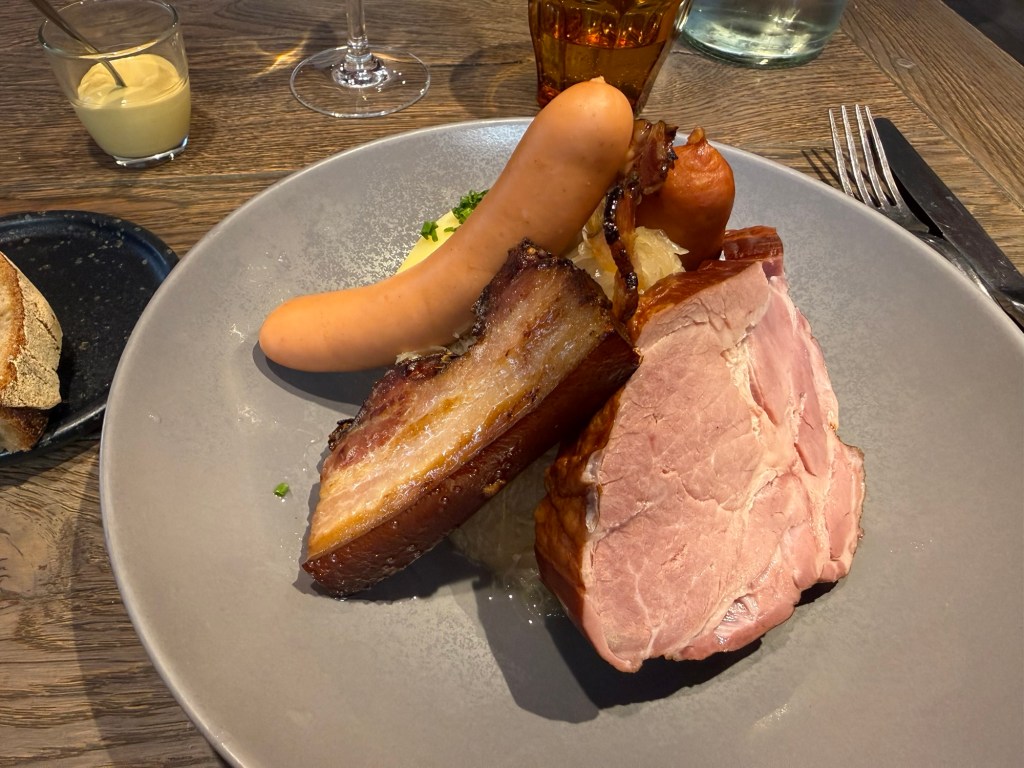
The food is a heavy combination of German earthiness and French richness, incorporating elements like spaetzle, sauerkraut, and cream. The choucroute garnie, a dish of sauerkraut with 5 different meats is defiantly excessive (which is a statement coming from an American, with our notoriously large serving sizes). And spaetzle here isn’t simply boiled, as it would be in Germany, but fried in a pan with decadent butter.
The coq au riesling takes the French classic coq au vin, and remakes it in Alsatian, featuring the star local wine.
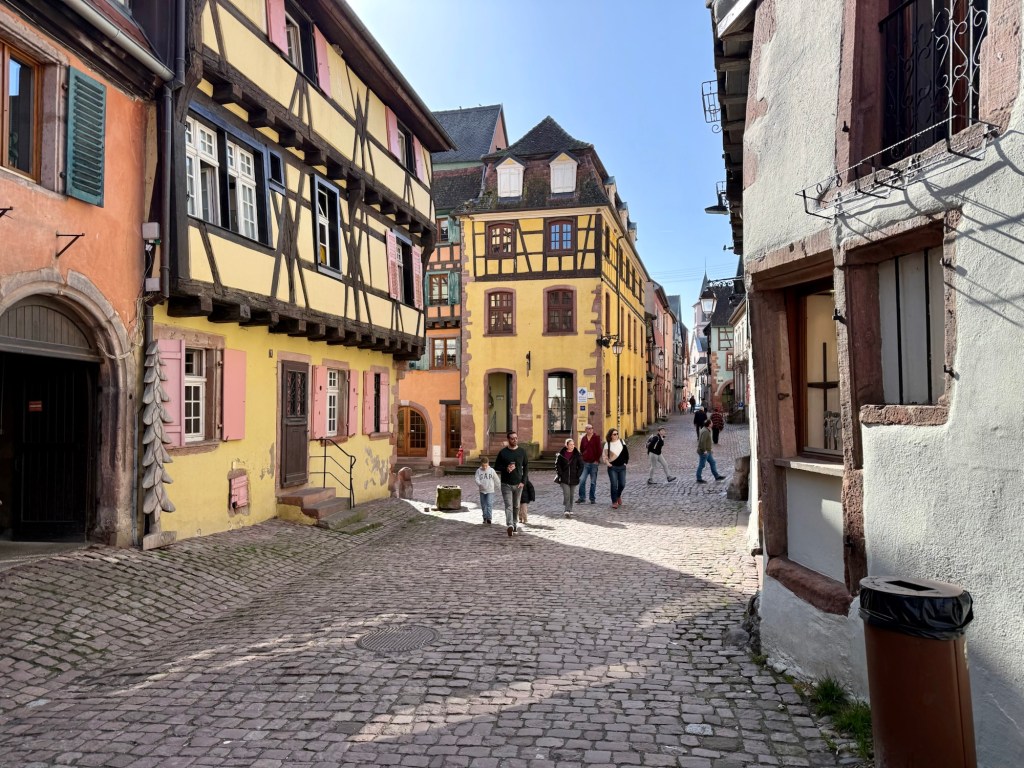
The tiny town of Riquewihr, scarcely more than a few streets wide, was easily overwhelmed by tourists even this time of year. There I made a light lunch of another local classic, an Alsatian onion tart. It most resembles an ethereal onion quiche in a delectable buttery pastry.
We finished today’s tour with a wine tasting. They are especially proud of their local wines, and menus everywhere feature the noble Alsatian grapes of riesling, gewürztraminer, muscat, and pinot gris, as well as other local favorites pinot blanc, Sylvaner, and pinot noir.
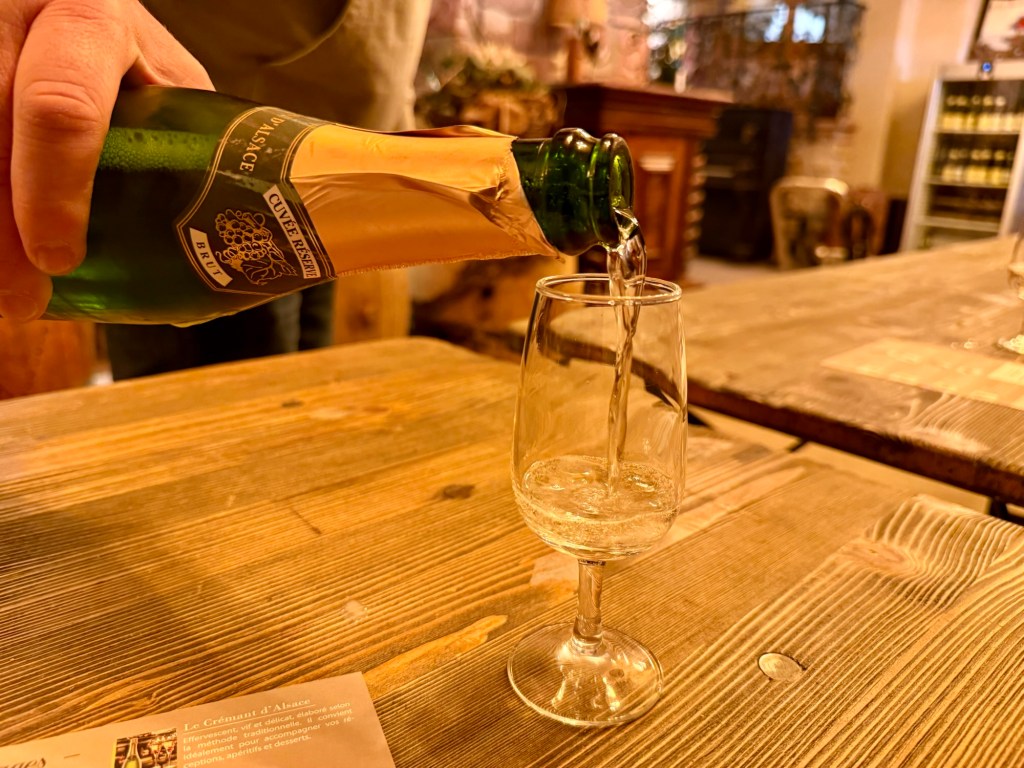
Among them, Didier was especially fond of the cremant, a sparkling wine produced using the traditional method (méthode champenoise, a term that is regulated here, and only used outside of the EU). Several times, he made the comparison to Champagne, pointing out that the locals like to say, “better an Alsatian Cremant than a bad Champagne.” I didn’t dare ask him how the locals felt about good Champagne.
As I sipped at the glasses, considering the wines, I felt my own special pride of place. In Michigan we grow many of these same grapes and the comparison was unavoidable. I was happy to know firsthand that my people are producing similar wines of excellent quality that mirror the flavors I experienced today.
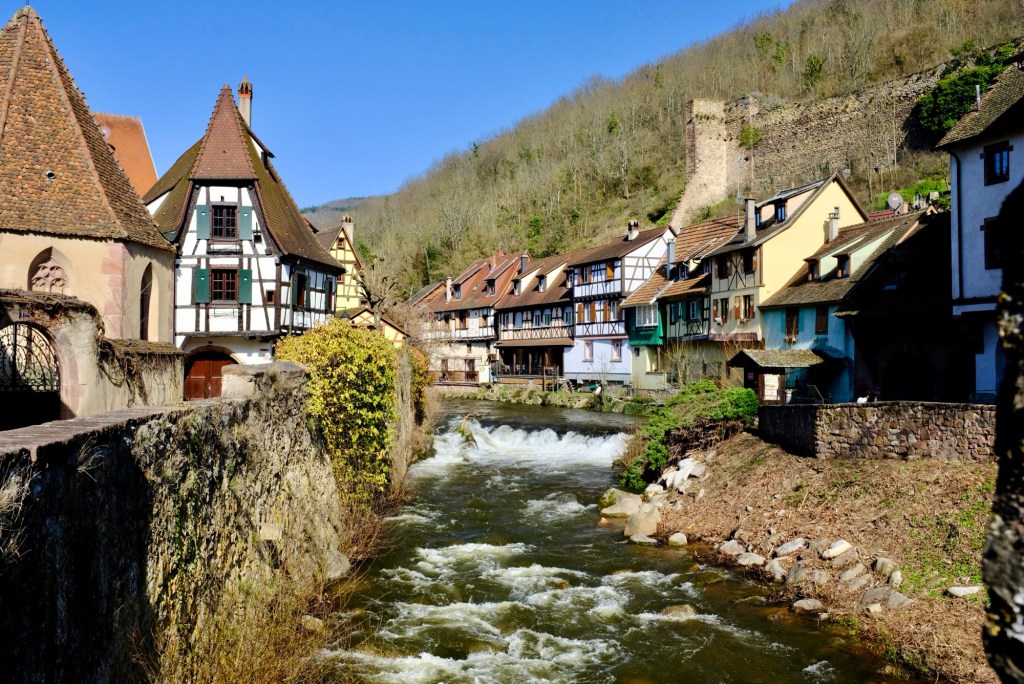
As for today’s tour – it was enjoyable enough. I don’t have a car, so this allowed me to see some of the renowned small villages I wouldn’t have otherwise seen. But the best part wasn’t the towns — it was talking to Didier, hearing his affection for his homeland, and having a moment to feel a bit for my own.
By the end of the tour I realized that, even before coming here I had inadvertently adopted the local habit. When friends had asked where I was going I told them, “I’m going to Alsace.” Unless they pressed further, I never even mentioned France.
I’m certain Didier would approve.

 butterblogger