Ioanna corrected me when I said “everything” was closed. “Just the museums,” she said.
She’s correct that museums aren’t everything but I’m not a big shopper, and I wanted to do something other than sit in cafes and parks.
If I had planned better, today would have been a great day to have planned day trip but once again I forgot about “museum-closure Monday.” As soon as I recognized the closures I booked a last minute walking tour that I had previously ruled-out.
I don’t know how much it added but it added enough, because Ioanna’s stories really helped me to understand Armenia a lot better.
Yerevan is the Russian name for this city, but many locals still call it by it’s traditional name Erebun. The “Yer” prefix is Russian and doesn’t otherwise appear in the Armenian language.
Erebun dates to 782 BC but the city doesn’t look especially old here. That’s partially geology – because this is seismically active land, but moreso it reflects geopolitics. You see, Armenia has been conquered and occupied, reshaped and rebuilt, for so much of history that the continuity is often difficult to trace.
Over the millennia, this nation has had 14 different capitols, yet only 7 of them have been on the Armenian plateau. And today it’s a tiny nation, much smaller than it once was, holding only about 10% of its historic lands
In fact, it lost its independence altogether in 1245 and didn’t regain it until 1918. That was a very brief era of independence that only lasted until 1920 became part of the Soviet Union. Understanding that history helps one read the architecture here.
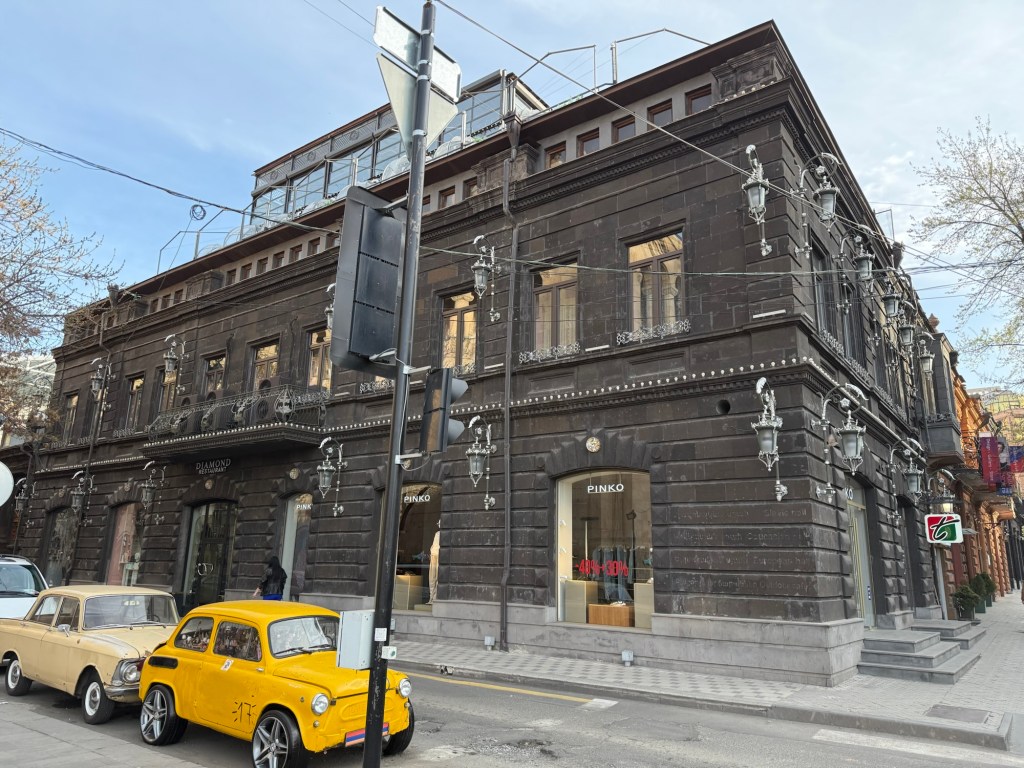
The oldest building are made with black tuff (volcanic rock) and date to the imperial Russian era (pre 1918). There aren’t many of them.
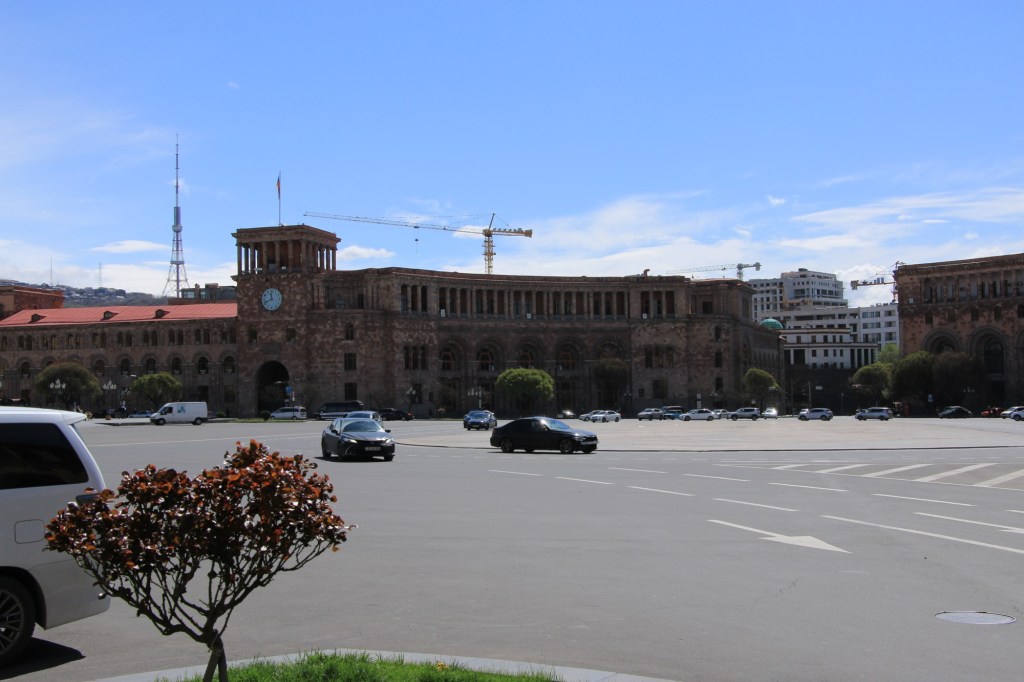
The buildings on Republic Square, core to the city, are instead built of pink tuff, which indicates that they date to the Soviet era. They were designed in the brief independent period from 1918 to 1920, and the Soviets allowed the construction to proceed as the plans had already been made. This is why they lack the harsh brutalist Soviet architectural style I’ve seen in places like Romania.
Armenia regained independence in 1991 and remains closely aligned with Russia, although there is a movement to seek membership in the European Union.
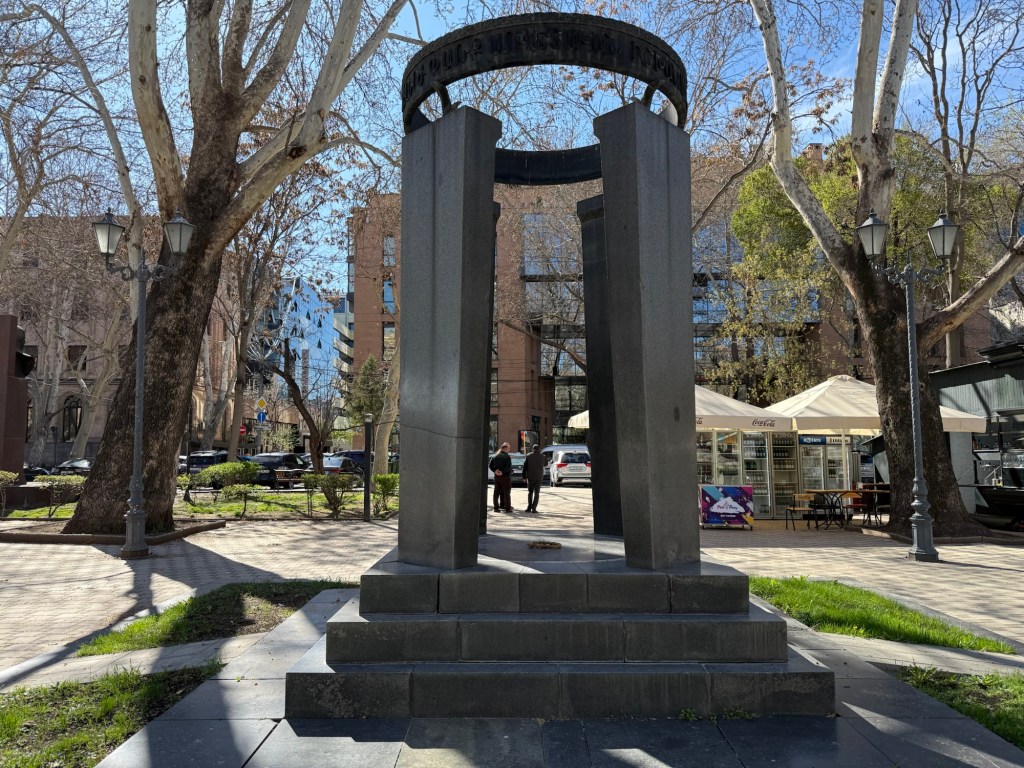
This is a matter of some controversy because cost of living here is already quite high compared to local salaries. This has been driven by Russians emigrating here in the wake of the invasion of Ukraine.
The ongoing joke is that under communism they had all the money they needed, but nothing to buy. Now they can buy anything they want, but don’t have money to buy it with.
Ioanna thinks costs will never go back down and I tend to agree.
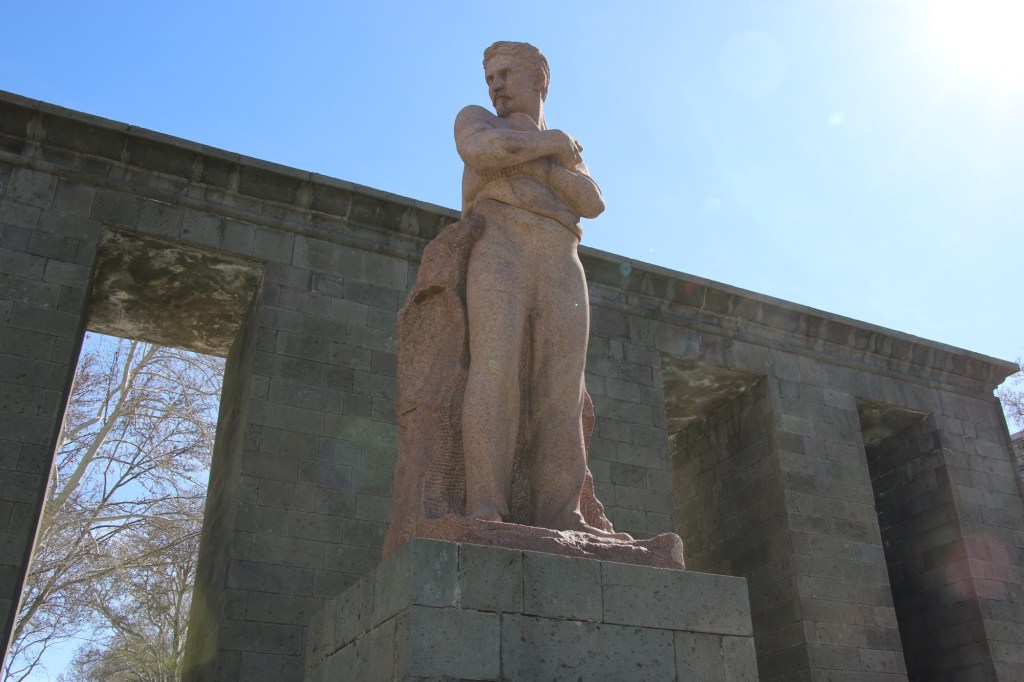
The tension is palpable in some of the things she points out. Although statues of Lenin and Stalin have long since been removed, other monuments from the Soviet era still exist and remain celebrated. They continue to reflect Armenian history, and the locals won’t turn their backs on that.
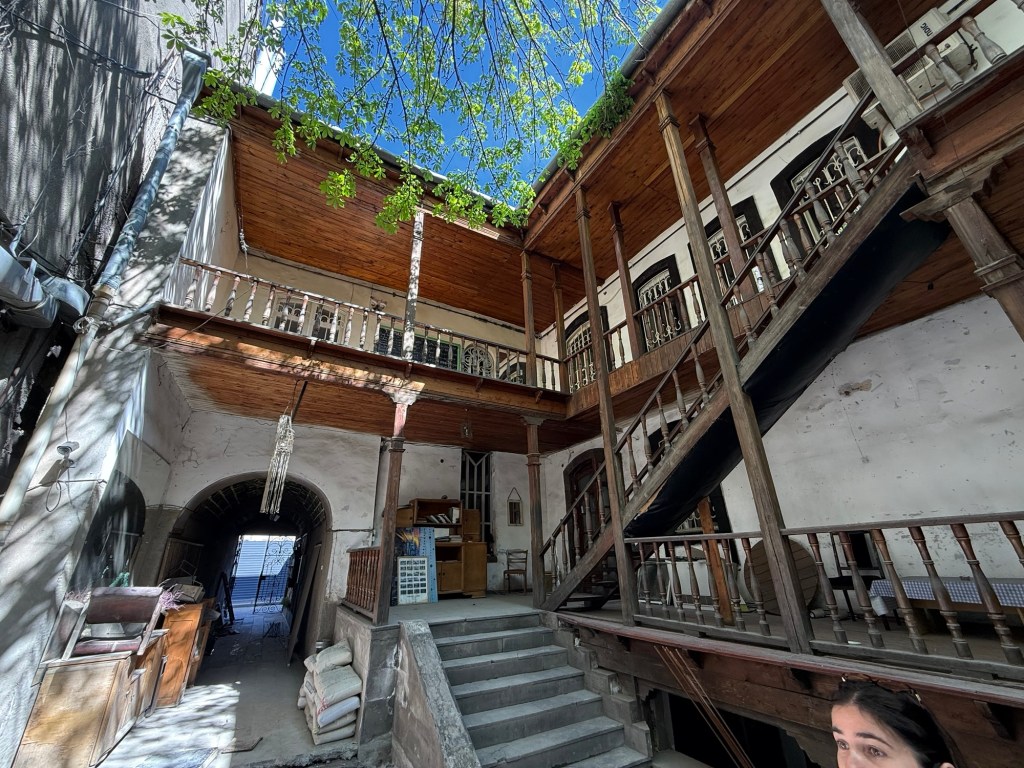
We continue walking through the city and duck into an occasional courtyard where she points out the old buildings in which generations shared a home. And below the buildings were the basements that were once used for winemaking.
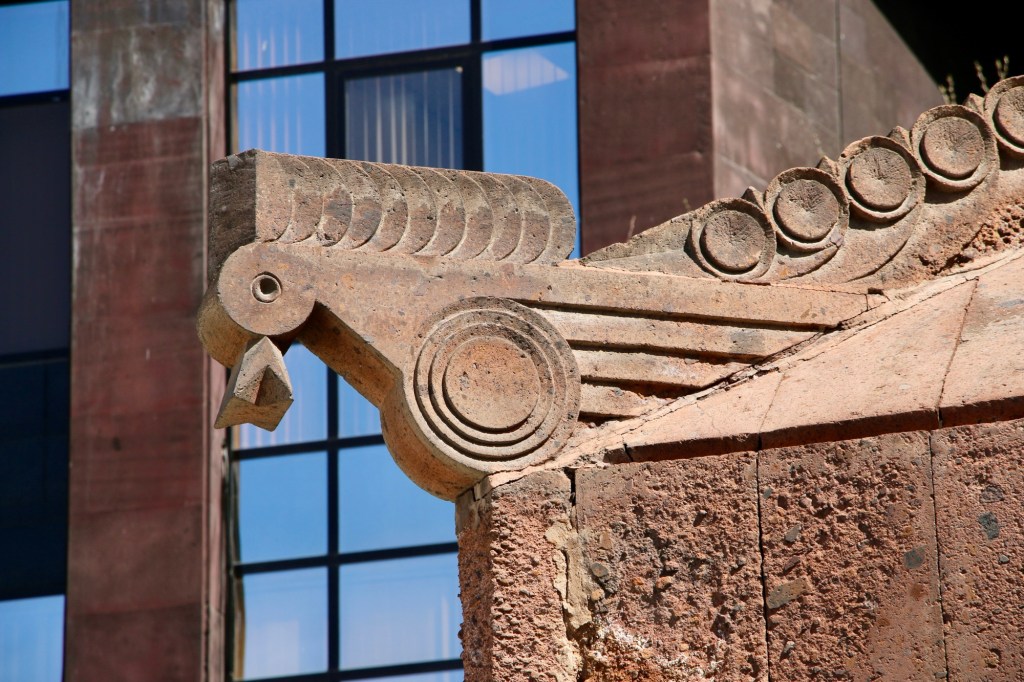
Our next stop at a metro station, bedecked with stylized stone peacocks. Even in its disrepair, it is a striking place, with a central stone fountain. It must have been beautiful with graceful crashes of water at one time, but now sits idle and hasn’t run for years, the cost of upkeep being prohibitive. The original plan for the metro was 3 lines, but only one sole line was ever completed, and it doesn’t go anyplace a tourist would be interested in
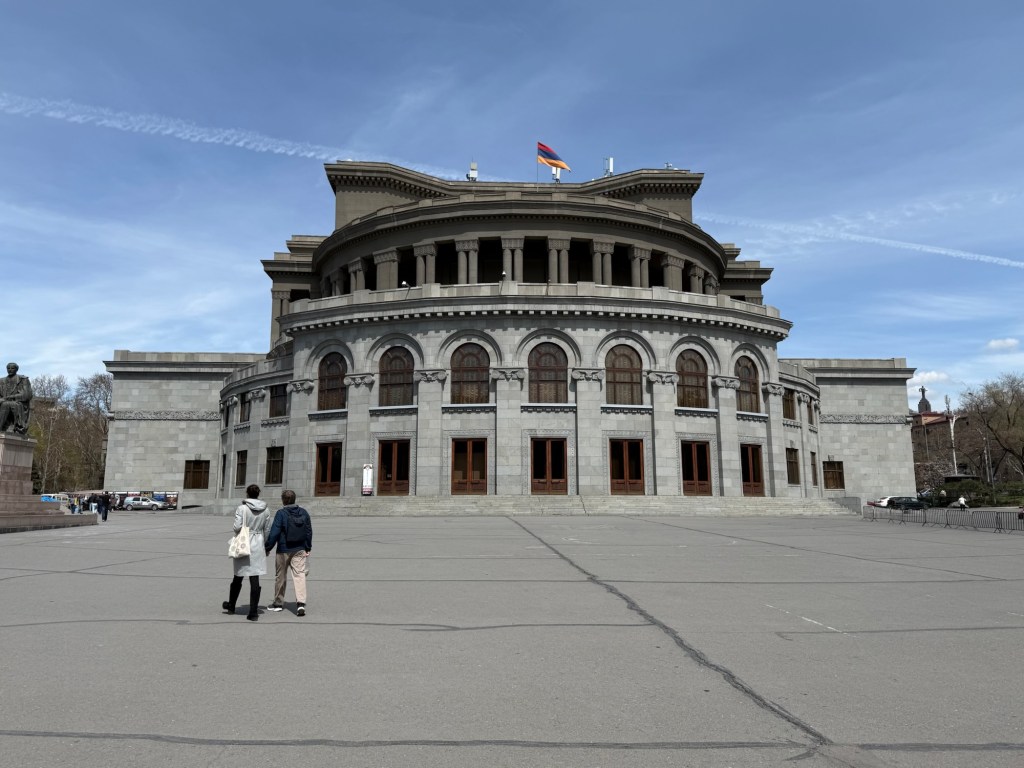
As we move along she points out the opera house, a hulking building made of grey tuff. It opened in 1933 and is a point of pride. She encouraged me to see a show here during my visit. I protested that I don’t have anything to wear and she explained that the locals dress up for the opera but tourists wear whatever they have.
This is the opposite of New York theater, for which tourists dress up and locals wear everyday clothes.
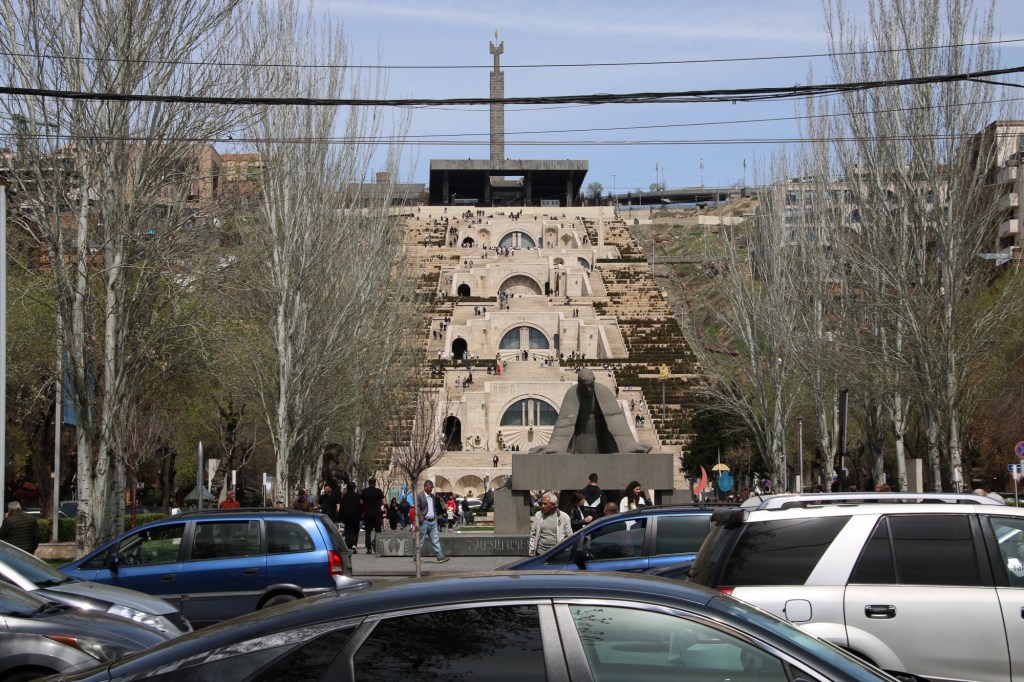
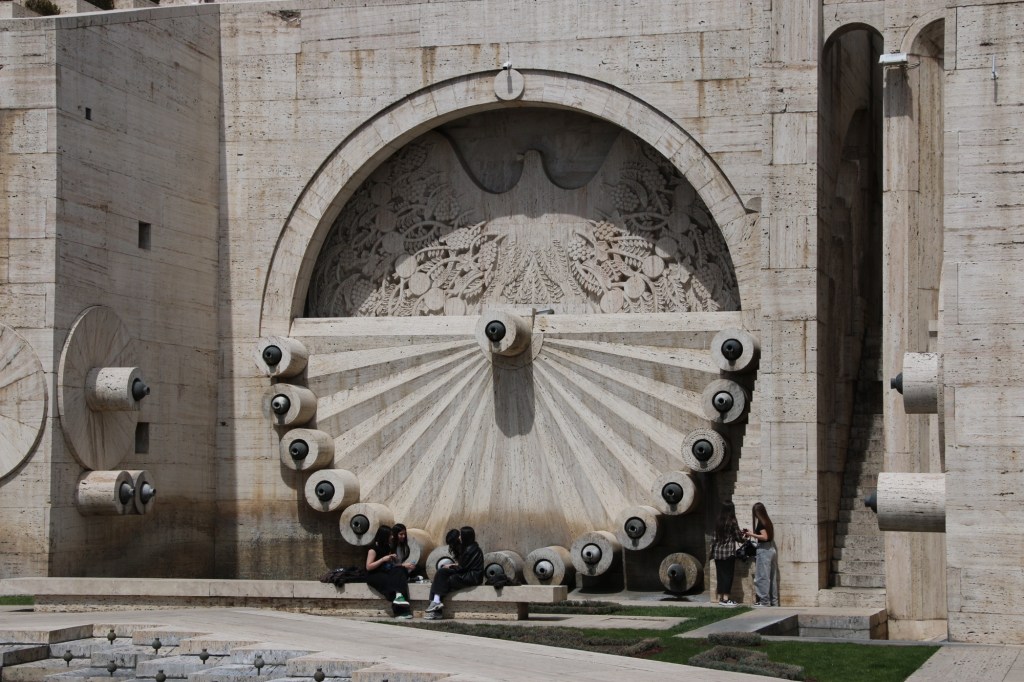
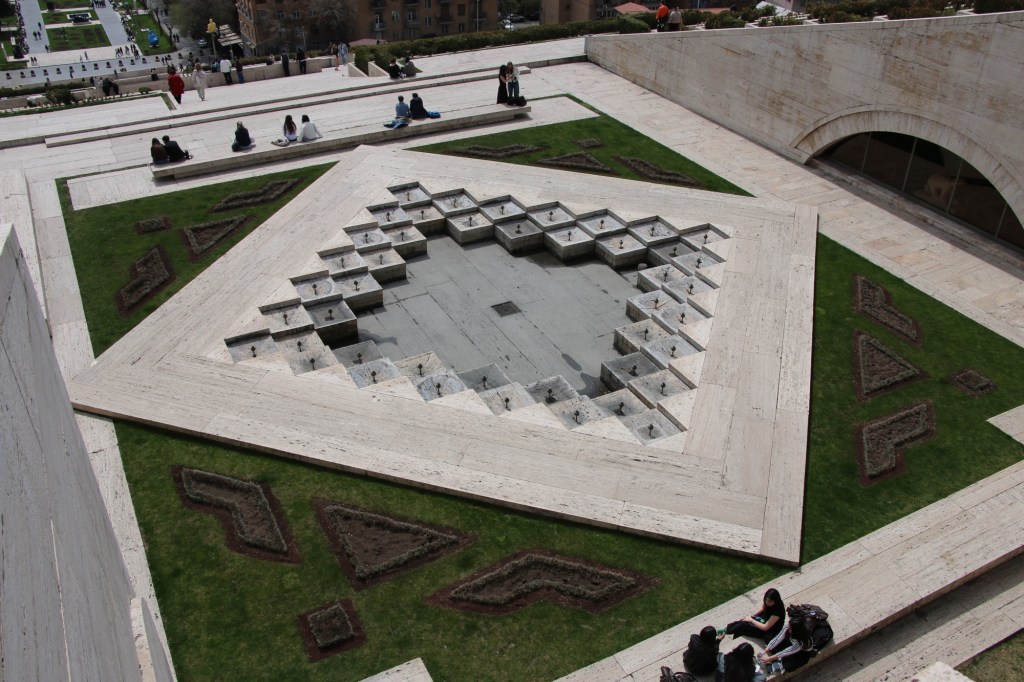
Finally the tour ends at the Cascade, a monumental staircase on a hillside, designed to link the administrative district above to the city below. It is not quite finished, but plans to complete it are in the works
For those of us willing to climb the 572 steps, the views are extraordinary.
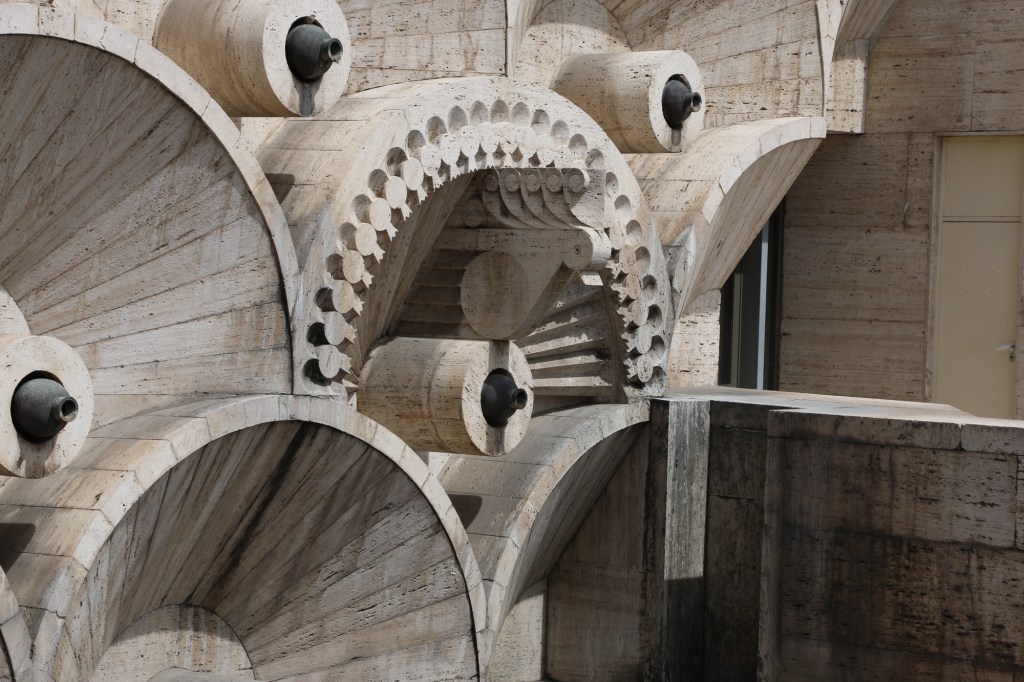
The architecture is a beautiful, incorporating Soviet stylism and modernism together with traditional Armenian themes.
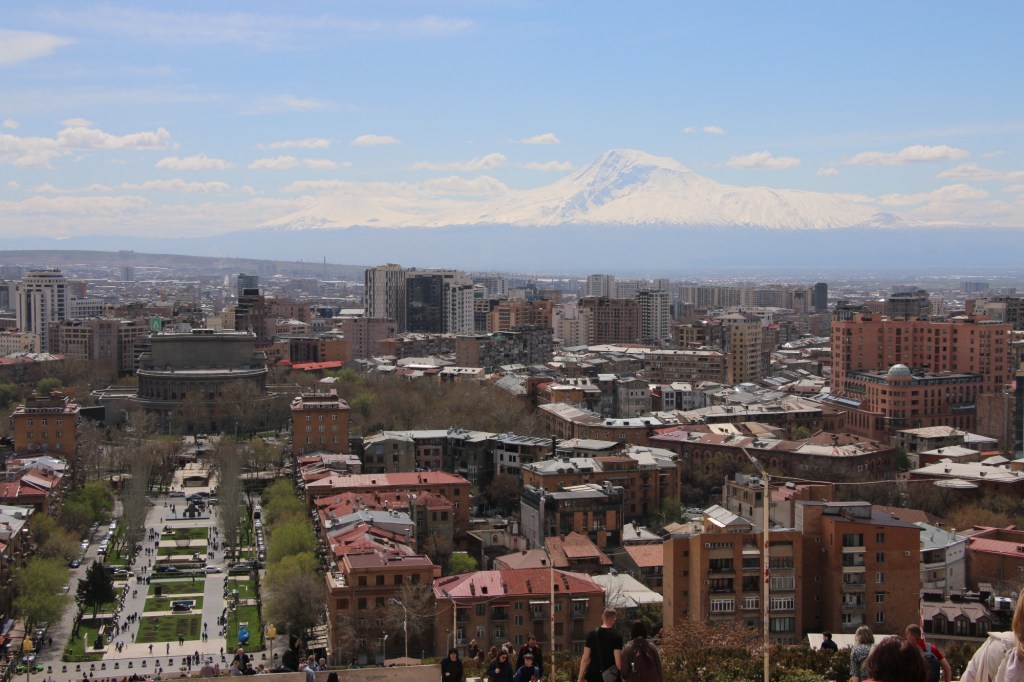
At the top, rest is required, and an opportunity to take in the view. The city stretches out below, with the majestic slopes of snow-covered Ararat rising in the distance.
It strikes me that much of the city from the Soviet era is unfinished or unsustainable, but still they yearn for more.
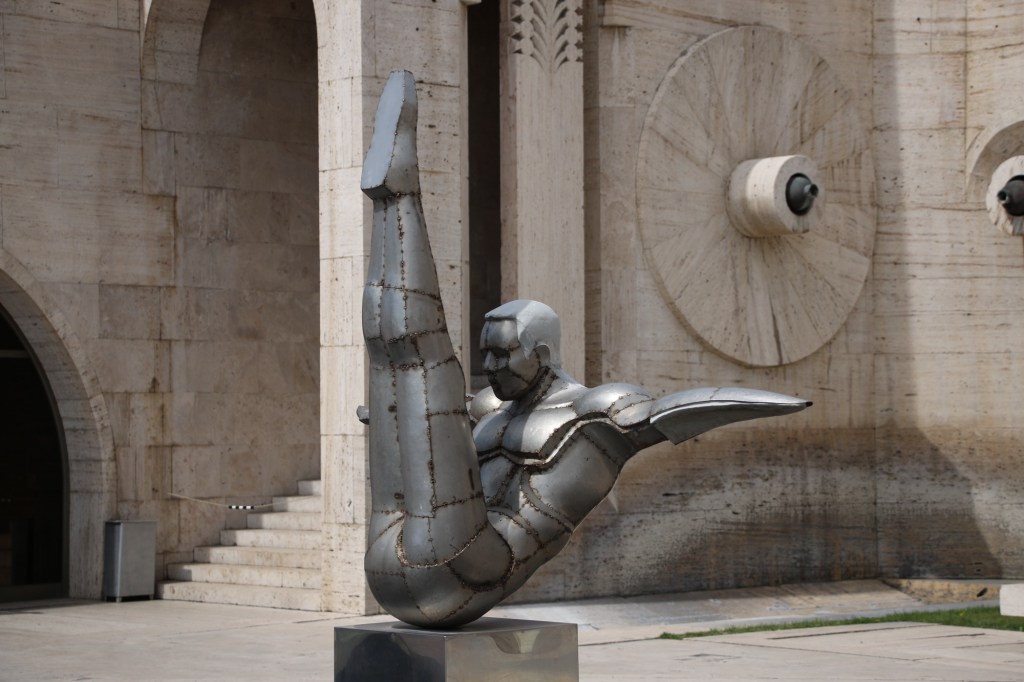
At times they have paused, but they haven’t stopped. Still, they move forward.
I consider people climbing the Cascade. It’s too much to take in at once, so they climb for a while, and then they pause for a moment. But they don’t stop – still they keep climbing.
And maybe that’s not just Armenian – maybe that’s universal.
Because don’t we all, at our best, continue to yearn for more?

 butterblogger