On a high mountain plateau somewhere in Southern Armenia, the weather was soft and the sun glowed warmly as she moved through her daily passage across the dome of the sky, her view obscured only by scattered cotton-ball clouds drifting by. Along the horizons in every direction, mountaintops marked the ephemeral border between earth and sky.
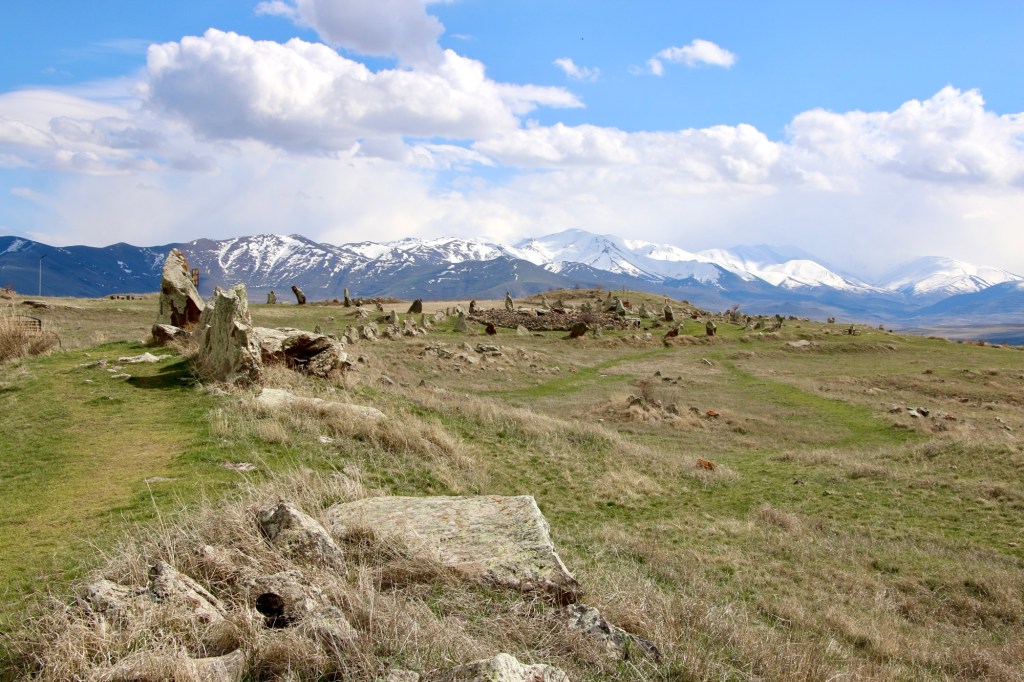
There was nothing but air between me and that jagged line of demarcation where the visible world disappears.
There was nothing between me and all that the universe holds above.
I fully understood why those ancient men of the Bronze Age, 6000 years ago, would choose this location.
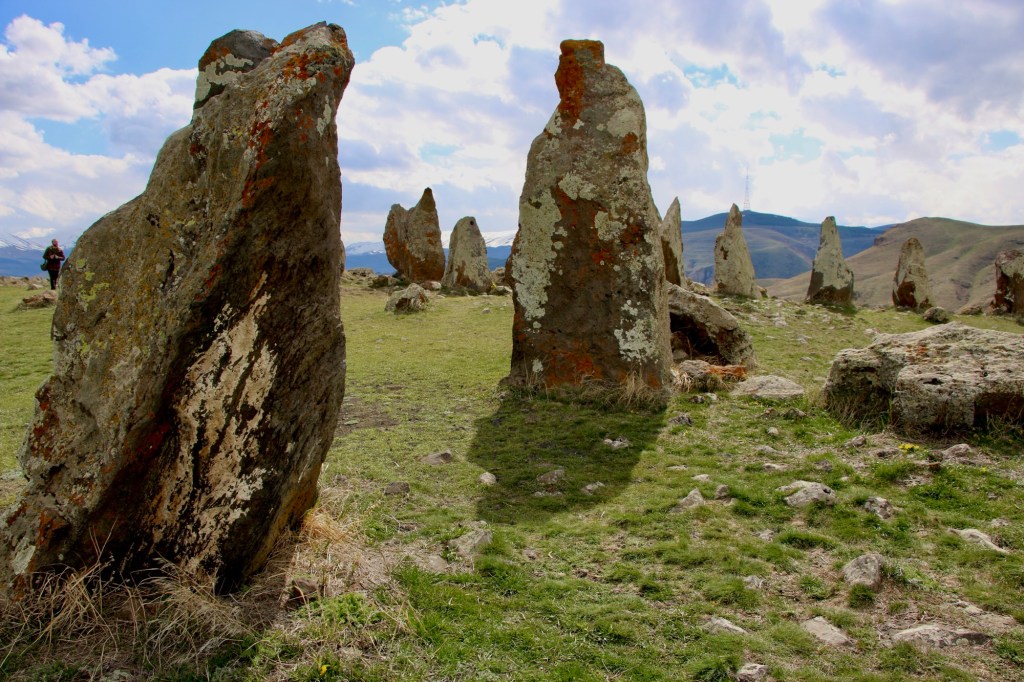
In an arduous countryside marked by mountain and valley, canyon and cliff, and rock and river, this small patch of land was flat and grassy. Compared to the rest of the difficult world, this must have felt easy. From here they could see everything.
In this place they built something we still struggle to understand today, planting massive stones in the earth and arranging them in the shape of a circle with two long arms extended, north and south.
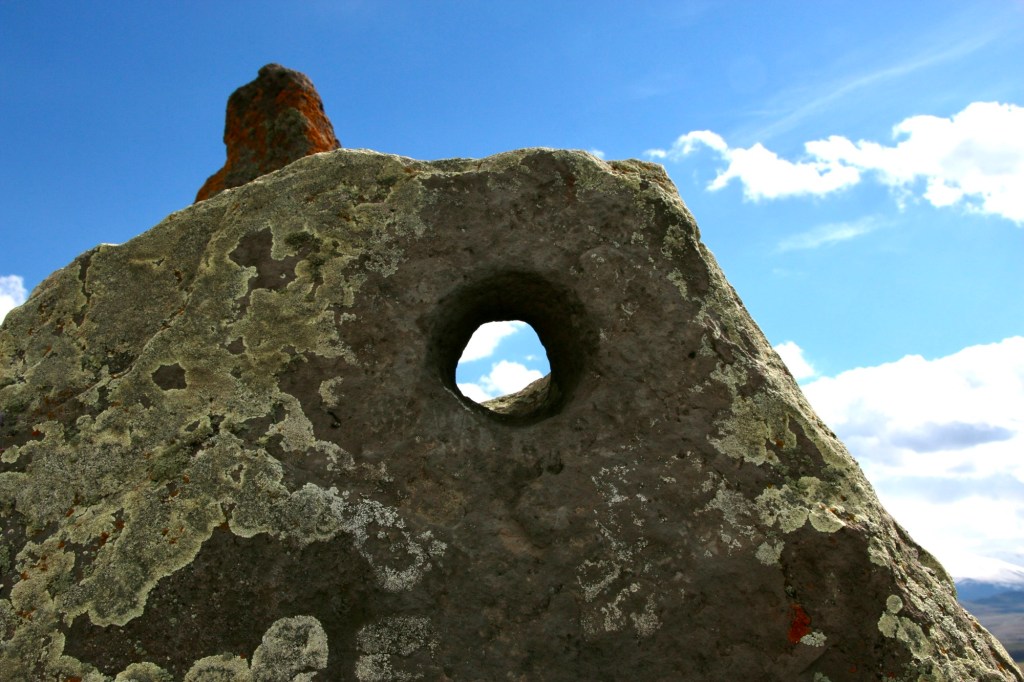
In some, they drilled holes at odd angles.
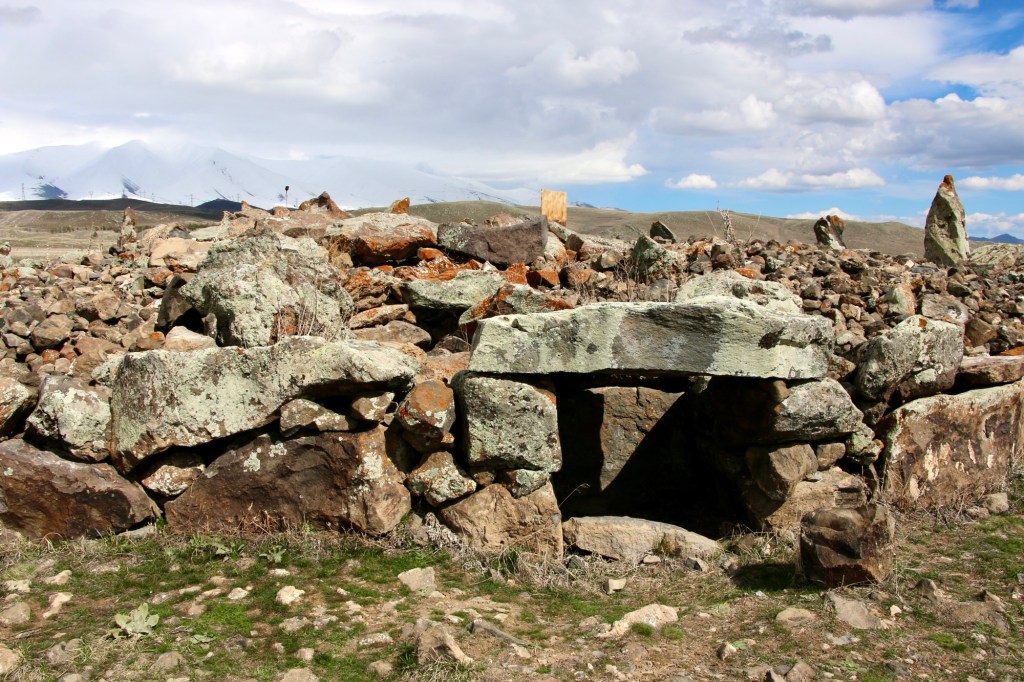
And amidst it all they constructed a circular central structure with an entrance and a roof. What was its purpose?
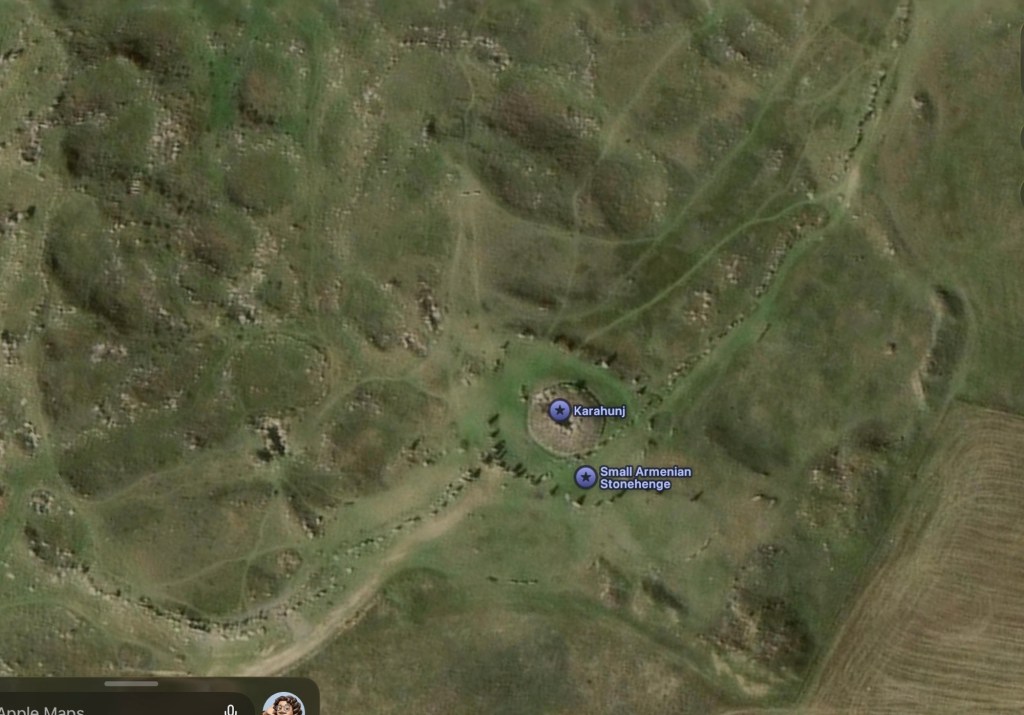
I pulled up a satellite image on my phone – I needed help visualizing the site, and immediately saw something I wasn’t ready for – circular and oval rings and impressions were visible all over the plateau. This wasn’t the only stone ring – just the most prominent.
I was at Zorats Karer, Karahundj, billed as Armenia’s Stonehenge, and I was trying to make sense of it all. I had been told it was an astronomical observatory, but the satellite image made me question that simple answer. I knew the full answer would be more complex, and further reading confirmed it. The observatory theory is but one of many. Others have theorized a necropolis or a city, for which the megalithic stones served to reinforce the walls.
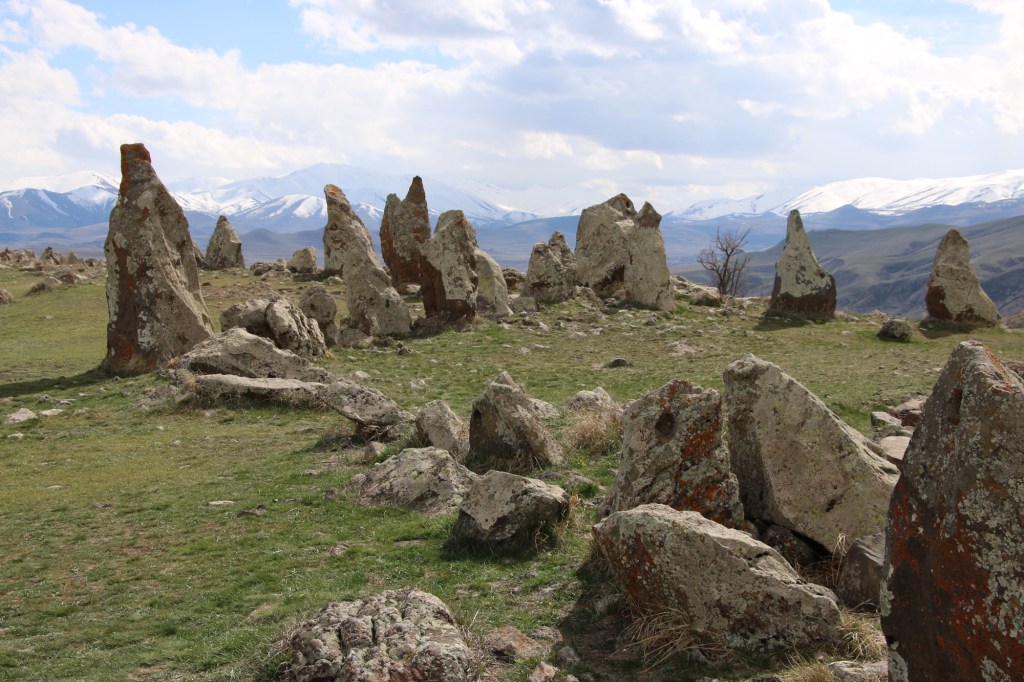
For my part I’m dubious of the astronomical observatory theory, and personally suspect this was a small village of some sort. But I have no expertise in archaeology or anthropology, so my opinion doesn’t mean much.
What I do know is this – the site was incomprehensible. It felt hallowed. Inviolable.
It felt like the kind of place where one should lower their voices and speak only in hushed tones.
I had arrived at this diminutive, solitary plain after leaving bustling Yerevan this morning. My guide, Arman, had collected me at my hotel and we headed first toward Ararat and the closed border with Turkey. Along the southern slope of Ararat’s smaller peak, the border with Iran sweeps northward and came into view, looking entirely unremarkable from a distance.
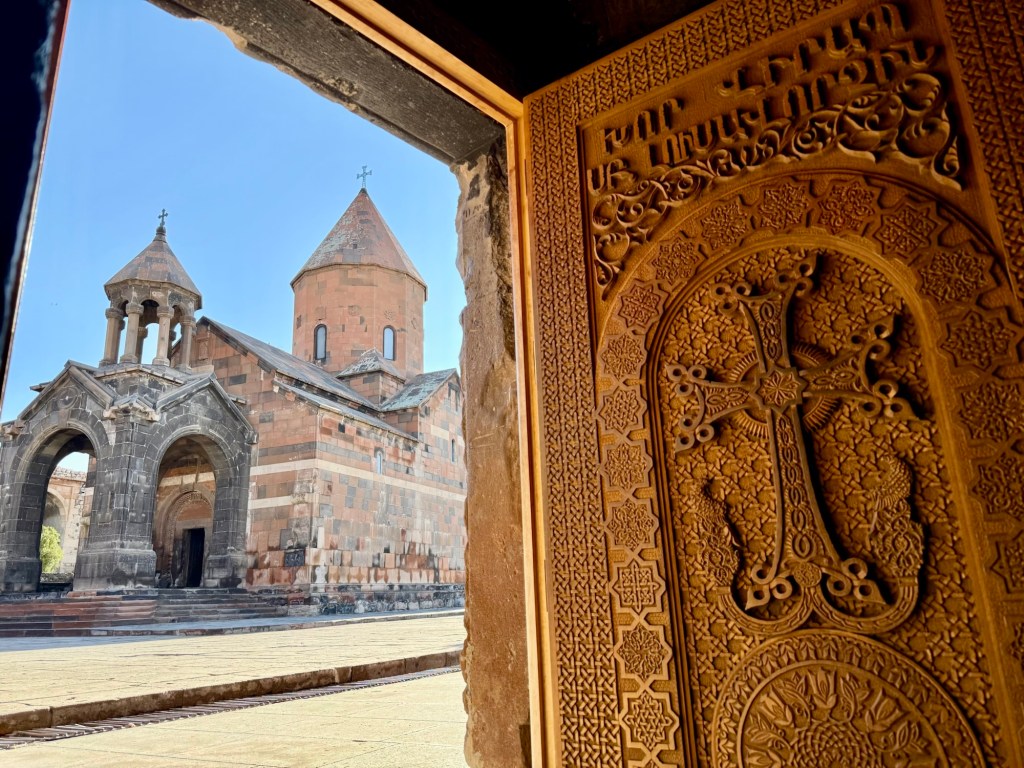
Our first stop was the Khor Virap Monastery, where St. Gregory the Illuminator was held captive in a great pit for 13 years. He was finally released and in c. 301 converted Armenia from Zoroastrianism to Christianity, becoming head of the newly formed Church.
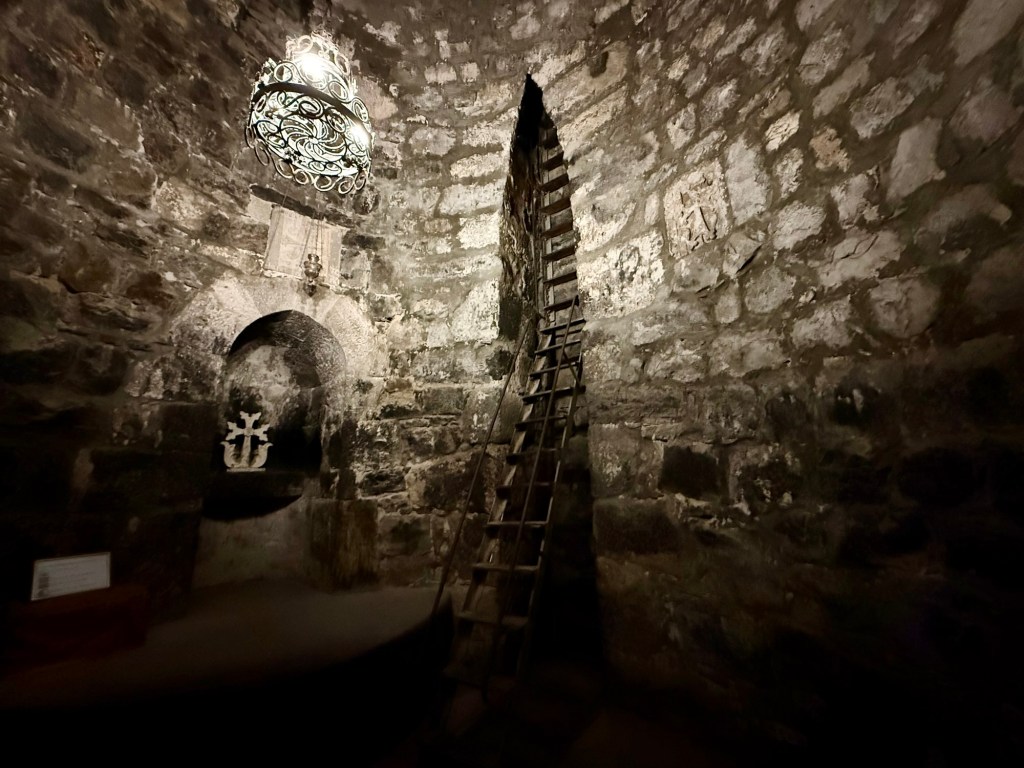
The pit is open to public access by narrow opening and ladder. The space is a chapel now, and the spiritual importance is unmistakable.
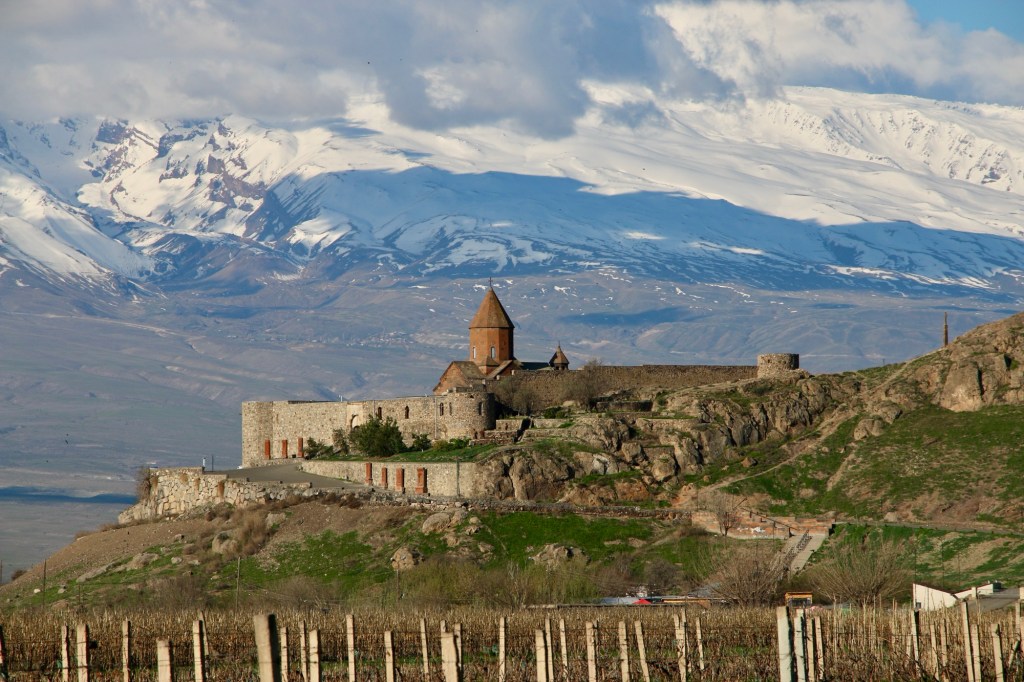
The current monastery was built much later, standing on a low hill, where it could also protect a now-lost city below. The church within is small, as they all seem to be here, with the usual conical dome. I’d imagine they really have no need for a large church, as the monastery is quite a distance from any town.
Back on the road we continued toward the southeast, with the terrain growing taller and more variable as we left the Yerevan plateau. Soon we began our ascent into the perilous passes, our course guiding us ever closer to the borders of Azerbaijan and Iran.
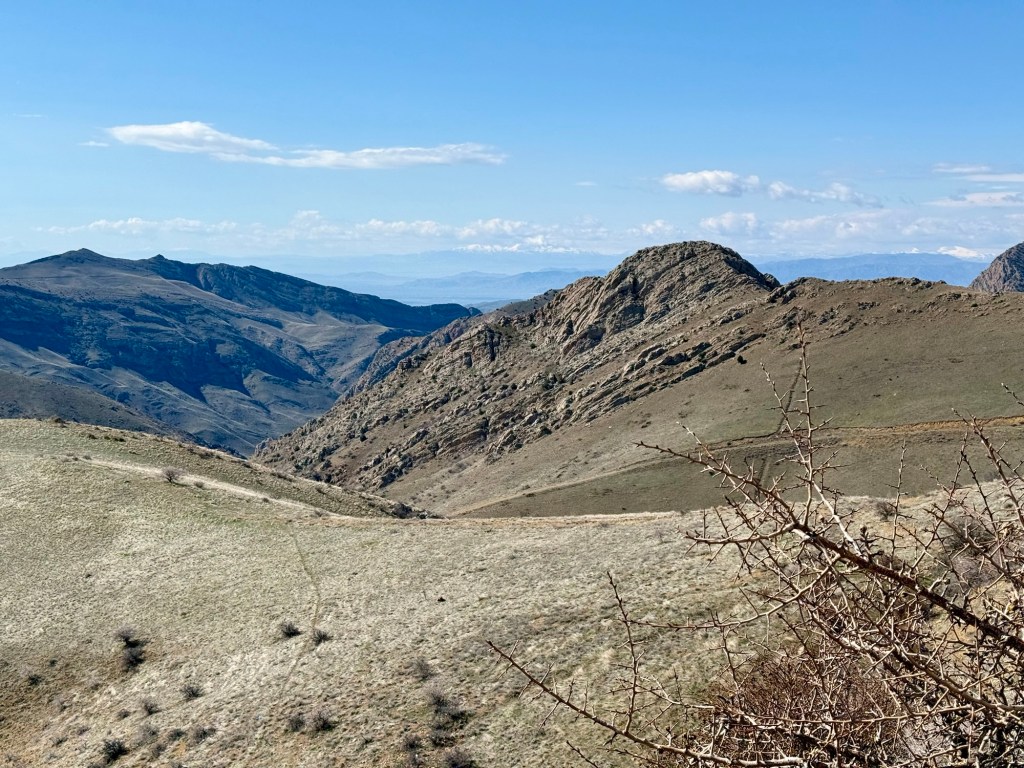
As we wound through the mountain passes and gazed at the tortured stone, twisted by seismic forces, I considered the land here and the hardiness a people must have in order to live here and make it a home. What kind of people must they have been to maintain it and protect it from invaders?
And I wonder at the stubbornness of a people willing to invade such precarious landscape.
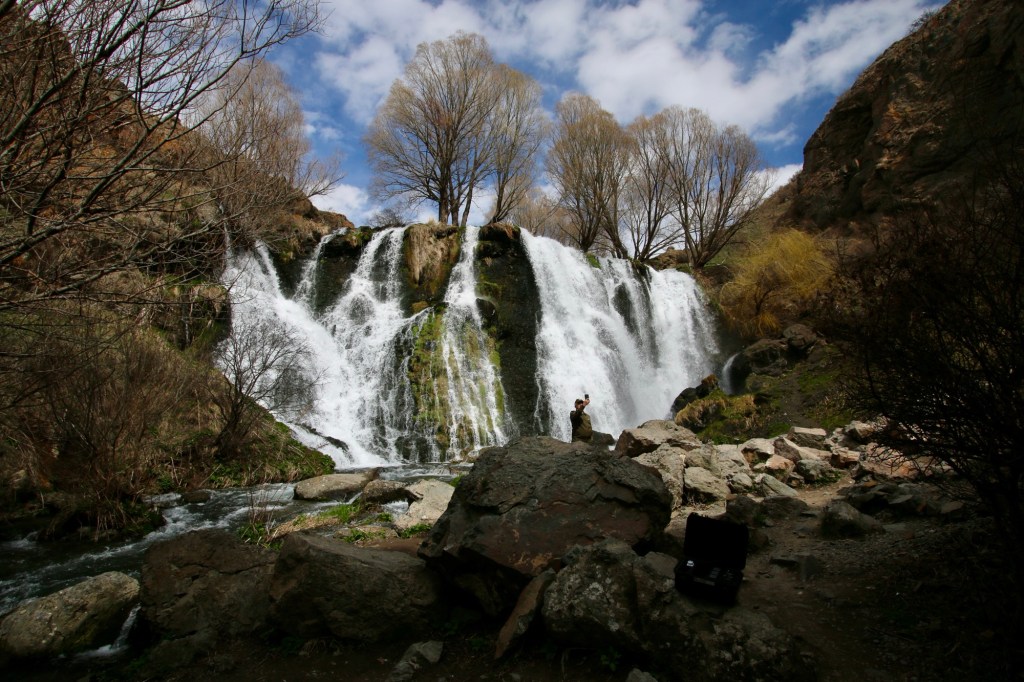
We paused along the way to view some local waterfalls, which are nice enough but aren’t especially exciting. Overall the drive is a long one and I think some of these stops primarily serve to break up the monotony of the trip.
It was sometime in the late afternoon when we stopped at Karahundj, and then moved on to Tatev Monastery.
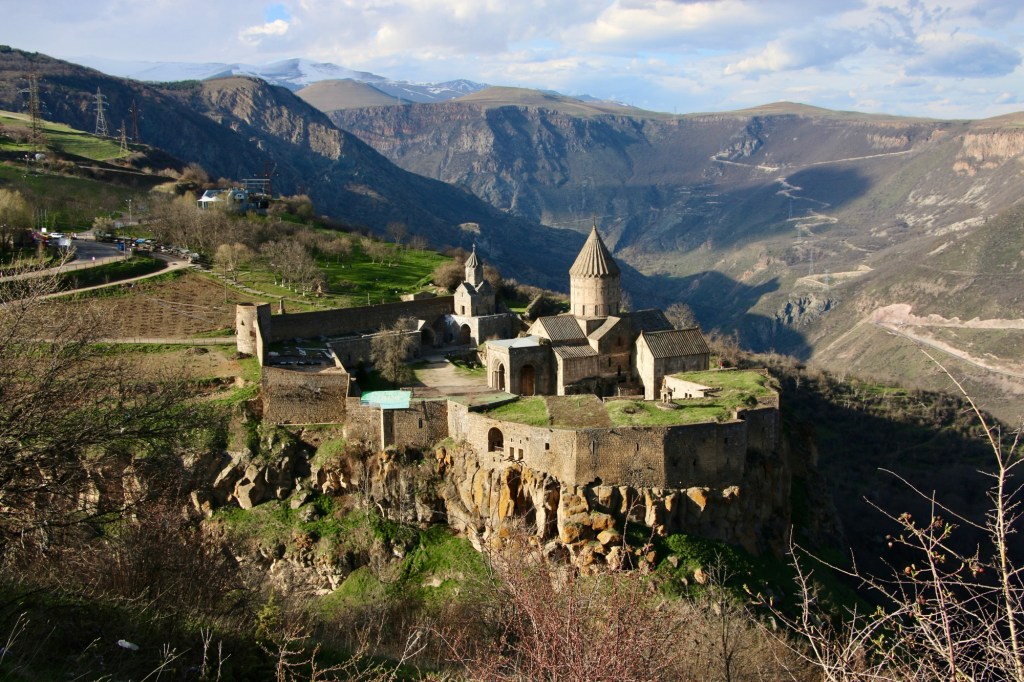
It’s another medieval monastery built on the edge of a cliff, as if suspended between earth and sky. It was once connected by tunnel to a now-ruined cloister below, but now stands on its own.
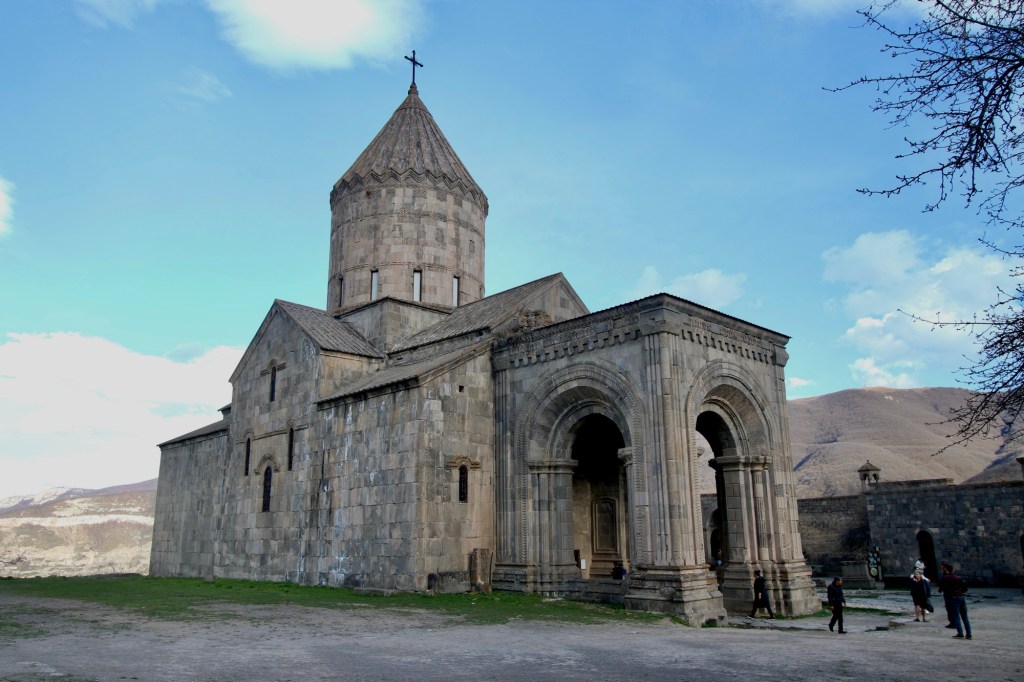
It was as stunning as I had heard when I planned this excursion.
But it was also a let-down. You see, I had expected this to be the high point of my day, but wasn’t — and that’s not because I hit my head 4 times.
By this point in the day I was obsessed with something else. I couldn’t clear my head of thoughts of that small patch of land in the middle of the mountains.
I kept thinking about Karahundj and the fortitude of the people who braved this rocky country to make their lives here.
And I knew intrinsically that this was the same strength of spirit that holds a people together when they are invaded time and again.
It’s the same dauntless determination to survive that unites them when they are driven from their homes and made victims of genocide.
And it is the same unquenchable spirit that sustains them even when they are separated from their national symbol.
I knew exactly who those people were.
They were the first Armenians.

 butterblogger