When I came to Calabria I knew I was coming someplace smaller, to a place most of the world doesn’t know about, and if they did they have already forgotten. I knew transport in this region is limited and many places are impossible to reach by train. I don’t have a car, so I’m more restricted in what I can see and do, but my time is also short, so that’s OK.
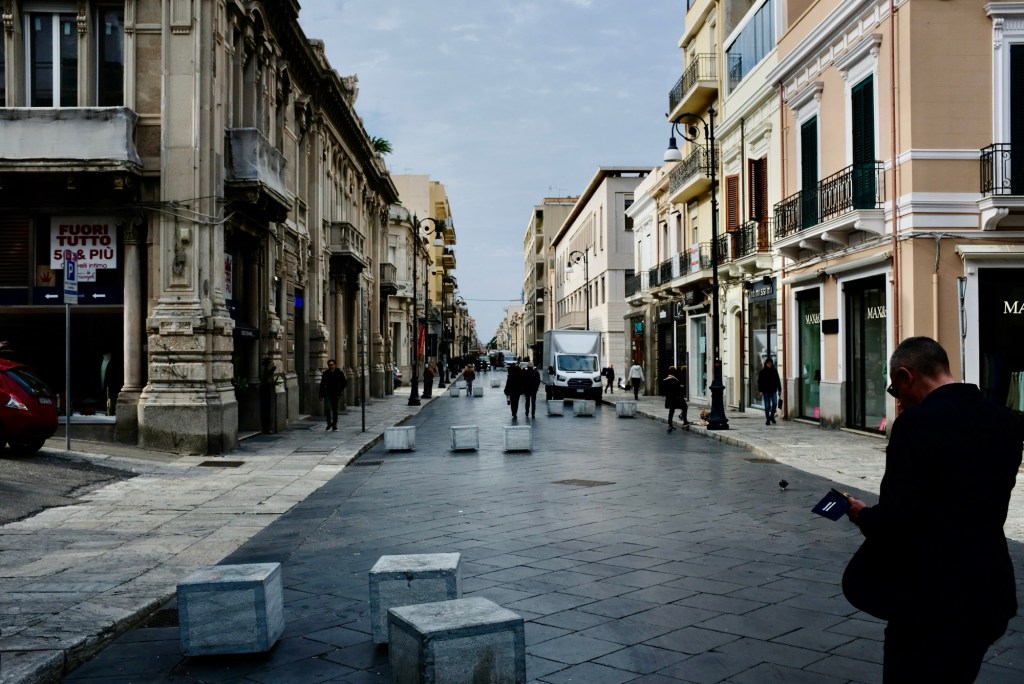
Choosing to start in Reggio Calabria was perfect – the town here is stunning, with stone and marble walkways that sparkle when the sun shines, and stands of palm that rustle in the gentle breezes that occasionally come ashore.
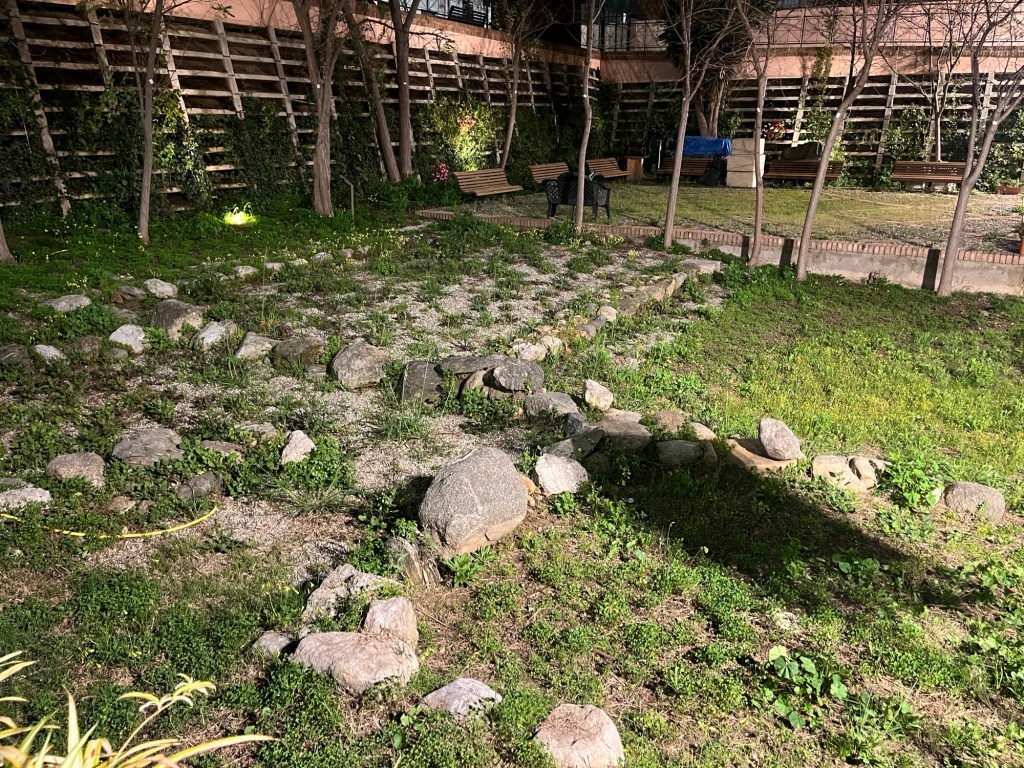
Its has a history that dates back millennia – this was once site of the Greek city state of Rhegion – and as I stroll along the long streets running parallel to the shore I wonder at that history. Perhaps some of these are the same streets the Greeks once used, as Via dei Tribunali in Naples dates back to the same era of Magna Graecia.
That history has largely been paved over, however, with just a few sparse sites remaining.
Since then rulers have come and gone, and the list is impressively long. The Romans, Byzantines, Saracens, Normans, Swabians, and Spaniards are just a few of the nations who have held title here. But there is no great history of any of that here – it’s not something I’m finding mentioned as I explore this town. The Calabrese seem to have shrugged it off and seem content to live their lives mostly unnoticed by the history books.
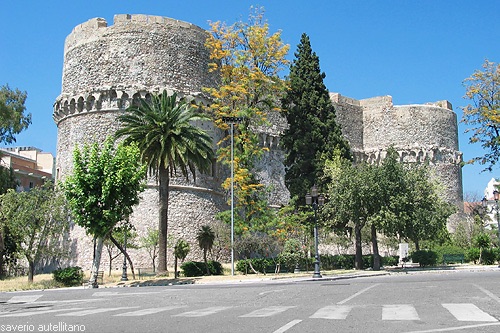
This morning I started with breakfast at a local cafe and then a walk across town to the Aragonese Castle. It dates to at least 1270, but my best understanding is it used to be part of the wall so the history goes back several centuries earlier. (nb I strangely didn’t take a photo of the castle from the outside, so I have “borrowed” this from Wikipedia)
Nothing significant is in English here, and my Italian is spotty at best, so I’m probably not a reliable source for any of this history.
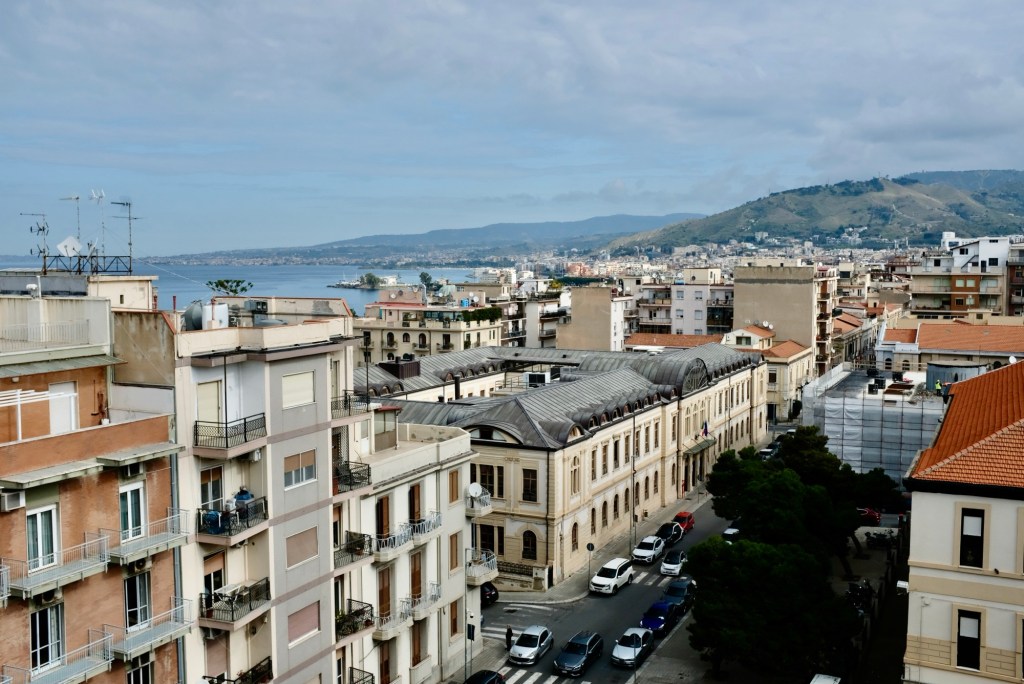
It was a nice visit, but there isn’t really much inside other than a meeting room, but this isn’t unique to Reggio Calabria – many castles have long since been relegated to elaborate meeting halls. The best part of Castello Aragonese is going to the top of the castle as a way to get above the city and catch a view of the town.
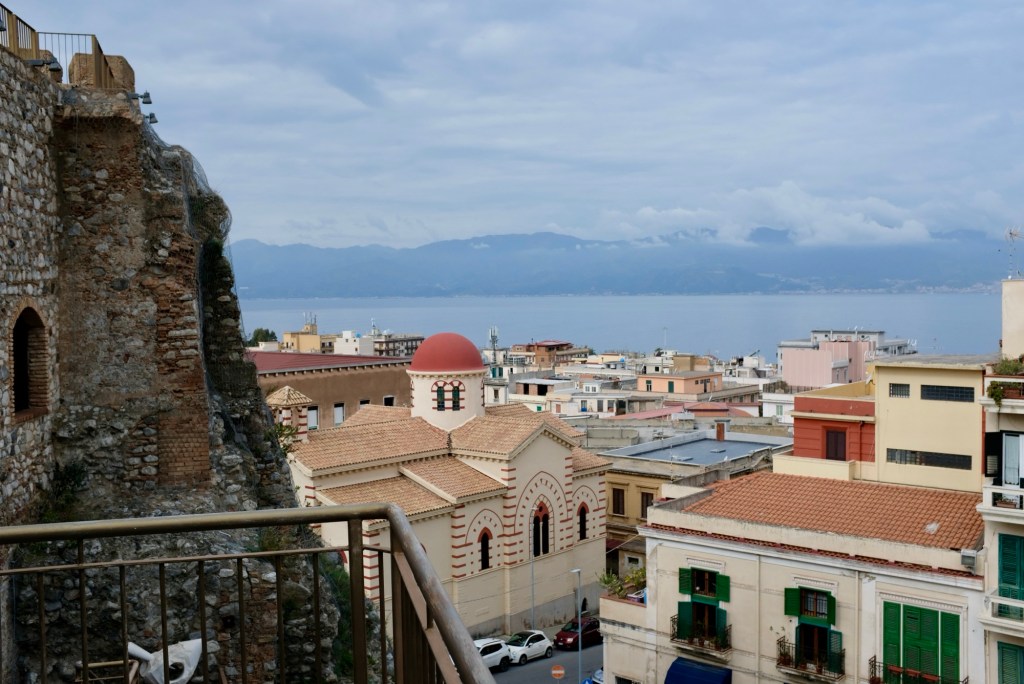
I think I’m supposed to be able to see Mt Etna somewhere in that direction, but today just saw clouds.
The more interesting half of the morning was spent in the Bergamot Museum, which was much less boring than it sounds.
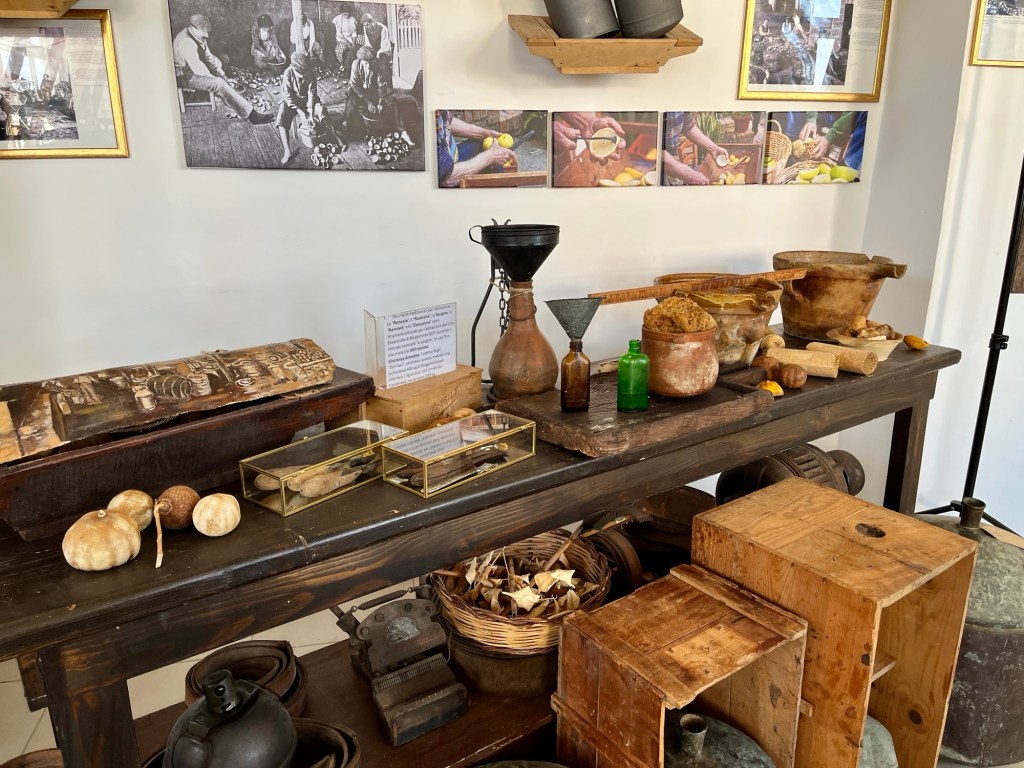
Admittedly, it wasn’t exciting, but historically bergamot had a moment. And in that time, the oils of the bitter and floral citrus fruit were highly sought after, and the world of bergamot centered on Calabria and Sicily.
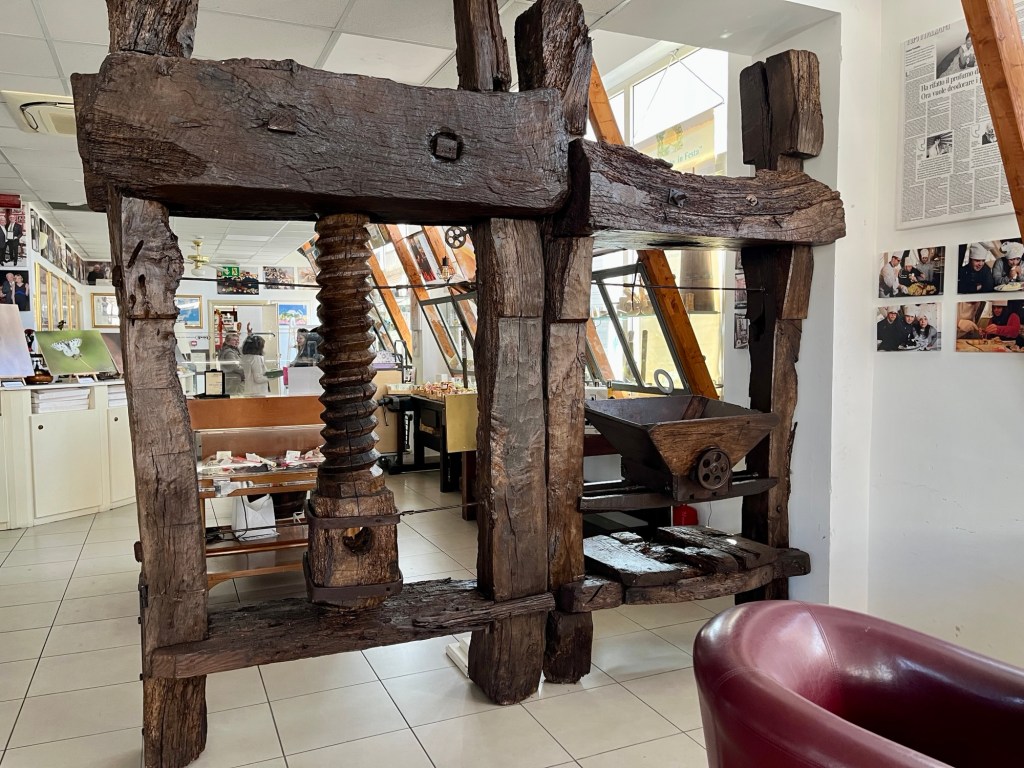
The museum explains the industry as it was, with presses and extractors and copper jugs for storage and delivery of the precious liquid across the world.
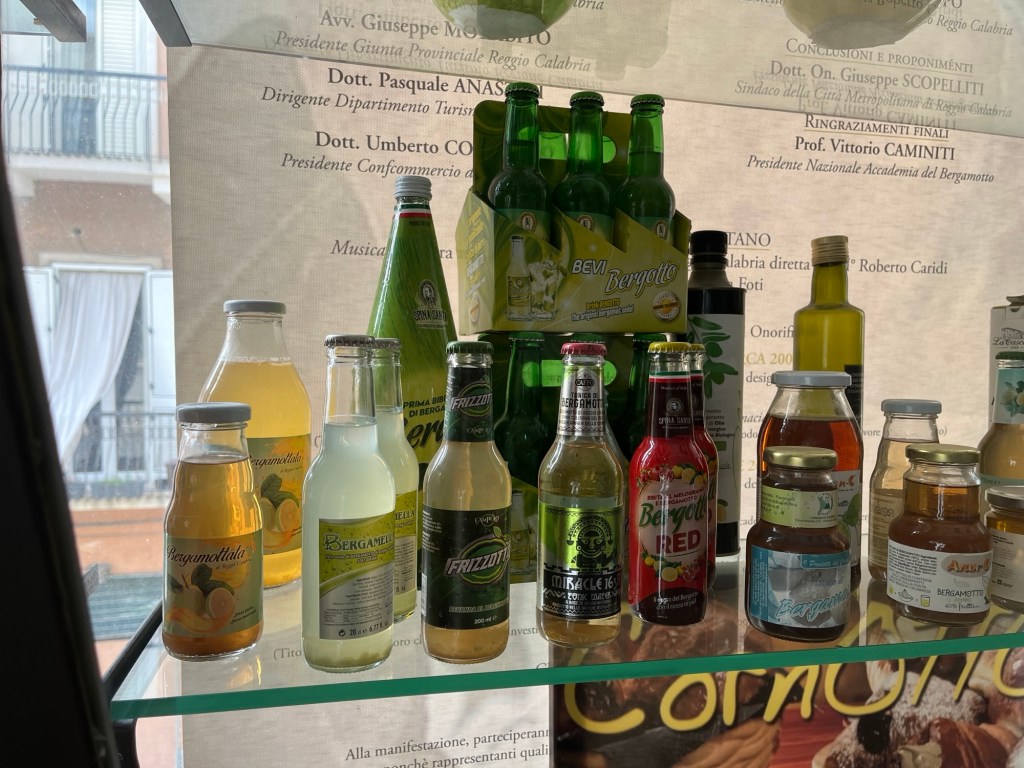
And they show off many products that have been produced from bergamot over the centuries, from oils and perfumes, to jellies and candies.

The hostess even gave me a nice little cup of bergamot granita.
After leaving the museum I headed toward the lungomare, the waterfront. Along the way I passed this stately palace. This isn’t ancient, but dates to another time in the history of Reggio Calabria. I wonder at its walls and whether this is from the bergamot era, or from another boom that I don’t know about.
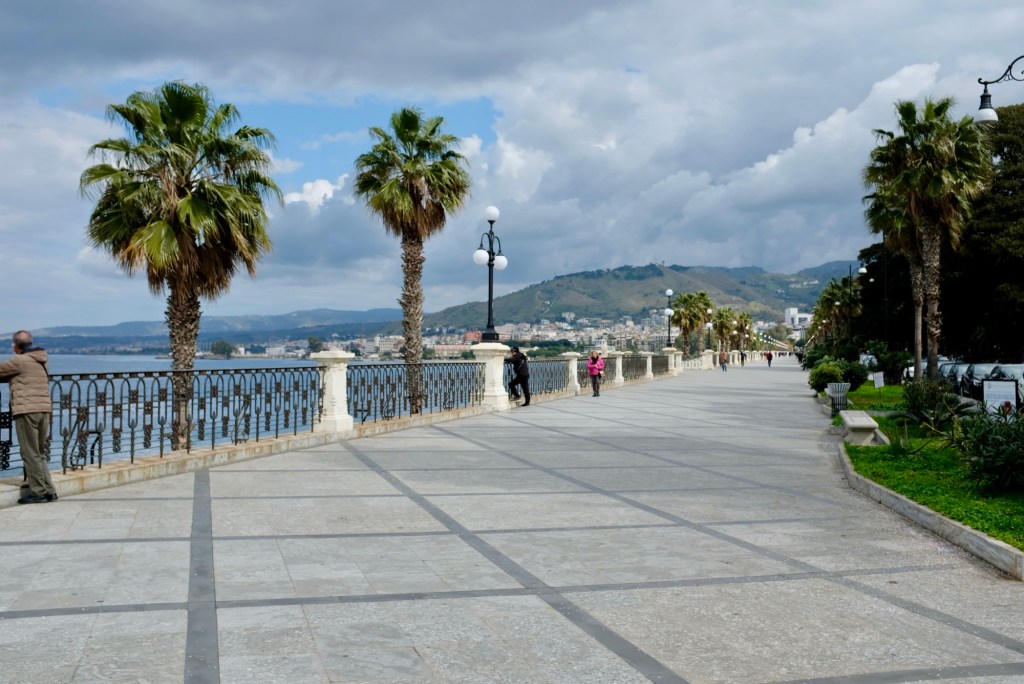
At the lungomare I found a bench and sat for some time nursing a gelato (bergamot, of course) and enjoyed the sun.
And I considered the town around me and the many secrets it must be holding.


