Marieta, the owner of the eclectic BnB where we spent the night, greeted me in the morning with a big hug and a kiss on the cheek. A jubilant soul who welcomes her guests with enthusiasm and affection, her unabashed joy is infectious.
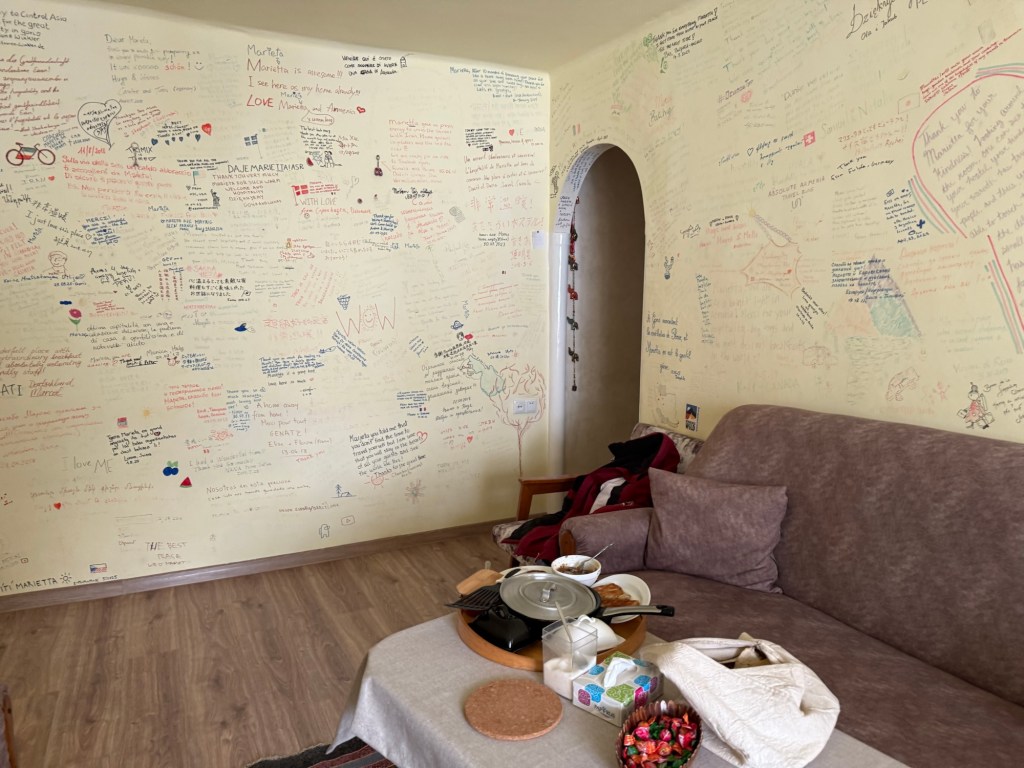
Arman had warned me on arriving “she will give you a hug and probably kiss you,” and he was correct.
We spent one night there, and in that time I think I got 4 friendly pecks from her.
Unsurprisingly, before leaving we were served an oversized homemade breakfast with her own honey and mountain tea brewed from flowers she collects herself.
After breakfast we headed east from Goris, toward the Nagorno Karabakh region. Until 2020, this had been part of Armenia, but it is now under the control of neighboring Azerbaijan.
In another time, the roads here were bustling with people traveling to and from that region, but the planned gas station now sits deserted, its construction stopped midway and its girders rusting.
The relationship with Azerbaijan remains an uneasy one. At places along the drive yesterday, where the border is close to the highway, the Armenians have built high berms along the roadside to protect drivers from sniper fire.
“Don’t worry,” Arman had reassured me. “Things are quiet now. It is fine.”
And I never really worried (until just now when I typed the words “sniper fire”).
We weren’t going to the border today- just to the swinging bridge and Old Khndzorek.
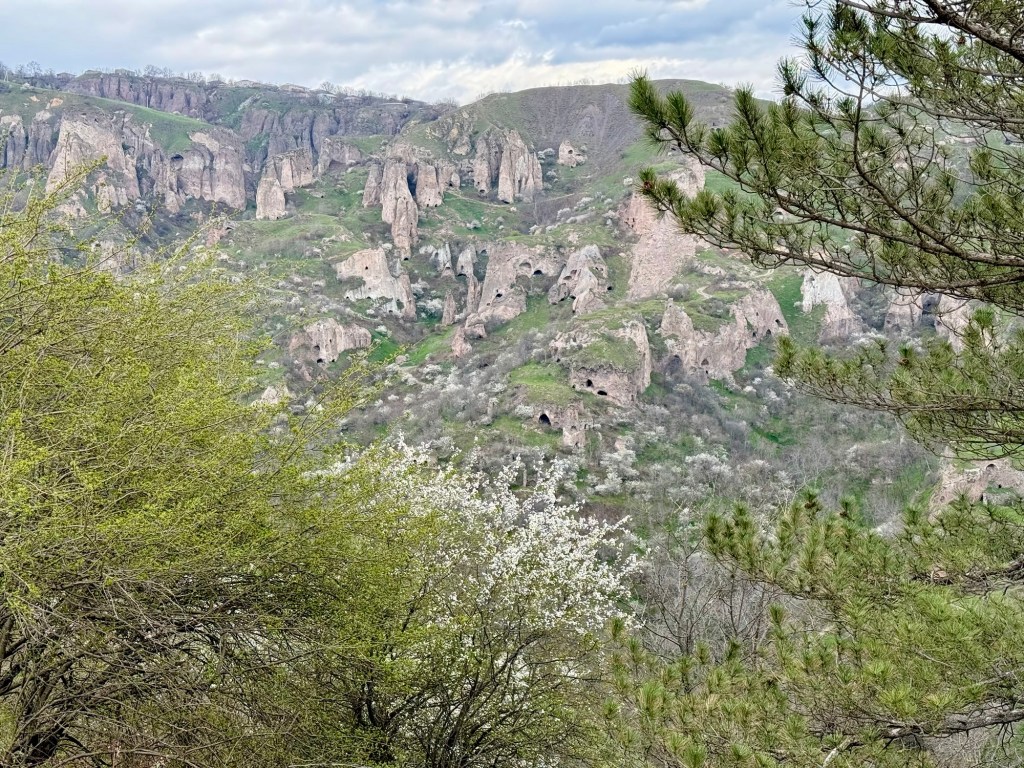
As soon as we pulled into the parking lot I knew what I was seeing. So many caves on a hillside isn’t an accident: This was once a cave town. I’ve seen the like before, in abandoned Cappadocia and dynamic Matera.
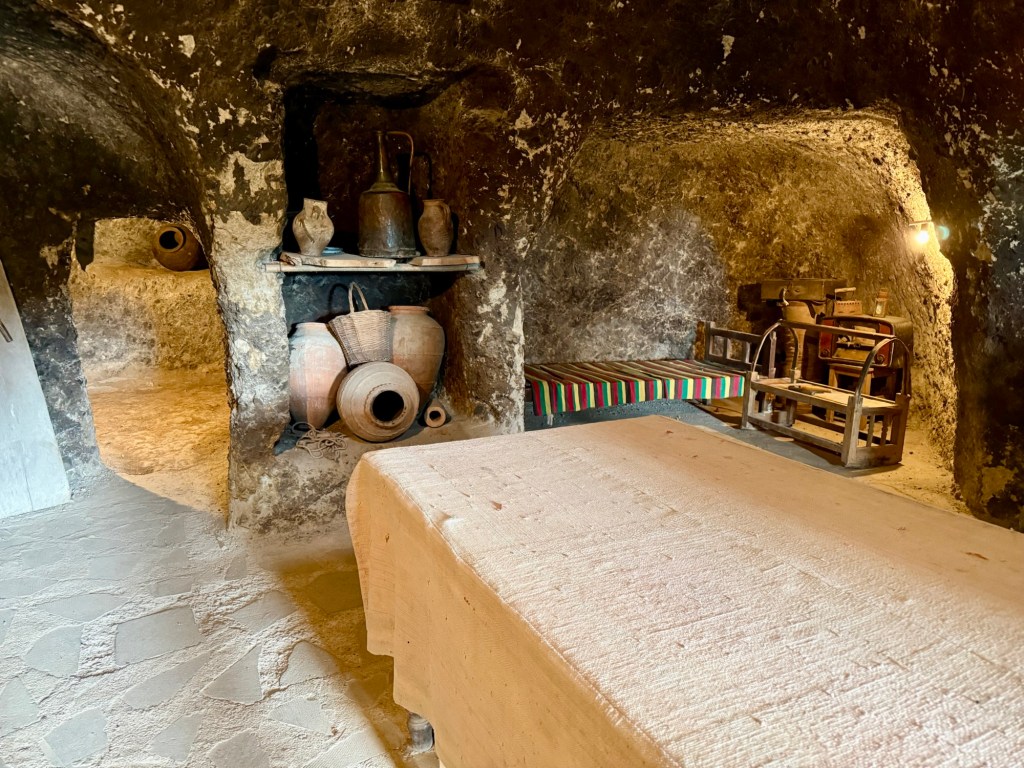
This cave town, too, was inhabited until very recently. People made their lives in these caves for an age, with some online sources saying 1,000 years, but Arman insisting on a 3,000 year timeline.
Whatever the number, the community here was thriving up until the 1950s.
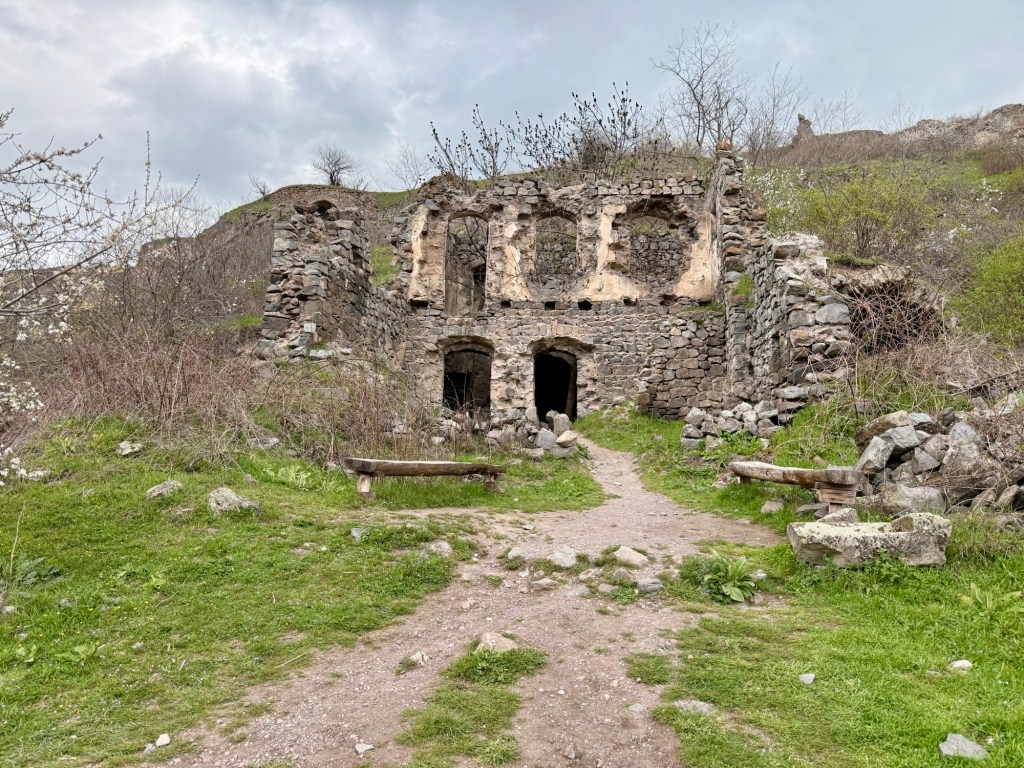
A century ago, you wouldn’t have looked upon this hillside and seen caves, but instead it would have seemed a town like any other. In front, each building bore a facade for the world to view that hid the cave behind.
Then in the 1950s everything changed. The Soviet government ordered the occupants to leave their caves and move to a new location on the top of the hill. The residents of Khndzorek weren’t given homes or building materials, so they used the only thing they had – their former homes.
Everything that could be salvaged — the homes, the businesses, and the lives that went with them — was disassembled and carted away.
And a way of life was lost.
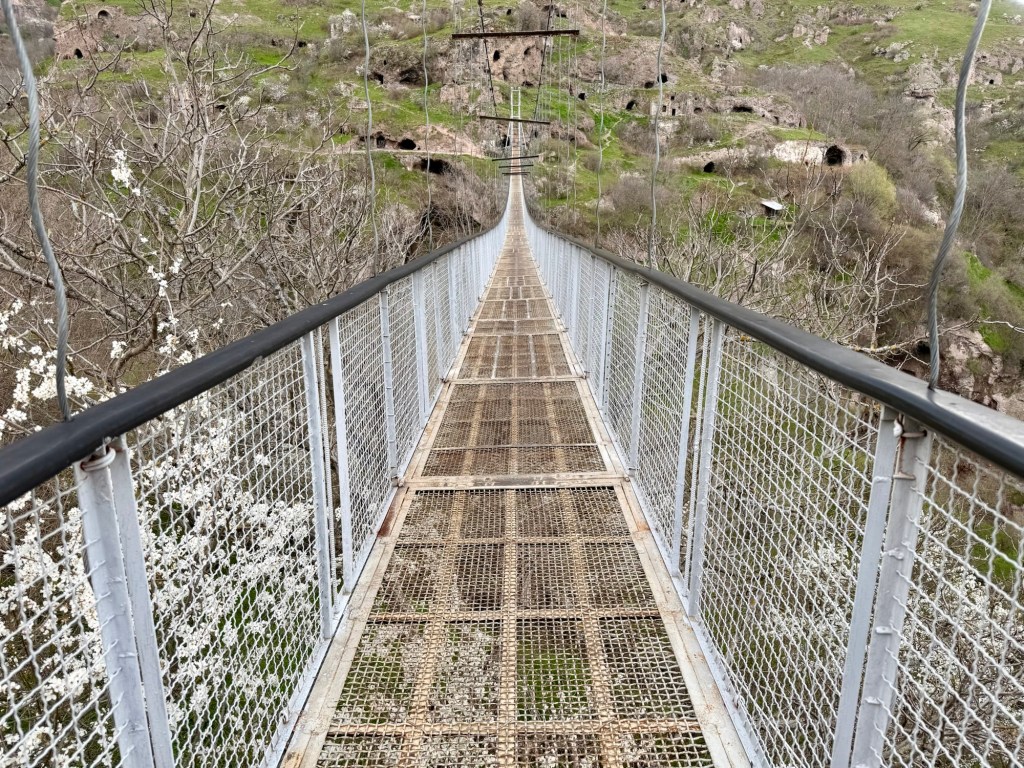
The pathway to Old Khndzorek crosses a ravine by way of a swinging metal footbridge. Arman preemptively cautioned me, “You will see it is rusty in some places. Don’t worry – it is safe.”
I measured my steps, feeling the unsteady sway of the structure beneath me, and looked intently at every little space where the metal grid of the floor had rusted through. Arman’s words echoed in my brain.
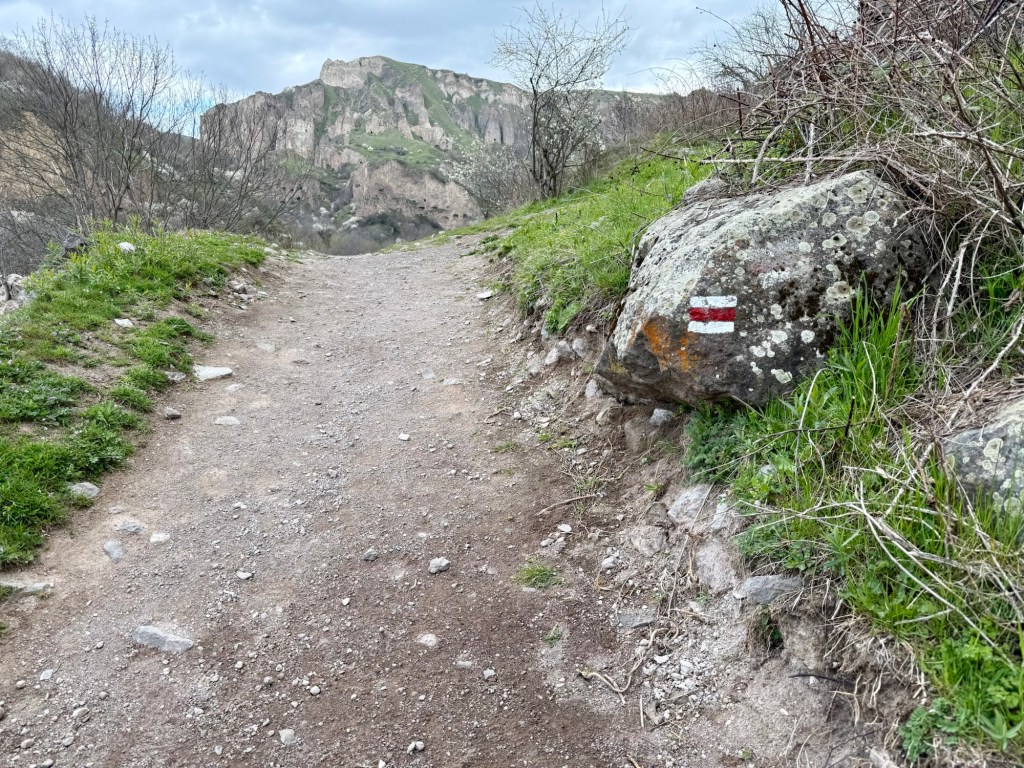
On the far side of the ravine, the skeleton of the old town is now the domain of hikers and animals.
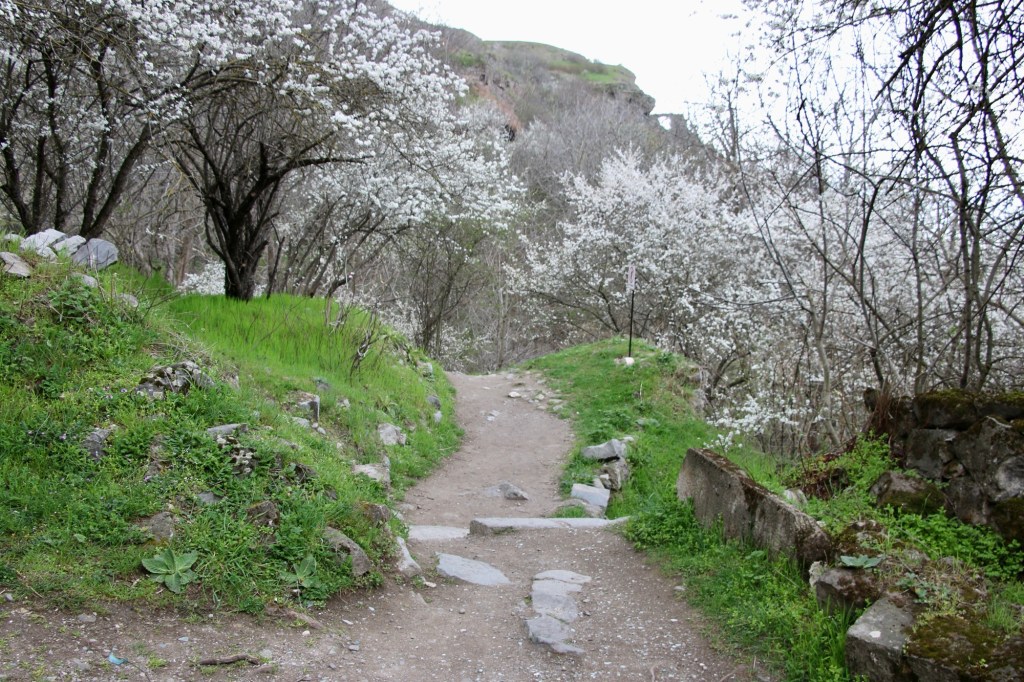
Flowering spring trees are pushing into the old pathways, and I had to duck to make a safe passage.
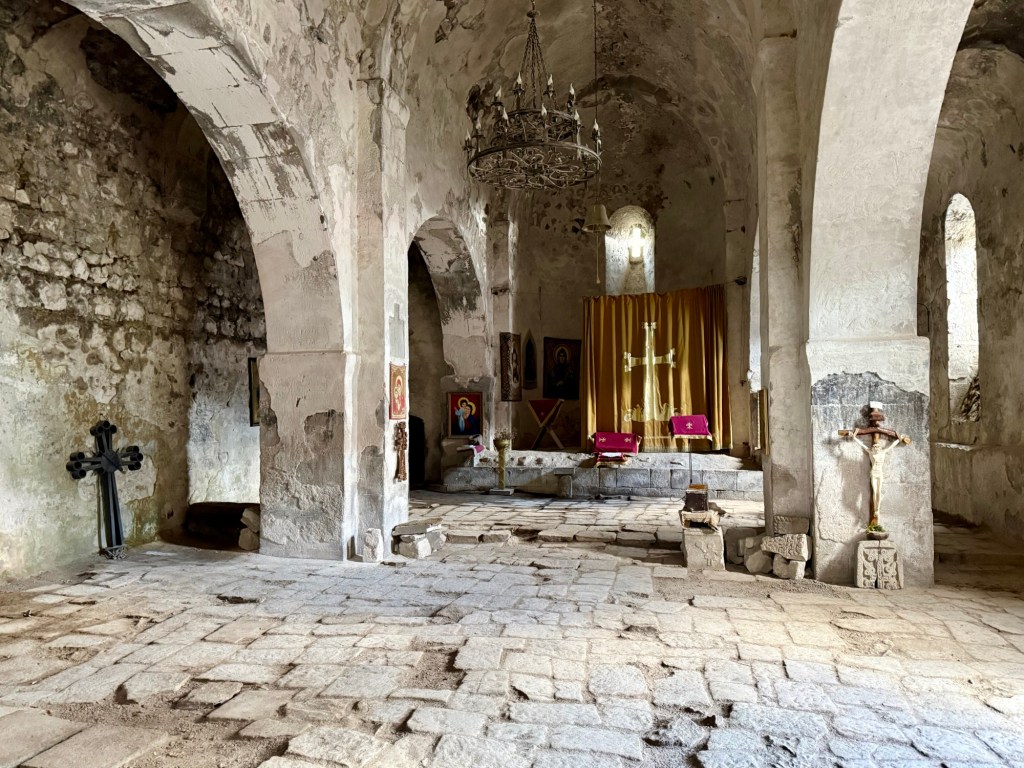
I went as far as the old church, which has not yet been fully abandoned.
Back at the car we rushed to get to the far side of the mountain pass. Snow was coming and we didn’t want to get caught because we had one more place to stop: Areni, where wine has been made for millennia.
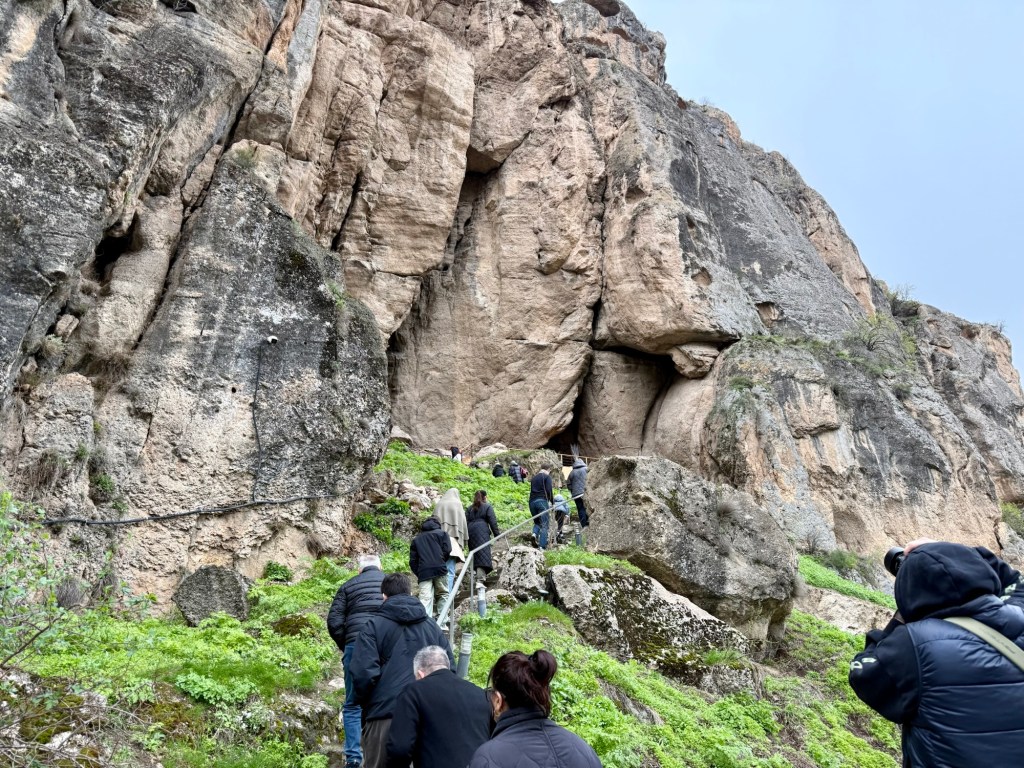
This is the world’s oldest wine region, so of course I tasted wine, and it was fine, but this wasn’t our greatest stop for the day. Instead I visited one more nondescript cave, sitting above the floor of the valley, just off the roadside, where Armenians have sought shelter for millennia.
A few days ago I marveled at a 5000 year old shoe in the museum in Yerevan. Seeing such an item in the museum is one thing, but the glass display cases and spotlights are void of context.
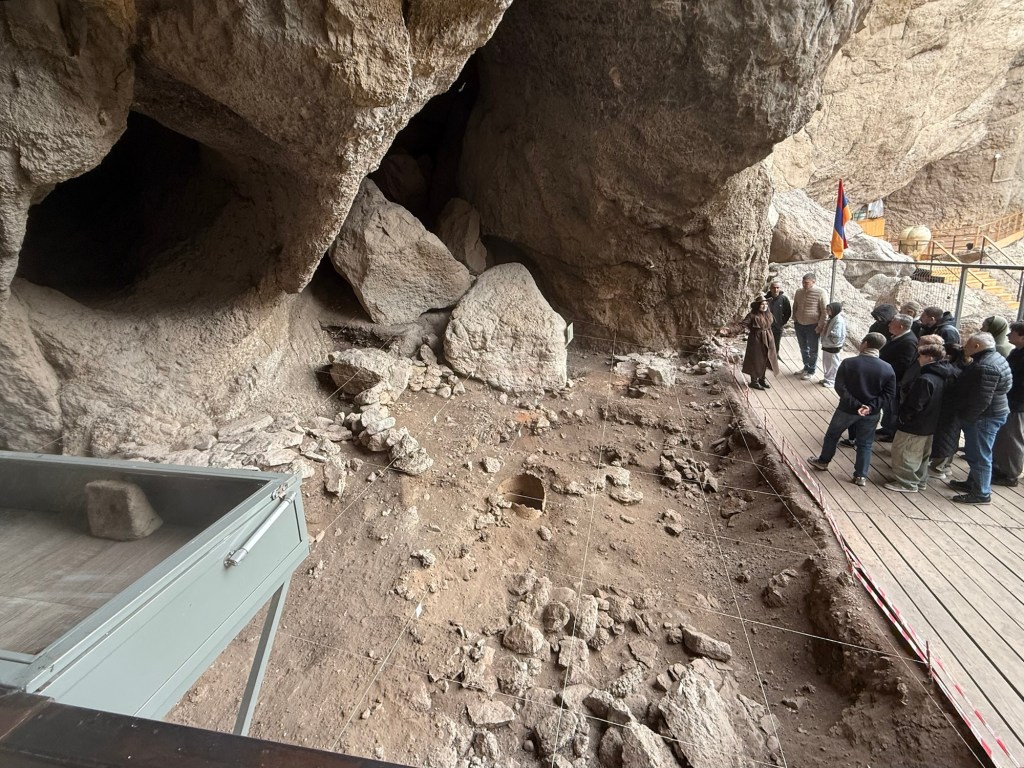
That shoe, I learned, came from the ancient earth lining the floor of this cave. I look about me at the cracks and crevices and can’t help but imagine the person who might have worn it. What was their life like? A shoe must have had real value then – why it was left behind? Why was there just one shoe? Were they fleeing some threat? Where was its mate?
Deeper in, admixed with burial plots, where skulls were laid to rest, archaeologists have found ancient urns from a winery.
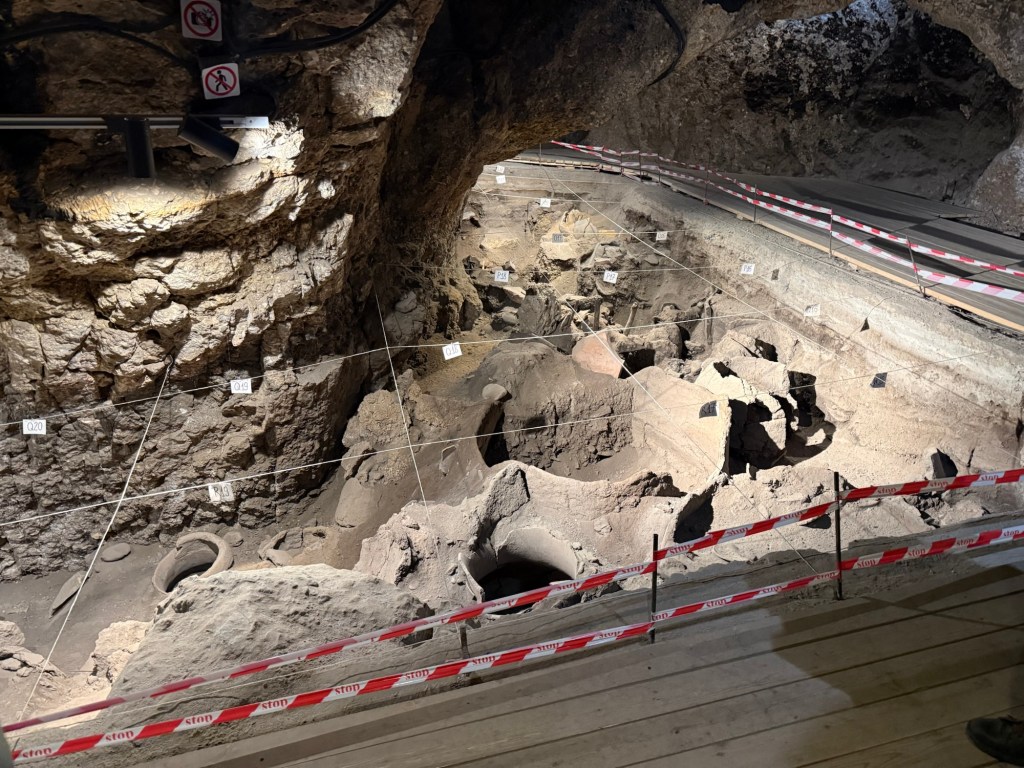
Gazing at the floor of the cave, with its buried ceramic jars, I am once again struck by the age of this place.
Millennia ago men came here, toiled, and made a life in an unforgiving terrain.
Their lives were so very different from ours, but maybe not completely different.
They took shelter from the world without and they wore shoes.
They buried their dead.
And in this humble cave, those earliest humans did something we still do today: They preserved grapes.


