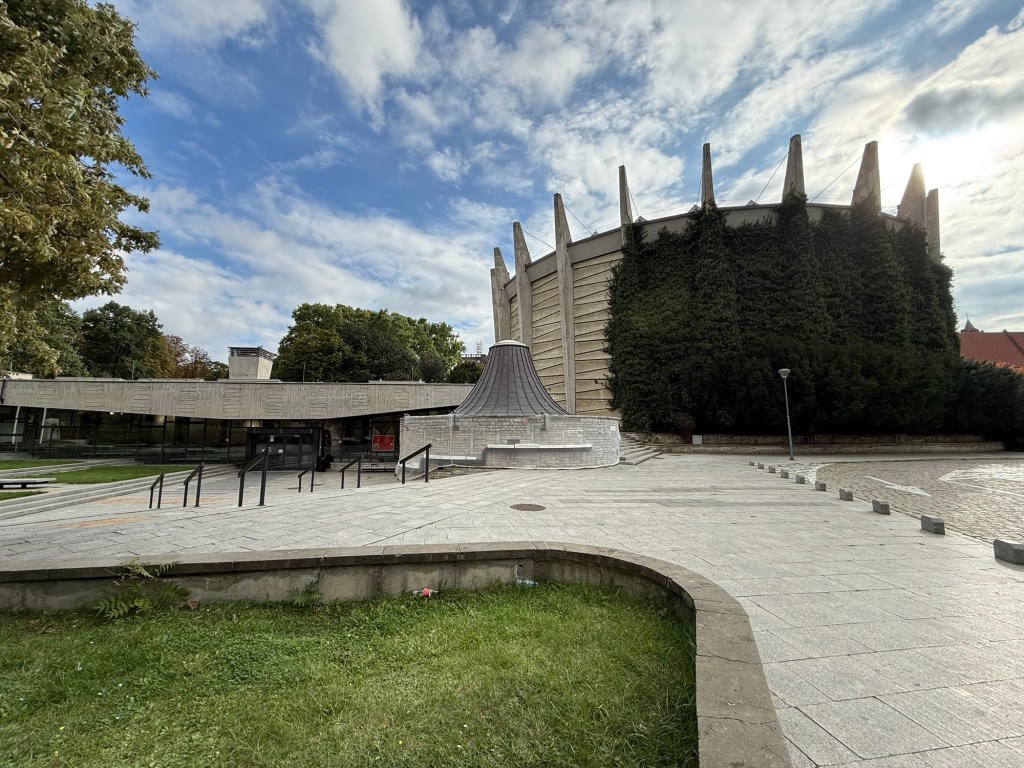
Standing in the swoon-inducing Panorama Raclawica, the Imax of its day, a certain revelation hit me, and somehow Poland is a natural follow up to Armenia in my journeys.
It’s not simply that they were both once locked behind the Iron Curtain, but that they have both shaped by their locations in the middle – between other countries who continually vie for their land.
Poland has been variously under the sway of the Holy Roman Empire, Austria, Hungary, Czechia, Germany, and Russia, with frequent periods of partitioning in the last 200 years. And yet, like Armenia, Alsace, and Vietnam, these outside forces haven’t diminished their national identity, but have helped to cement it.
And the Panorama Raclawica, depicting one battle with Russia, represents that fight.
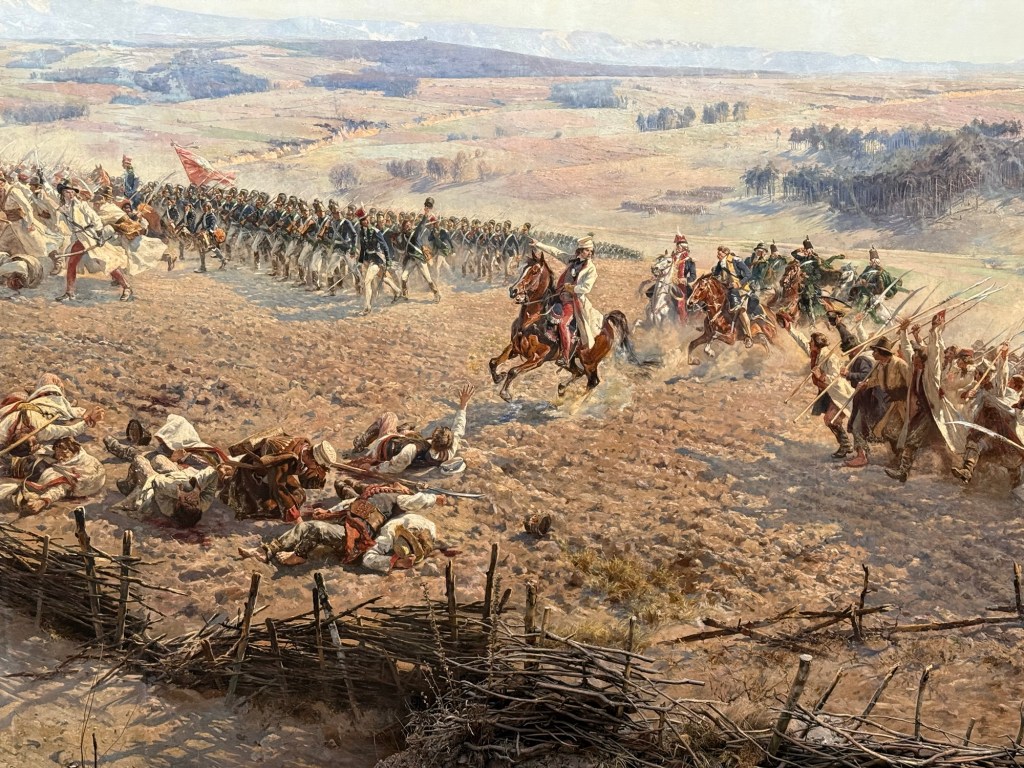
There was a moment in history during which the production of panoramic art became popular. These panoramas weren’t the broad images we think of today and that we take with our phones. They were true panoramas, large circular artworks viewed from within. Several such works were created, but very few remain intact, one of which is the Panorama Raclawica.
It’s an astounding work. It was completed in 1894, for the 100th anniversary of the Battle of Raclawica, in which the Polish people attempted to defend their independence from Russia. Other than Tadeusz Kosciusko, who also played a role in the American Revolution, the characters mean little to me. But the piece rises above familiarity. It is immersive art in a way I haven’t seen before.
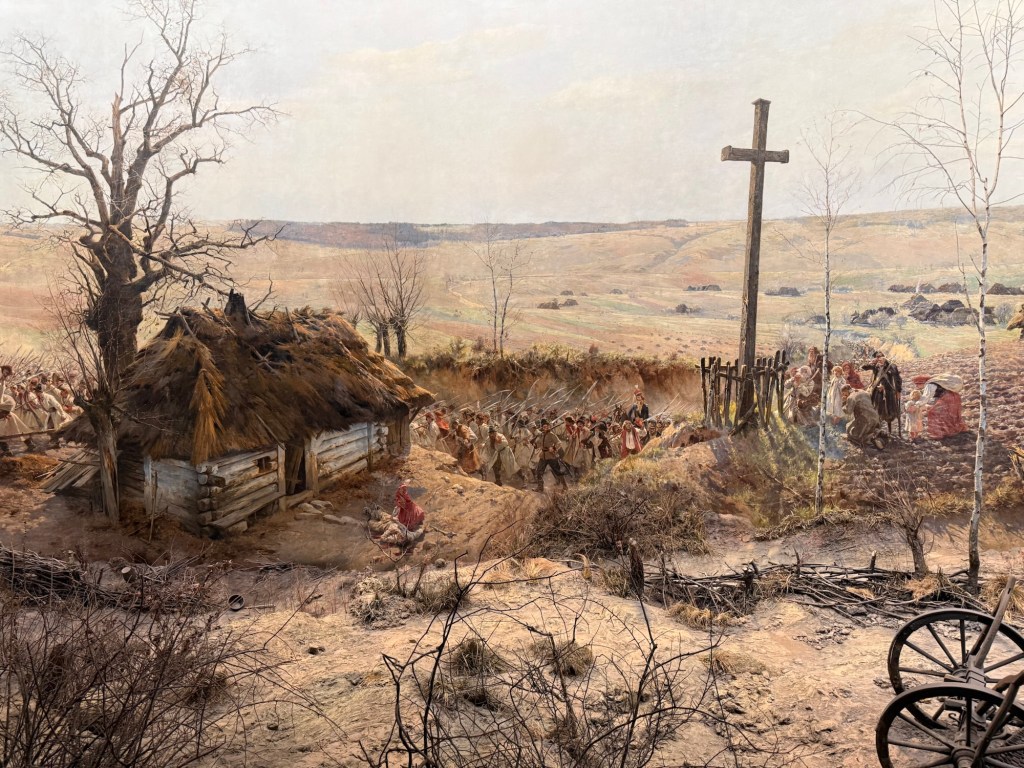
As a viewer, surrounded by images of the countryside, it is as though you are standing on a hill as the battle rages about you and families grieve.
As important as this work was, and because of that importance, it was hidden away for decades after World War II. At the time, under Soviet sway, the government thought that images of Poles fighting and resisting Russian invaders would be subversive. Restoration finally began in 1980, the same year that the Polish Solidarnosc trade union was founded, and it finally returned to public display in 1985.
As I looked upon it, towering above me, and planted in a diorama at my feet, I considered the fortitude of people who have fought off invader after invader, cementing resistance and independence as part their heritage.
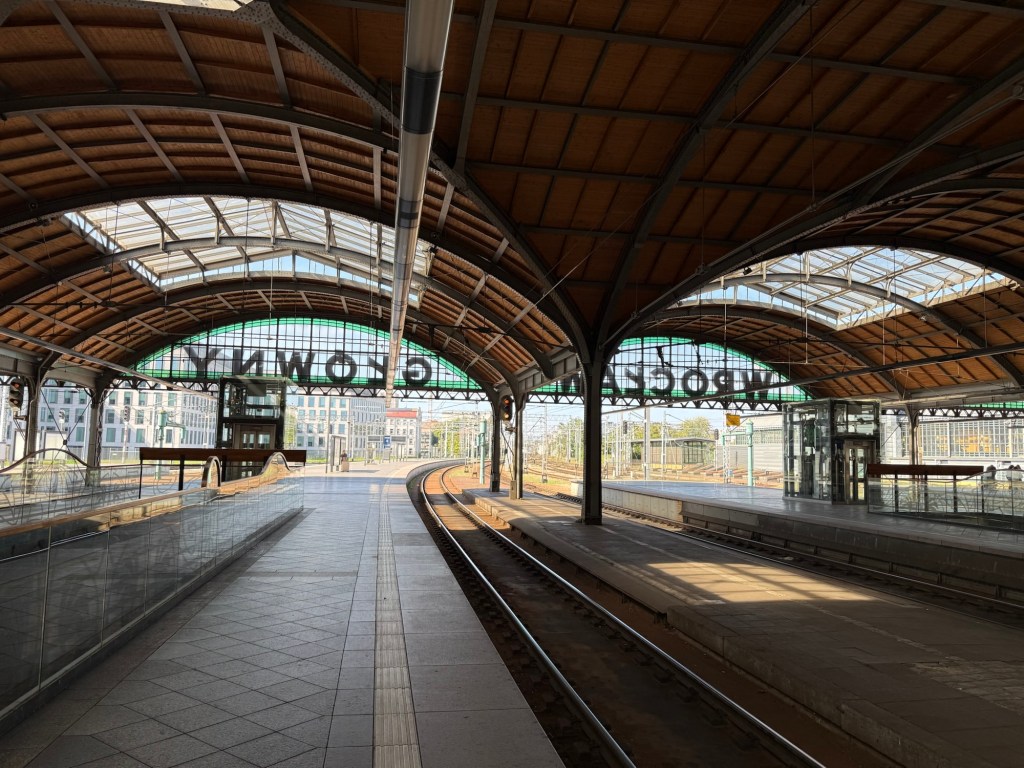
Today I took the three hour train ride from Wroclaw to Krakow in the early afternoon. It was early enough in the day to constrain my morning, but not early enough to do much in the afternoon.
But it didn’t matter because I still had plenty to think about as I watched the miles roll by outside my window.


