The asphalt of the desolate careening streets was cracked and broken and the stone and concrete buildings around me pitched at angles as I walked through Kond, the oldest surviving neighborhood in Yerevan.
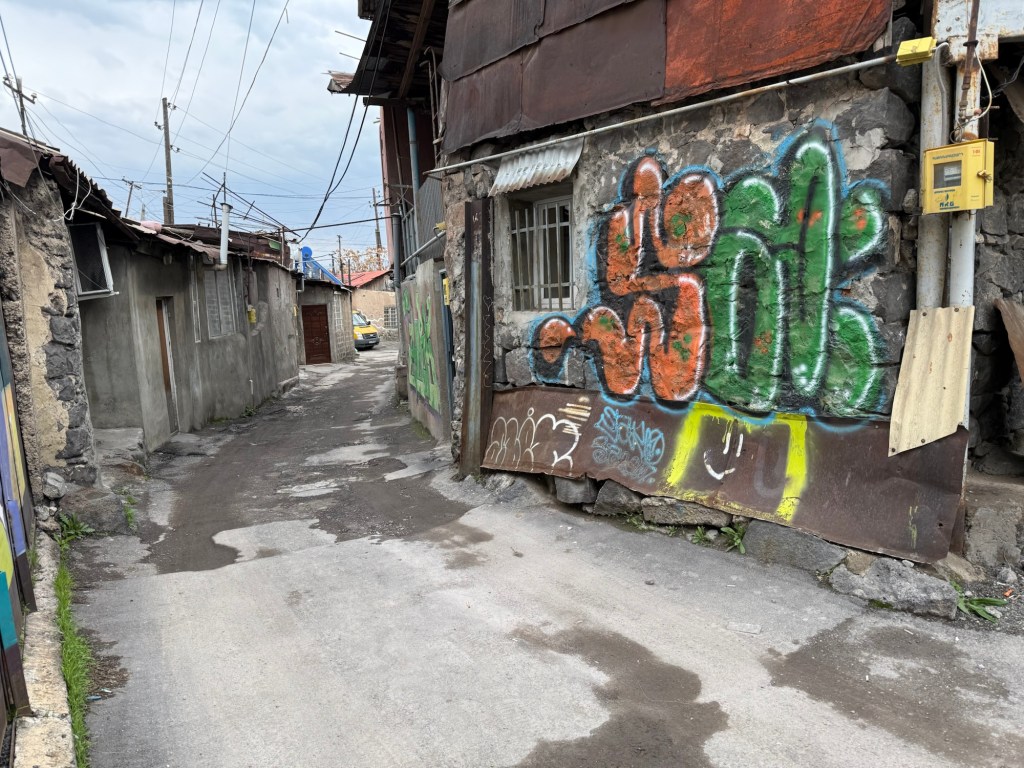
I found myself here because I like age and it was recommended as a quirky place to visit for a glimpse into the history of the city.
As the only tourist here, hauling my heavy camera case over my shoulder, I instead felt a bit out of place.
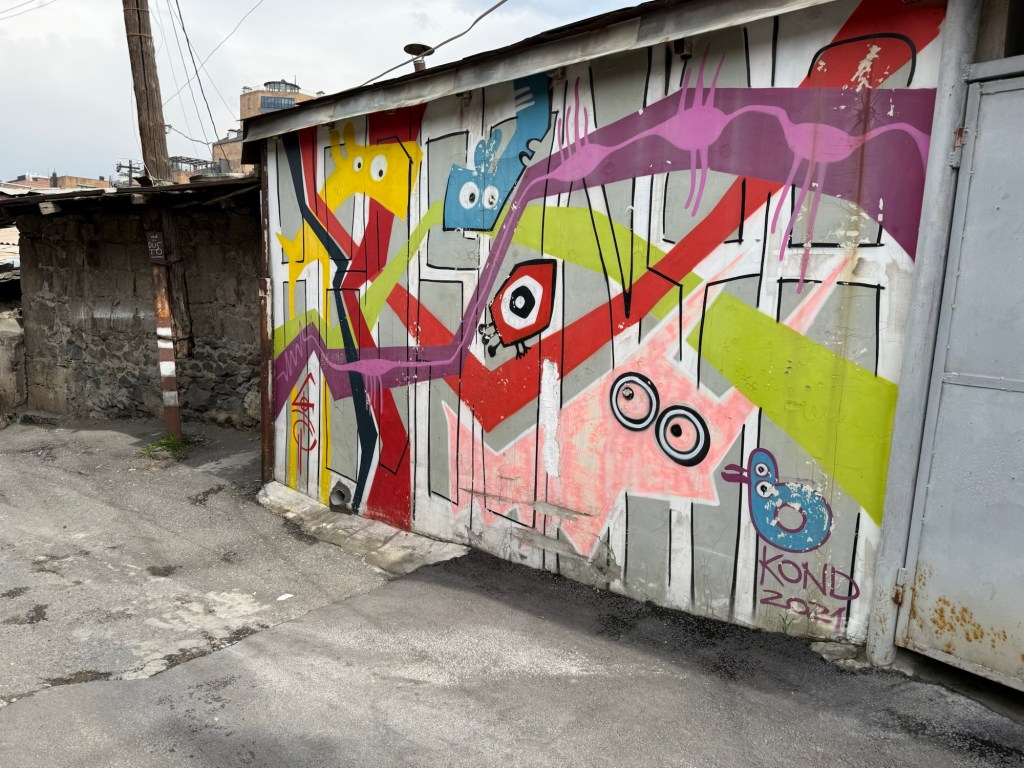
The graffiti covered walls and corrugated metal roofs certainly gave the place character, but the occasional cafe where I might sip a drink and pass the afternoon never materialized, and I was quickly consulting my map to find one of the few streets out of this isolated enclave.
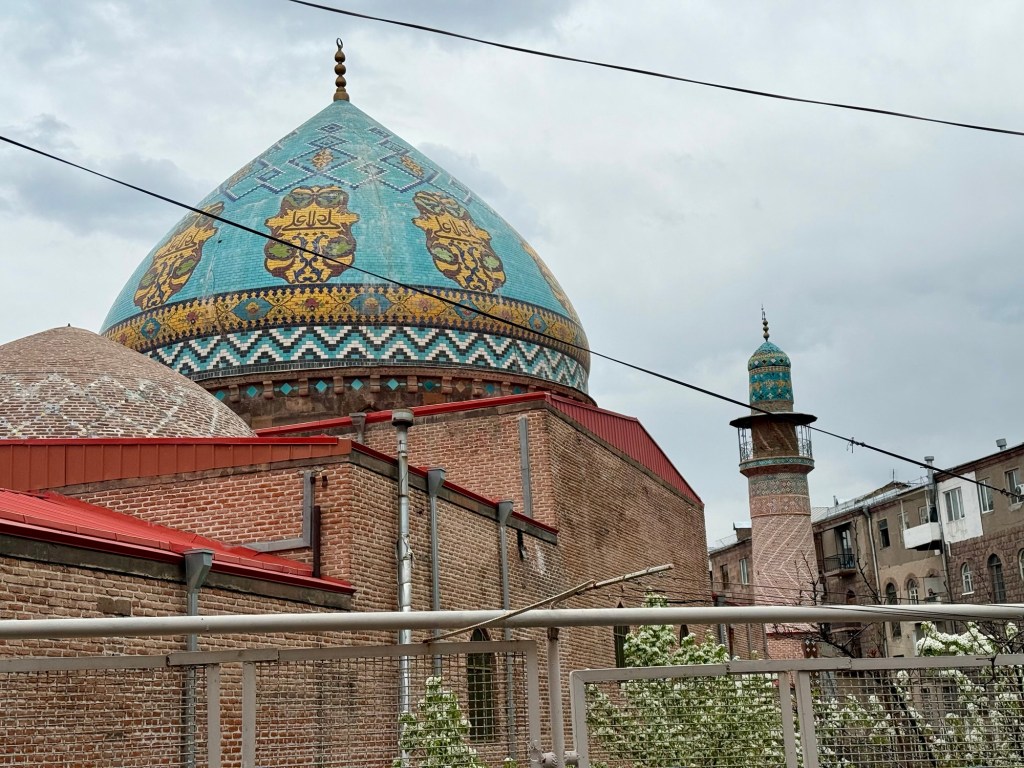
Along the way I passed the tiled onion dome of the Blue Mosque. This mosque, I learned, was constructed in the 18th century, and is a remnant from the Iranian era. It is the only operating mosque in Armenia today.
I found myself here, in part, because my flight to Istanbul doesn’t depart until 3 am. Turkish Airlines recently started the route to Yerevan, and I suspect the airport intentionally gave them terrible slots. Airlines often bank flights to make for efficient connections, but this departure time doesn’t make any sense from that perspective.
There was nothing to be done for it, then, but enjoy a low key day in the city.
I had considered passing the day on a tour to lake Sevan or maybe Etchmiadzin Cathedral (the Armenian mother-church), but ultimately decided I’d had enough tours and really needed something slower.
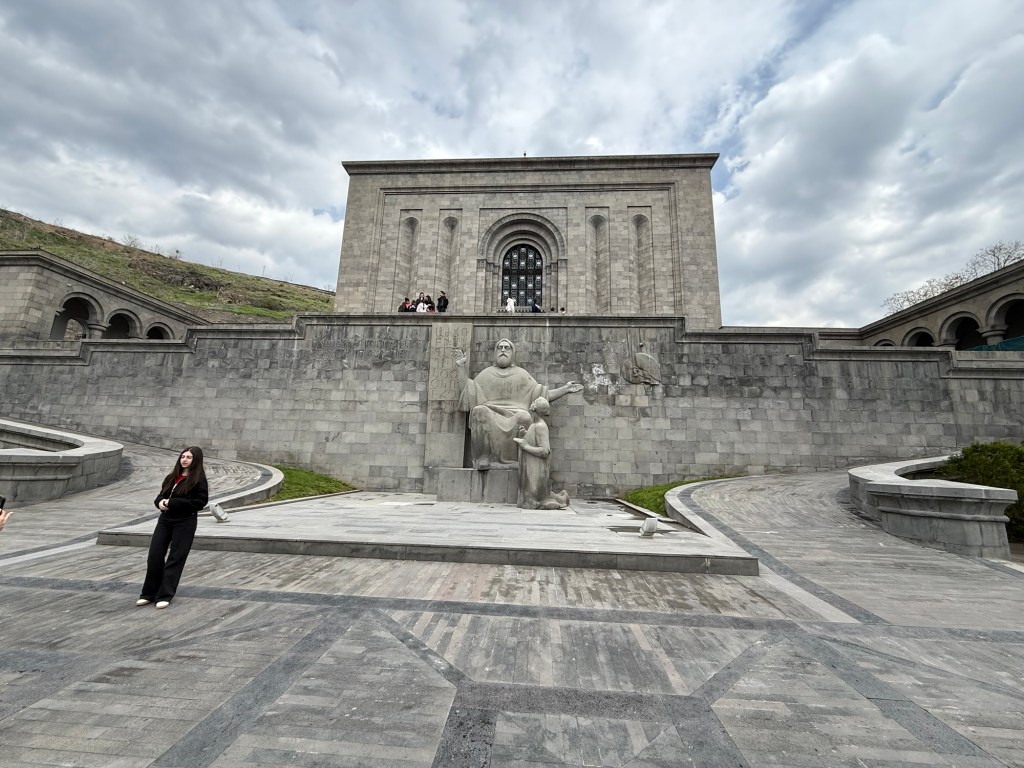
The Matenadaran would be my first stop in the morning, after a leisurely breakfast and workout. This is the famed repository of ancient books in Yerevan, and I was expecting a lot out of it.
The problem with expecting a lot is that it isn’t hard to feel a bit disappointed.
First of all I got hung up on the word “ancient.” Ancient history, according to Wikipedia, covers the era from 3000BCE to 500 CE. As I entered and started circling among the display cases, the ages of the manuscripts here all seemed to date to later eras.
One of the oldest books dates to the 9th century, so these are all pieces that I would classify as Medieval.
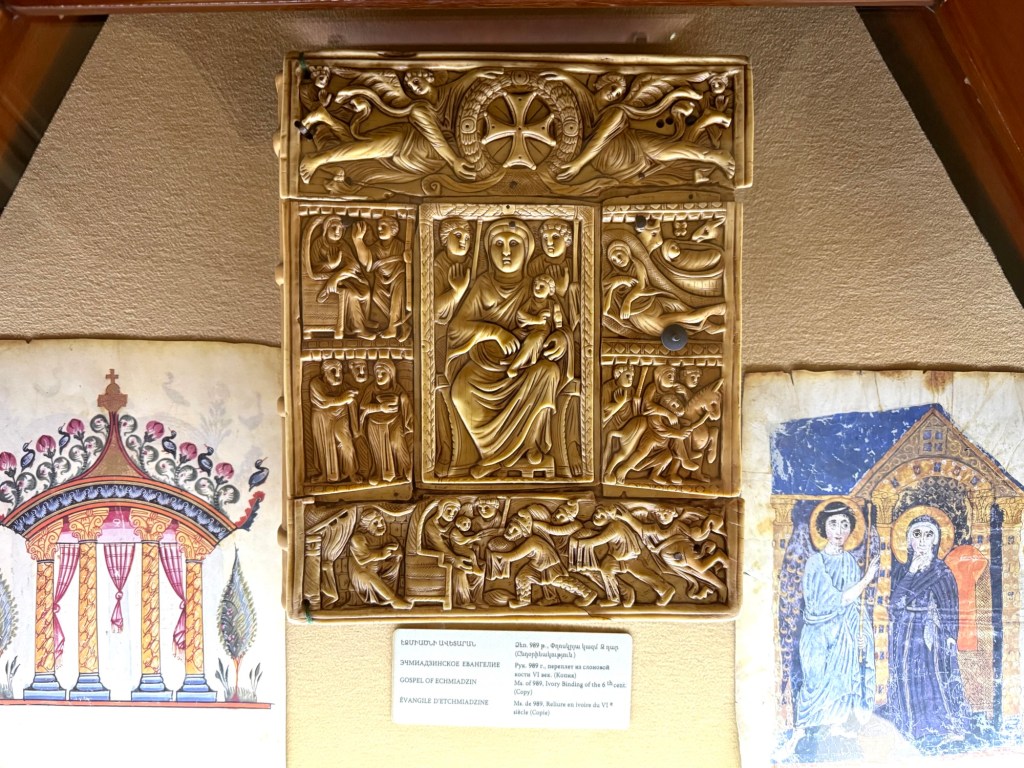
Even this book, an Etchmiadzin Gospel with a sculpted Byzantine binding from the 6th century, has a manuscript that dates to the 9th.
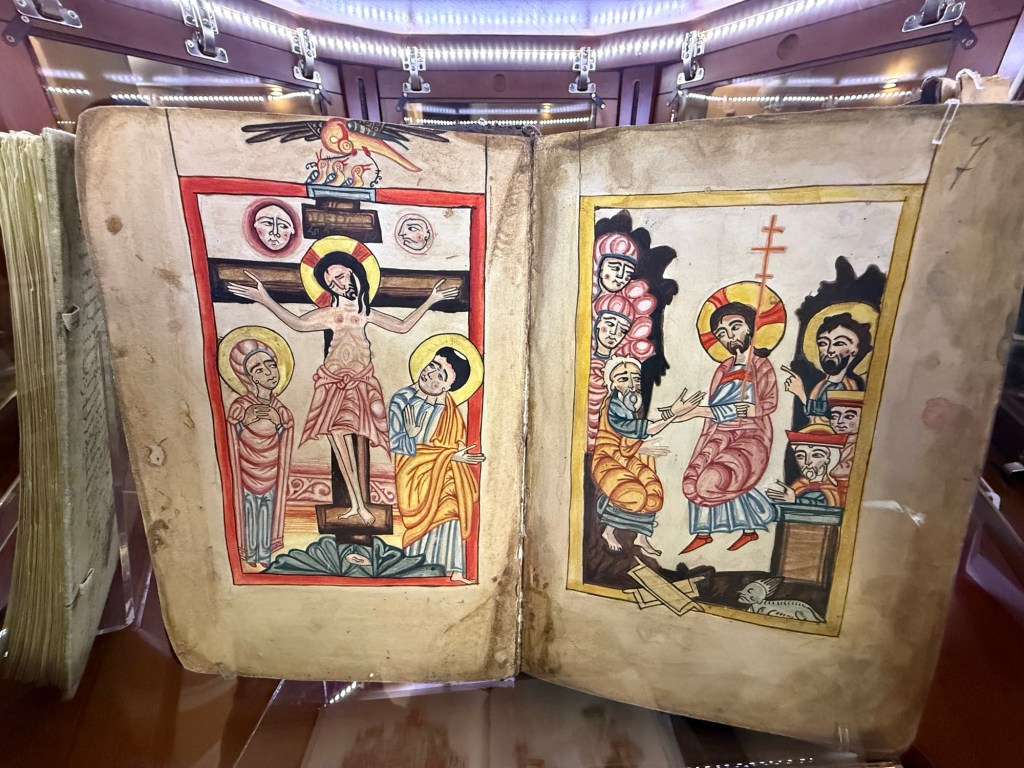
As I meandered amongst the illustrated manuscripts with their fraying pages, I realized they didn’t really mean much to me, although they clearly meant a lot to others. They were nice enough, but not engaging.
And then I found The Homilies of Mush. I hadn’t known it when I walked in the door, but this was my reason for being here today. As much as anything in the Matenadaran, this book felt like an embodiment of Armenia and her people.
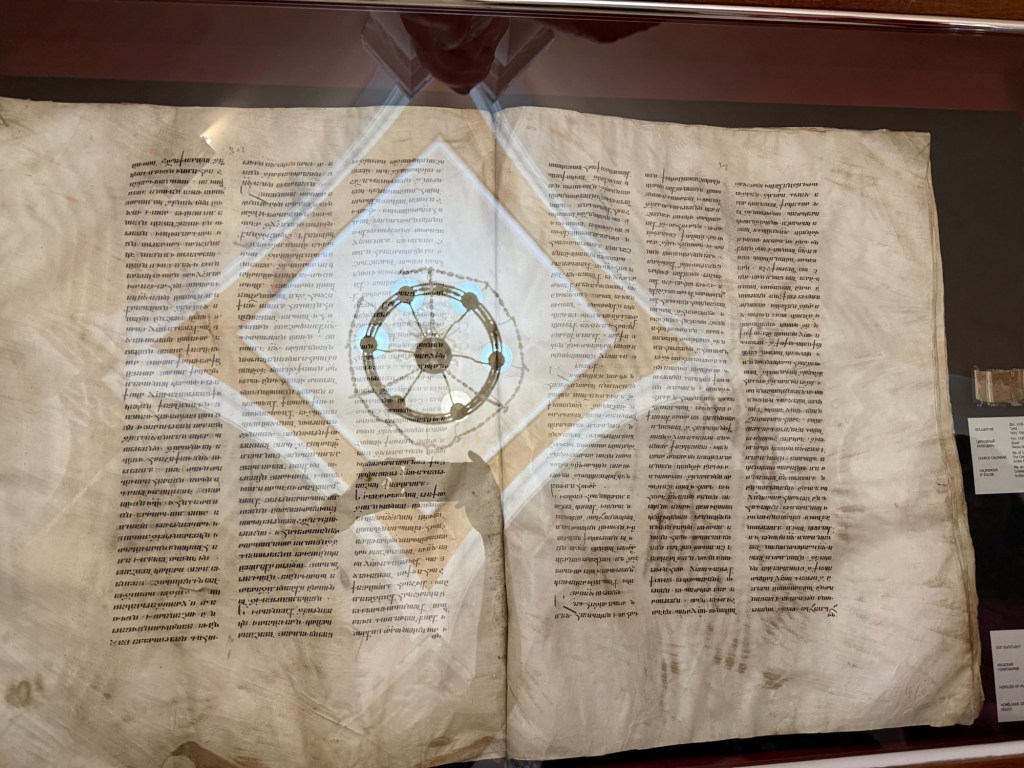
The Mush Homiliary dates to 1200. During the Genocide, in 1915, two fleeing women found it forsaken in an abandoned monastery in Eastern Turkey. It is an enormous tome that neither could carry alone, so they split it in two, one carrying her half with her all the way to the Etchmiadzin Cathedral. The other wouldn’t survive to complete the task, and instead buried her burden in the ground where it would later be found and reunited with its mate.
This book and its story, one of flight, division, death, and reunification, is a fitting cap to this journey. It is, in every sense, an Armenian story.
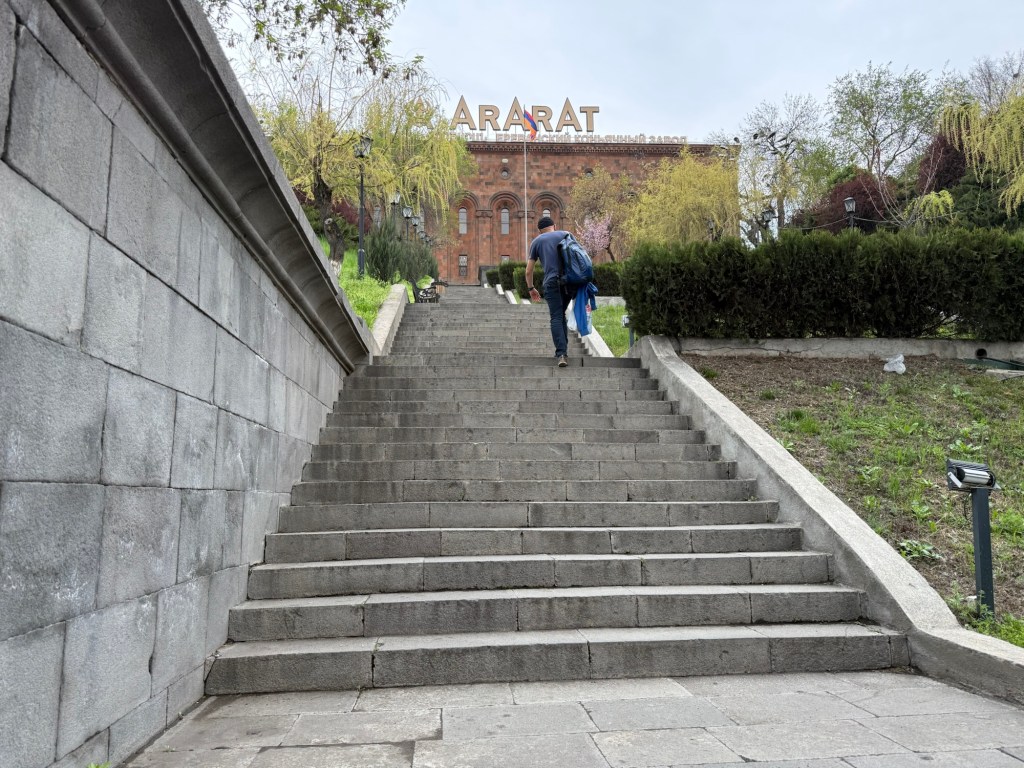
In the evening, after leaving Kond, I climbed the stairway to the Ararat distillery where I mused over this journey and the things I have seen.
Much later, after an easy dinner and pastry, I followed my footsteps back to my hotel where I collected my bags from storage and reorganized some things for the journey ahead.
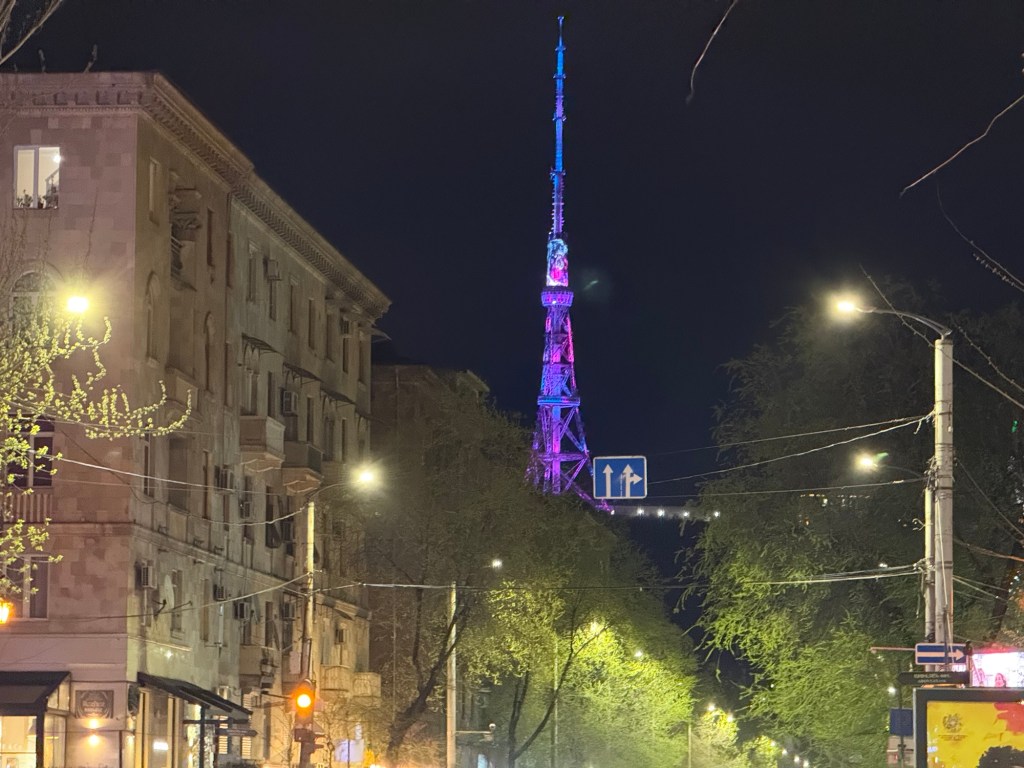
Overhead the soaring Yerevan TV tower illuminated my path with a peaceful blue light.
I was happy. And I was ready, at last, to go home.


