Ad astra per aspera.
To the stars, through hardship.
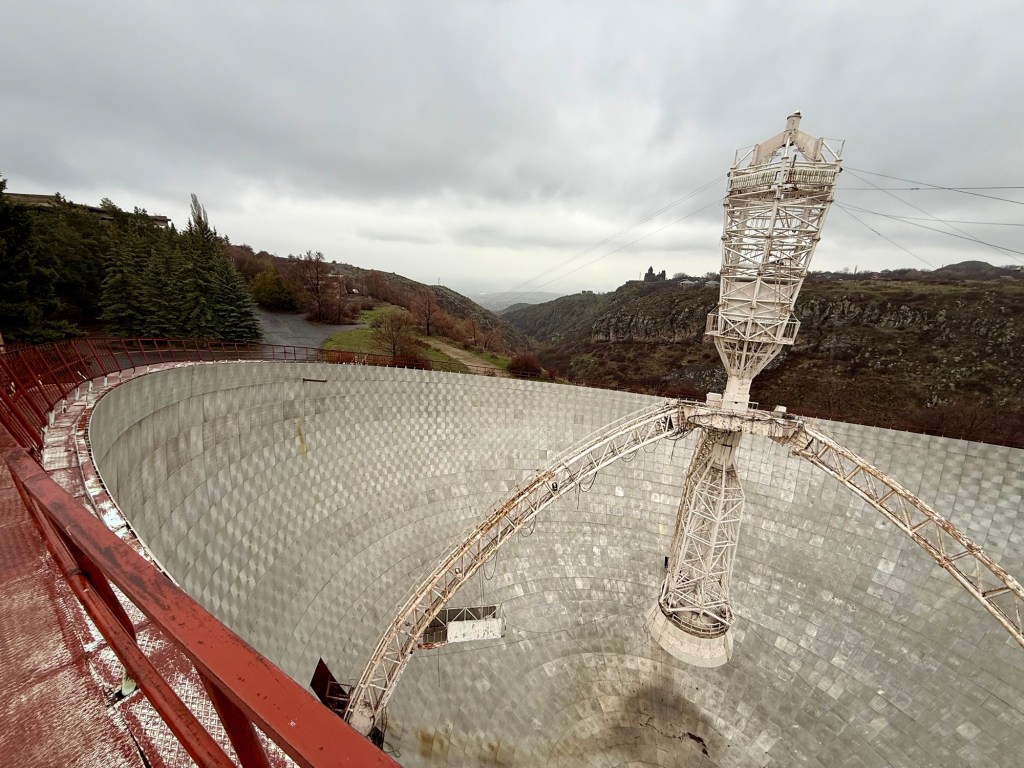
These famous words echoed through my mind today as I stood in the chill rain on the slippery steel deck of the decaying remains of the Soviet Orgov Observatory, a superhuman radiotelescope built into the mountains well above Yerevan. It was designed to listen billions of light years into the past, to the furthest and oldest songs of the universe.
But something else in that well-worn phrase tickles the back of my brain. Aspera is Latin for hardship, but it reminds me of the word aspiration.
Hopes and dreams. Aspiration. Aspera. Hardship
Do these words share a common root? I can’t help but think that we rarely reach the fullness of our hopes and dreams without encountering a little hardship.
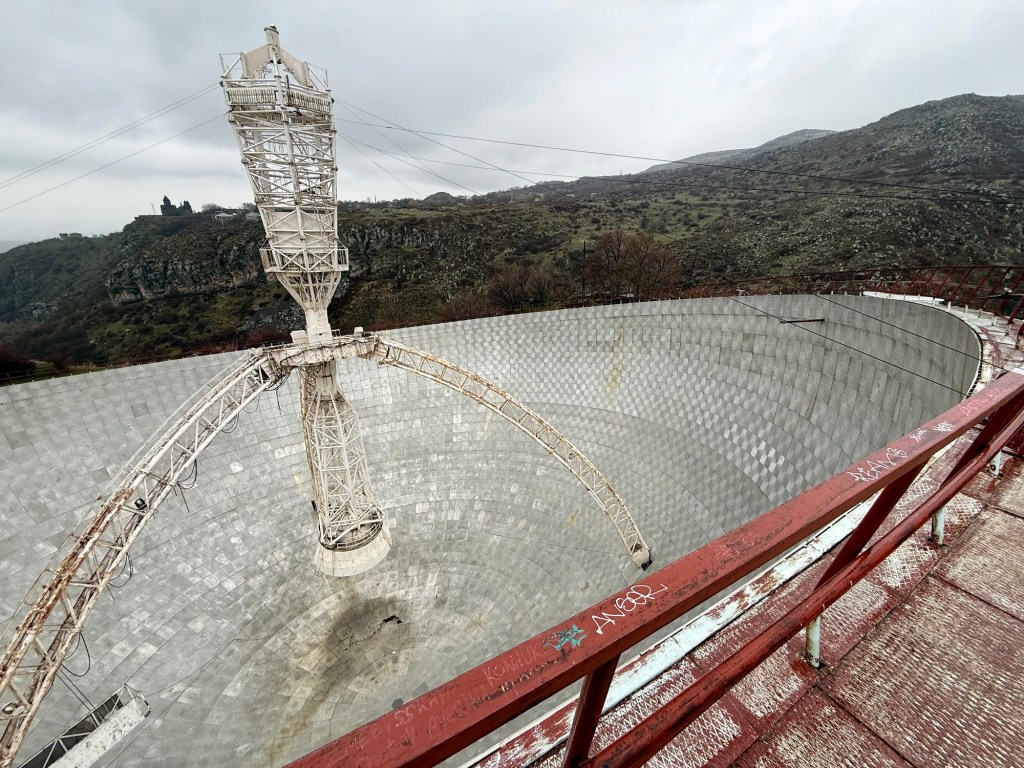
The Soviets built this from 1975-85, but it struggled to survive the dissolution of the Union in 1991.
It was constructed as a rival to the Mt Arecibo observatory in Puerto Rico, which today is equally quiet, damaged by Hurricane Maria in 2017, and eventually taken offline completely in 2022.
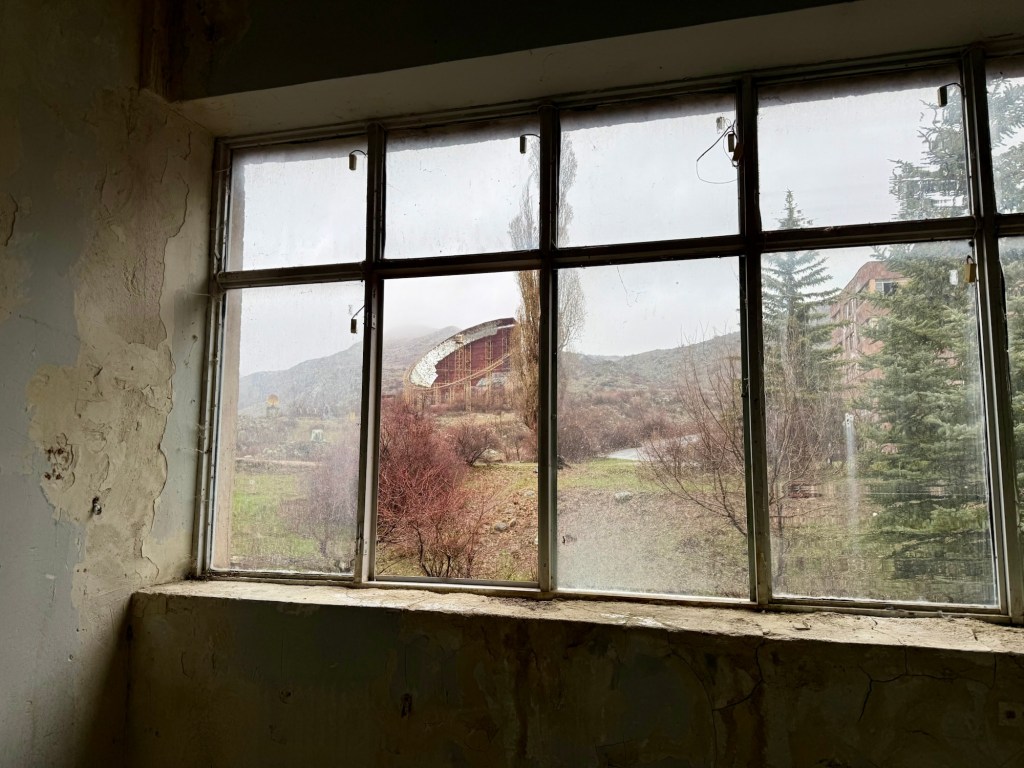
Orgov itself seems to have been a stretch of the imagination. Nearby the skeletal remains a second observatory sag heavily, unfinished.
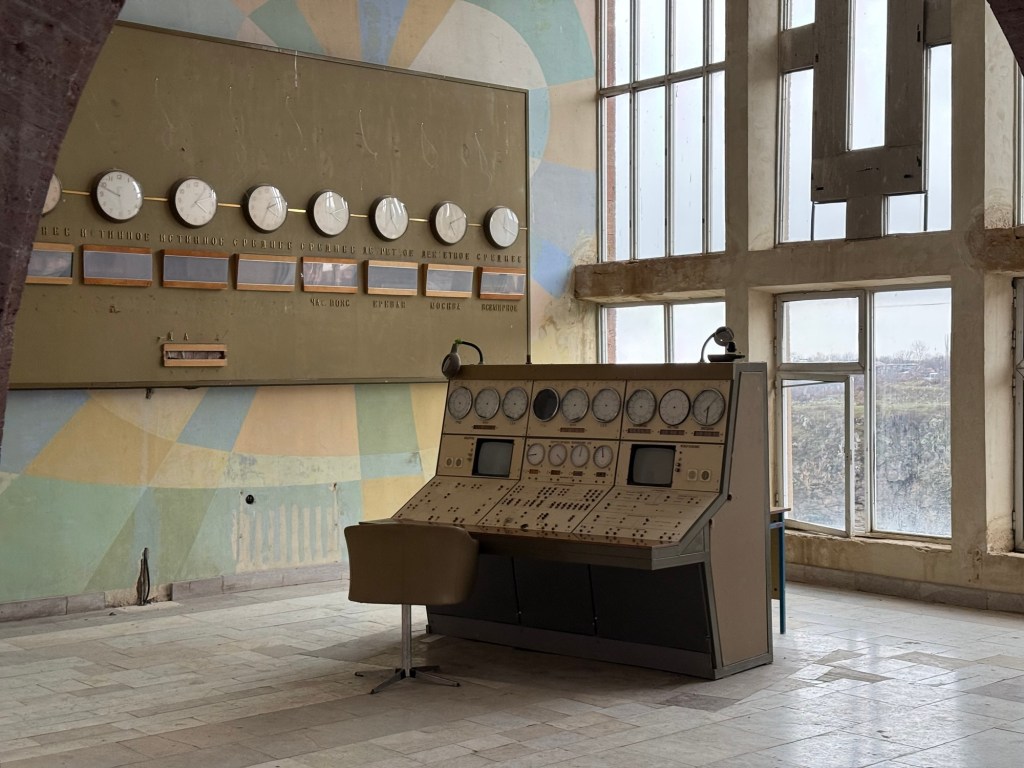
Back at the main observatory, the headhouse stands empty, the massive glass wall cracked and the concrete crumbling in places. Inside, the carcasses of her computers have long been silenced, their dials still and their lights dark.
Clocks that once kept time across the Soviet Union are idle, their hands lifeless.
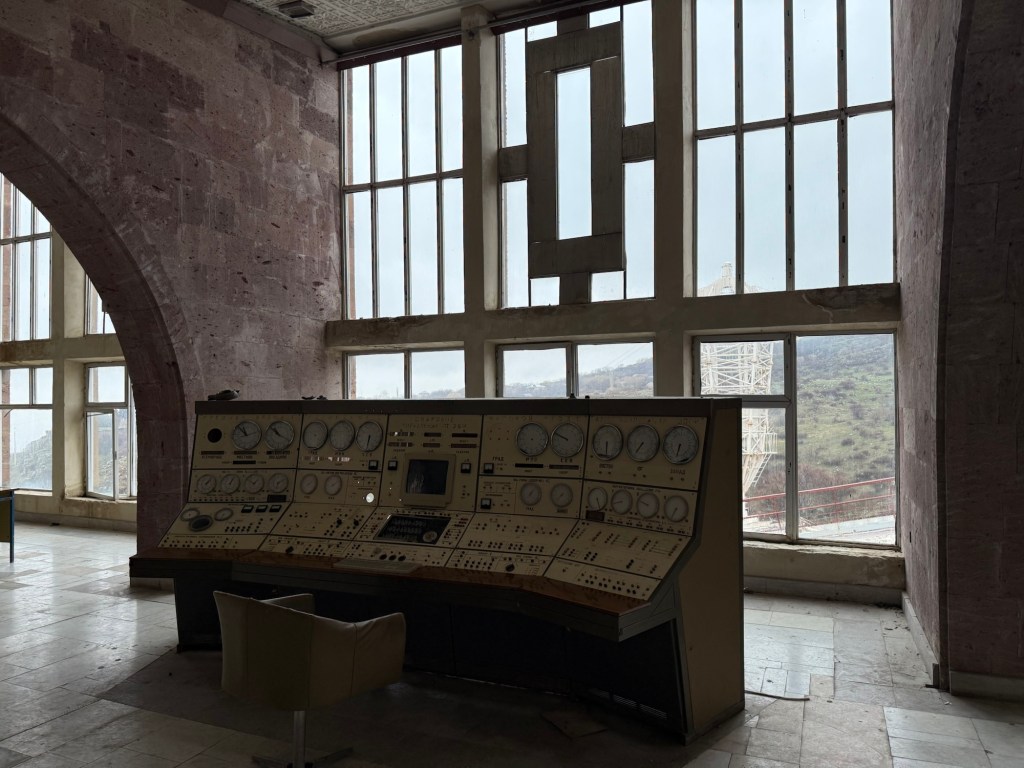
Keys have been stripped from the keyboard.
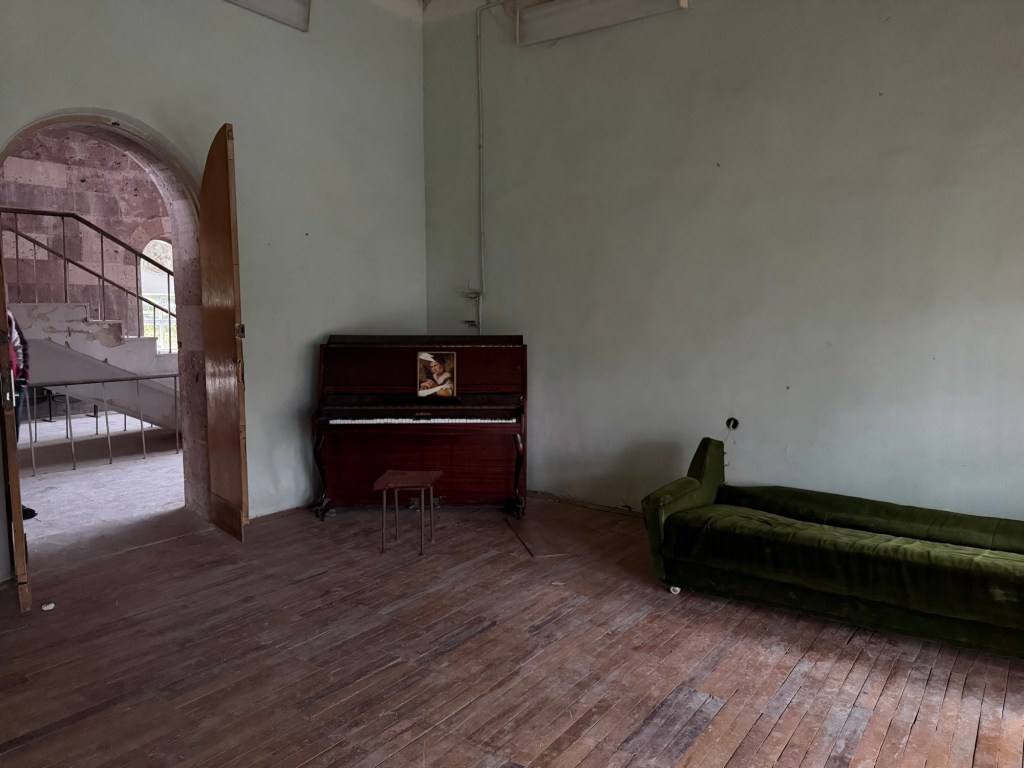
A piano, seemingly out of place in a scientific center, stands neglected in a corner, years from its last tuning. Today it sounds only discordant notes for the rare visitor who dares to wake its ghosts.
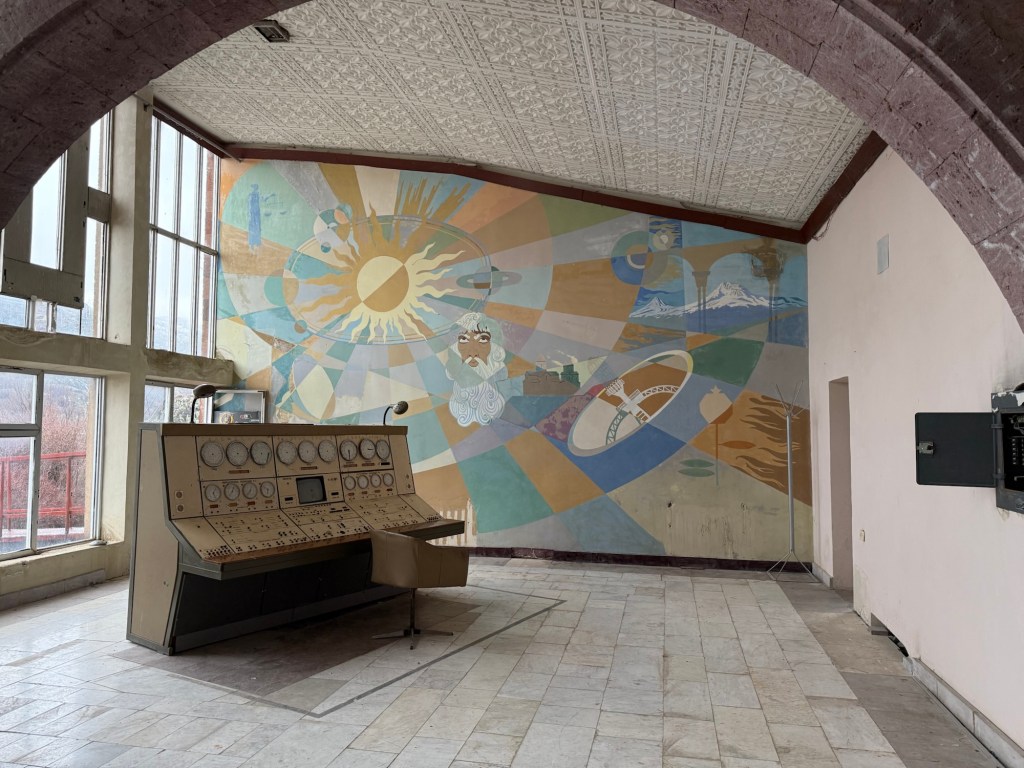
But on the northern wall, a glorious stylized mural remains, unsullied by graffiti. None dare touch this testament to the dreams that once drove her makers.
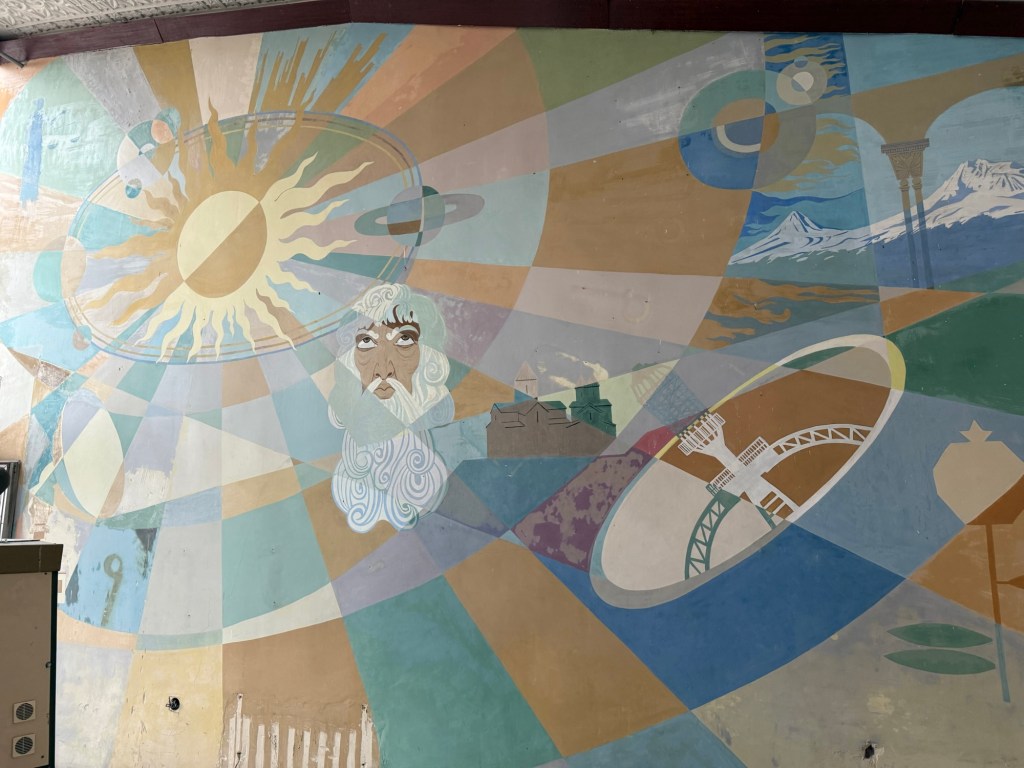
The imagery is unmistakeable – a grand Sun, the face of God, and the telescope. Nearby stand a monastery, the scales of justice, the planets, and Mount Ararat.
The construction of this place may have been driven by the cold war and competition with the United States, but the mural tells another, deeper tale.
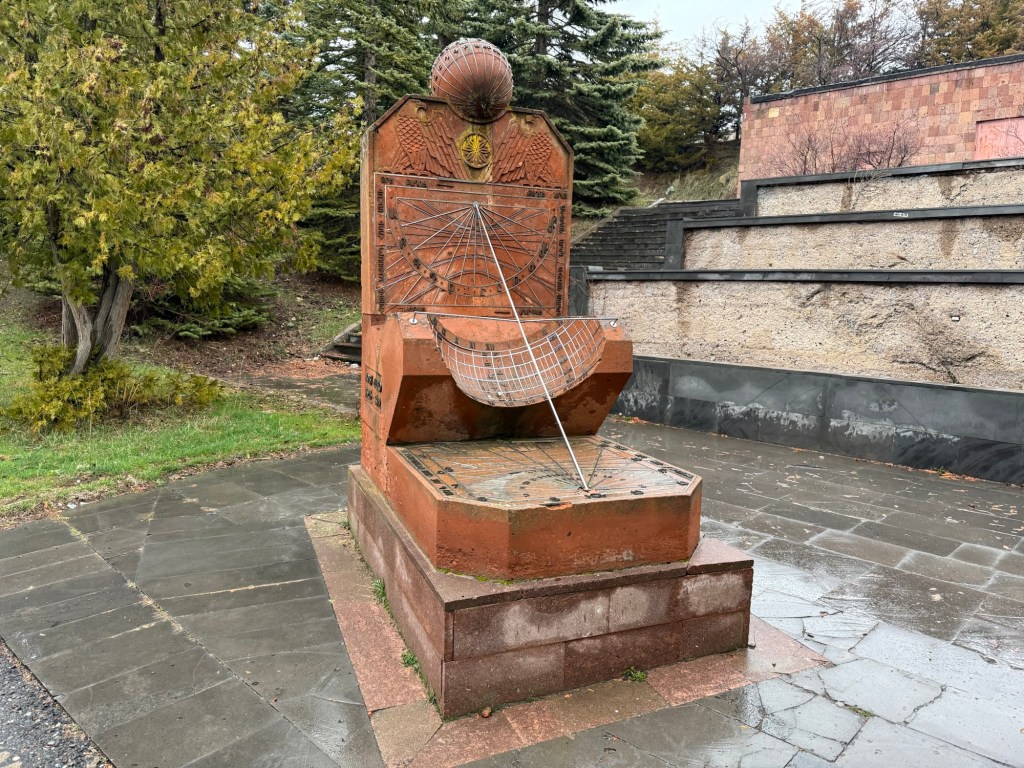
I can’t help but take it all in and listen to that story.
And I am smitten, my heart swelling with affection for a people who dreamed giant dreams, reaching — straining — for the stars.


