I remember learning about the numbers in school.
During World War II, prisoners in the German concentration camps at Auschwitz were tattooed with numbers upon their arms.
There is something about this that we weren’t taught in school, or if so, it didn’t make an impression. I know I’ve heard it since, but today it sunk in and really implanted itself permanently in my brain.
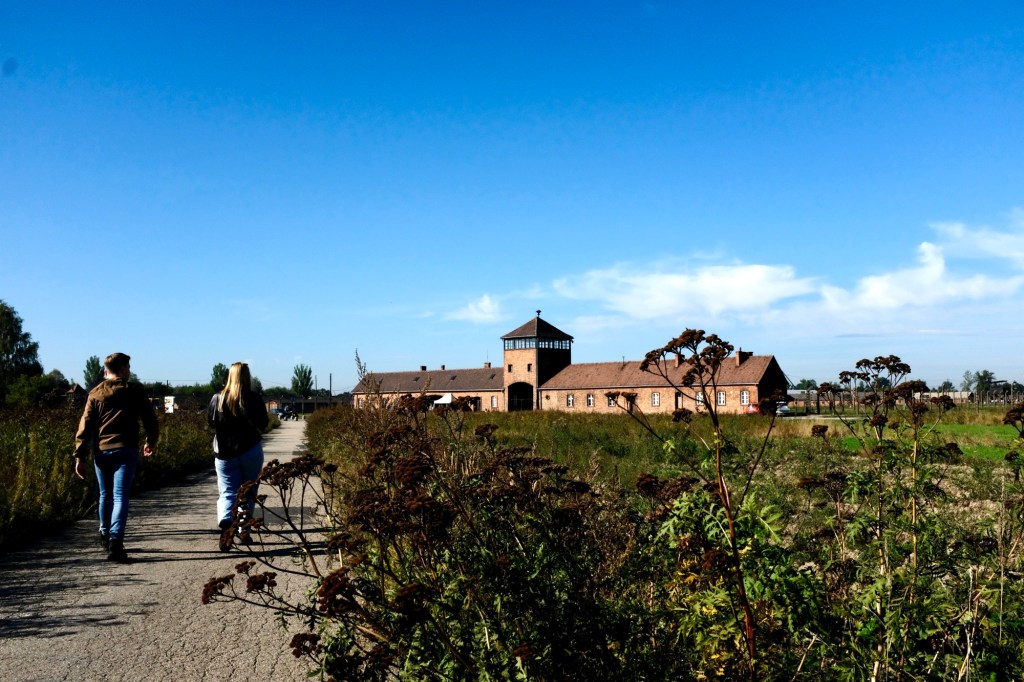
Standing on the train platform at which 1.3 million prisoners, most of them Jews, were mercilessly sorted on arrival, the matter-of-fact words of the docent echoed in my ears.
Immediately on arrival, the trains were unloaded and people were triaged. Human beings were divided into those who might have use in the camp and those who didn’t. Those for whom the Germans had no use were to die immediately.
Murdered.
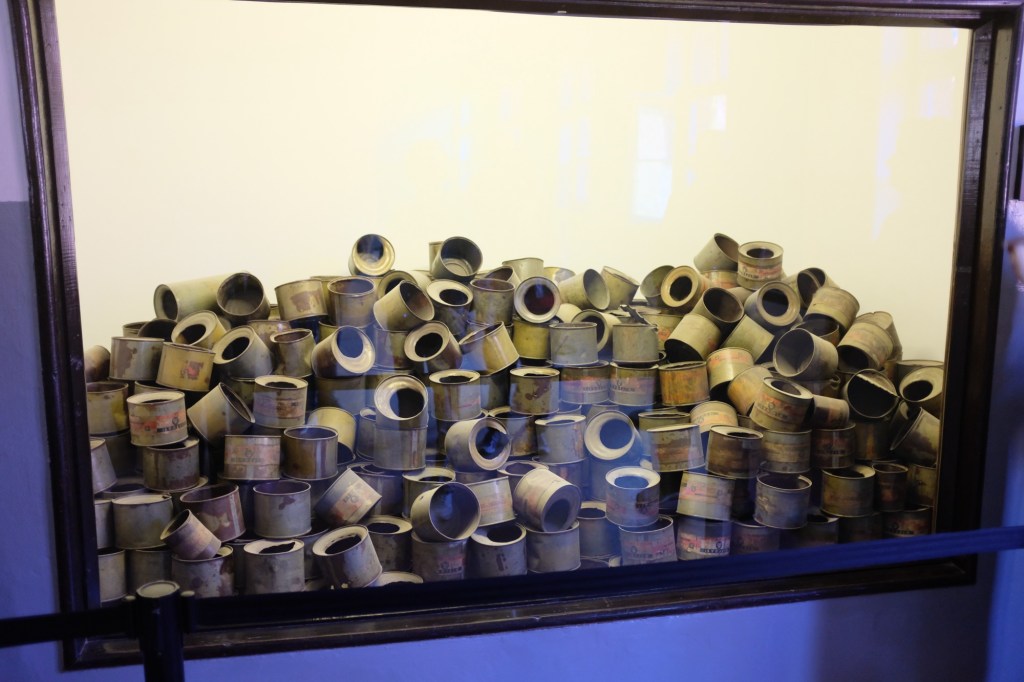
Nine hundred thousand souls were triaged immediately away. They went unregistered, unnamed, and unnumbered to the gas chambers where they were poisoned with Zyklon B and their bodies cremated.
The tattoos were borne only by the 400,000 who were registered and might survive to see another ashen sunrise, permanent physical markings that they would bear through the remainder of their lives.
Half of those who bore tattoos would not survive to see the end of the war.
What impresses me most about Auschwitz is how small it feels.
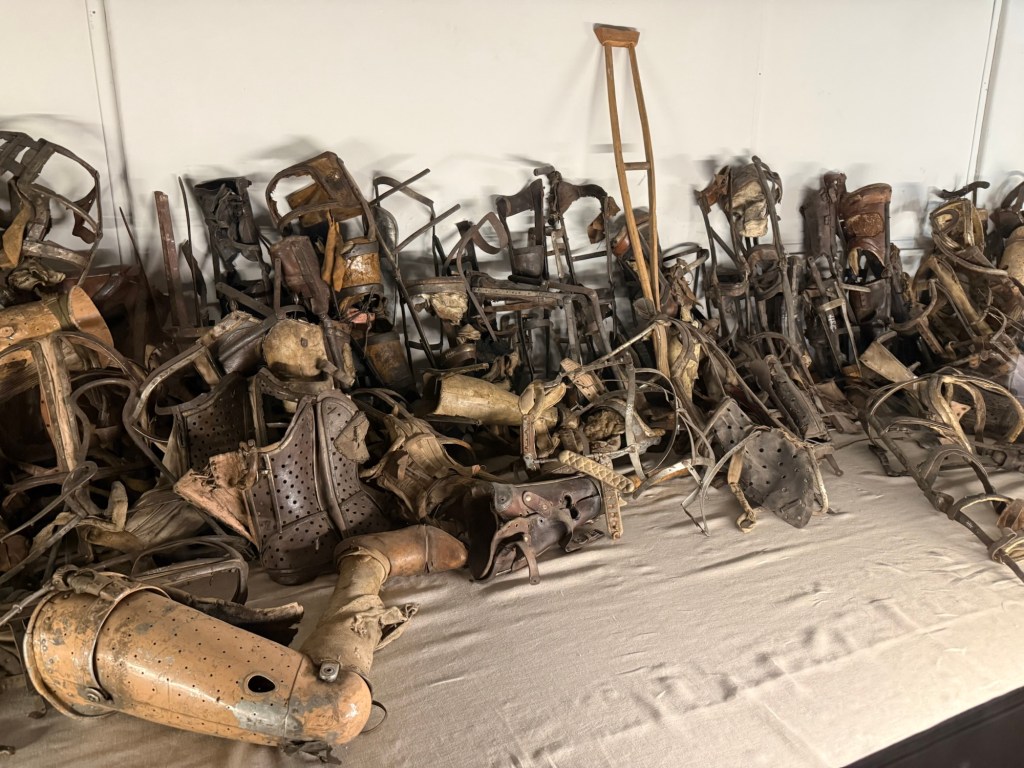
I was angered by the numbing, dehumanizing spectacle of mounds of shorn hair and prostheses.
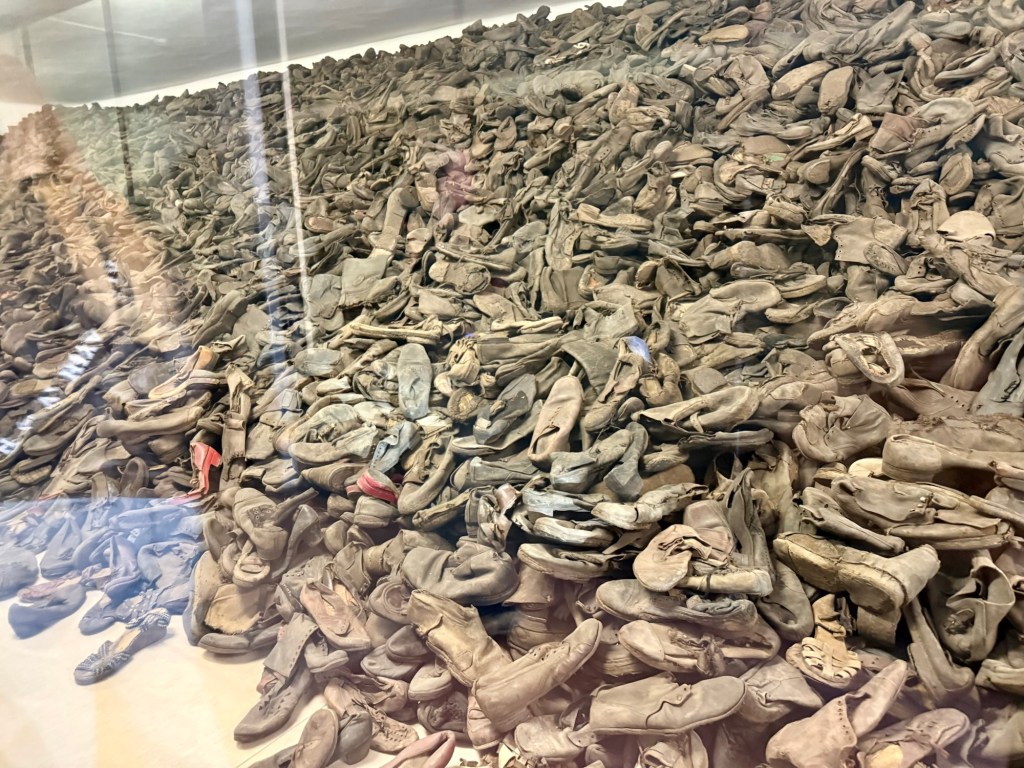
And I was saddened by the tragedy of the shoes, many of which were once worn with pride.
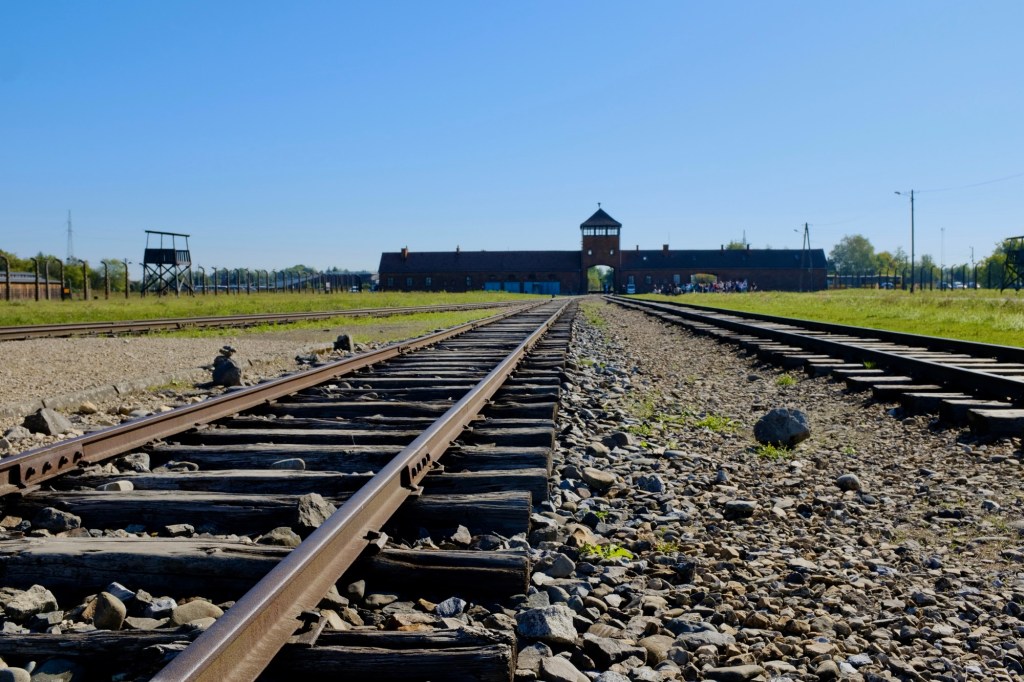
And I was silenced by the eerie, desolate train tracks that lead one way through the gatehouse to their final termination point.
But what I’m left with, most strongly, is the reality that this is an oversized site of incredible evil, and yet it is, somehow, small.
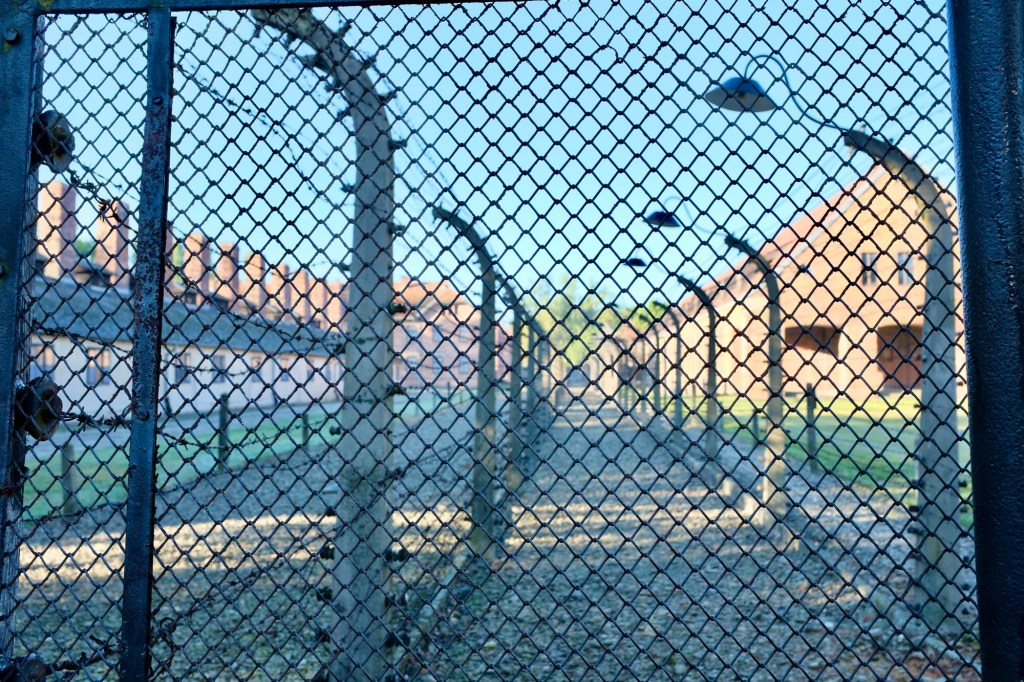
None of this is to say, in reality, that Auschwitz, or its much larger sub camp, Auschwitz II Birkenau (which is what most people think of when they think of Auschwitz), is actually diminutive, because they are massive sites. When all the buildings were standing, the latter would have stretched as far as human eyes could see, laden with barracks designed to house 125,000 tortured prisoners.
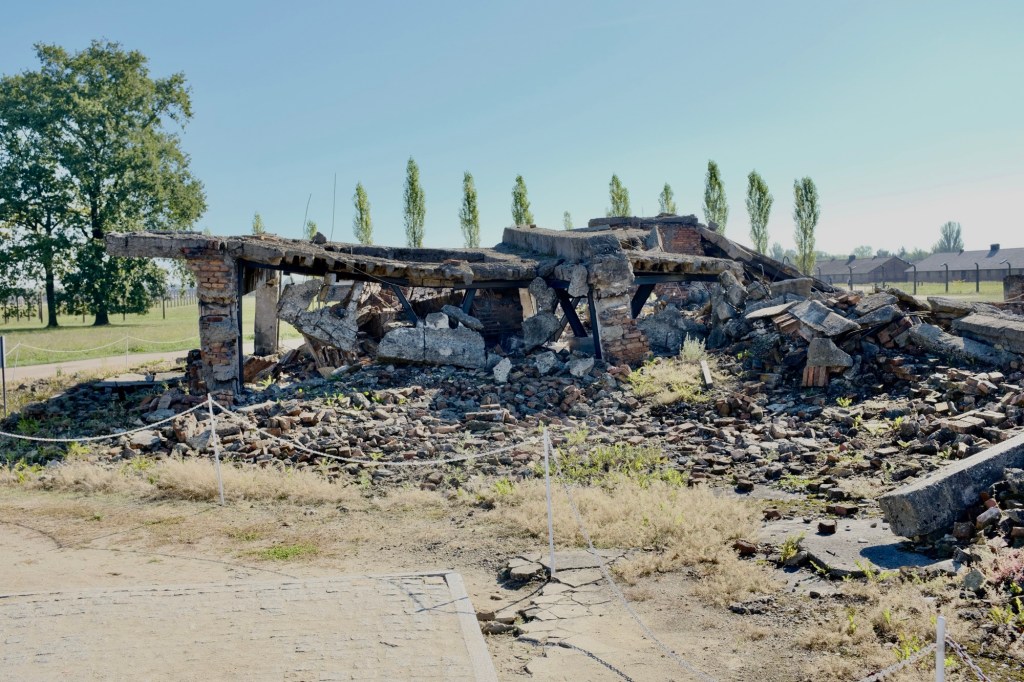
But standing under a glaring September sun and a crystal blue sky, the remains of the crematoria, dynamited by the retreating Germans attempting to hide their crimes, feel disproportionately small. Nearby, the collapsing remnants of the exploded gas chambers are large, but not ridiculously so.
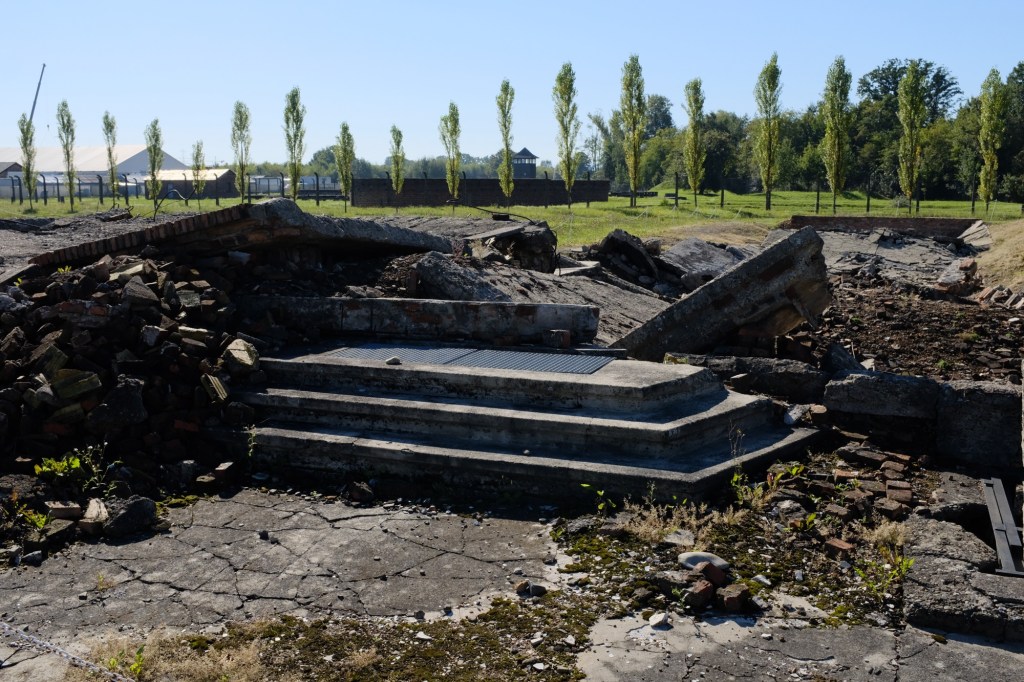
They had 4 crematoria at this camp, which together were designed to cremate about 4400 bodies a day. Some days they did more, up to 8000 when they were especially efficient. Sometimes the system was overwhelmed and the Germans resorted to burning bodies in open pits, incinerating up to a total of 20,000 a day in the summer of 1944.
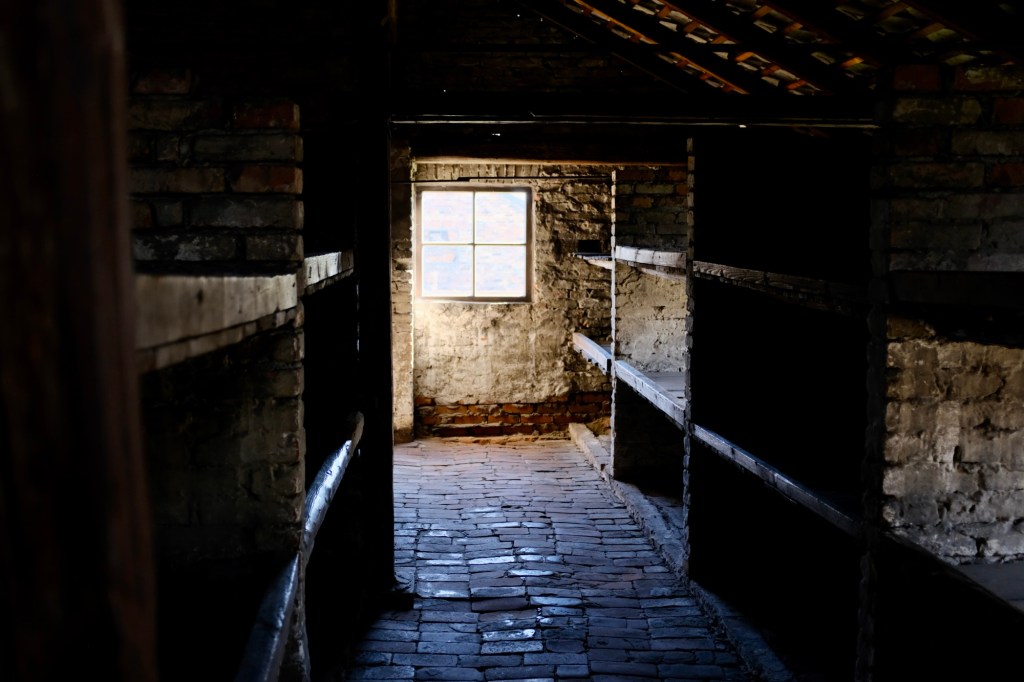
We have very good estimates (1.1 million) but not hard numbers to tell us exactly how many people were murdered here.
And for most, we don’t have names.
When you are being efficient, you don’t count the dying. You don’t bother to name or number the dead.
And if nothing else, the Germans were efficient.


